

For a fleeting moment in early 2026, the silver market transformed into a digital-age spectacle. Dubbed the "GameStop of 2026" by startled analysts, the white metal’s price action was less about traditional valuation and more a reflection of a coordinated retail and algorithmic frenzy. It was a liquidity event masquerading as a commodity rally, and its collapse was as swift as its ascent.
The Velocity of Unraveling
Silver’s meteoric rise to a peak of $118 was built on a foundation of social media momentum and leveraged retail options trading, not physical scarcity. The turning point arrived not with a geopolitical shock, but with a subtle shift in the bond market. Comments from a newly appointed Treasury official hinted at a more aggressive normalization of the yield curve. This modest repricing of the dollar was enough to prick the bubble.
What followed on January 30th wasn't just a correction; it was a structural unwind. In a single, brutal session, silver lost nearly a third of its value—the sharpest percentage decline since 1980. The entire rally, which had seemed so powerful, was revealed to be a highly leveraged position with no deep-seated institutional support. When the first wave of stop-losses triggered, the cascading effect was amplified by high-frequency trading algorithms that flipped from aggressive buyers to even more aggressive sellers in milliseconds.
Gold's Institutional Moat
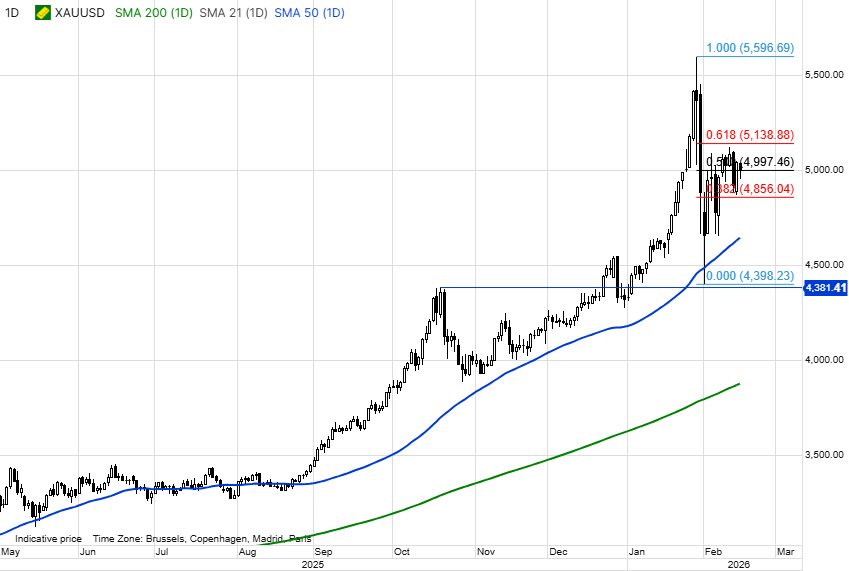
Gold experienced the same macro shock, suffering a sharp 12% drawdown. However, the comparison ends there. While silver was in freefall, gold found a floor with astonishing speed. Within a week, it had recaptured the $5,000 level, a feat that spoke volumes about its market structure.
The divergence was stark. Data from the Commodity Futures Trading Commission (CFTC) showed that speculative "paper" longs had been rapidly exiting silver. In contrast, the gold market saw sovereign wealth funds and major pension funds stepping in to buy the dip. This is gold's enduring advantage: a diversified, multi-trillion-dollar ecosystem of buyers with multi-decade investment horizons. A 10% drawdown is viewed by these players as a buying opportunity, not a reason to panic. The LBMA (London Bullion Market Association) reported that gold swap lines saw their highest usage in two years during the turmoil, providing crucial liquidity that silver’s much thinner market simply lacked.
The Fundamental Flaw in the Silver Story
The popular narrative for silver has long been the "supply deficit" driven by green technology. And it's true, industrial demand for photovoltaics and 5G infrastructure is robust. However, recent supply chain analysis from CRU Group offers a more nuanced view. They found that solar manufacturers, facing margin compression from falling panel prices, have accelerated their shift to silver-coated copper and advanced cell architectures that use up to 40% less silver per watt than older technologies. This "thrifting" is happening faster than the models had predicted, effectively capping the upside potential from the green transition. The much-hyped supply deficit is shrinking, not growing, as technological substitution outpaces demand growth.
The Verdict: Momentum vs. Money
Silver retains its allure for traders chasing high beta exposure to a metals rally. Its volatility will always attract speculative capital. But the January washout served as a brutal reminder of its dual nature. When the financial system experiences a genuine shock, capital doesn't seek refuge in an industrial metal with volatile ETF flows; it flows into the only asset with no counterparty risk.
Gold, once again, proved it is not just another commodity. It is the foundational layer of the global financial system. Silver, for all its industrial promise, remains a derivative of that foundation a high-octane bet that thrives on momentum but wilts under the harsh light of a real fundamental reassessment.