
@Fogo Official is a new Layer-1 blockchain that was created with a very clear and focused purpose: to deliver fast, reliable, and consistent performance for real-world blockchain applications. In recent years, many blockchain networks have entered the market claiming to be faster, cheaper, and more scalable. However, in practice, many of them struggle when real users start using the network heavily. Transactions slow down, fees become unpredictable, and the overall user experience suffers. Fogo was designed specifically to solve these real problems, not just theoretical ones.
At its core, Fogo uses the Solana Virtual Machine, often called SVM. This is the same execution engine that powers Solana, one of the fastest and most efficient blockchain systems available today. The Solana Virtual Machine allows transactions to be processed in parallel instead of sequentially. This means that instead of waiting in a long line, multiple transactions can be processed at the same time. This approach dramatically increases efficiency and reduces delays. By building on SVM, Fogo inherits this powerful performance advantage while also improving and optimizing it for its own infrastructure.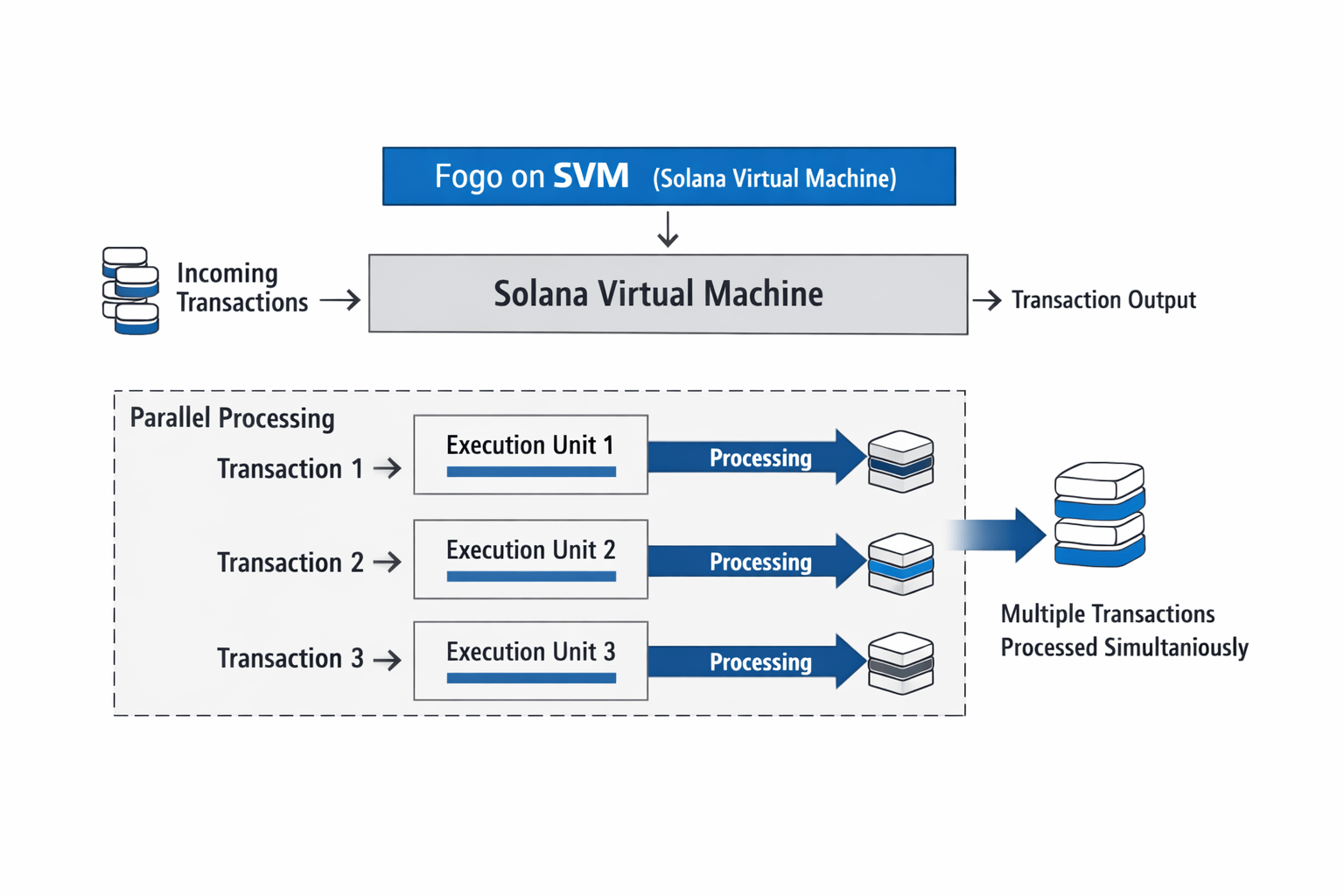
One of the most important ideas behind Fogo is predictable performance. Many blockchain networks can perform well under normal conditions, but when the network becomes busy, performance becomes inconsistent. Transactions may slow down or fail. This creates serious problems, especially for financial applications. Fogo focuses on maintaining consistent performance even during heavy usage. This makes the network reliable and dependable, which is extremely important for applications that require real-time execution.
Latency is another area where Fogo stands out. Latency refers to the time it takes for a transaction to move from submission to confirmation. Lower latency means faster execution and better responsiveness. Fogo was built to minimize latency as much as possible. This makes the network feel fast and smooth from a user’s perspective. Instead of waiting for long confirmation times, users can experience near-instant feedback. This is especially valuable for trading platforms, automated systems, and decentralized finance applications.
Fogo’s architecture also improves how validators operate. Validators are responsible for verifying transactions and maintaining the security of the network. In many traditional blockchain systems, validators must communicate across long distances, which introduces delays. Fogo improves this process by organizing validators in a more efficient structure. This reduces communication delays and allows faster transaction processing. By optimizing validator coordination, Fogo improves both performance and efficiency.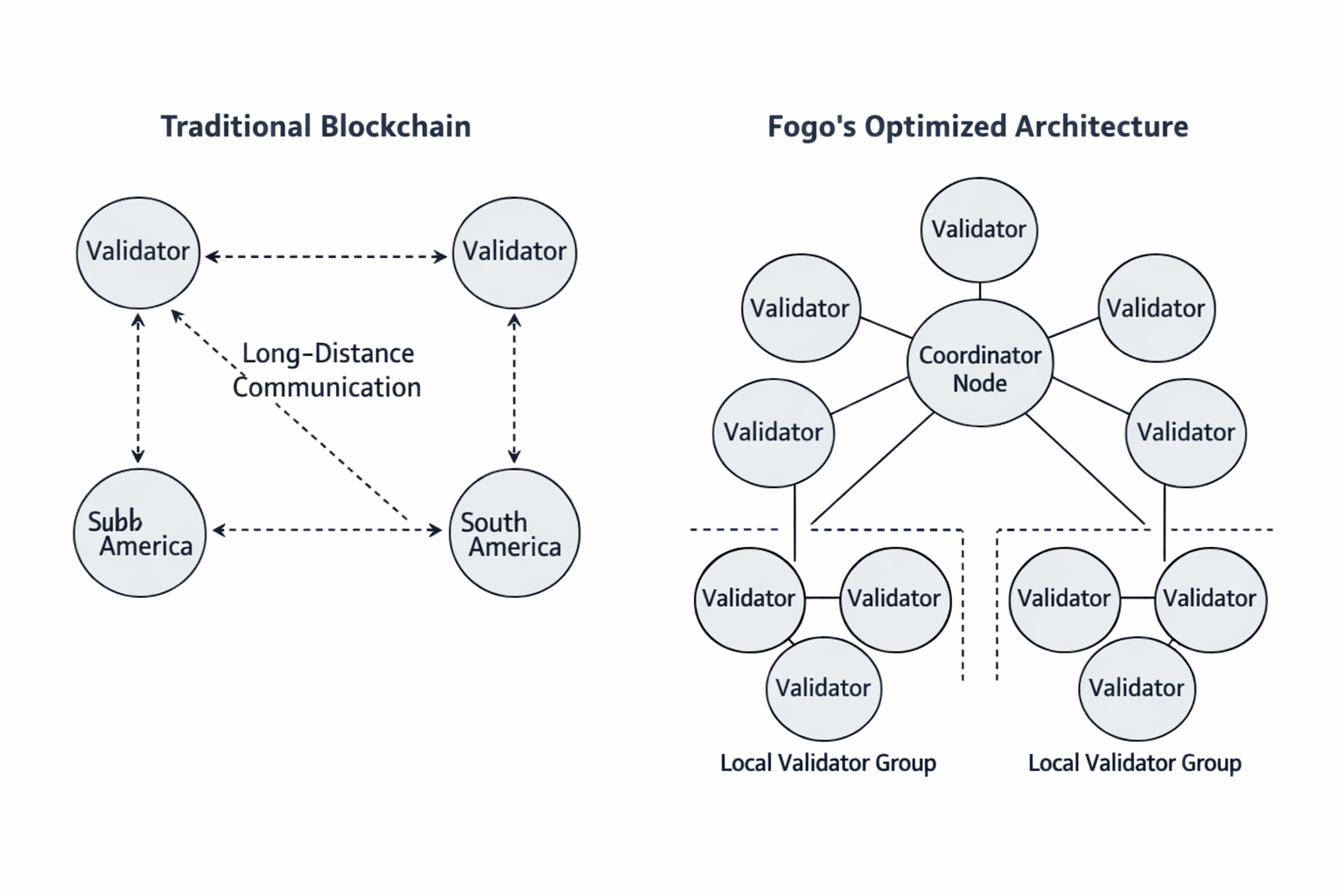
Another important advantage of Fogo is its compatibility with the Solana ecosystem. Developers who already build applications using Solana tools can easily deploy their applications on Fogo without needing to completely rewrite their code. This reduces development time and effort. It also makes it easier for existing projects to expand and grow. This compatibility helps Fogo attract developers and encourages ecosystem growth.
Fogo is particularly well suited for financial applications such as decentralized exchanges, trading platforms, lending systems, and automated trading bots. These applications require fast and reliable execution. Even small delays can cause significant problems in trading environments. Fogo provides the speed and consistency needed for these systems to operate effectively. This makes it an attractive platform for developers building financial infrastructure.
The network also focuses on improving user experience. One of the common frustrations in blockchain systems is the need to approve every single transaction manually. This process can be slow and inconvenient. Fogo introduces improvements that allow smoother and more efficient interaction. This creates a more seamless experience for users and makes blockchain applications feel more practical and accessible.
The FOGO token plays an important role in the network. It is used to pay transaction fees and support network operations. It also plays a role in securing the network through staking. Validators stake tokens to participate in securing the network and verifying transactions. This helps maintain the integrity and reliability of the system. The token also supports ecosystem growth by providing incentives for participants.
Fogo’s design reflects a deeper understanding of how blockchain technology is evolving. In the early days, blockchains were mostly experimental. Today, they are becoming real infrastructure used for financial systems, applications, and services. This shift requires better performance, higher reliability, and more efficient systems. Fogo was built with these requirements in mind.
Instead of focusing only on marketing claims or theoretical performance, Fogo focuses on real usability. Its goal is to create a network that can handle real workloads without slowing down. This makes it suitable for professional use cases where reliability is essential. As blockchain adoption continues to grow, networks like Fogo that prioritize performance and stability may play an important role in supporting the next generation of decentralized applications.
Another important aspect of Fogo is its focus on efficiency. By optimizing how transactions are processed and how validators communicate, Fogo reduces wasted resources. This allows the network to operate more efficiently while maintaining high performance. Efficient resource usage also helps keep transaction costs lower and more predictable.
Fogo also benefits from modern design principles. It was built using lessons learned from previous blockchain systems. This allows it to avoid many of the problems that older networks face. Instead of trying to fix problems later, Fogo was designed from the beginning with performance and efficiency as priorities.
The use of the Solana Virtual Machine also ensures that Fogo has access to a proven and reliable execution environment. This reduces risk and increases confidence in the network’s capabilities. Developers and users can trust that the system is built on strong technical foundations.
As the blockchain industry continues to evolve, performance will become increasingly important. Applications will require faster execution, lower latency, and greater reliability. Financial systems, automated services, and real-time applications all depend on fast and consistent performance. Fogo was created to meet these future demands.
The long-term vision of Fogo is to provide infrastructure that supports advanced blockchain applications. Its focus on speed, reliability, and efficiency positions it well for this role. By building on proven technology and optimizing performance, Fogo aims to become a reliable foundation for decentralized systems.
Fogo represents a new generation of blockchain networks that prioritize real performance over hype. Its architecture is designed to deliver fast execution, consistent reliability, and efficient operation. This makes it suitable for serious applications that require dependable infrastructure.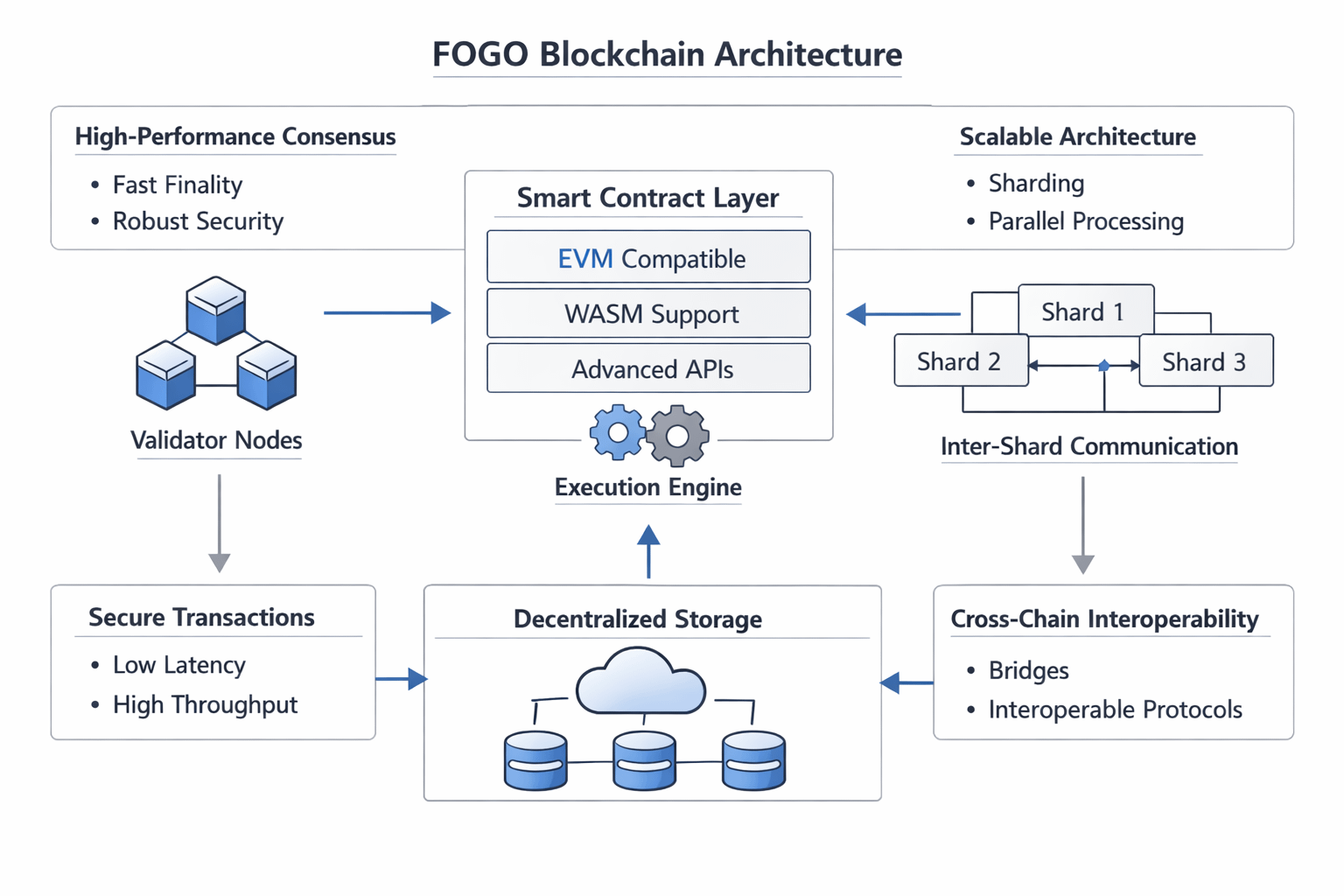
As adoption grows and more applications move to decentralized systems, the need for high-performance infrastructure will continue to increase. Fogo is positioned to meet this need by providing a network that is fast, efficient, and reliable.
In simple terms, Fogo is not just trying to be another blockchain. It is trying to be a better one one that focuses on real performance, real usability, and real value. Its use of the Solana Virtual Machine, its focus on predictable performance, and its efficient architecture make it a strong example of how blockchain infrastructure is evolving.
Fogo represents a step forward in blockchain design. It focuses on what truly matters: speed, reliability, efficiency, and usability. These qualities are essential for the future of decentralized technology.
