
If you’ve been around crypto for a while, you probably started with buying coins and holding them on an exchange. That’s how most of us begin. But in 2026, things are different. Crypto is no longer just about trading. It’s about ownership, identity, decentralized apps, and digital freedom.
That’s where Web3 comes in. And if you’re using Binance, you now have direct access to the Web3 world through Binance Web3 Wallet and its expanding ecosystem.
This is your complete beginner’s guide to Binance Web3 in 2026 — explained in simple, practical language.
What Is Web3?
Before we talk about Binance, let’s understand Web3 in the simplest way possible.
Web1 (1990s–early 2000s) → Read-only internet (you consume content).
Web2 (2005–2020s) → Read & write internet (you create content on platforms like social media).
Web3 (Now) → Read, write & own (you own your assets, identity, and data).
In Web3:
You hold your own crypto.
You interact with decentralized apps (dApps).
You don’t need banks to move money.
You don’t need centralized platforms to manage digita
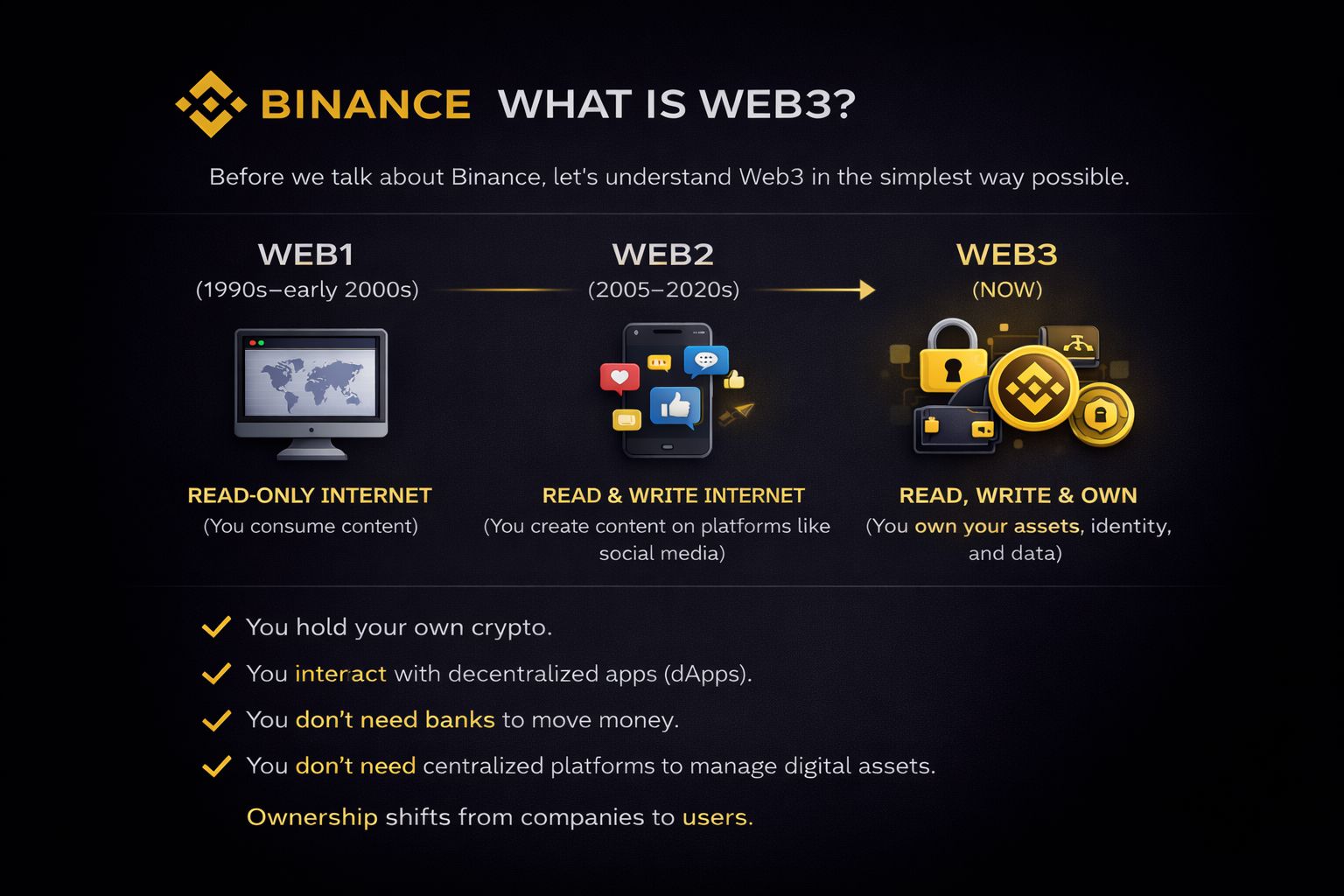
Ownership shifts from companies to users.
What Is Binance Web3 in 2026?
Binance has evolved far beyond just being a trading exchange. In 2026, Binance Web3 includes:
Binance Web3 Wallet
dApp browser
Cross-chain swaps
NFT support
DeFi access
On-chain earning opportunities
Social identity integration
AI-assisted transaction protection
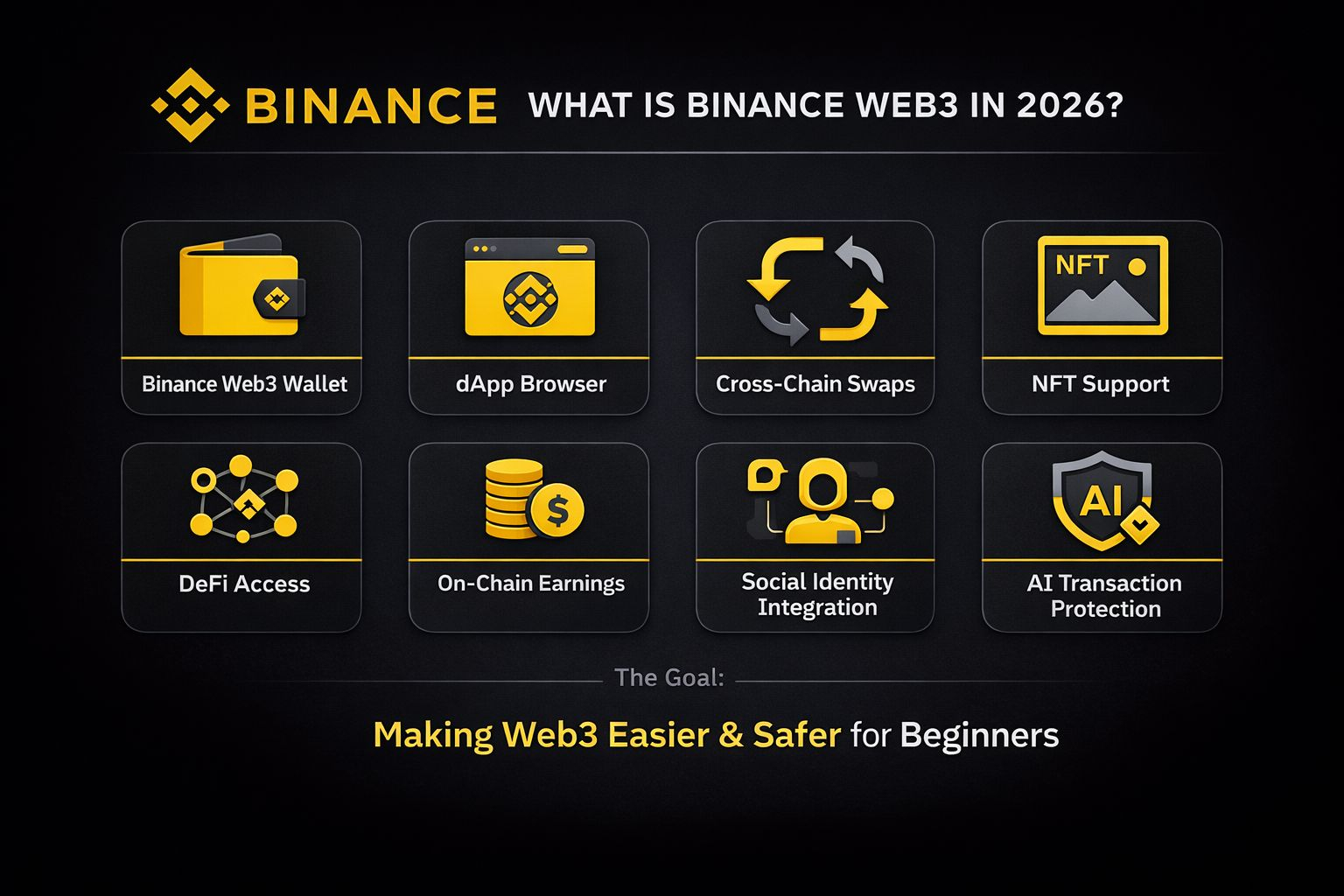
The goal is simple: make Web3 easier and safer for beginners.
Binance Web3 Wallet Explained
The Binance Web3 Wallet is a self-custodial wallet integrated directly inside the Binance app.
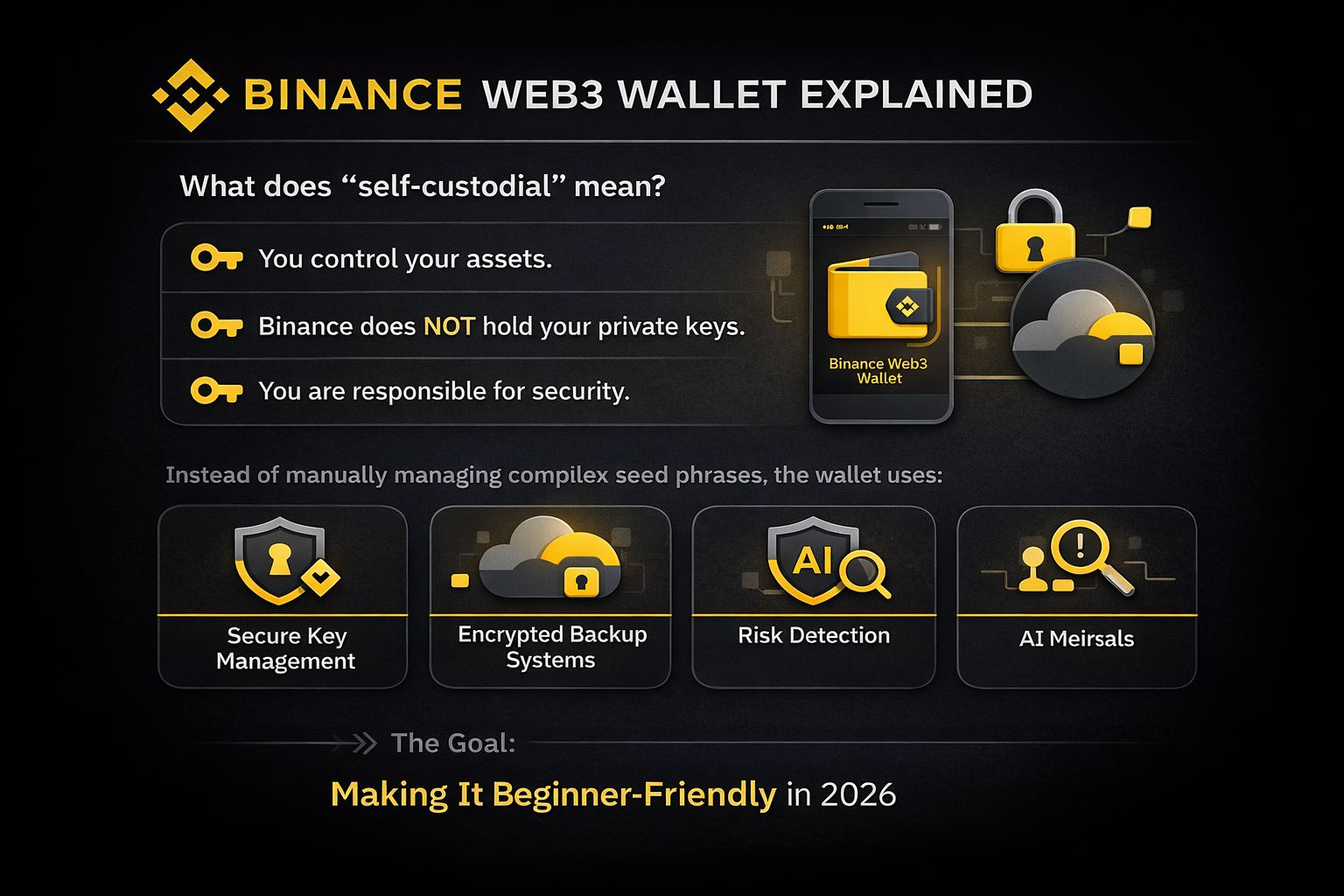
What does “self-custodial” mean?
It means:
You control your assets.
Binance does NOT hold your private keys.
You are responsible for security.
But here’s the difference in 2026 — Binance made it beginner-friendly.
Instead of manually managing complex seed phrases, the wallet uses:
Secure key management
Encrypted backup systems
Risk detection before signing transactions
This reduces common beginner mistakes.
How Binance Web3 Is Different from a Normal Exchange Account
Let’s compare.
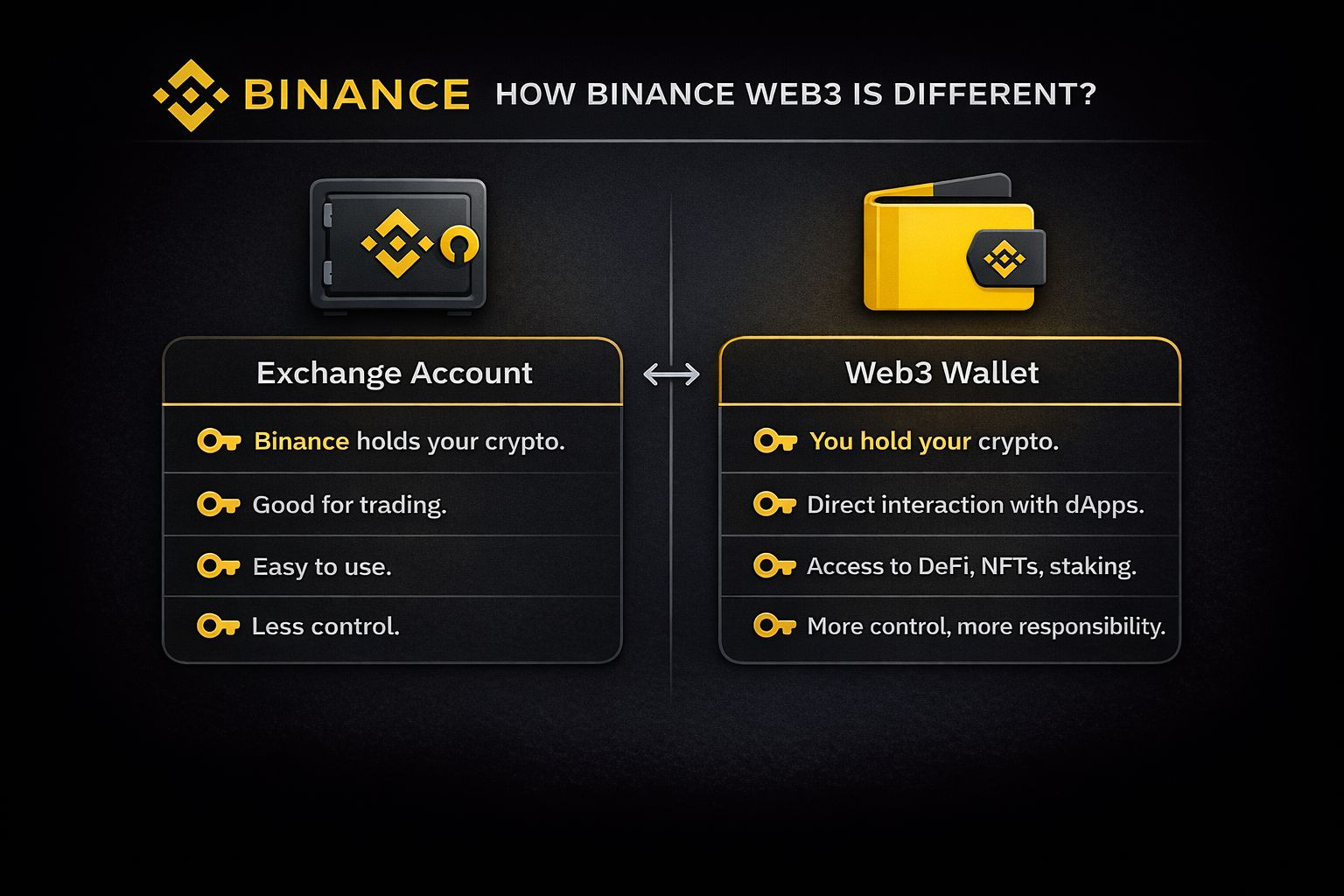
Exchange Account:
Binance holds your crypto.
Good for trading.
Easy to use.
Less control.
Web3 Wallet:
You hold your crypto.
Direct interaction with dApps.
Access to DeFi, NFTs, staking.
More control, more responsibility.
In short:
Exchange = convenience.
Web3 = ownership.
Most beginners now use both.
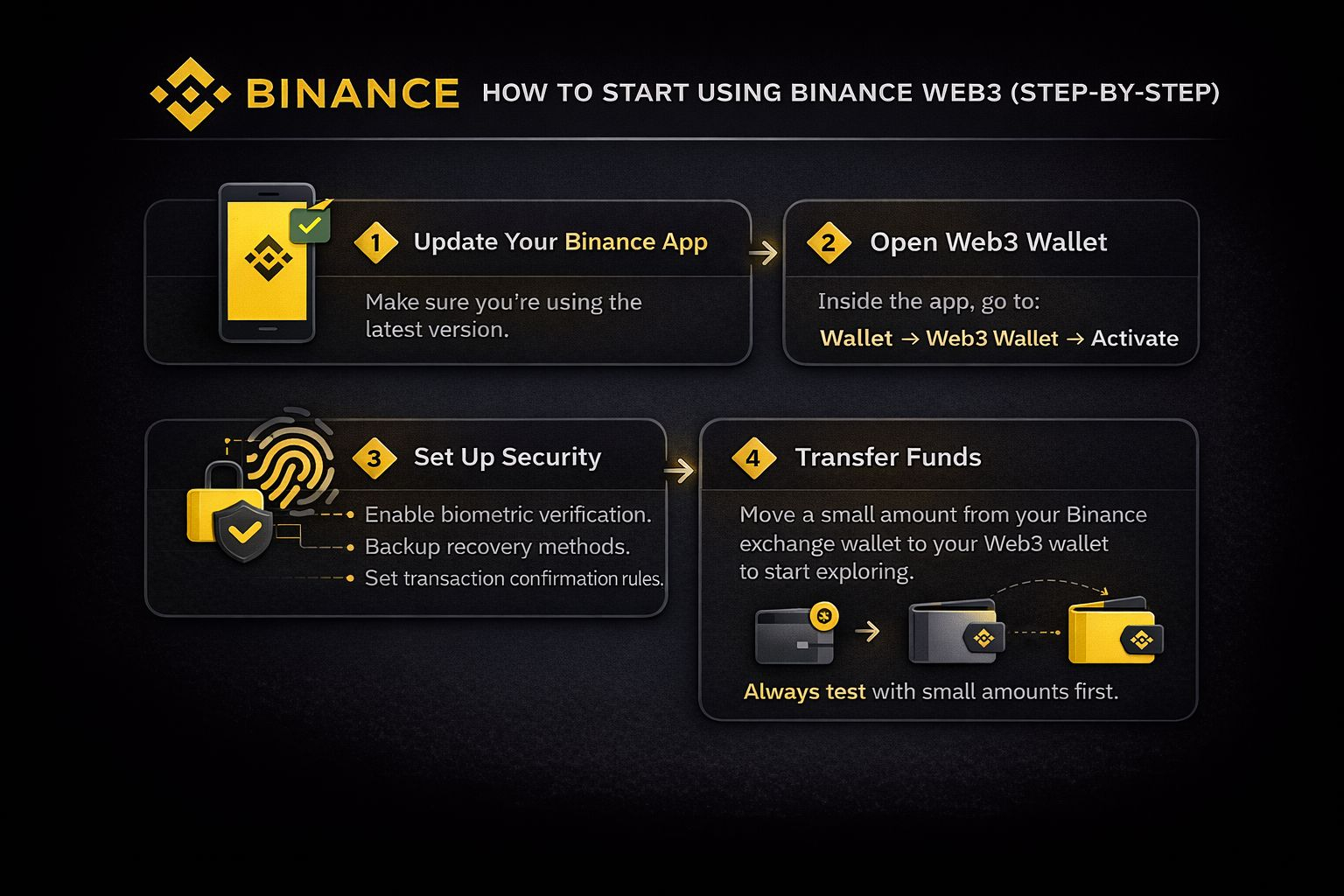
How to Start Using Binance Web3 (Step-by-Step)
Step 1: Update Your Binance App
Make sure you’re using the latest version.
Step 2: Open Web3 Wallet
Inside the app, go to: Wallet → Web3 Wallet → Activate
Step 3: Set Up Security
Enable biometric verification.
Backup recovery methods.
Set transaction confirmation rules.
Step 4: Transfer Funds
Move a small amount from your Binance exchange wallet to your Web3 wallet to start exploring.
Always test with small amounts first.
What Can You Do in Binance Web3?
Here’s where things get exciting.
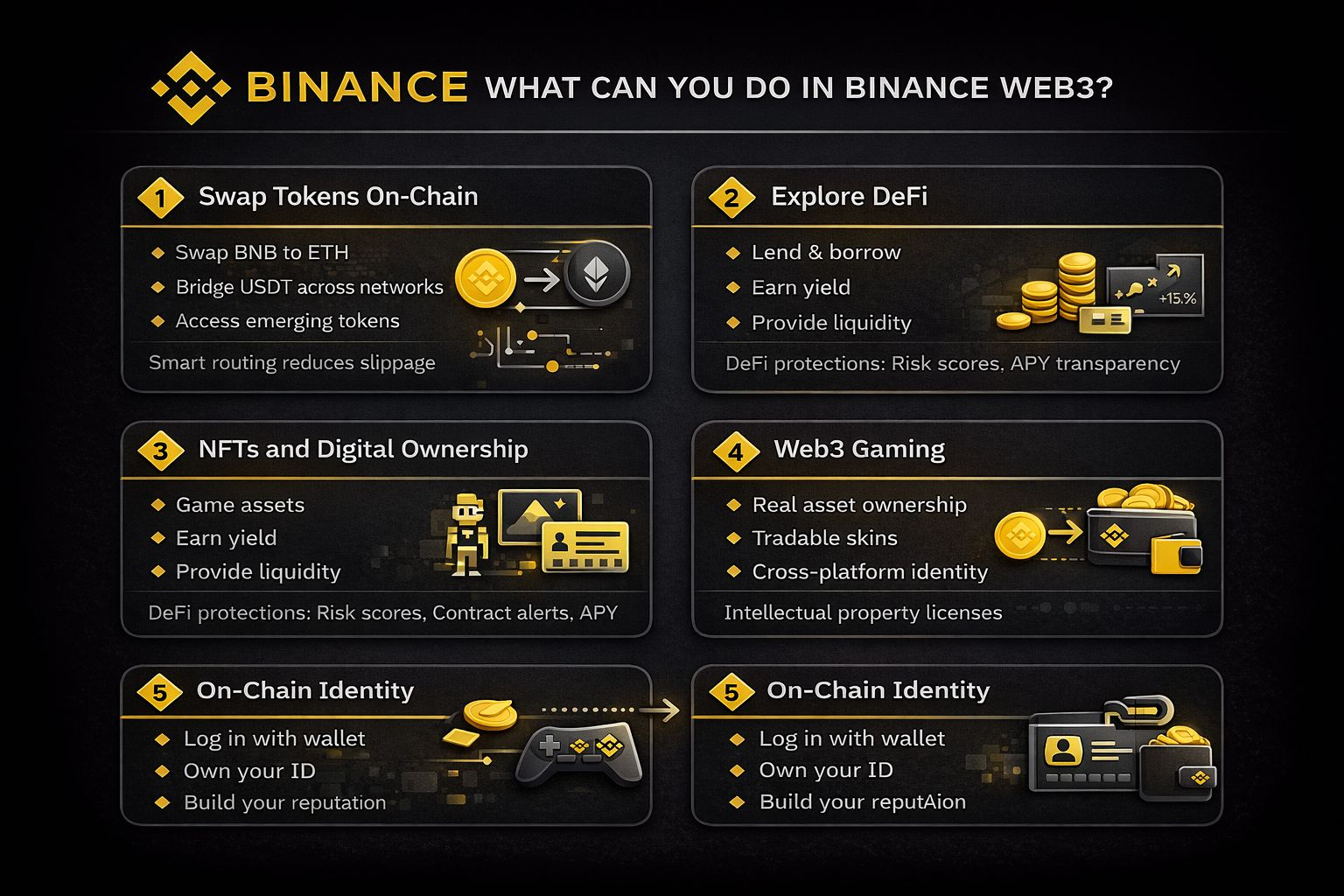
1. Swap Tokens On-Chain
You can swap tokens directly across different blockchains without leaving the app.
For example:
Swap BNB to ETH
Bridge USDT across networks
Access emerging tokens
Binance Web3 integrates smart routing to help reduce slippage and fees.
2. Explore DeFi
DeFi (Decentralized Finance) allows you to:
Lend crypto
Borrow crypto
Earn yield
Provide liquidity
Instead of banks, smart contracts manage everything.
In 2026, Binance Web3 simplifies DeFi access by:
Showing risk scores
Flagging suspicious contracts
Displaying APY transparency
This is important because DeFi can be risky if you don’t understand it.
3. NFTs and Digital Ownership
NFTs are no longer just profile pictures.
In 2026 they represent:
Game assets
Digital IDs
Membership passes
Event tickets
Intellectual property licenses
Binance Web3 allows:
Minting NFTs
Trading NFTs
Storing NFTs securely
And you can view them directly inside the wallet.
4. Web3 Gaming
Blockchain games are now more advanced. Instead of “play-to-earn hype,” many games focus on:
Real asset ownership
Tradable skins
Cross-platform identity
Tokenized rewards
With Binance Web3 Wallet, you can:
Connect to games instantly
Sign transactions safely
Track in-game assets
5. On-Chain Identity
Web3 identity is becoming important.
Instead of logging in with email, you log in with your wallet.
Your wallet becomes:
Your ID
Your reputation
Your asset hub
Binance Web3 in 2026 integrates decentralized identity protocols to make login easier and more secure.
Security in Binance Web3 (Very Important)
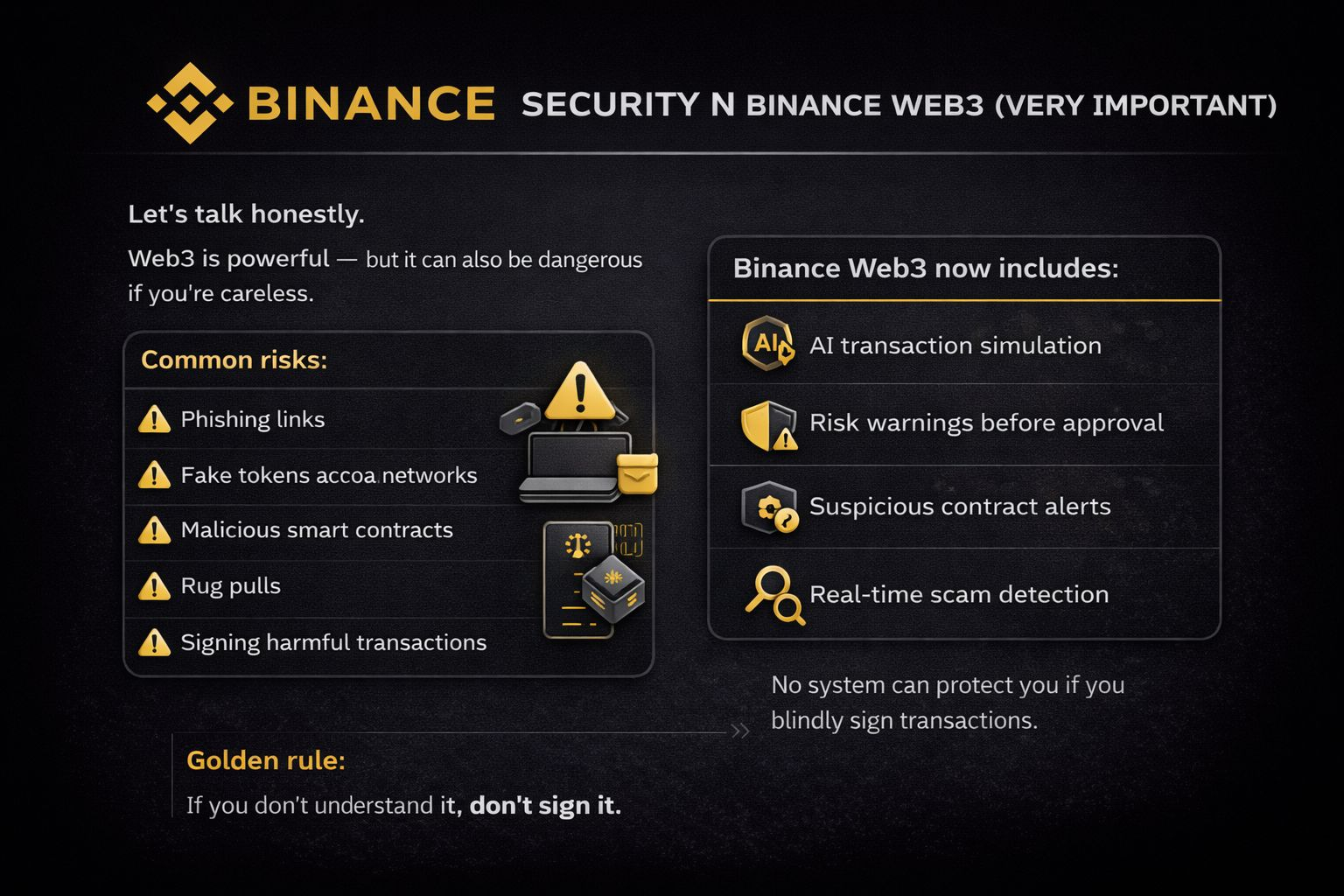
Let’s talk honestly.
Web3 is powerful — but it can also be dangerous if you’re careless.
Common risks:
Phishing links
Fake tokens
Malicious smart contracts
Rug pulls
Signing harmful transactions
Binance Web3 now includes:
AI transaction simulation
Risk warnings before approval
Suspicious contract alerts
Real-time scam detection
But remember:
No system can protect you if you blindly sign transactions.
Golden rule:
If you don’t understand it, don’t sign it.
Gas Fees Explained (Simple Version)
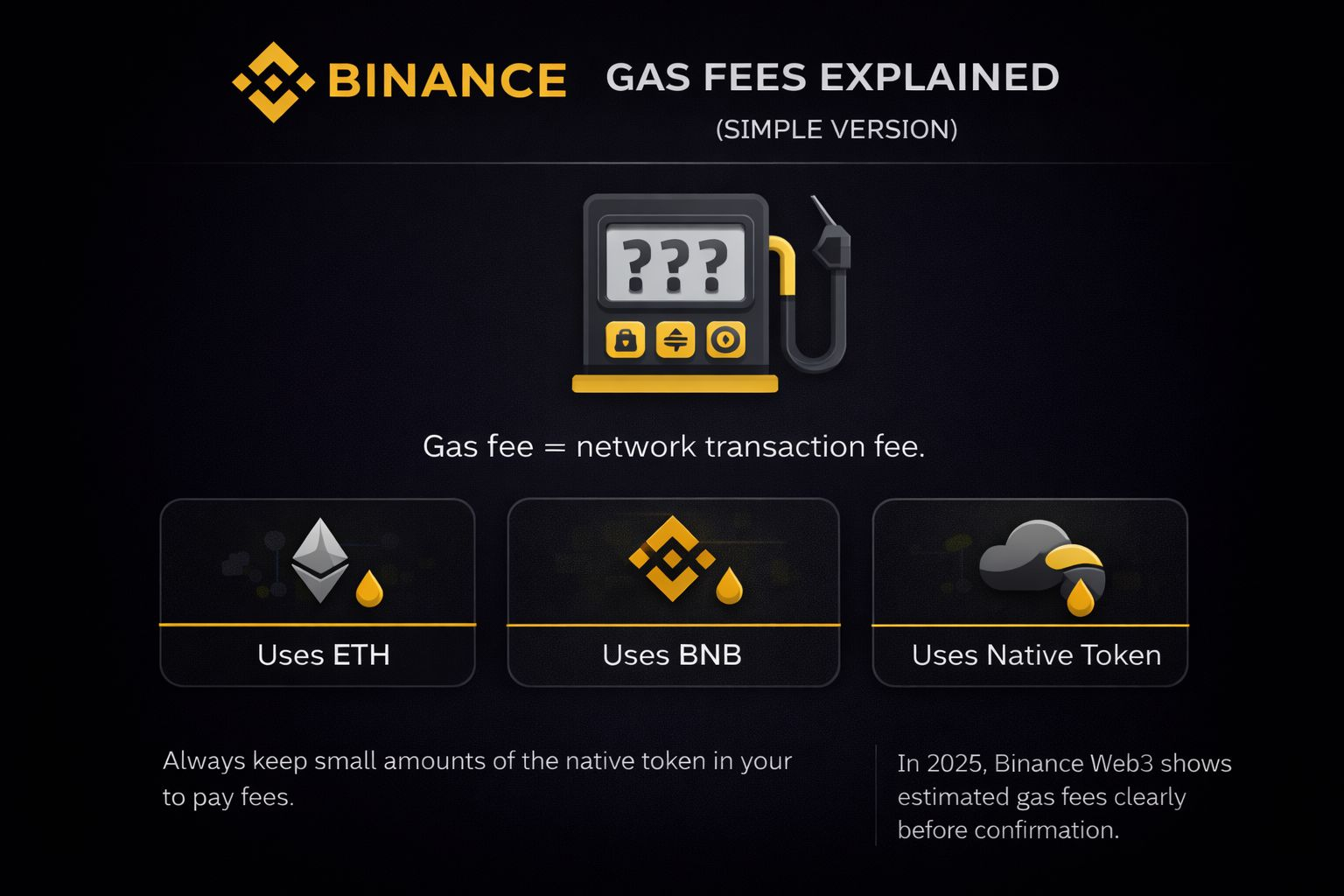
When you use Web3, you pay “gas fees.”
Gas fee = network transaction fee.
Each blockchain has its own gas token:
Ethereum uses ETH.
BNB Chain uses BNB.
Others use their native tokens.
Always keep small amounts of the native token in your wallet to pay fees.
In 2026, Binance Web3 shows estimated gas fees clearly before confirmation.
Multi-Chain Support
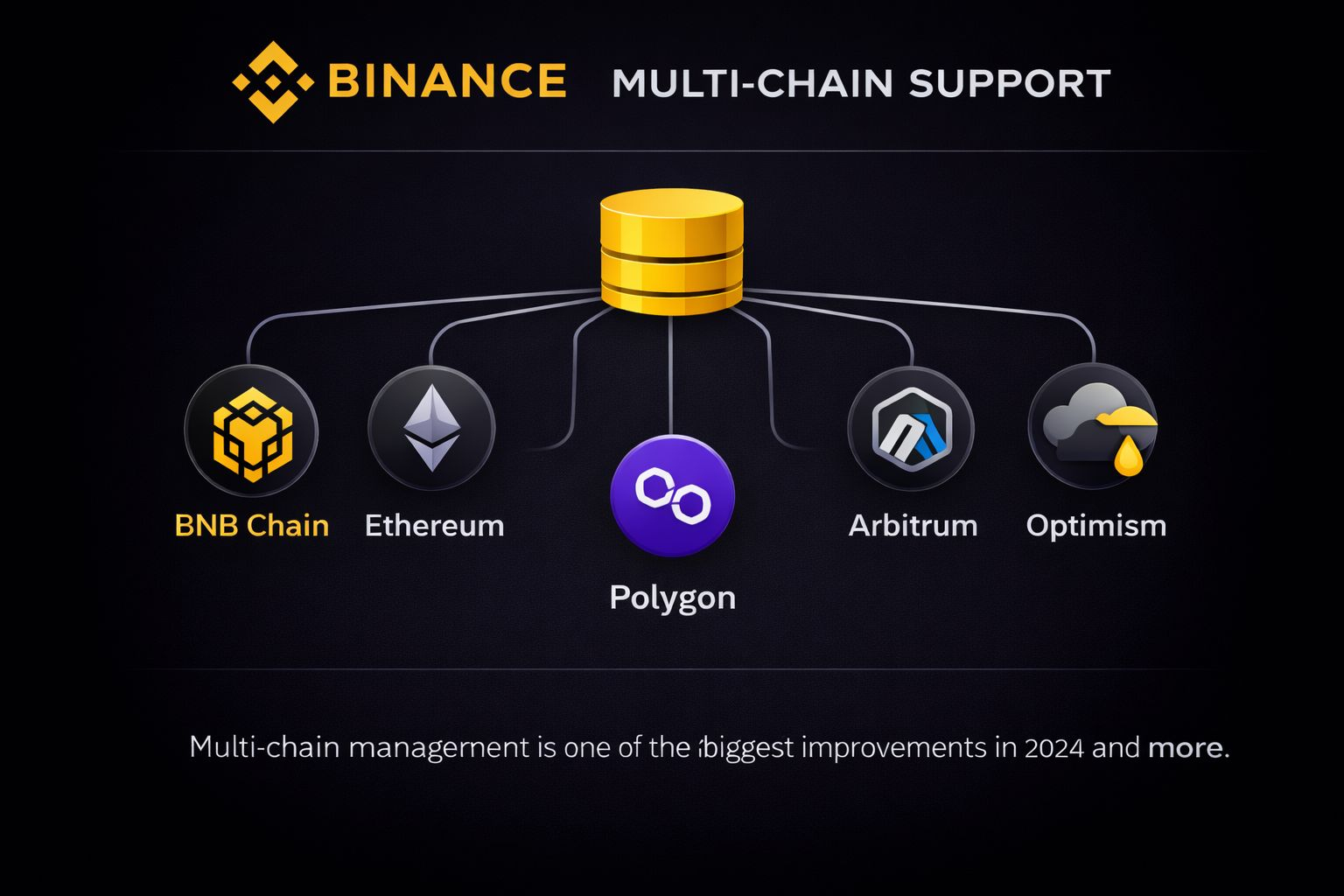
Binance Web3 supports multiple blockchains including:
BNB Chain
Ethereum
Polygon
Arbitrum
Optimism
And more
This means you can hold assets across chains in one interface.
Multi-chain management is one of the biggest improvements in 2026.
How Beginners Should Approach Web3
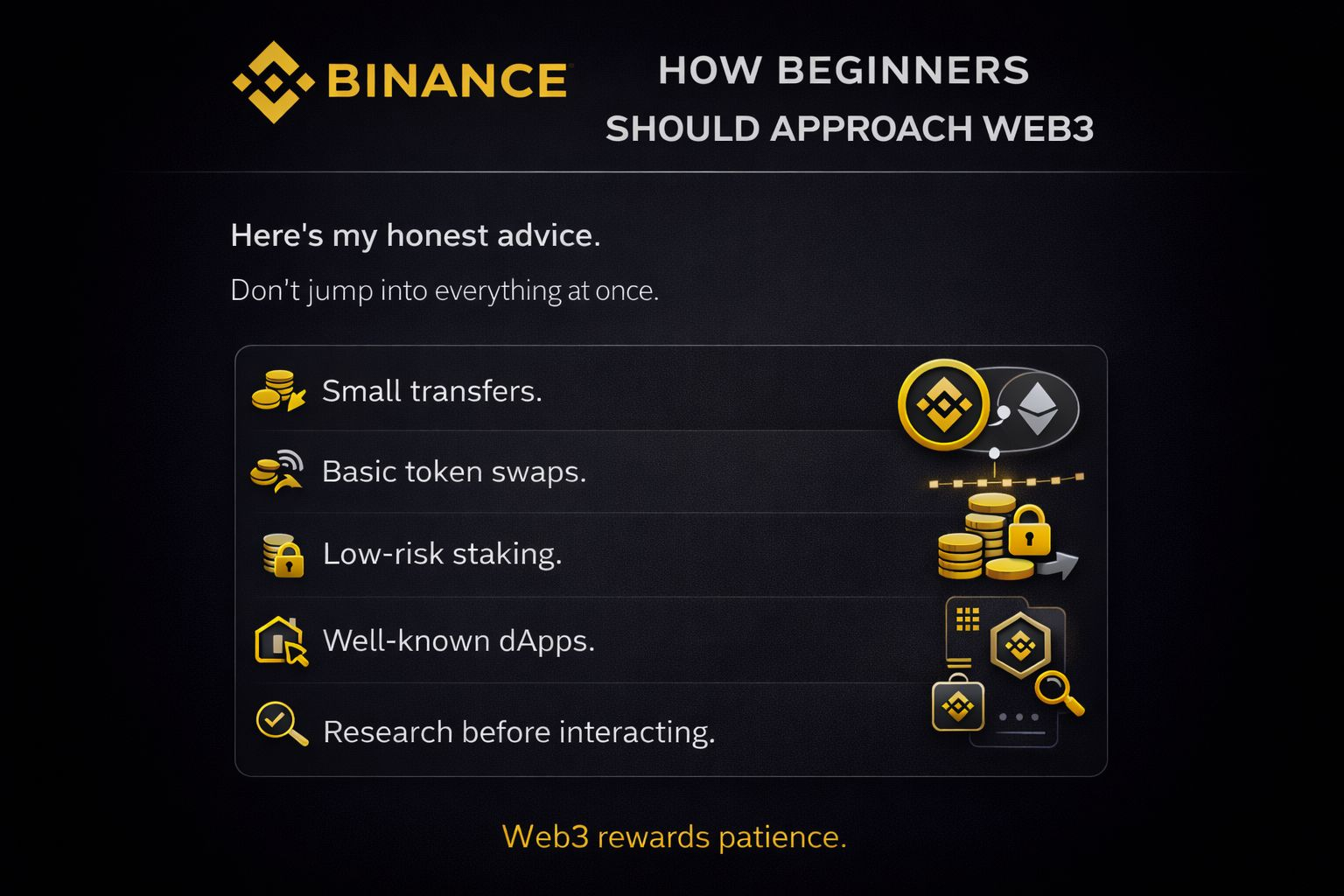
Here’s my honest advice.
Don’t jump into everything at once.
Start with:
Small transfers.
Basic token swaps.
Low-risk staking.
Well-known dApps.
Research before interacting.
Web3 rewards patience.
Common Mistakes Beginners Make
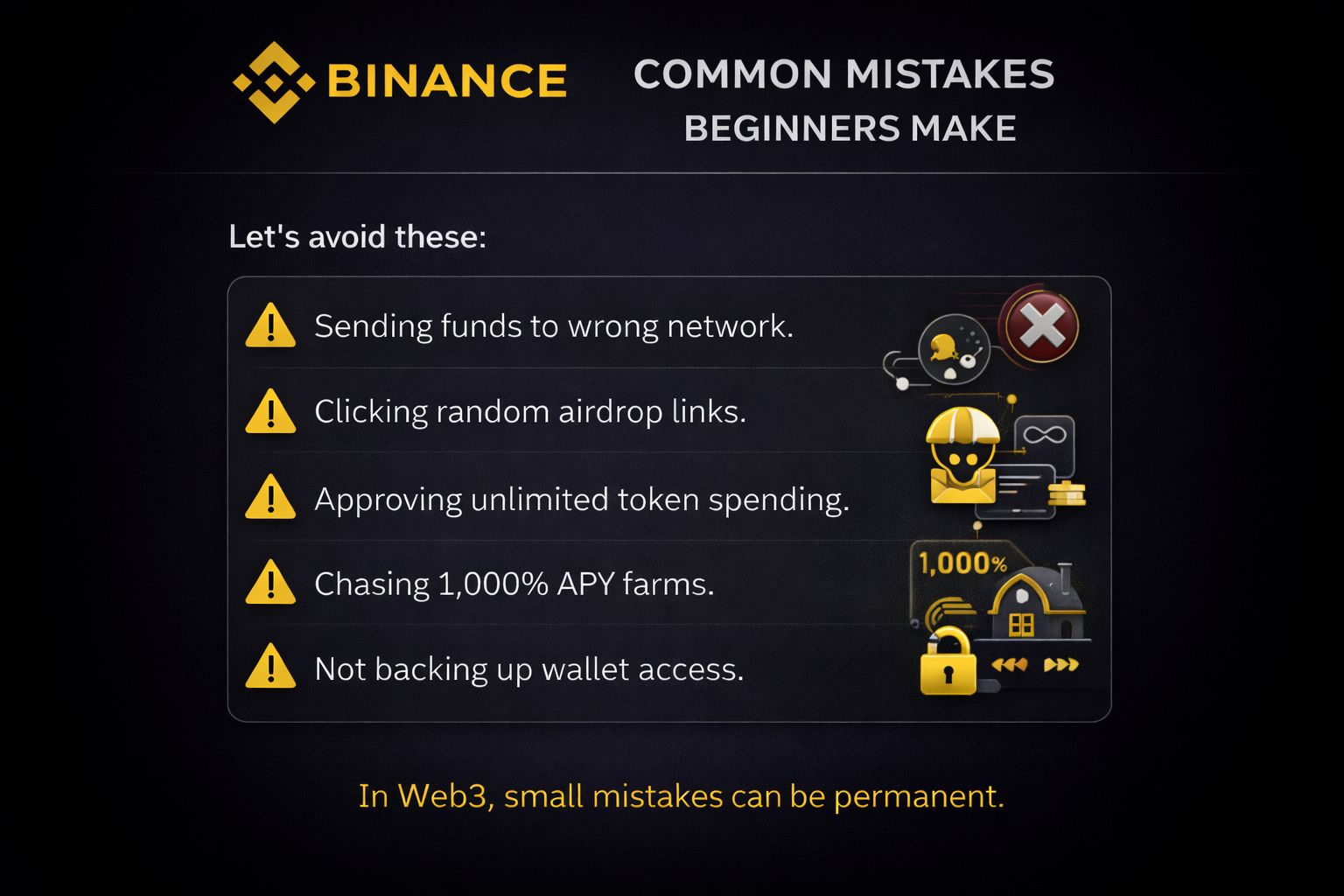
Let’s avoid these:
Sending funds to wrong network.
Clicking random airdrop links.
Approving unlimited token spending.
Chasing 1,000% APY farms.
Not backing up wallet access.
In Web3, small mistakes can be permanent.
Why Binance Web3 Matters in 2026
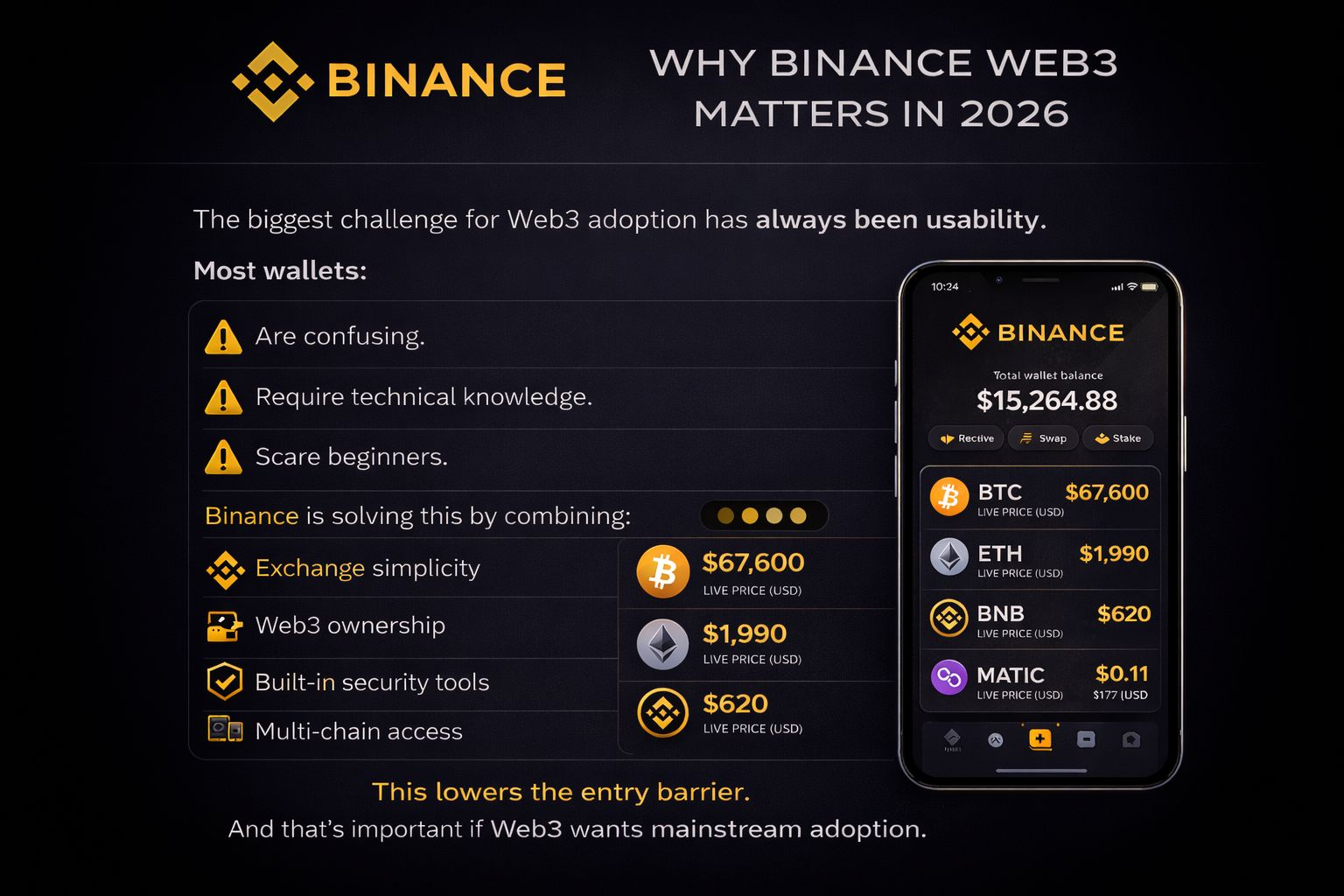
The biggest challenge for Web3 adoption has always been usability.
Most wallets:
Are confusing.
Require technical knowledge.
Scare beginners.
Binance is solving this by combining:
Exchange simplicity
Web3 ownership
Built-in security tools
Multi-chain access
Mobile-first experience
This lowers the entry barrier.
And that’s important if Web3 wants mainstream adoption.
The Future of Binance Web3
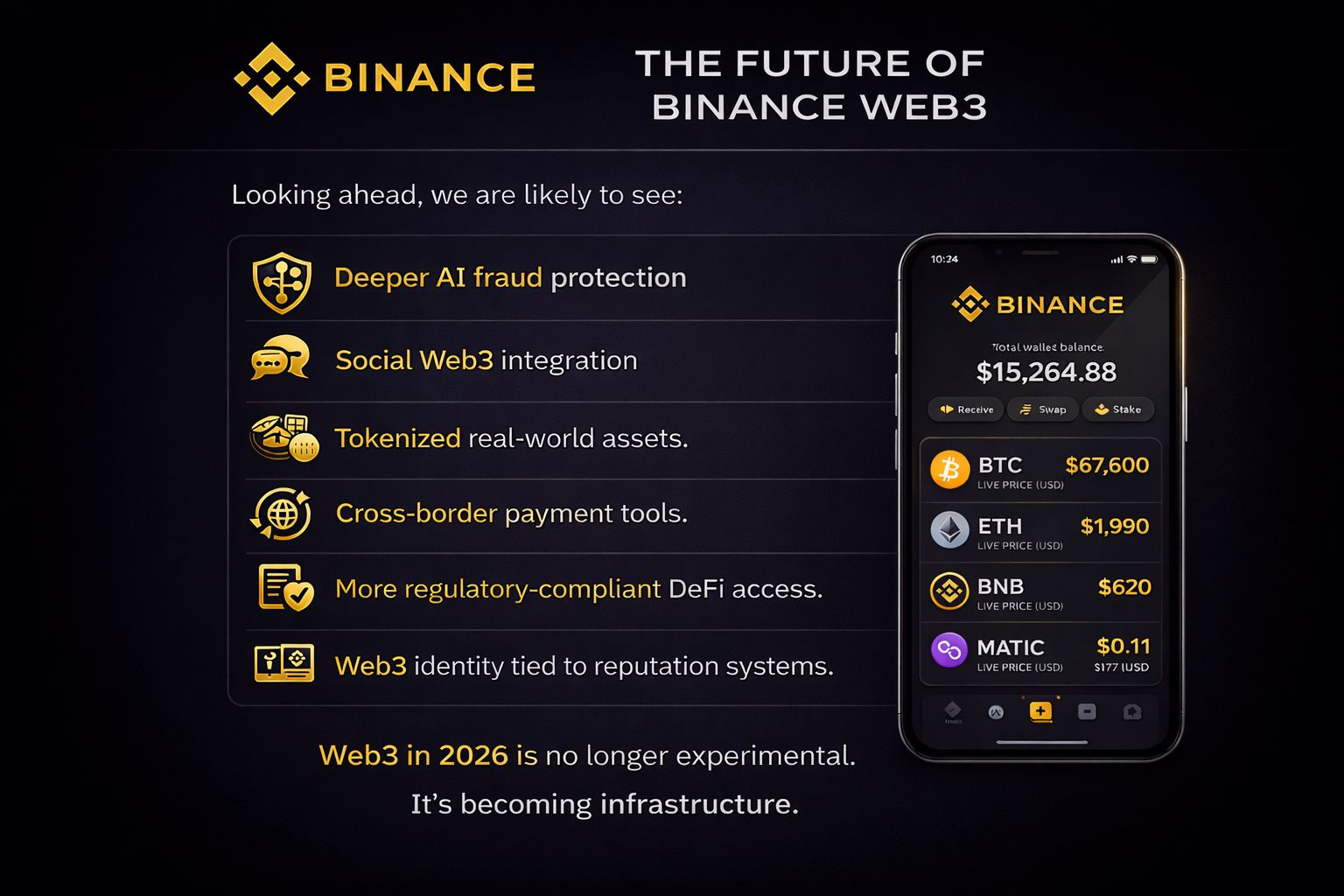
Looking ahead, we are likely to see:
Deeper AI fraud protection.
Social Web3 integration.
Tokenized real-world assets.
Cross-border payment tools.
More regulatory-compliant DeFi access.
Web3 identity tied to reputation systems.
Web3 in 2026 is no longer experimental.
It’s becoming infrastructure.
Final Thoughts: Should Beginners Use Binance Web3?
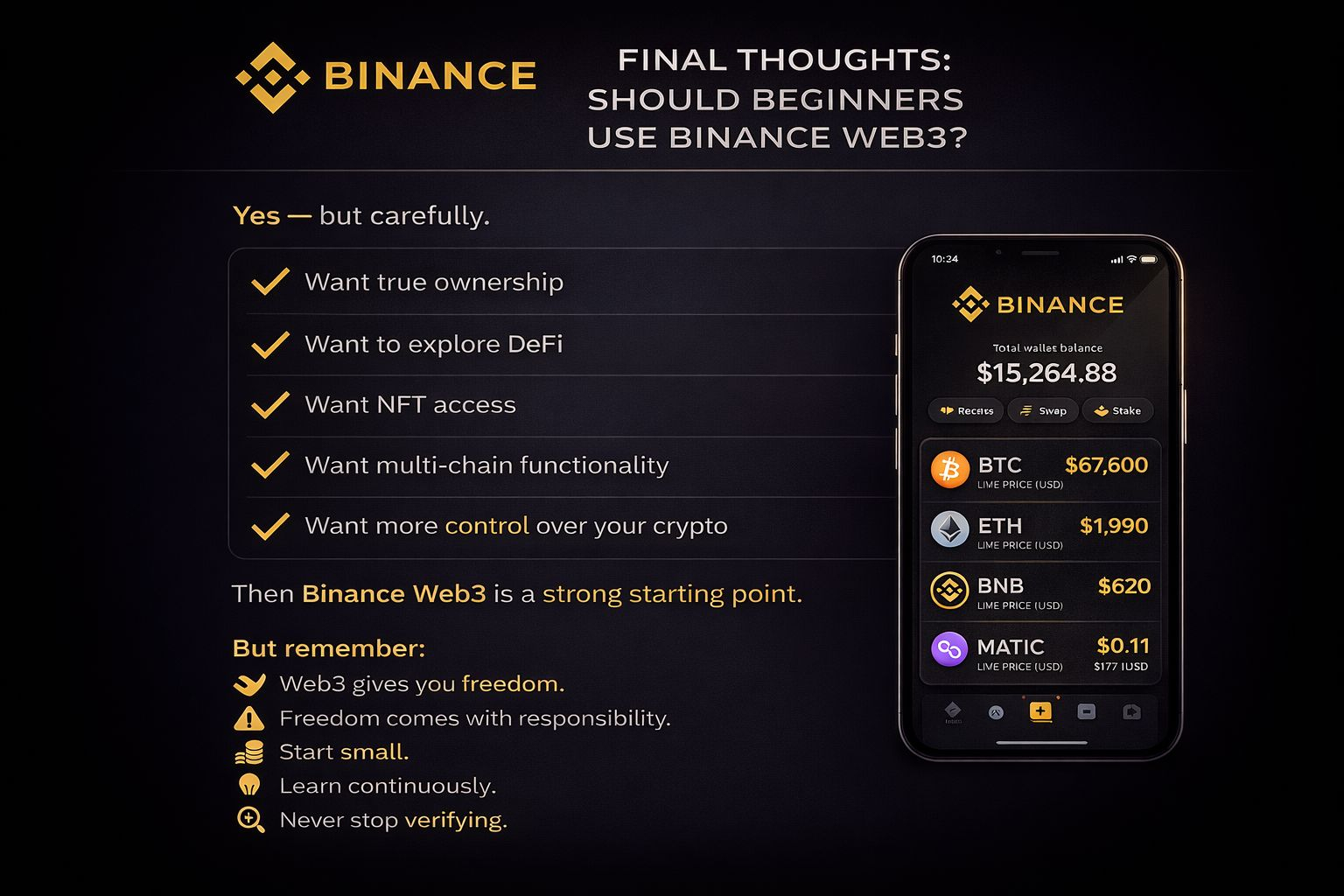
Yes — but carefully.
If you:
Want true ownership
Want to explore DeFi
Want NFT access
Want multi-chain functionality
Want more control over your crypto
Then Binance Web3 is a strong starting point.
But remember:
Web3 gives you freedom.
Freedom comes with responsibility.
Start small.
Learn continuously.
Never stop verifying.
If you approach it smartly, Binance Web3 in 2026 can open doors far beyond simple trading.
And that’s the real evolution of crypto.