
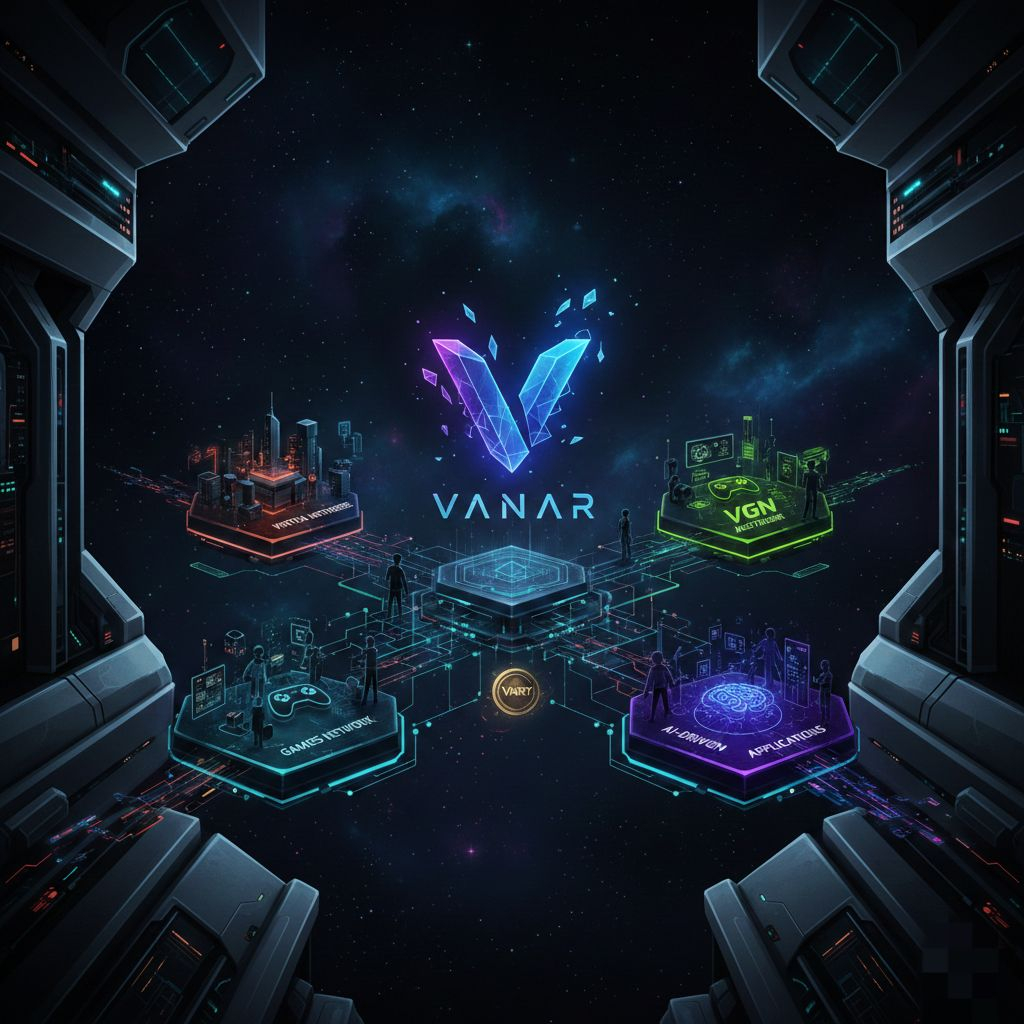
@Vanarchain The broader blockchain industry has struggled to move beyond early adopters into mainstream consumer usage. Most networks were designed primarily for financial applications, often overlooking the performance, usability, and integration requirements needed for entertainment, gaming, and digital consumer platforms. As a result, many blockchain applications remain isolated from the daily digital experiences of billions of users. Vanar was designed to address this gap by focusing on infrastructure that supports real-world digital products such as games, virtual worlds, brand experiences, and AI-driven applications.
The core problem Vanar attempts to solve is the lack of blockchain systems optimized for consumer-facing applications at scale. Traditional blockchains can suffer from slow transaction speeds, unpredictable fees, and complex onboarding processes. These limitations create friction for developers building interactive applications and for users who expect instant, seamless digital experiences similar to existing web and mobile platforms. Vanar approaches this challenge by designing its blockchain specifically for applications where performance, reliability, and user experience are essential.
At a high level, Vanar is a Layer 1 blockchain, meaning it operates as an independent base network with its own consensus mechanism, validator system, and native token called VANRY. The network processes transactions, secures data, and supports decentralized applications without relying on another blockchain for core security. Vanar serves as the foundational infrastructure layer that applications can use to store assets, execute logic, and coordinate digital ownership.
Vanar’s system architecture is designed to support high-throughput environments such as gaming and metaverse platforms. These applications require fast confirmation times and the ability to process large numbers of user actions without delays. The blockchain functions as a distributed ledger that records transactions, ownership, and interactions between users and applications. Validators maintain the network by verifying transactions and ensuring consensus, while the VANRY token is used for transaction fees, network participation, and ecosystem utility.
One of the important aspects of Vanar’s design is its integration with consumer-focused platforms such as Virtua Metaverse and the VGN games network. These platforms represent practical implementations of blockchain infrastructure within entertainment environments. In these systems, blockchain operates in the background, enabling asset ownership, identity persistence, and cross-platform interoperability. Users can own digital items, maintain consistent identities, and transfer assets across different applications without relying on centralized databases.
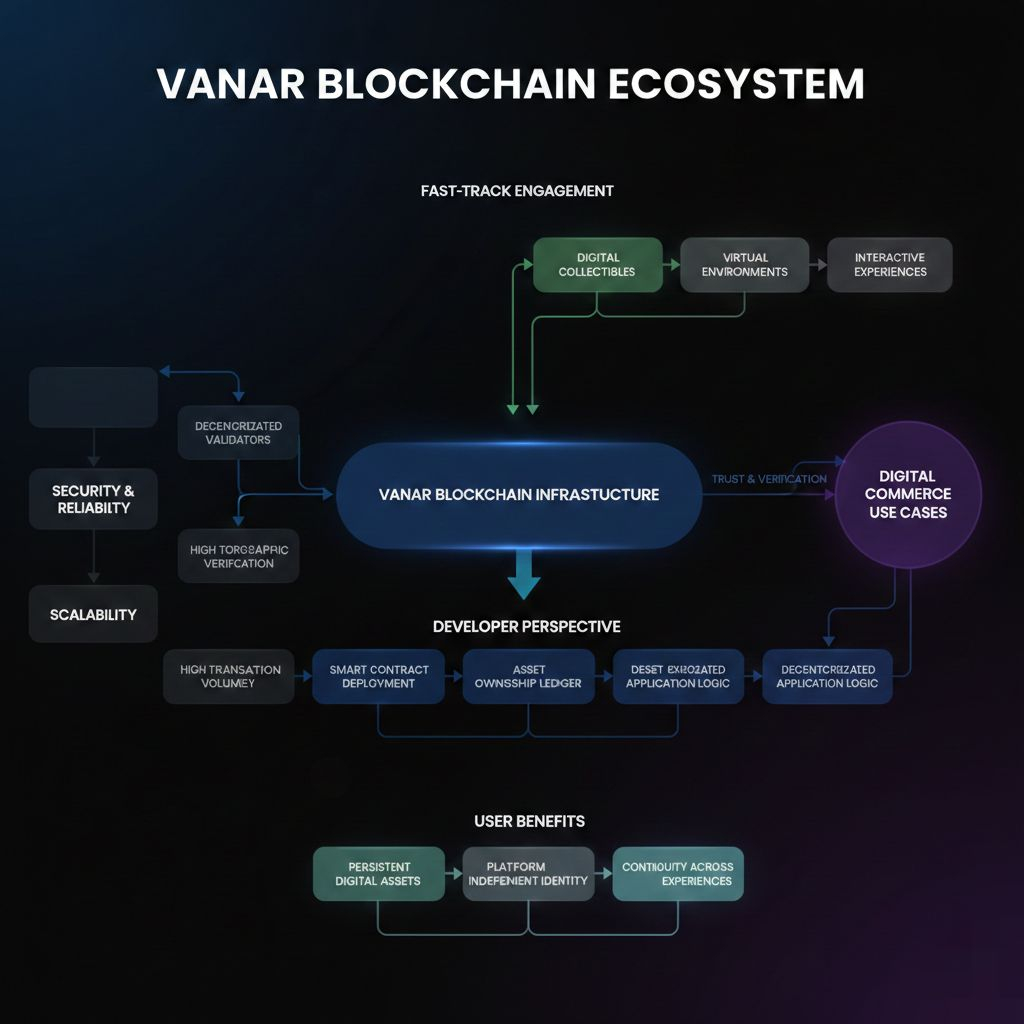
Vanar also extends its infrastructure to support brand engagement and digital commerce use cases. Companies can create digital collectibles, virtual environments, and interactive experiences that connect directly with consumers. Blockchain ensures that digital assets are verifiable, transferable, and independent of any single platform operator. This reduces reliance on centralized systems and gives users greater control over their digital property.
From a developer perspective, Vanar provides a foundation for building applications that require persistent digital ownership and decentralized coordination. Developers can deploy applications that interact with the blockchain to store asset ownership, execute smart contract logic, and manage user interactions. The blockchain handles trust and verification, allowing developers to focus on application logic rather than infrastructure security. This separation simplifies development and improves reliability.
For users, Vanar’s infrastructure is often invisible but provides important benefits. Digital items stored on the blockchain can persist independently of the application that created them. This reduces the risk of losing access to digital assets due to platform shutdowns or account restrictions. Blockchain-based identity and ownership systems also allow users to maintain continuity across different platforms and experiences.
Security and reliability are fundamental aspects of any Layer 1 blockchain, and Vanar’s decentralized validator model contributes to network resilience. Transactions are verified by multiple independent participants, reducing the risk of manipulation or single points of failure. This distributed validation process increases trust in the system without requiring centralized oversight. The use of cryptographic verification ensures that transaction data cannot be altered once confirmed.
Scalability is particularly important for consumer applications, where millions of users may interact with the network simultaneously. Vanar’s infrastructure is designed to support high transaction volumes while maintaining low latency. This allows applications such as games and virtual environments to operate smoothly without interruptions. Efficient transaction processing also helps keep operational costs manageable for developers and users.
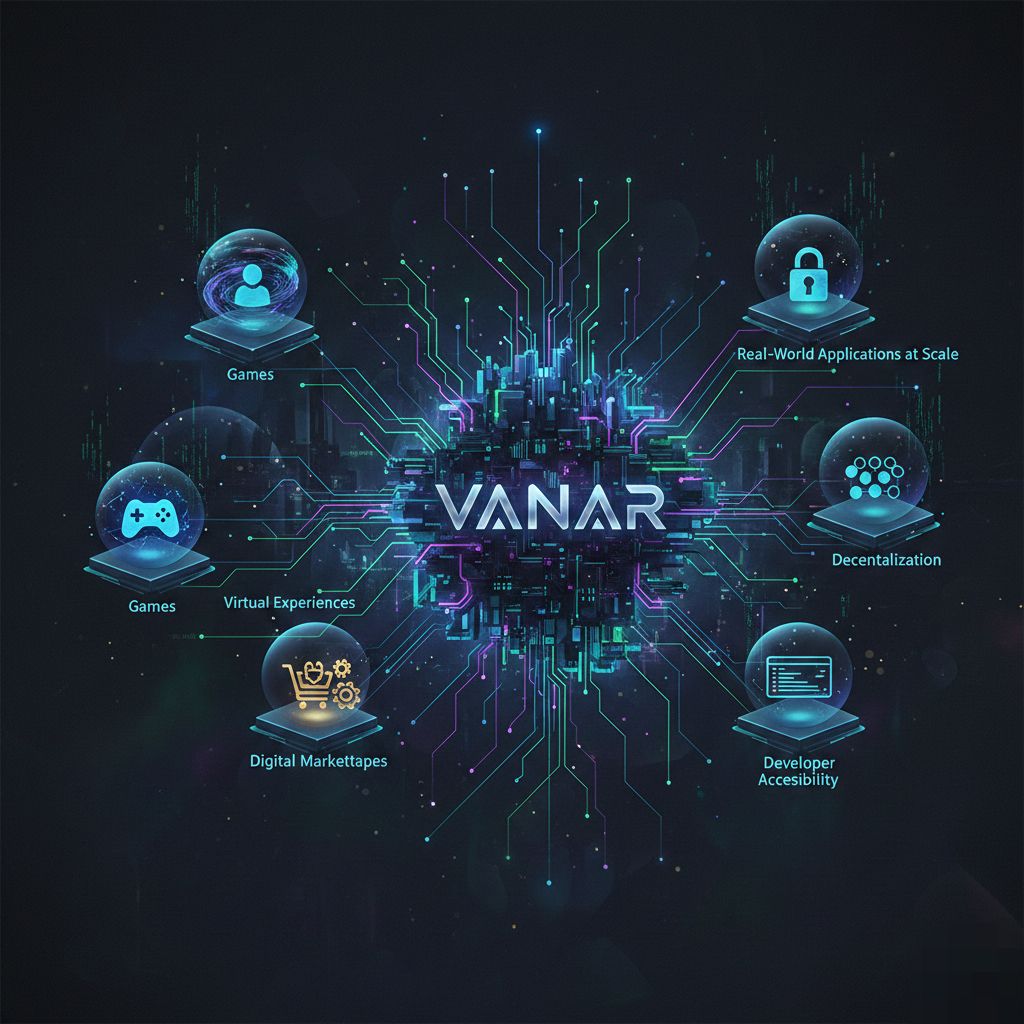
Compatibility and integration are also important factors in adoption. Vanar’s infrastructure is designed to support interoperability between different applications and digital environments. This allows assets and identities to move across platforms, creating more flexible digital ecosystems. Developers can integrate blockchain functionality into existing applications without requiring users to understand the underlying technical complexity.
Cost efficiency is another key consideration. High transaction fees have limited the adoption of blockchain in consumer applications. Vanar addresses this by focusing on efficient transaction processing and predictable cost structures. This makes it practical for applications that involve frequent user interactions, such as games, virtual experiences, and digital marketplaces.
Vanar’s long term relevance depends on its ability to support real world applications at scale and compete with other Layer 1 networks focused on performance and developer accessibility. The blockchain infrastructure space is highly competitive, with multiple networks offering similar performance and functionality goals. Vanar’s differentiation lies in its focus on entertainment, gaming, and brand-driven ecosystems, which represent large and growing digital markets.
However, challenges remain. Network adoption depends on attracting developers, users, and ecosystem partners. Technical performance alone does not guarantee success, as developer tools, user experience, and ecosystem growth play equally important roles. The network must also maintain security and decentralization while scaling to support increasing demand.
Vanar represents an infrastructure approach centered on enabling blockchain to function as a foundational layer for digital consumer applications rather than focusing solely on financial transactions. By integrating blockchain into entertainment platforms, virtual environments, and brand experiences, Vanar attempts to position itself as part of the broader shift toward persistent digital ownership and decentralized digital infrastructure. Its long term impact will depend on its ability to deliver reliable infrastructure that remains efficient, secure, and useful as consumer facing blockchain applications continue to evolve.
