



When I first started digging into Vanar, I expected another “AI-powered blockchain” narrative. We’ve seen that phrase everywhere lately. Most of the time it means an integration, a wrapper, or a chatbot sitting on top of a traditional L1.
The more time I spent reviewing Vanar’s stack, the more I realized the framing is different.
Vanar is an L1 designed from the ground up for real-world adoption — gaming, entertainment, brands — but what stood out to me is that it treats AI systems as primary economic participants, not just tools layered on top. That assumption changes infrastructure design at a fundamental level.
Instead of asking how fast transactions can execute, Vanar’s architecture seems to ask a different question: what does an AI agent actually need to operate persistently and economically?
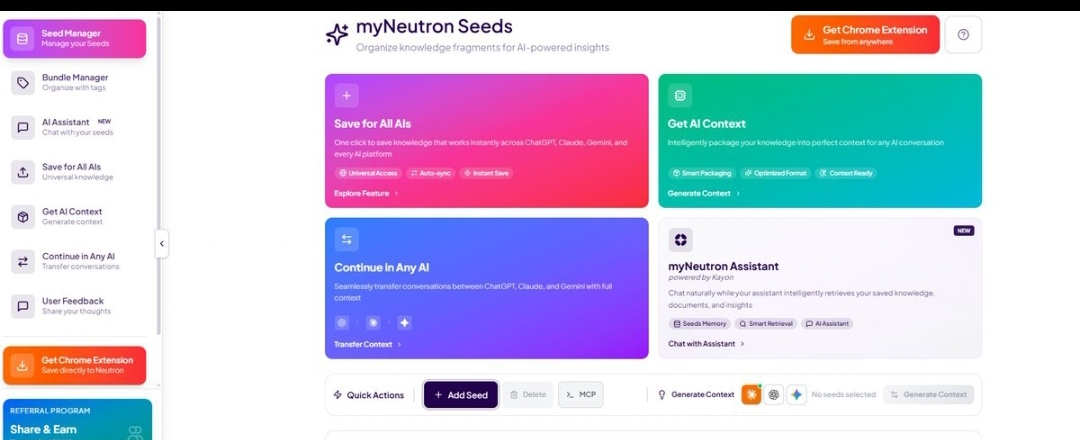
That’s where products like myNeutron caught my attention. Semantic memory at infrastructure level isn’t just storage — it’s structured, contextual persistence. One of the biggest weaknesses of current AI systems is session-based amnesia. If agents forget everything after each interaction, they can’t compound usefulness over time. Embedding memory into the stack signals long-term thinking.
Kayon, positioned as a reasoning layer, pushes that idea further. Rather than treating intelligence as a black-box API call, the design leans toward making interpretation and explainability visible components of the system. Whether that vision fully materializes remains to be seen, but architecturally it makes more sense than retrofitting intelligence later.
Then there’s Flows — automation tied to rules and execution. Intelligence without action is commentary. Intelligence connected to controlled automation becomes infrastructure.
As I looked at the broader ecosystem, what reinforced the thesis for me was Vanar’s experience across consumer-facing verticals. Products like Virtua Metaverse and the VGN games network indicate exposure to environments where user experience matters more than protocol theory. If the stated goal is onboarding the next wave of users, blockchain has to disappear behind usable applications.
Another detail I paid attention to is cross-chain expansion, including availability on Base. AI-native infrastructure can’t live in isolation. If agents are meant to transact, automate, and operate across ecosystems, confinement limits growth. Extending reach expands potential usage surface for VANRY without forcing users into a single-chain silo.
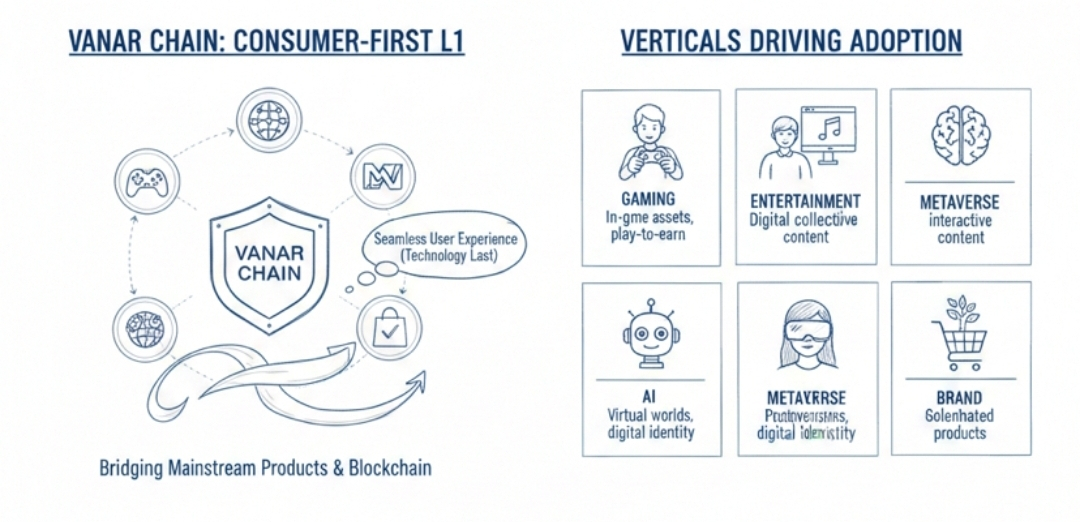
After studying enough new L1 launches, I’ve become skeptical of chains that compete purely on throughput numbers. AI systems don’t primarily need record-breaking TPS. They need persistent context, automation rails, and programmable settlement. VANRY underpins that economic layer within Vanar’s design.
Vanar doesn’t feel like it’s chasing headlines. It feels like it’s positioning around readiness — readiness for agents, readiness for consumer applications, readiness for systems that transact autonomously.
That doesn’t guarantee success. Infrastructure bets rarely do.
But from what I’ve seen after reviewing the stack carefully, Vanar is building as if AI isn’t a feature to advertise — it’s the environment to prepare for.