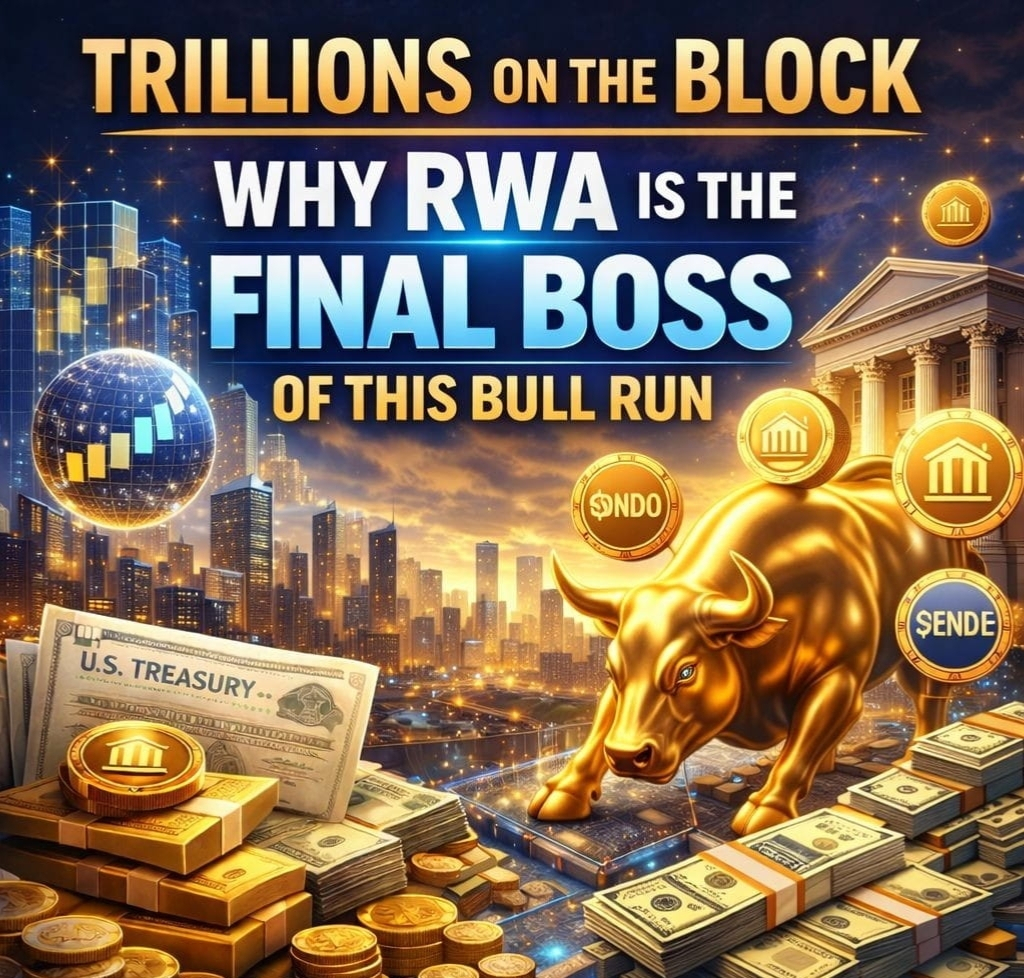
Memecoins generate excitement.
Real World Assets (RWA) generate liquidity.
For years, tokenization was framed as a future possibility. Now it’s starting to materialize. When the world’s largest asset manager, BlackRock, launches a tokenized Treasury fund and major banks begin experimenting with on-chain settlement, the discussion shifts from “What if?” to “How quickly?”
We’re seeing the long-anticipated bridge between traditional finance and crypto finally take shape.
Why RWA Is Emerging as a Dominant Narrative
1️⃣ Real Yield Comes On-Chain
Crypto investors can now access returns backed by tangible assets like U.S. Treasuries, private credit, and real estate. Unlike hype-driven token rewards, this yield is rooted in traditional financial instruments — simply delivered through blockchain infrastructure.
2️⃣ A Major Efficiency Leap
Traditional markets typically operate on a T+2 settlement cycle, meaning trades can take two days to finalize.
Tokenized assets, by contrast, can settle around the clock, across borders, in minutes — reducing costs, friction, and capital lockup.
3️⃣ Institutional Capital Entry Point
Large institutions are unlikely to speculate on memecoins or short-term hype.
However, tokenized bonds, funds, and real estate align with their mandates. RWA provides a scalable pathway for traditional capital to enter crypto markets.
That’s why many see RWA not as a passing trend, but as a structural shift.
We’re already seeing early participants such as Ondo (ONDO) and Pendle (PENDLE) gaining attention.
Zooming out, the opportunity is much larger:
Stocks. Bonds. Real estate. Commodities. Private equity.
Virtually every traditional asset class could eventually be tokenized.
This isn’t about billions — it’s about trillions potentially moving on-chain.
Outlook:
The leading RWA protocols of this cycle could evolve into the blue-chip crypto platforms of the next decade.
Which RWA project are you watching most closely?