

In the early days of blockchain, the dream was simple yet powerful: a decentralized digital world where people owned their assets, controlled their identities, and interacted freely without gatekeepers. Years later, the technology has advanced dramatically, yet for most people outside the crypto bubble, Web3 still feels distant, complex, and sometimes unnecessary. This gap between innovation and everyday usability is exactly where Vanar Chain is trying to make its mark.
Vanar is built on a belief that blockchain adoption will not be driven by traders or developers alone, but by ordinary people using technology in ways that feel natural. Instead of asking users to learn wallets, gas fees, and cryptographic security, the project focuses on embedding blockchain quietly beneath experiences people already enjoy such as gaming, digital ownership, entertainment platforms, and brand ecosystems. The vision is not just to build another Layer 1 network competing for speed or technical benchmarks, but to build a digital foundation that fits into real consumer behavior.
One of the key challenges Vanar tries to address is that most blockchain ecosystems still revolve around finance. Tokens, swaps, staking, and trading dominate the conversation, yet these activities represent only a fraction of what the internet is used for today. The average person spends more time playing games, consuming content, interacting with brands, or participating in communities than they do trading financial assets. Vanar’s philosophy is that if blockchain is going to matter globally, it must become part of those everyday digital moments rather than remain a niche financial tool.
This perspective shapes the way the network is designed. The architecture aims to support applications where users interact constantly rather than occasionally, meaning performance, responsiveness, and reliability become crucial. Gaming environments, digital worlds, and branded experiences cannot tolerate slow confirmations or unpredictable fees, so the infrastructure is built with scalability and stability in mind. At the same time, the design tries to keep the technology invisible, allowing users to benefit from ownership and decentralization without needing to understand the mechanics behind it.
Security and efficiency are approached from a practical standpoint. The network aims to balance decentralization with performance so that applications built on top of it can scale to large audiences without sacrificing trust. Instead of focusing only on theoretical throughput numbers, the emphasis is on ensuring that real platforms can operate smoothly under real demand. This kind of thinking reflects a shift from blockchain as an experiment toward blockchain as infrastructure.
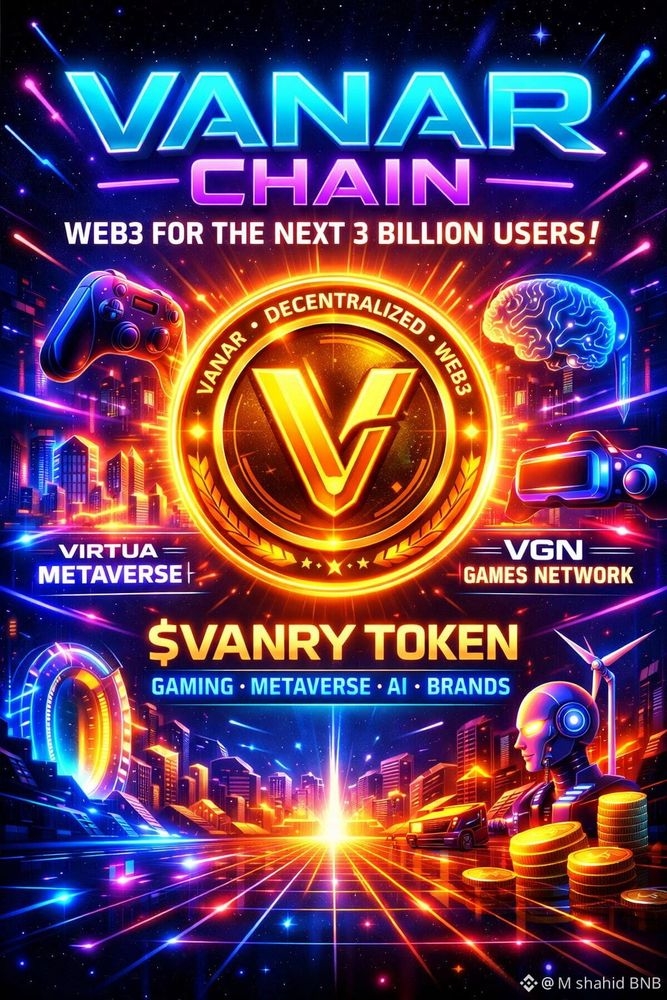
What truly distinguishes Vanar, however, is that it is not just a protocol but an ecosystem already tied to consumer-facing platforms. One of the most visible components is Virtua, a metaverse environment designed to host digital spaces, collectibles, and interactive experiences. While the term “metaverse” has been used loosely across the industry, platforms like Virtua attempt to demonstrate what persistent digital ownership and identity might look like when integrated into entertainment and social interaction.
Another important part of the ecosystem is the VGN gaming network, which focuses on enabling blockchain-powered game economies. In this model, players are not just participants but stakeholders who can own in-game assets, trade items across platforms, and engage in digital economies that extend beyond a single title. Gaming is widely considered one of the strongest entry points for Web3 adoption because players already understand digital value and virtual ownership, making this direction particularly strategic.
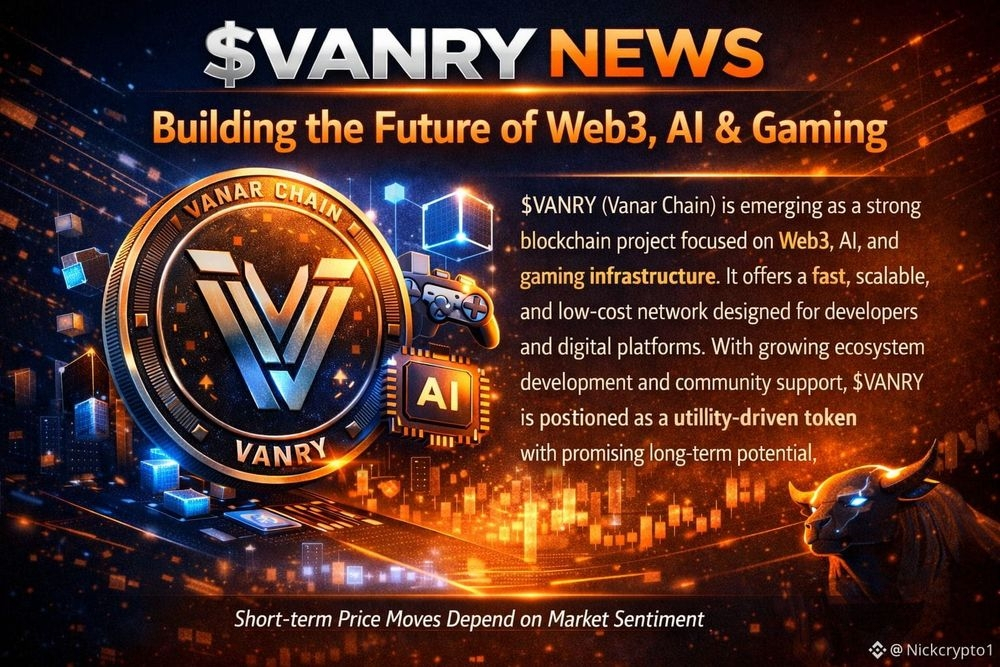
Beyond gaming and virtual worlds, Vanar explores how blockchain can integrate with brands, AI-driven experiences, and sustainability initiatives. This broader approach suggests that the network is not betting on a single industry to drive adoption but is instead positioning itself across multiple digital sectors. The more industries that connect to the infrastructure, the more resilient the ecosystem becomes.
At the center of this system sits the VANRY token, which acts as the operational fuel for the network. It supports transactions, staking, governance participation, and economic activity across applications. Ideally, the token’s value comes not just from speculation but from real usage across platforms, whether through digital purchases, game economies, or ecosystem incentives. This approach attempts to tie token demand directly to user engagement, something many blockchain projects struggle to achieve.
Partnerships and industry relationships will likely play a decisive role in Vanar’s trajectory. The team’s background in entertainment, gaming, and brand collaboration gives it an entry point into markets that many blockchain projects find difficult to access. If brands, studios, and consumer platforms begin integrating blockchain features through Vanar’s infrastructure, the network could grow organically alongside the industries it serves rather than relying solely on crypto-native growth.
Of course, the road ahead is not without challenges. The Layer 1 space is extremely competitive, with many networks offering high performance, developer tools, and established liquidity. Adoption also depends heavily on whether the ecosystem platforms themselves succeed in attracting real users. If gaming adoption slows or consumer interest in digital ownership fluctuates, growth could become uneven. Additionally, regulatory environments continue to evolve, especially for networks that interact with mainstream industries.
Despite these uncertainties, Vanar’s long-term potential lies in its alignment with how the internet is actually used. The next wave of blockchain adoption may not come from financial markets but from entertainment, identity, and digital culture. If that shift occurs, networks designed around consumer experience rather than purely technical metrics could become the ones that matter most.
In that sense, Vanar represents more than a blockchain project. It reflects a broader transition in how the industry thinks about adoption. Instead of asking people to come to blockchain, it tries to bring blockchain to where people already are. If successful, this approach could help transform Web3 from a specialized technology into a natural part of everyday digital life, quietly supporting the experiences people care about while reshaping the idea of ownership and participation online.