

The more I explore this, the clearer it becomes that this isn’t just a discussion about MEV in general.
It’s about how @Fogo Official is deliberately positioning itself in contrast to what we’ve already seen play out on Solana.
Let me walk through this properly.
On Solana, transactions were designed to go directly to the current leader. No public mempool in the traditional Ethereum sense. That design aimed to reduce visibility and, in theory, reduce front-running.
But in practice, infrastructure evolved.
An alternate validator client introduced a short holding window roughly 200ms where transactions could sit before being forwarded. That small delay opened a strategic window. During that time, searchers could observe activity, simulate trades, calculate sandwich sizes, and submit competing bundles.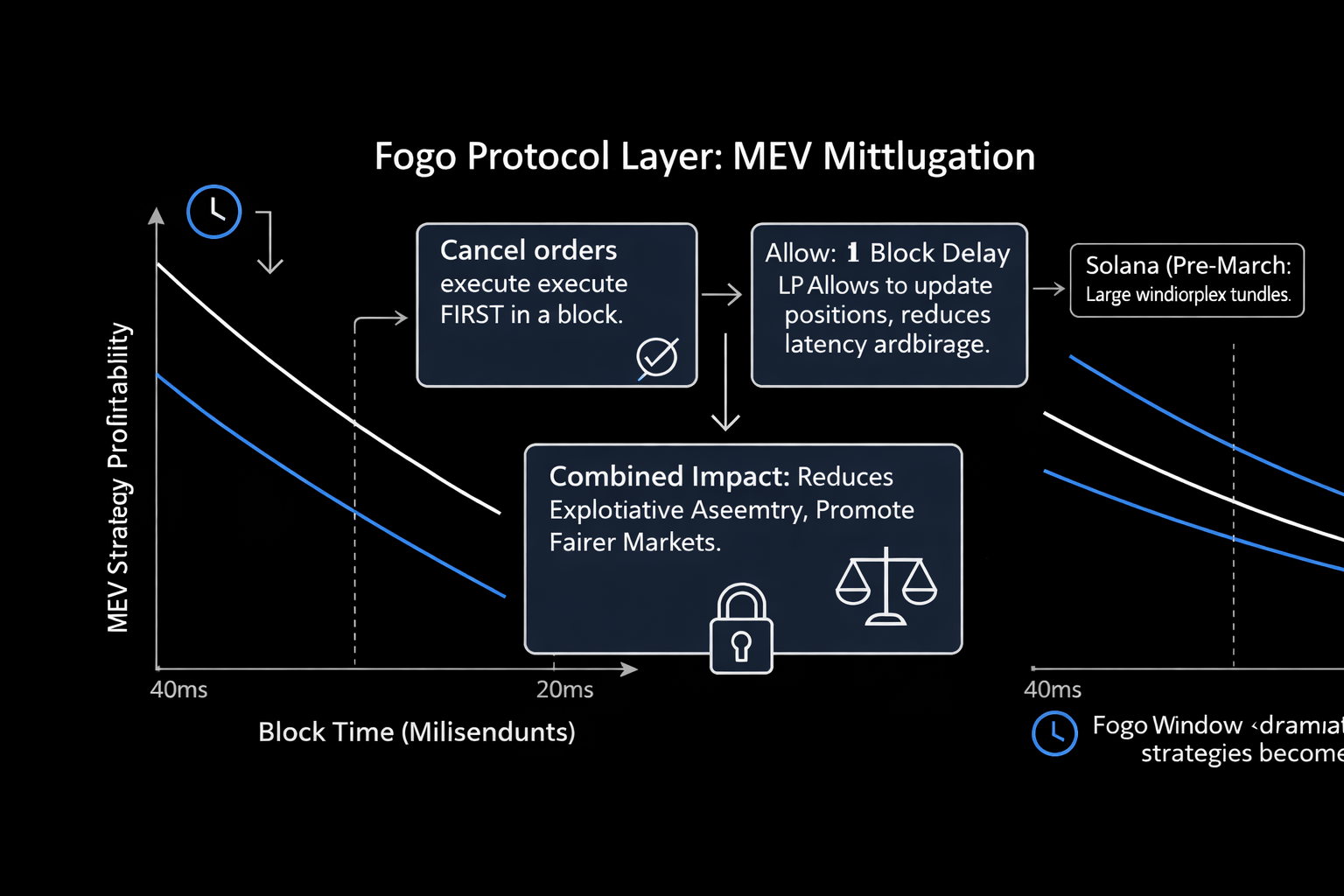
Two hundred milliseconds in traditional finance is huge.
And when the overwhelming majority of stake runs the same client, that behavior effectively becomes embedded in the network.
Even after public mempool access was suspended, private flows didn’t disappear. They reorganized. MEV doesn’t vanish it adapts.
Now layer on stake-weighted Quality-of-Service.
Validators with more stake get transaction priority. If a validator extracts MEV, earns more rewards, attracts more stake, and increases its dominance, that creates a compounding loop.
Extract - earn - attract stake - gain priority -extract more.
Over time, power concentrates.
This is exactly the environment Fogo is reacting to.
Fogo doesn’t pretend MEV doesn’t exist.
Instead, it restructures the conditions under which it operates.
First, the validator model.
Fogo starts with a smaller, curated validator set. Validators are vetted. There are operational expectations. And importantly, there are penalties including removal for exploitative behavior like sandwiching or abusive frontrunning.
That is not a random decision.
It’s a structural response to what happens when validator incentives are left fully unchecked.
Traditional exchanges don’t allow anyone to become a market maker. Participants meet standards. If they abuse order flow, they lose privileges.
Fogo brings that operational discipline into blockchain infrastructure.
Not to centralize control permanently, but to stabilize behavior while the network matures and transitions toward on-chain permissioning.
That’s a very intentional relationship with the MEV dynamics we saw on Solana.
Then comes the protocol layer.
Fogo introduces cancel priority meaning cancel orders execute before other order types in a block.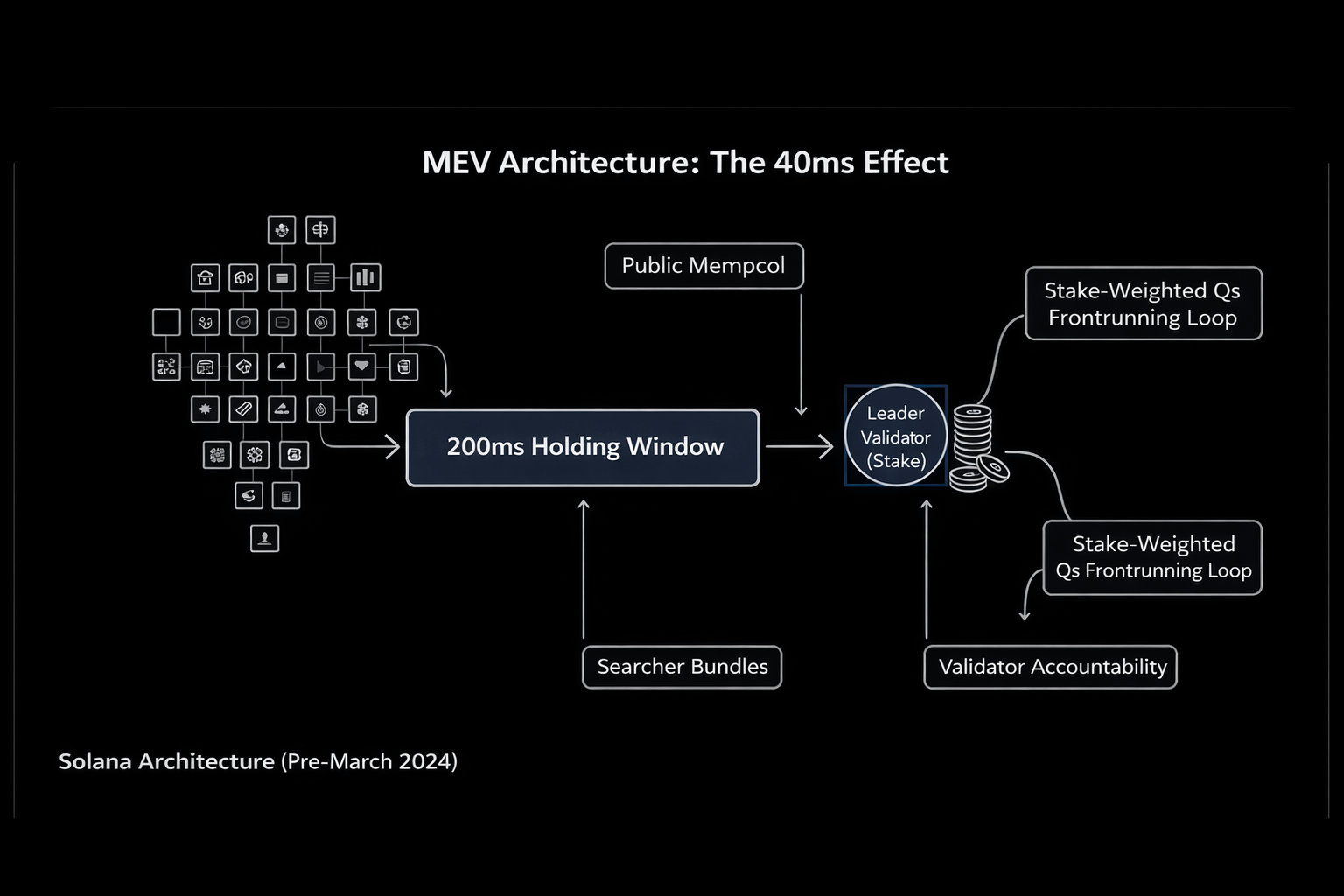
This is directly connected to MEV.
When markets move quickly, liquidity providers risk being picked off if they cannot update stale quotes fast enough. If arbitrageurs can hit old liquidity before it’s pulled, that’s pure extraction.
By prioritizing cancels, Fogo gives liquidity providers a defensive mechanism.
It shifts balance back toward makers instead of pure latency predators.
Then there’s the short delay before market-taking orders execute roughly 1–2 blocks.
That small buffer gives liquidity providers time to update positions in response to price movement. It reduces pure latency arbitrage without freezing trading activity.
Again, this isn’t about stopping trading.
It’s about reducing exploitative asymmetry.
Fogo is not ignoring what happened on Solana.
It is designing around it.
Now we reach execution speed.
Forty millisecond blocks.
This is where the economic impact becomes obvious.
At 400ms, searchers have enough time to:
See a pending transaction. Calculate optimal front-run size. Simulate slippage. Build and bundle. Submit strategically.
At 40ms, that window compresses aggressively.
Strategies that are profitable at 400ms may simply not work at 40ms.
The opportunity still exists but the viability narrows.
Fogo changes the profitability curve of MEV by shrinking time.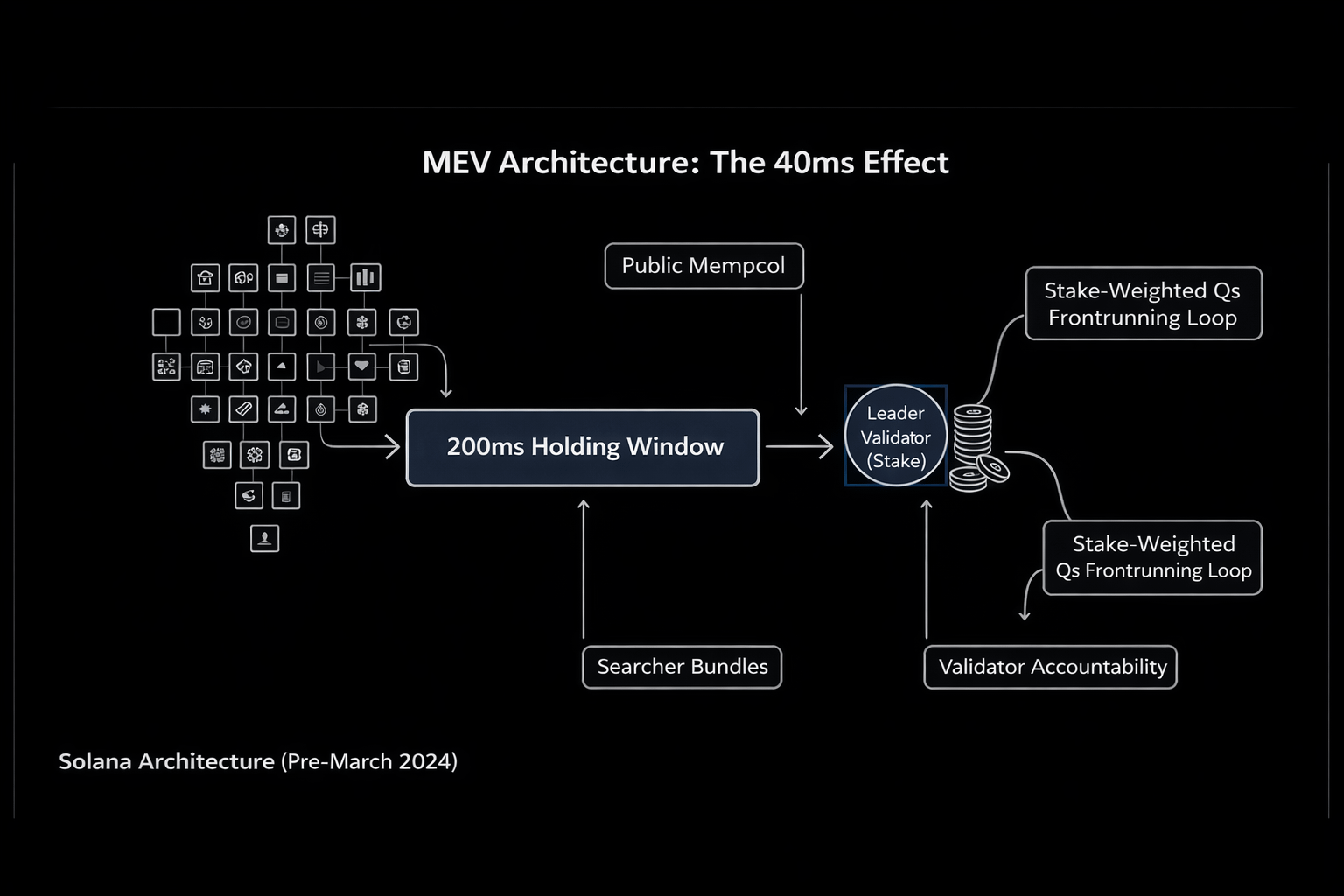
That’s physics shaping economics.
And this ties directly back to the earlier Solana dynamic. If 200ms holding windows created space for searchers, reducing effective decision windows to 40ms dramatically tightens that space.
Fogo isn’t just faster.
It’s economically different.
What stands out to me is that Fogo doesn’t rely on one solution.
It aligns three layers:
Governance discipline at validator level.
Protocol-level fairness mechanisms.
Execution-time compression.
Together, they reshape MEV incentives.
It’s not about pretending extraction disappears.
It’s about narrowing abuse, protecting liquidity providers, and preventing compounding validator dominance.
The relationship is clear.
Solana exposed how infrastructure design, stake weighting, and time windows can amplify MEV feedback loops.
Fogo responds by:
Reducing time windows.
Controlling validator variance.
Introducing accountability.
Embedding fairness rules directly in protocol logic.
This is not theoretical.
It’s reactive engineering.
The more I analyze this, the more I see Fogo as a structural counterbalance.
Not anti-Solana.
Not a rejection of SVM compatibility.
But an evolution built with awareness of how MEV and stake dynamics actually played out in production environments.
It respects the same execution model.
But it tightens the physical and economic layers around it.
And that’s what makes the difference.
Because at the end of the day, MEV isn’t just about mempools.
It’s about time. It’s about power. It’s about who controls ordering under pressure.
Fogo changes all three.