

The Layer-1 blockchain space is one of the most competitive sectors in crypto. Every cycle introduces new chains claiming higher TPS, lower latency, and better scalability. However, only a few survive beyond the hype phase.
Fogo positions itself differently not as a general-purpose blockchain, but as a high performance, trading-optimized SVM Layer 1 built specifically for serious financial execution.
This article explores Fogo’s competitive positioning, token pressure dynamics, ecosystem risks, and long-term strategic outlook.
What Makes Fogo Different?
Fogo is built around SVM (Solana Virtual Machine) compatibility, aligning it technically with Solana, but its focus is narrower and more specialized.
Instead of competing broadly across NFTs, gaming, and meme activity, Fogo concentrates on:
Ultra-low latency execution
High-frequency trading infrastructure
On-chain orderbook performance
Institutional-grade DeFi environments
This “trading-first” architecture gives Fogo a clear niche:
Optimized blockchain infrastructure for financial markets.
In theory, specialization can create stronger defensibility than generalization.
Competitive Landscape Where Fogo Stands
The Layer-1 market already includes dominant players such as:
Ethereum – The liquidity and ecosystem leader
Solana – High throughput + strong retail ecosystem
Sui – Object-based architecture + scalability focus
Aptos – Parallel execution + Move language innovation
Fogo’s edge is not ecosystem size it’s performance specialization.
However, in crypto, technical superiority alone does not guarantee dominance. Network effects, developer adoption, liquidity depth, and brand trust play an equally critical role.
Fogo must prove that its performance advantages translate into real economic activity. Tokenomics & Selling Pressure Dynamics
Early-stage Layer-1 tokens typically face volatility due to:
Seed and private round unlocks
Team vesting schedules
Early investor profit-taking
If unlock events are not matched by organic demand, the market can experience temporary downside pressure.
From an institutional perspective:
Short-term volatility is normal in early infrastructure projects.
Long-term sustainability depends on whether real users generate transaction demand.
If Fogo successfully attracts trading volume and protocol usage, unlock pressure becomes easier to absorb. If adoption lags, token emissions can weigh heavily on price performance.
Adoption – The True Deciding Factor
Performance metrics are attractive on paper. But markets reward execution.
Fogo’s long-term trajectory depends on:
Real trading platforms launching on-chain
Institutional DeFi participation
Sustainable liquidity growth
Developer migration from SVM ecosystems
Because Fogo aligns technically with Solana’s virtual machine, it lowers the friction for builders familiar with that environment. This compatibility is strategically important it reduces the “cold start” problem many new Layer-1s face.
However, migration only happens if there is a compelling economic incentive.
Strengths vs Risks Core Strengths
Clear niche (financial infrastructure focus)
SVM compatibility
Performance-oriented branding
Early mover advantage in trading-optimized L1 positioning
Key Risks
Crowded Layer-1 competition
Smaller ecosystem compared to established chains
Token unlock pressure
Execution and adoption uncertainty
In competitive infrastructure markets, clarity of focus is a strength — but only if matched by real-world traction.
Market Positioning in the 2026 Cycle
In a strong bull cycle driven by DeFi infrastructure narratives, Fogo could benefit significantly. Markets tend to reward performance-focused chains when:
On-chain trading volumes rise
Institutional participation increases
Low-latency execution becomes more valuable
In risk-off or liquidity contraction environments, early-stage Layer-1 tokens often face amplified downside.
Fogo currently fits into the category of:
High-risk, high-upside infrastructure play.
Final Instructor-Level Verdict
Fogo’s competitive advantage is technical precision not ecosystem breadth.
Its future will depend on three measurable factors:
Can it attract serious trading platforms?
Can it maintain performance under real network stress?
Can token supply emissions remain aligned with ecosystem growth?
If the answers trend positive, Fogo could establish itself as a serious niche infrastructure chain in the SVM ecosystem.
If not, it risks becoming another technically strong but economically underutilized Layer-1.
Closing Thought
Speed alone does not win blockchain wars.
Network effects, liquidity depth, and sustained developer activity do.
Fogo has positioned itself around performance.
Now the market will decide whether performance alone is enough to create lasting value. 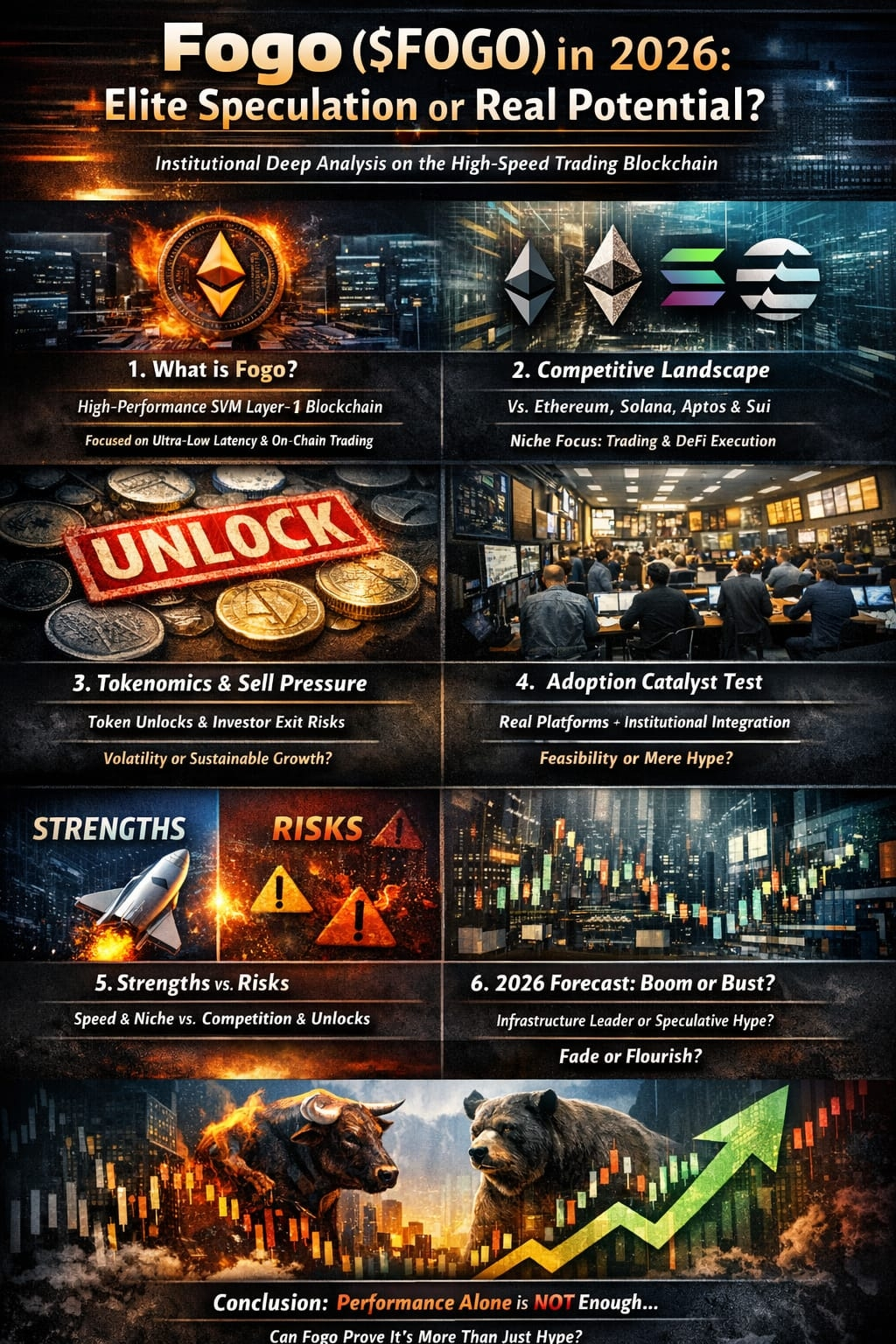 @Fogo Official #Fogo $FOGO
