
I’ve spent a long time watching DeFi trading try to grow into something mature, and the honest conclusion I keep coming back to is that the technology has often moved faster than the experience.
On paper, decentralized trading solved something important years ago. It removed intermediaries, opened access, made markets composable. But in practice, most DeFi trading has still felt like a compromise. Execution is slower than it should be. Liquidity is fragmented. Slippage becomes unpredictable the moment size enters the picture. And during periods of volatility, the entire experience can feel fragile.
That gap between what DeFi promises and what traders actually feel is the reason centralized exchanges still dominate real trading flow.
Most participants don’t choose a venue because of ideology. They choose it because trading is a game of precision. Traders care about fills, spreads, latency, and reliability. They care about whether they can enter and exit without being punished by hidden costs. The moment DeFi fails on those points, the average trader stops thinking about decentralization and simply goes back to the place where execution works.
That’s why I find projects like @Fogo Official interesting right now.
FOGO exists at a moment when the market is quietly shifting away from pure narrative and back toward infrastructure. The last cycle proved that liquidity can appear quickly in crypto, but it also proved how quickly it disappears when systems aren’t built for real stress. People remember congested networks, failed transactions, pools that looked deep until they weren’t. Traders may not talk about it in philosophical terms, but behavior shows the memory is there.
FOGO’s core relevance is that it is not really selling a new idea. It is attacking an old problem that has been left unresolved for too long: DeFi trading has rarely felt fast, deep, and consistent enough to compete with a modern CEX.
What FOGO is quietly solving is not the obvious cost of trading, but the invisible cost.

In DeFi, the fee is rarely what hurts you. The real cost is slippage, latency, and execution uncertainty. A trade that looks cheap in theory becomes expensive in practice when liquidity is thin or when the network is under load. This is the part that most retail users overlook, but experienced traders notice immediately.
Execution quality is the difference between trading and gambling.
If liquidity is shallow, even modest orders move the price against you. If transaction throughput is unreliable, you miss entries or exits. If volatility spikes and the system degrades, you are trading blind. These are structural problems, not cosmetic ones, and they are the reason DeFi has often remained more of an experiment than a true venue for serious flow.
FOGO’s approach is built around making those frictions less visible.
The emphasis on deeper liquidity and smoother execution suggests something important: DeFi is entering a phase where usability matters more than novelty. Traders do not want ten new primitives. They want the basics to work at scale. They want markets that hold up under pressure.
This is where the Firedancer angle becomes meaningful.
Trading is one of the most demanding things you can do on-chain. It requires speed, throughput, and reliability at moments when everyone is acting at once. Networks reveal their weaknesses during peak activity. Congestion appears, transaction ordering becomes chaotic, and fees can spike unexpectedly. These are not edge cases. They are the moments that define whether a trading platform is real.
FOGO is positioning itself in a world where the underlying performance environment is improving, and where traders are no longer satisfied with DeFi being “good enough.” They want execution that feels closer to what they are used to in centralized venues, without giving up the benefits of being on-chain.
The way users interact with FOGO reflects this. Most traders are not thinking about architecture. They are thinking about outcomes. Can I trade size without moving the market too far? Can I exit quickly when volatility hits? Can I trust the platform to stay usable when volume surges?
Liquidity depth matters here more than almost anything else.
Deep liquidity is what separates a market from a toy. If liquidity is real, slippage stays tight and execution becomes predictable. If liquidity is shallow, the platform remains limited to small swaps and retail-level flow. So when FOGO emphasizes deeper liquidity, it is pointing toward a higher ambition: becoming infrastructure that can support serious trading behavior.
Of course, there are uncomfortable truths that come with this.
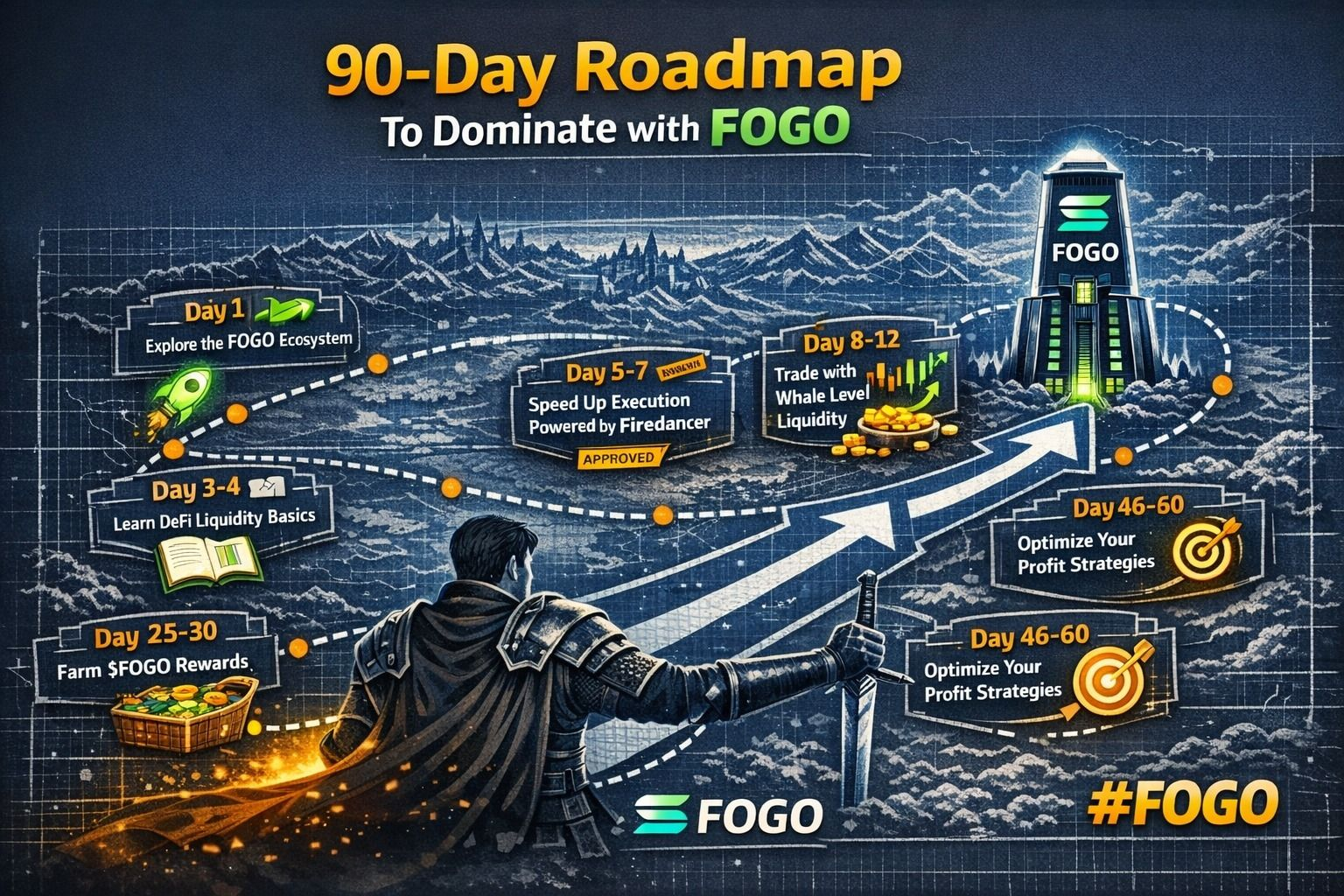
Liquidity can be bootstrapped temporarily through incentives, but sustaining it requires organic flow. Traders are ruthless. They stay where execution is best, and they leave when it isn’t. Speed alone does not guarantee durability. The market will eventually test whether FOGO’s liquidity is structural or simply early-stage momentum.
Token economics will matter in the same way exchange tokens always matter.
If $FOGO is meant to play a role in incentives, fee alignment, governance, or liquidity provisioning, its value will ultimately depend on whether the platform is actually used. Tokens that exist without deep integration into real activity tend to drift into speculation. Tokens that reflect genuine flow tend to behave differently over time.
If FOGO succeeds, you would expect its on-chain footprint to show it.
Rising volume that persists beyond incentive windows. Liquidity depth that holds up during volatility. Retention that suggests traders are staying for execution, not for rewards. Price behavior that follows adoption rather than hype.
That is the real filter.
In the broader market cycle, I think we are moving into a phase where infrastructure becomes the differentiator again. Not because speculation disappears, but because speculation concentrates where trading is easiest. The next generation of DeFi winners will not be the loudest protocols. They will be the ones that quietly absorb flow because they work.
FOGO feels like a bet on that direction.
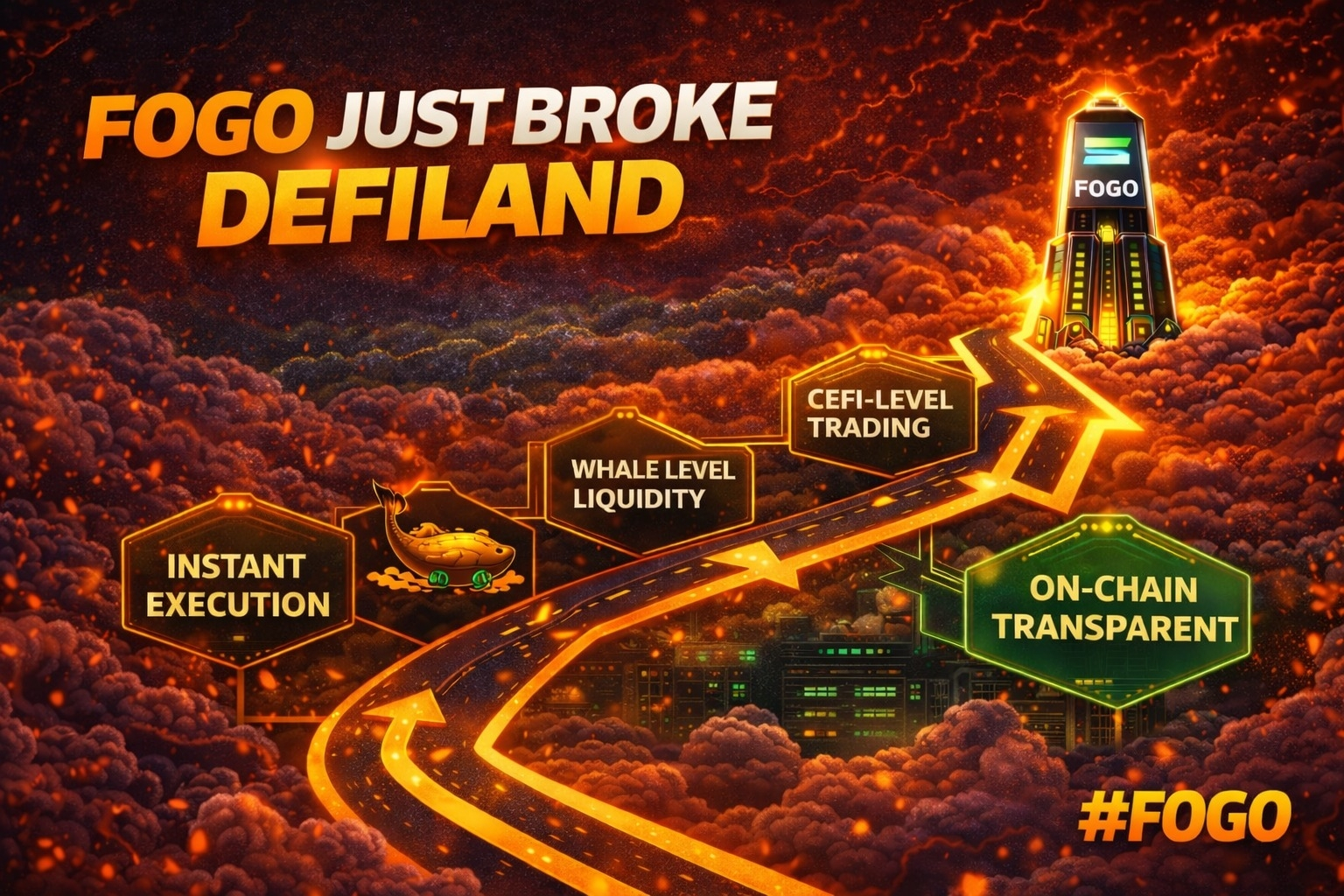
I don’t think the question is whether DeFi replaces centralized exchanges overnight. That framing is too simplistic. The real question is whether DeFi can absorb the parts of trading that do not require custody risk, permission, or intermediaries, while matching the operational standards traders expect.
That is a harder problem than most people admit.
FOGO is stepping directly into that challenge. Whether it succeeds will not be decided by slogans about speed. It will be decided in the only moments that matter: high volatility, high volume, real stress.
That is when infrastructure stops being theory and becomes reality.
And I keep coming back to the same thought: the future of DeFi trading will not feel revolutionary. It will feel normal. The moment traders stop noticing the chain at all is the moment the technology has actually matured.
FOGO is trying to push DeFi closer to that moment.
