

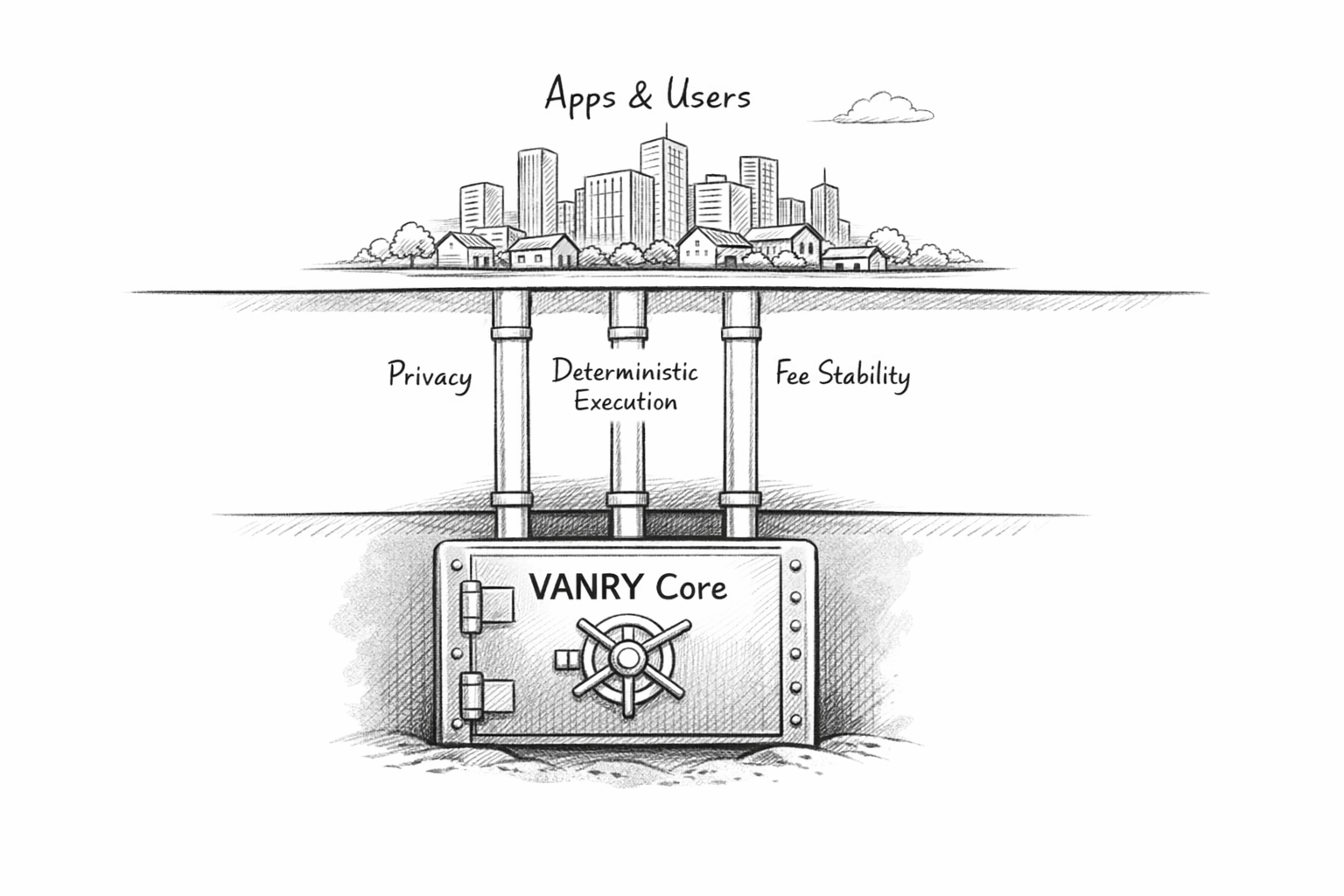
Why the strongest blockchains are felt, not seen
In crypto, we are trained to look at what is loud.
TPS charts. Latency dashboards. Gas wars. Validator counts.
But after living through multiple cycles — DeFi summer, NFT mania, gaming hype, and now the AI-driven compute race — I’ve learned something uncomfortable:
The most valuable blockchains don’t advertise their security. They dissolve it.
That’s what I see emerging inside the Vanar ecosystem and its native settlement layer, VANRY.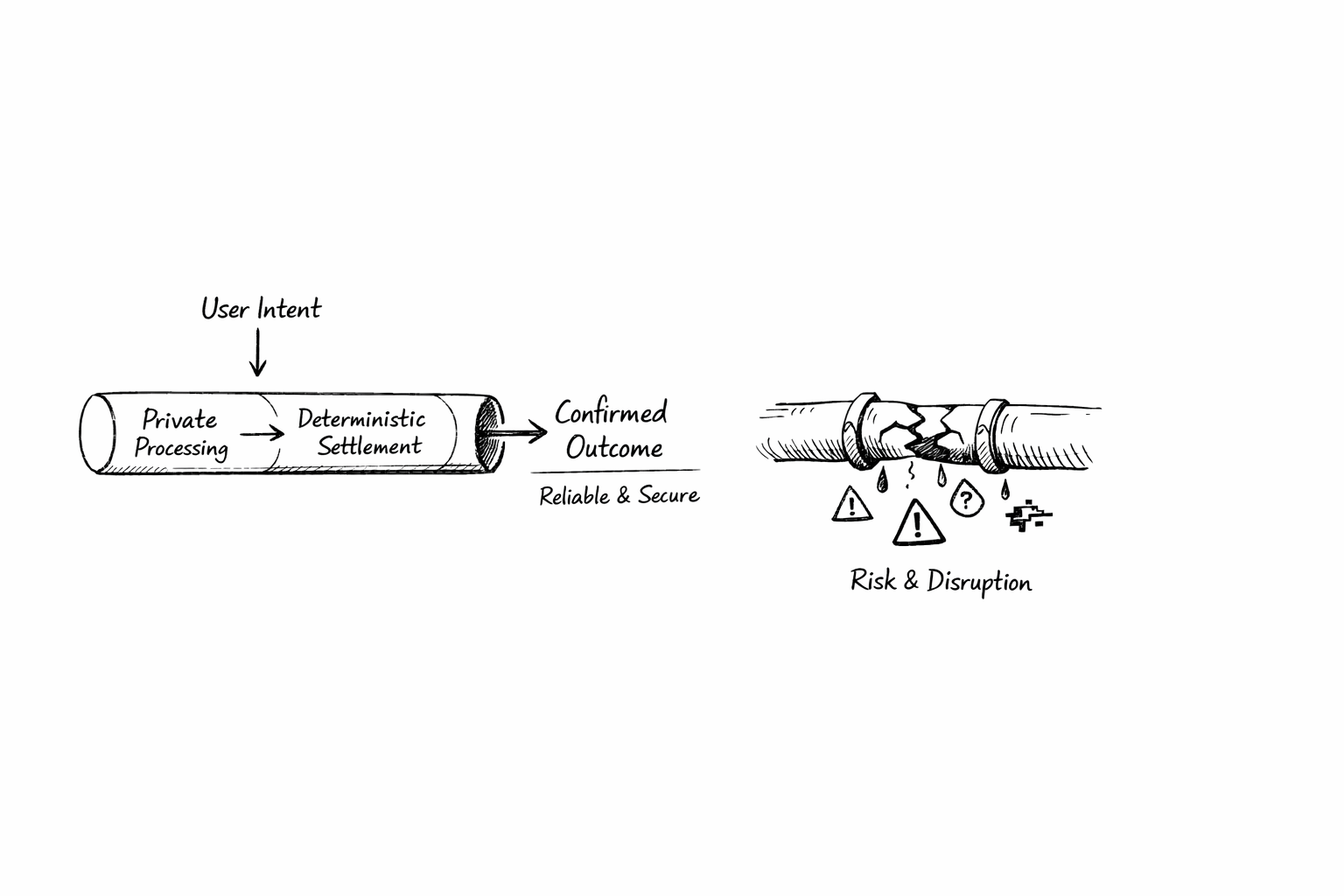
Not as a product.
Not as a token.
But as a behavioral engine for how humans and machines coordinate.
The hidden tax every blockchain charges
Every blockchain charges users a tax — but not in fees.
It’s the cognitive tax.
Will my transaction fail?
Will I be front-run?
Will this game state desync?
Will this AI agent leak private inputs?
These questions slow everything.
On chains with visible fragility, users subconsciously hedge:
Traders split orders
Gamers avoid on-chain actions
AI agents delay execution
Builders add off-chain crutches
This is why raw throughput rarely creates adoption.
Confidence does.
VANRY’s quiet design advantage
Vanar’s architecture is unusual because it wasn’t optimized for spectacle.
It was optimized for invisible guarantees:
Deterministic execution
Private computation
Stable fee dynamics
Composable on-chain game and AI logic
This creates something rare in crypto:
Users stop thinking about the chain. They think about the experience.
That shift is economic.
When players trust game outcomes, they play more.
When AI agents trust settlement, they transact more.
When traders trust privacy, they size up.
Not because incentives changed —
But because risk perception collapsed.
That’s invisible security at work.
Gaming taught me this first
If you’ve built or traded in on-chain games, you know the truth:
Performance doesn’t keep players.
Fairness does.
The moment a player believes:
Someone else sees their move first
A bot can manipulate outcomes
A rollback is possible
They disengage.
Vanar’s design philosophy — especially around private, deterministic execution — feels built for this reality.
It doesn’t try to be fast for marketing. It tries to be stable for behavior.
That’s why I pay attention.
AI changes everything
AI agents don’t tolerate uncertainty.
They don’t “hope” a transaction works. They require deterministic settlement, private state, and predictable cost.
Most blockchains were designed for humans. Vanar feels like it was designed for machines that behave like humans at scale.
That is where Web3 is going.
And VANRY is quietly positioned at that junction.
What I actually watch
Not price.
Not hype.
I watch:
Game studios shipping real economies
AI workflows moving on-chain
Repeated user actions without friction
Developers choosing Vanar for things that must not break
That’s adoption.
That’s the economics of invisible security.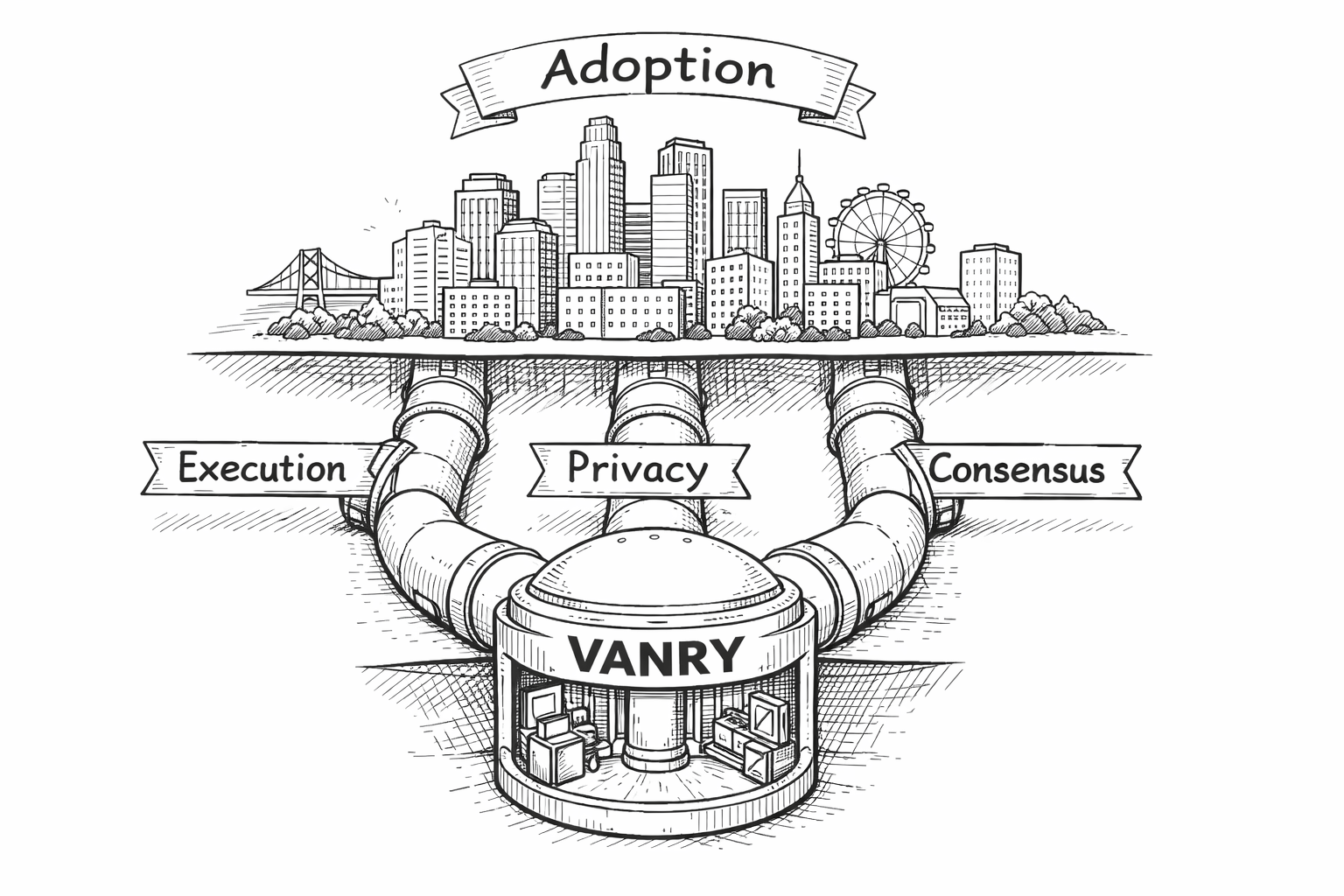
Final thought
Speculation chases noise.
Infrastructure compounds on silence.
VANRY isn’t trying to be the loudest chain in the room.
It’s trying to be the one everyone forgets about Because when it works, nothing feels risky anymore.
And in Web3, that’s when real economies start to form.
