

I’ve spent years watching blockchains promise simplicity while quietly making life harder for the people expected to use them. Most fail not because the technology is weak, but because the systems are designed as if users are endlessly patient, endlessly curious, and eager to learn new mental models. In the real world, none of that is true. Everyday users don’t wake up wanting to understand transaction finality, wallet abstractions, or fee markets. They want things to work without thought. The moment a system introduces friction that requires explanation, attention drains away. This mismatch between how blockchains are designed and how humans actually behave is, in my view, the quiet reason so many chains never leave their own echo chambers.
When I look at consumer-facing infrastructure, I don’t start by asking how fast it is or how novel the architecture sounds. I ask what kind of behavior the system expects from the user. Does it assume curiosity, tolerance, and forgiveness? Or does it assume distraction, impatience, and limited context? Gaming, entertainment, and consumer brands live in the second world, not the first. These industries are built around fleeting attention, emotional response, and habit, not education or ideology. Infrastructure that wants to serve them has to internalize that reality deeply, not treat it as a surface problem solved by better interfaces later.
This is where Vanar starts to make sense to me—not as a list of features, but as a set of quiet assumptions about h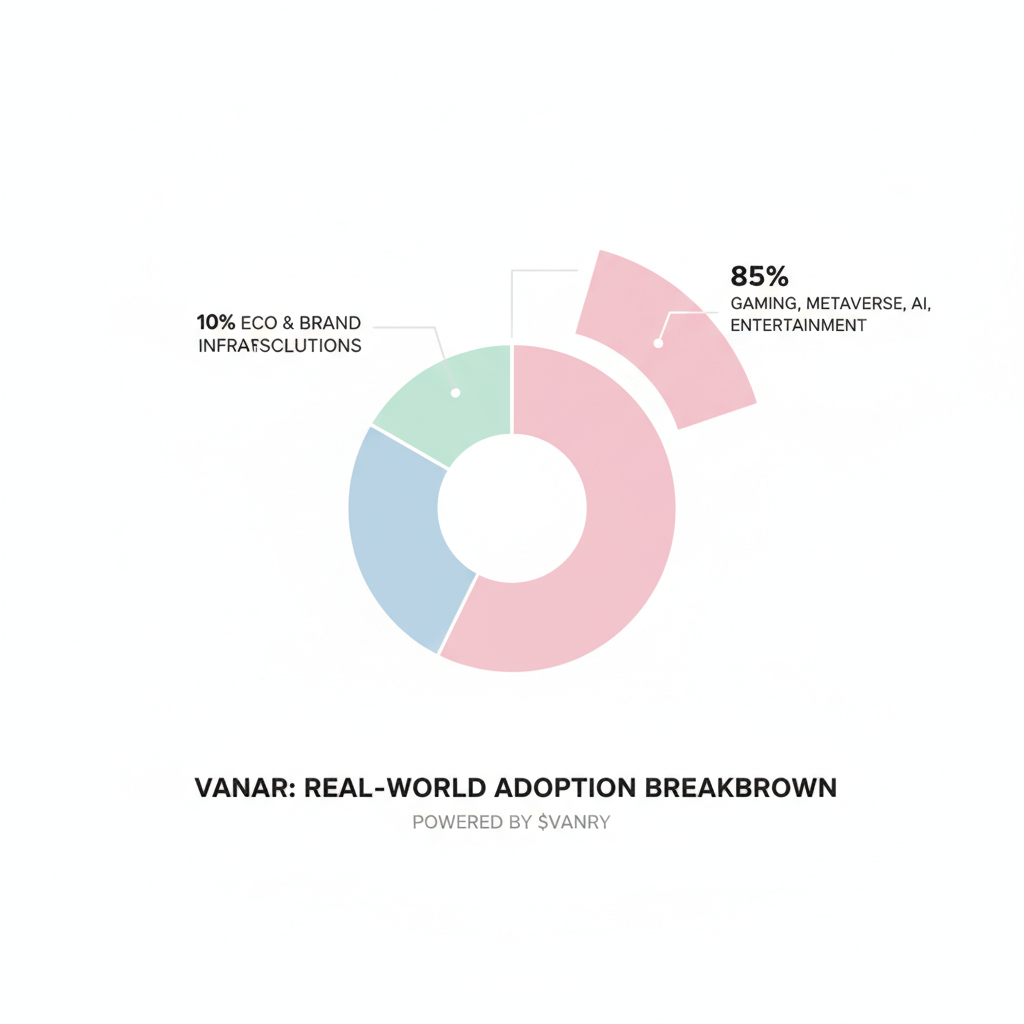 uman behavior. Its focus on gaming, entertainment, and brands signals a recognition that consumer systems fail differently than financial or infrastructure-heavy ones. In games and entertainment, failure isn’t dramatic. There’s no protest, no complaint. Users simply leave. Latency, unexpected costs, confusing flows—these don’t register as technical flaws to users. They register as friction, and friction dissolves engagement faster than almost anything else.
What stands out in Vanar’s design philosophy is an apparent prioritization of invisible smoothness over visible complexity. Many chains chase theoretical performance or architectural elegance, but those pursuits often come with trade-offs that surface as cognitive load for users or operational burden for developers. Vanar feels oriented around reducing the number of moments where someone has to stop and think. Not think about blockchain, not think about fees, not think about whether something will fail. Just think about the experience they came for in the first place.
This approach matters because consumer systems are brutally honest. A gamer doesn’t care why something lagged. A brand doesn’t care about decentralization purity if a campaign fails during peak traffic. These users don’t negotiate with the system. They judge it silently and move on. Infrastructure that survives in this environment isn’t the one with the most optionality. It’s the one that behaves predictably under pressure and disappears into the background when things are working.
 I’ve noticed that many consumer-focused chains stumble because they treat users as wallets first and people second. Everything is framed around onboarding into crypto primitives rather than embedding those primitives into familiar flows. The result is a constant demand for attention: sign this, approve that, understand this risk, manage that balance. Each step might seem minor to builders, but to users it’s cumulative friction. Vanar’s orientation suggests a different starting point—one where blockchain exists to support experiences, not to be experienced itself.
From a developer perspective, this has implications too. Developers building for games and brands don’t want endless configurability. They want constraints that are sensible and defaults that work. Flexibility sounds attractive in theory, but in practice it often shifts complexity downstream. Systems that are opinionated in the right places reduce decision fatigue and speed up iteration. Vanar’s design choices appear to lean toward this kind of pragmatic simplicity, where the system does more deciding upfront so builders can focus on the product, not the plumbing.
There’s a trade-off here, and it’s important to acknowledge it honestly. When a system chooses simplicity, it usually gives up some degree of maximal flexibility or experimental freedom. Vanar does not feel like it’s trying to be everything for everyone. That means certain edge cases or highly specialized use-cases may be better served elsewhere. But in consumer infrastructure, breadth is often the enemy of reliability. By narrowing its focus, Vanar increases the likelihood that what it does support works consistently.
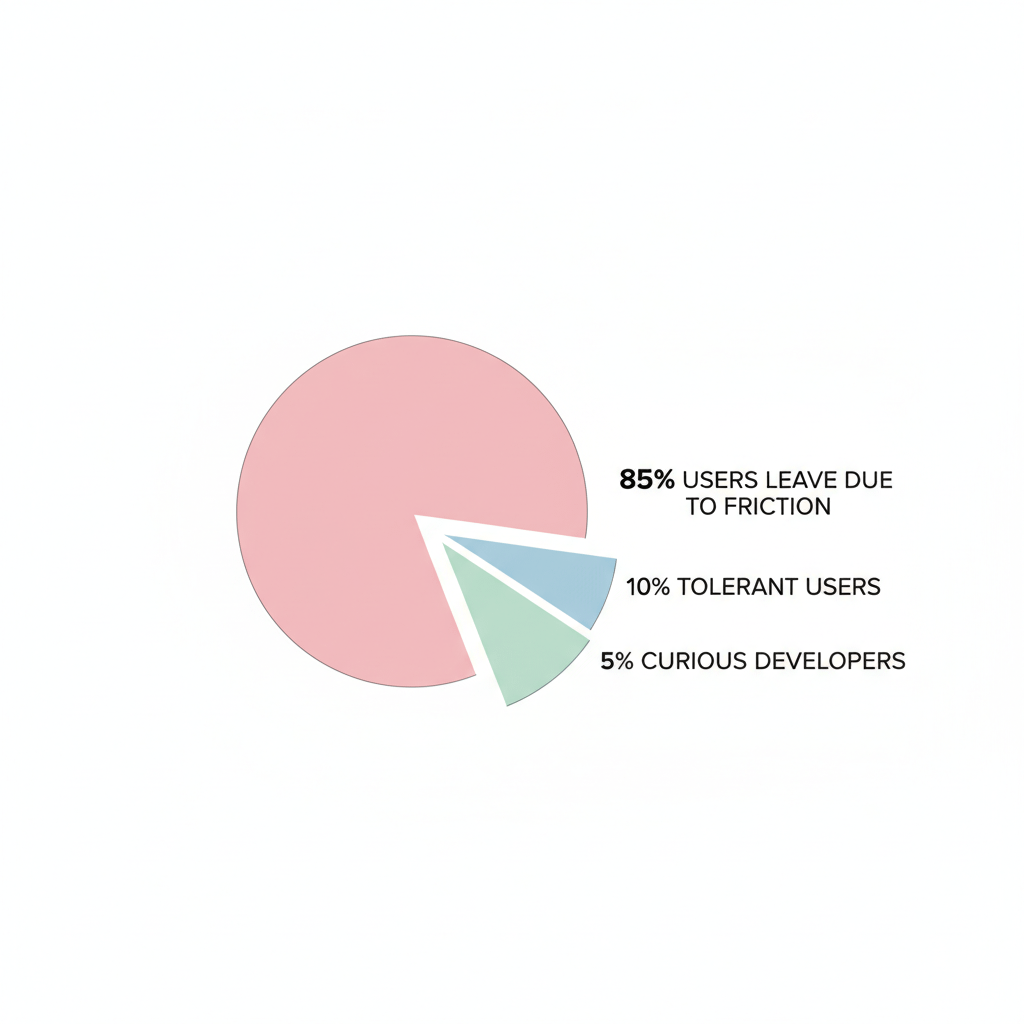 This trade-off also shows up in scalability conversations. Scaling for consumers is different from scaling for financial throughput. It’s not just about handling volume; it’s about handling bursts, peaks, and emotional moments. A game launch, a brand campaign, or a live event creates sudden, uneven load. Systems that only optimize for average performance often fail here. Vanar’s emphasis on predictable behavior suggests an understanding that worst-case moments matter more than benchmarks.
I also think it’s telling what Vanar does not center its identity around. There’s little obsession with ideological narratives or abstract purity tests. For mainstream brands, reliability beats ideology every time. They care about whether a system stays up, whether costs remain stable, and whether users have a smooth experience. They don’t want to explain blockchain to their customers, and they don’t want to apologize for it either. Infrastructure that aligns with this mindset has a better chance of being quietly adopted rather than loudly discussed.
When I look at the VANRY token through this lens, it makes sense only as a coordination mechanism, not a story. Tokens that derive meaning from usage rather than speculation behave differently over time because their value is anchored in activity, not expectation. In systems like Vanar, the token’s role is to facilitate participation, secure the network, and align incentives between builders, users, and operators. When usage grows organically through products people actually want to use, value flows feel less forced and less fragile.
 What’s interesting in the current market environment is that consumer-focused infrastructure is resurfacing without much noise. After years of over-engineered systems chasing theoretical ideals, there’s visible fatigue among builders. I see more teams asking simpler questions: Will this break? Will users notice? Will this slow us down? Developer retention often follows these answers more closely than marketing cycles. Chains that reduce operational headaches tend to accumulate builders quietly, even if they don’t dominate headlines.
If you were to look at on-chain behavior or ecosystem activity around systems like Vanar, the signal wouldn’t be explosive spikes. It would be steadier usage, fewer abandoned projects, and products that keep iterating rather than constantly pivoting. This kind of gravity is harder to measure but more durable. It comes from trust built through repeated, uneventful success.
None of this means Vanar is perfect or immune to challenges. Consumer expectations evolve quickly, and infrastructure has to adapt without destabilizing itself. Balancing ease of use with long-term robustness is not a one-time design decision; it’s an ongoing discipline. By choosing not to optimize for everything, Vanar also limits its exposure to certain opportunities. But limits can be a form of strength when they prevent systems from collapsing under their own ambition.
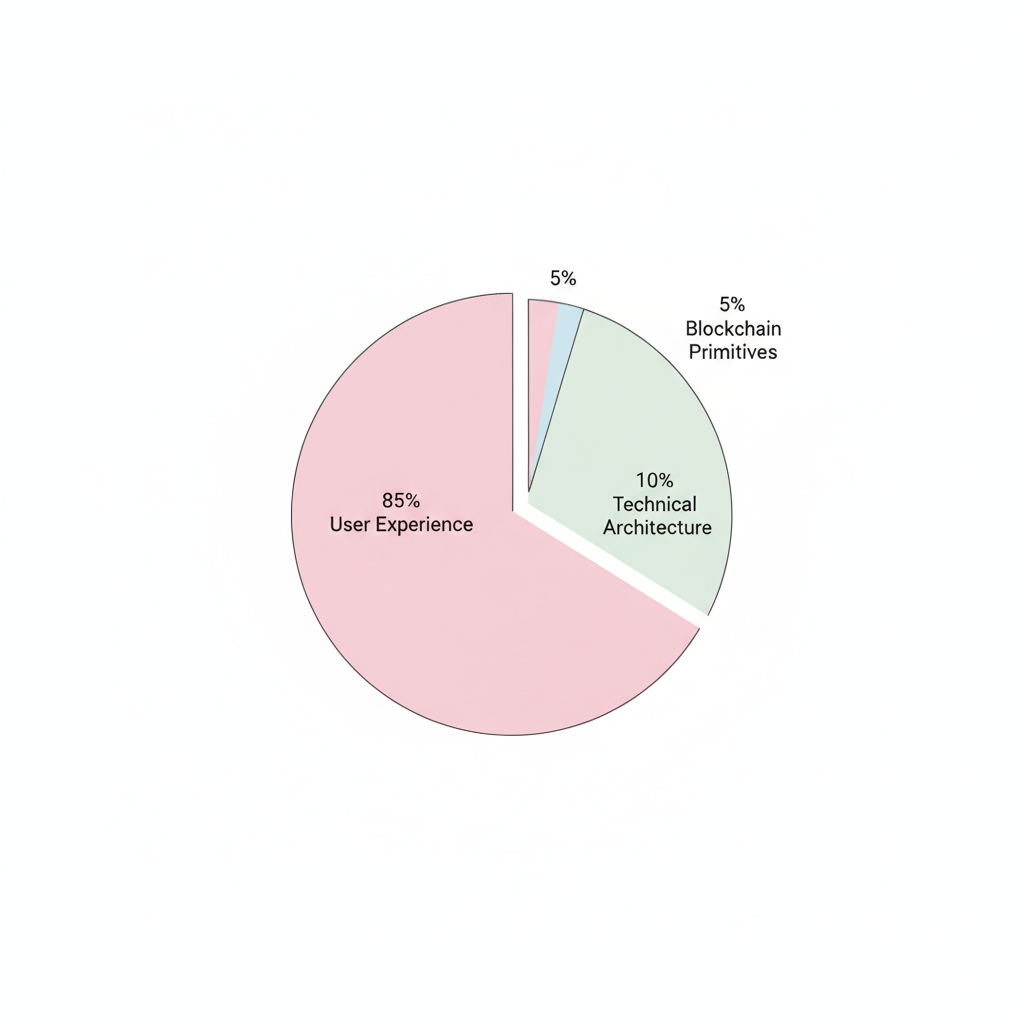 What I appreciate most about Vanar is that it feels like infrastructure designed to be forgotten in the best possible way. When systems work well for consumers, they fade into the background. People remember the game, the content, the brand interaction—not the chain underneath. That’s not glamorous work, and it doesn’t lend itself to dramatic narratives. But it’s how real adoption happens, quietly and unevenly, through repetition rather than revelation.
After watching so many projects try to impress instead of endure, I find myself drawn to systems that seem comfortable being unremarkable on the surface. Vanar gives me that impression. It doesn’t feel like it’s trying to teach users a lesson or prove a point. It feels like it’s trying to stay out of the way. And in a space where attention is scarce and patience even scarcer, that might be the most durable design choice a blockchain can make.
