
There’s a quiet ache most people never say out loud—the feeling of standing at the edge of something revolutionary and not knowing how to step into it. Technology promises connection, ownership, opportunity. Yet so often, it delivers confusion, passwords we forget, fees we don’t understand, and systems that feel like they were built for someone else.
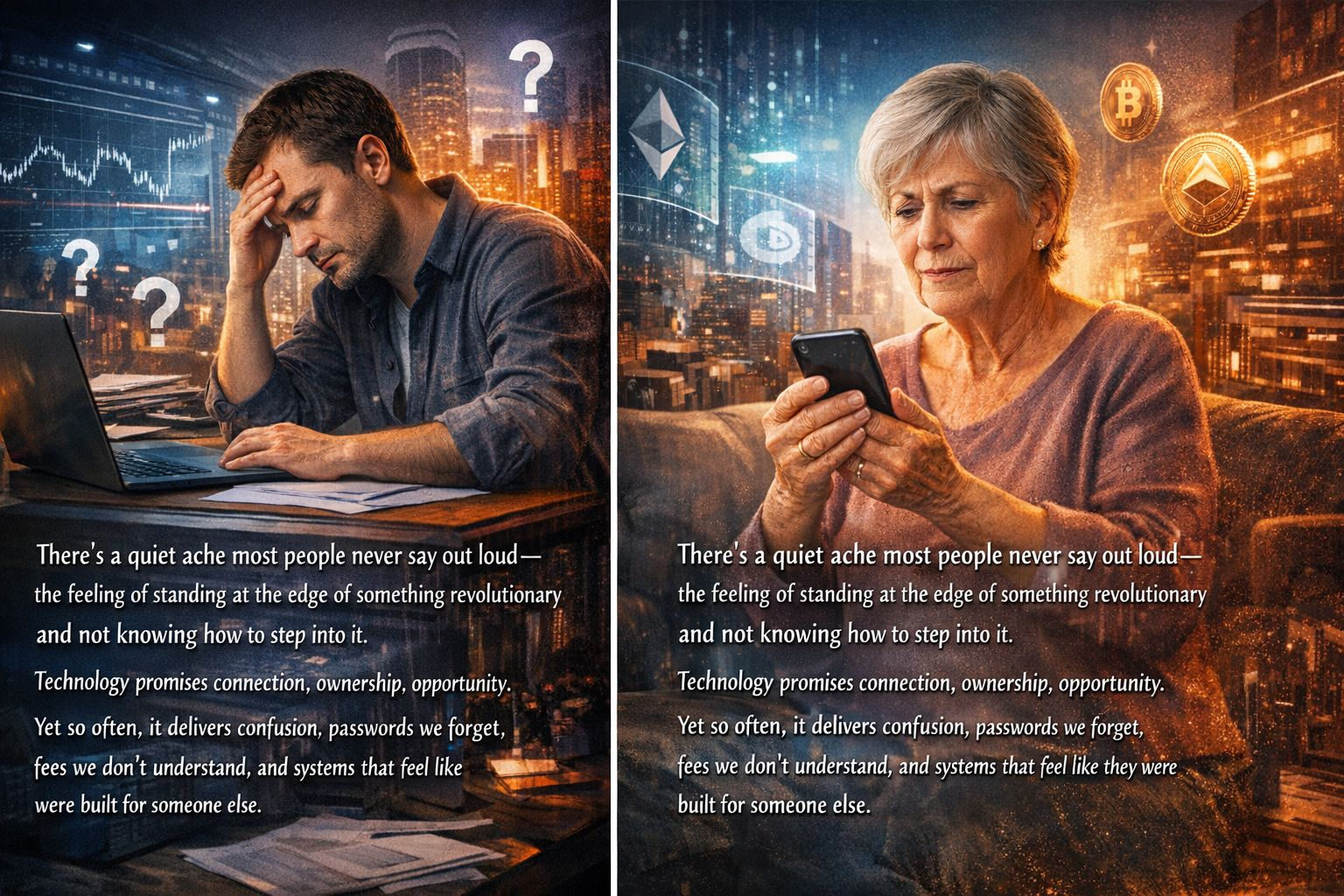
Web3 has carried that contradiction for years. It speaks of empowerment, but too many people feel intimidated before they even begin. Wallet addresses look like encrypted riddles. Gas fees rise without warning. Interfaces feel mechanical, detached from the warmth of human intention. The future feels brilliant… and strangely distant.
Vanar was born in that distance.
Not from the desire to compete loudly in a crowded blockchain arena, but from the recognition that something essential was missing—human comfort. The kind of comfort that makes a person stay instead of leaving. The kind that replaces hesitation with curiosity.
The team behind Vanar didn’t emerge solely from cryptography labs or trading desks. Their experience is rooted in games, entertainment, and global brand ecosystems—industries where emotion determines success. In gaming, if a player feels confused or frustrated, they don’t analyze the mechanics; they simply close the app. In entertainment, if a story fails to resonate, audiences move on. In branding, if the experience feels complicated, loyalty disappears.
So the approach shifted. Instead of asking how to build something more technically impressive, the question became: how do we build something that feels natural?
At its core, Vanar is a Layer-1 blockchain. But that description barely captures its intent. It was designed with AI woven into its architecture, aiming to support intelligent applications rather than static transactions. The idea is not just to process data but to enable environments that respond, adapt, and evolve.
Picture a digital world where your in-game identity isn’t temporary, where the assets you earn belong to you beyond the boundaries of a single platform. Imagine AI-driven environments that understand context, learning from behavior while remaining anchored in transparent, verifiable systems. This is the emotional promise behind Vanar—not just ownership, but continuity.
Continuity matters. People crave it.
We want our digital lives to feel like extensions of ourselves, not disposable sessions. We want the items we earn, the worlds we explore, and the communities we join to carry meaning beyond a logout screen. Vanar’s ecosystem—through projects like VGN and Virtua—tries to meet users in familiar territory. Not by forcing them to become blockchain experts, but by embedding blockchain quietly beneath experiences they already understand.
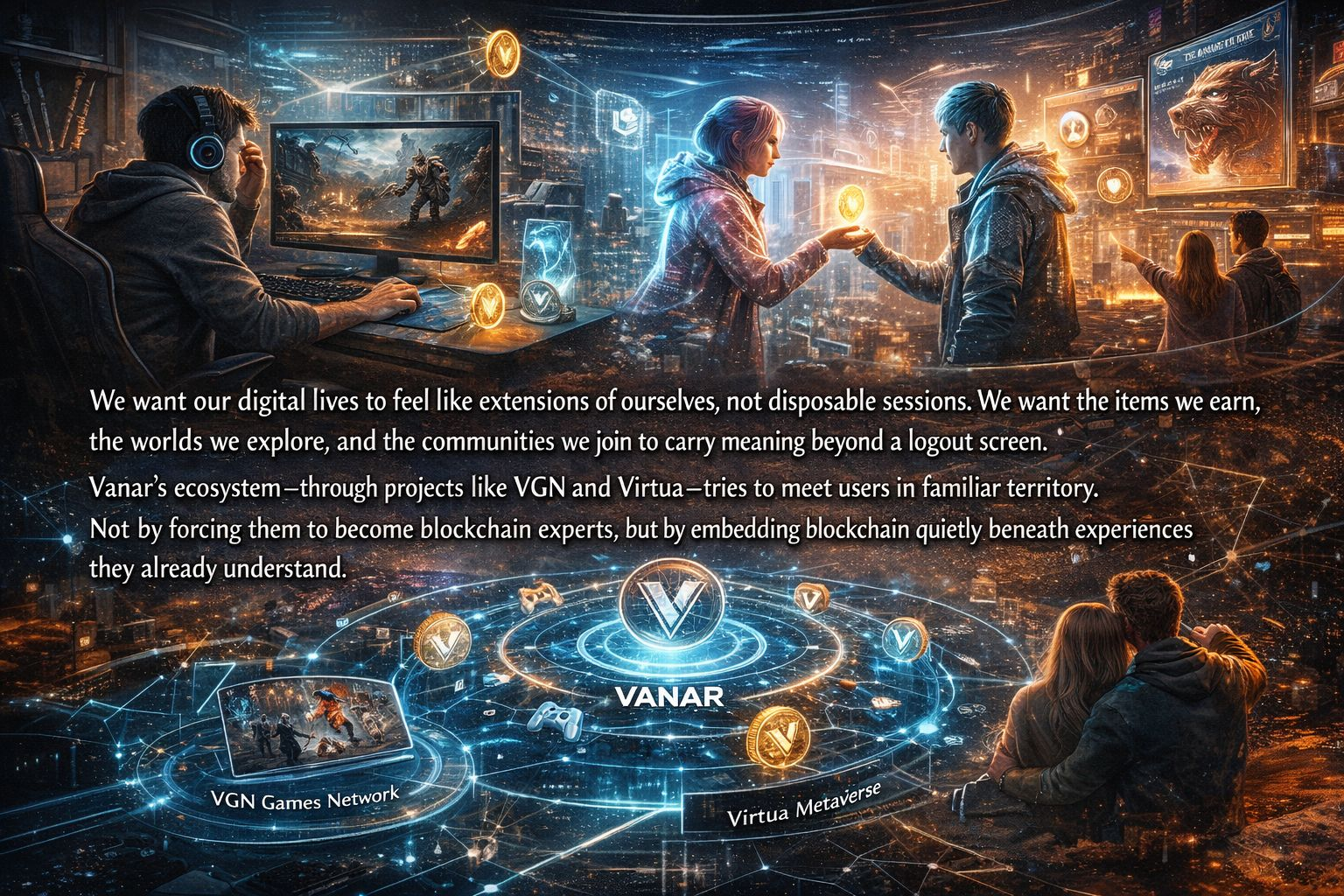
Gamers don’t want to study technical manuals before pressing play. They want immersion. Brands don’t want unpredictable operational chaos; they want stability and scale. Creators don’t want friction; they want freedom.
Then there is VANRY, the token powering the network. To outsiders, it may appear as a fluctuating number on a chart. But within the ecosystem, it serves as fuel—enabling transactions, supporting validators, and connecting applications. Its evolution from the earlier TVK identity into VANRY symbolized something larger than a name change. It marked a unification of purpose, a shift toward building an integrated chain rather than a single product story.
Yet tokens alone do not inspire loyalty. Experience does.
And trust in this space is delicate.
The crypto world has witnessed cycles of intense optimism followed by sobering corrections. Grand promises have sometimes outpaced practical delivery. So when Vanar speaks about bringing the “next three billion” people into Web3, the weight of that statement is enormous. It isn’t just about user growth; it’s about accessibility. It asks whether a casual gamer, a small business owner, or someone entirely new to digital assets could step into this ecosystem without fear.
That is the real measure of progress.
Vanar’s emphasis on AI integration invites both excitement and scrutiny. Integrating intelligent systems directly into blockchain infrastructure is complex. It demands sustained development, real-world adoption, and technical resilience. Vision must be matched by execution. Architecture diagrams must transform into products people use daily.
But what gives this story emotional depth is not perfection—it is intention.
There is something profoundly human about wanting advanced technology to feel welcoming. About choosing to soften complexity instead of celebrating it. About recognizing that innovation is meaningless if it alienates the very people it hopes to serve.
The most transformative technologies eventually disappear into the background. We do not marvel at electricity every time a light turns on. We do not contemplate internet protocols before streaming a song. True success lies in invisibility—when systems function so smoothly that users focus on experience, not infrastructure.
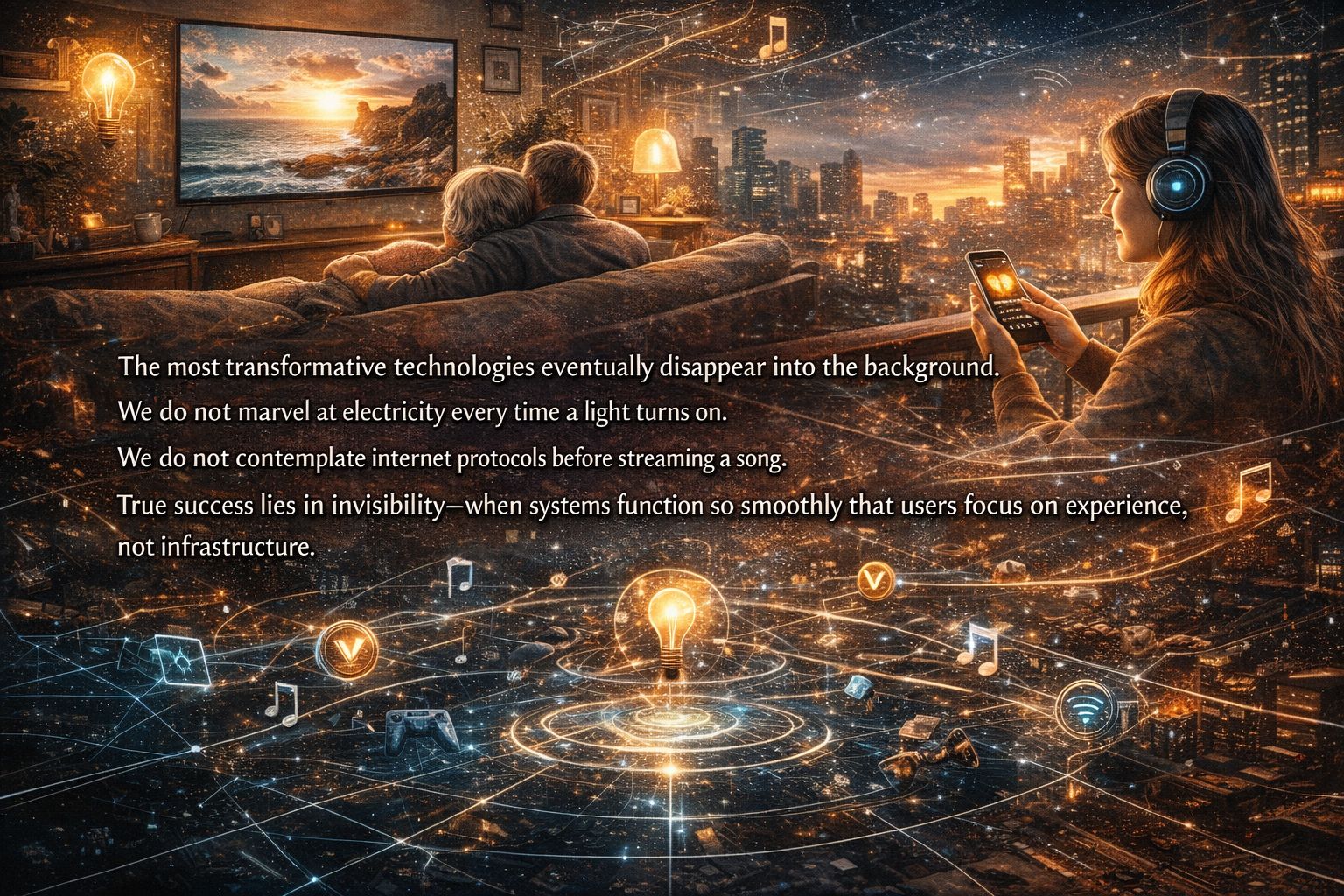
Vanar appears to be striving for that invisibility.
Not to hide complexity out of secrecy, but to remove unnecessary barriers. To let someone log into a digital world and feel wonder instead of confusion. To let creators build without navigating endless technical hurdles. To let brands experiment in immersive environments without financial unpredictability.
Whether this vision becomes reality depends on sustained effort, transparent communication, and genuine adoption. Markets will fluctuate. Token prices will rise and fall. Skepticism will remain part of the conversation. That is the nature of innovation in volatile environments.
But if even a fraction of users enter this ecosystem and feel, perhaps for the first time, that blockchain makes sense—that it feels intuitive rather than intimidating—then something meaningful will have shifted.
Because at its heart, this isn’t just about infrastructure. It’s about belonging.
Technology should not feel like a fortress. It should feel like a doorway.
And if Vanar succeeds in turning that doorway into something open, understandable, and alive with possibility, then its greatest achievement will not be technical supremacy—it will be human connection.
In a world racing toward digital transformation, creating something that feels like home might be the boldest move of all.
