

Vanar Chain has been on my mind lately, but not for the reasons most people expect. For a long time, the focus was the metaverse angle, the gaming vision, the big entertainment narrative. It was exciting, no doubt. But after watching the recent updates, I found myself caring less about the story and more about something much simpler: is this system actually becoming more usable in real life?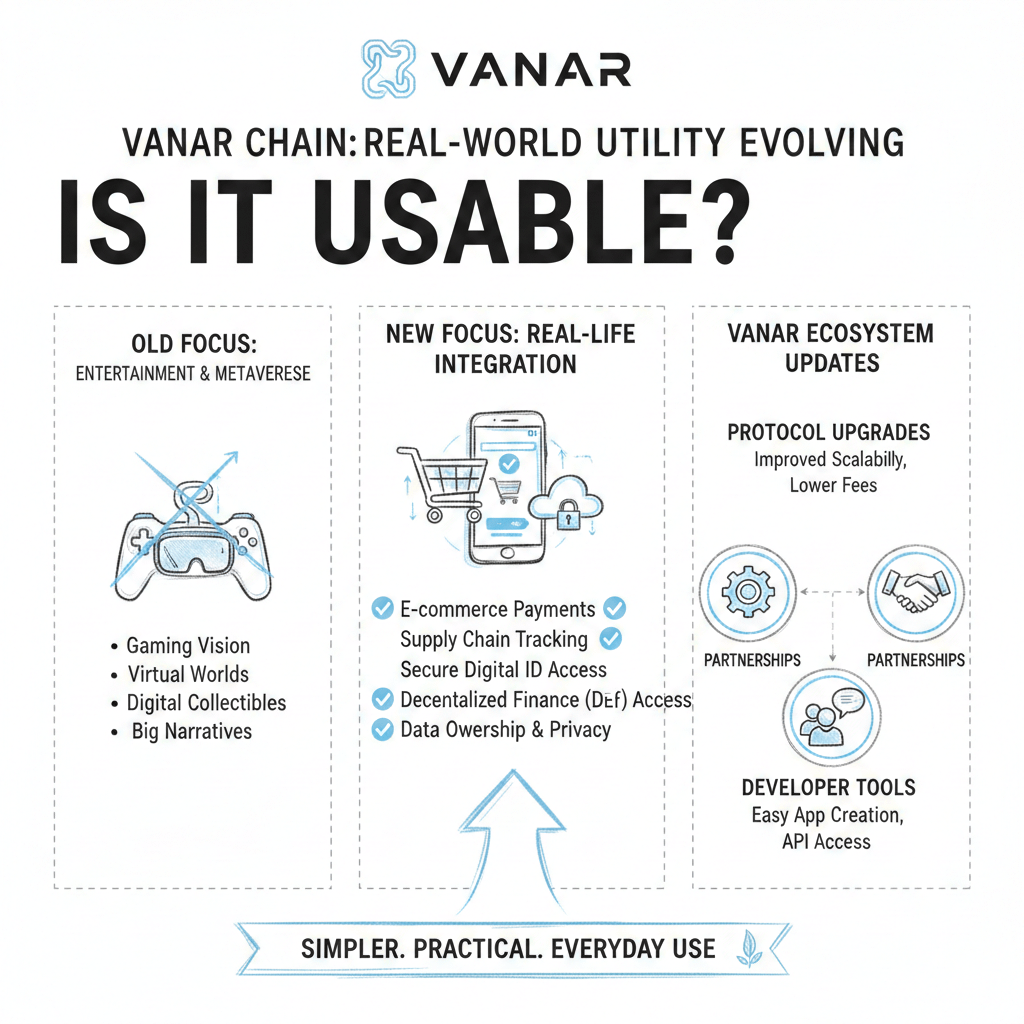
What really made me pause wasn’t a partnership or a flashy announcement. It was the fixed-fee model. That might sound technical or even boring, but when I think about how normal users behave, it suddenly feels important. Most chains promise low fees. Very few promise predictable fees. And there’s a big difference between the two. Low fees can change when traffic increases. Predictable fees remove that uncertainty. As a user, knowing exactly what I’ll pay every time makes the experience feel stable. It feels less like speculation and more like infrastructure.
At the same time, I’m not ready to celebrate it as a breakthrough. Fixed fees sound great when the network is quiet. The real question is what happens when activity grows. If a game suddenly goes viral or usage spikes hard, will fees still stay stable? Will validators still be properly rewarded? Will performance remain smooth? That’s the kind of pressure that reveals whether this is solid engineering or just clever positioning. Until I see that kind of stress test, I see this as promising but not fully proven.
From a builder’s perspective, I can understand why this matters. If you’re creating a consumer app, you want clarity. You want to know your costs won’t randomly double during a busy day. Predictability makes planning easier. It reduces the need for complicated workarounds. But it also means the chain itself has to absorb volatility. If that creates long-term trade-offs in security or decentralization, that’s something we’ll only understand with time.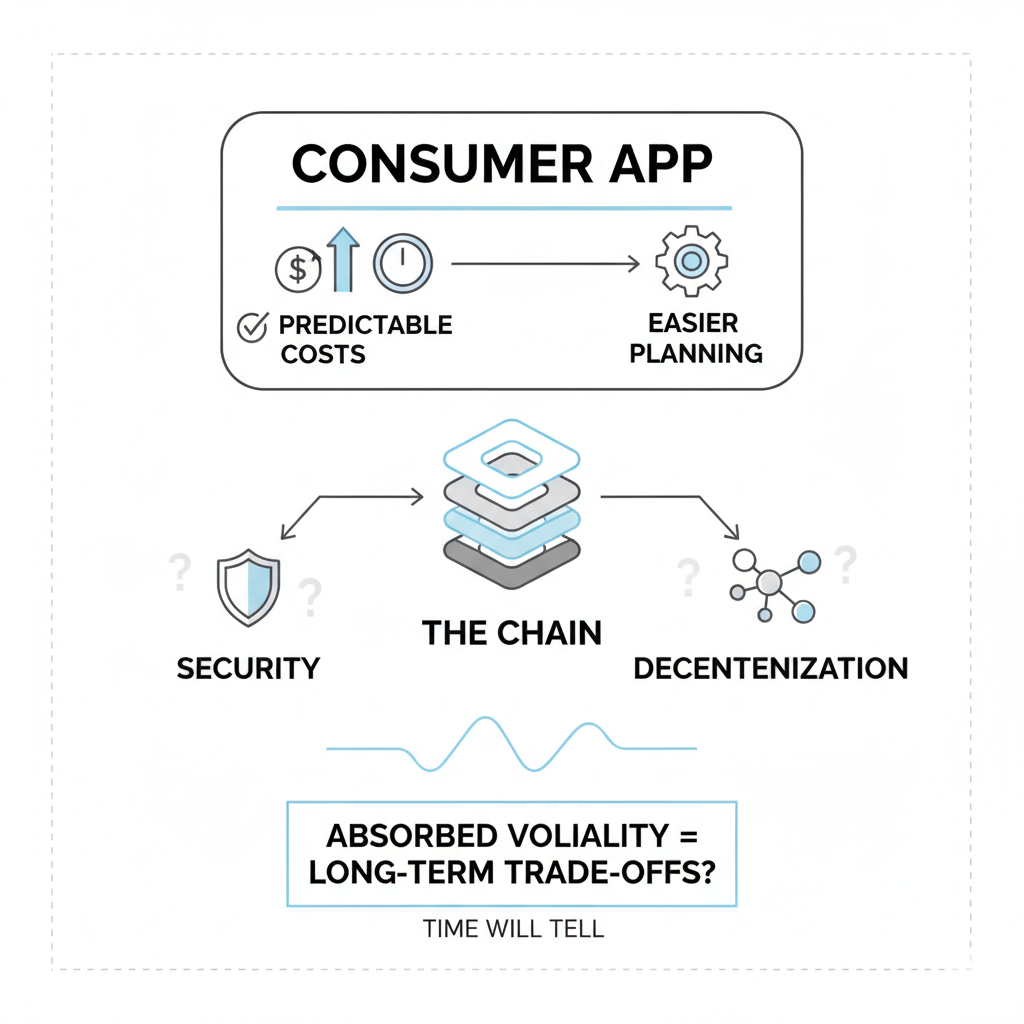
Some of the other recent updates feel more like movement than transformation. Integrations, ecosystem growth, announcements — they’re good signs, but they don’t change how the system behaves at its core. I’ve stopped treating those as victories. I see them as checkpoints. Useful, but not decisive.
So my view has shifted slightly. I’m less focused on the grand narrative and more focused on reliability. If the fixed-fee model survives real pressure and real demand, that would genuinely increase my confidence. If it struggles when things get busy, then it becomes just another attractive idea that couldn’t handle scale.
Right now, I’m not overly optimistic or skeptical. I’m just updating my mental model. My confidence has moved up a little, but cautiously. What would truly change my mind is simple: show me stability under stress. Show me that the system behaves the same when it’s crowded as it does when it’s quiet. If that happens, the story becomes much stronger — and much more real.