
I used to treat DeFi composability like a pure convenience upgrade
Fewer clicks fewer approvals fewer hops and suddenly you have a position that would take ten steps on a centralized venue
Then I started paying attention to what happens when lending and trading snap together too tightly
The same financial Lego feeling can hide a hard truth
Small timing gaps can become solvency risk
The scary part is how quietly it happens
Your dashboard looks fine
Your health factor is green
But executable reality is already drifting away from what the risk engine thinks is true
My misalignment moment what I did and what I learned
I did a routine move that looked clean on paper
I deposited stablecoins into a lending market
I borrowed a volatile asset because I wanted to run a strategy
I traded that borrowed asset across spot and perps
I watched the UI and stayed calm because the health factor stayed green
Then a fast move hit
Not a slow trend a sudden wick type move
In that window I realized something uncomfortable
The oracle price still looked calm
The real tradable price had already slipped
Liquidators did not instantly jump because liquidation is a market and hedging gets expensive in chaos
And I was staring at my screen thinking
I was safe two minutes ago so where did this danger zone come from
That was the moment composability stopped feeling like a shortcut and started feeling like a responsibility
The real issue is not composability the real issue is the gap stack
When lending and trading are tightly integrated risk does not come from one place
It comes from small mismatches that stack up and activate together under stress
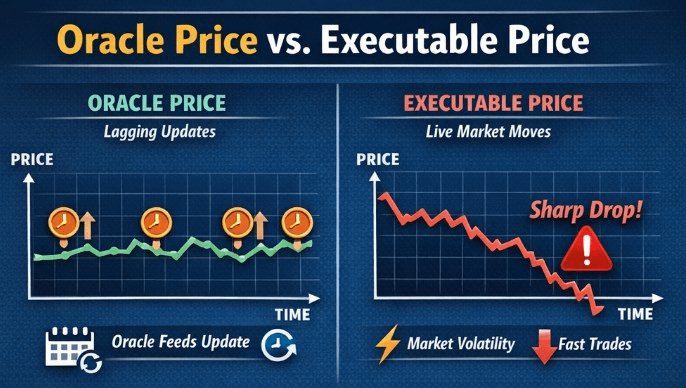
Gap one oracle price versus executable price
Lending systems rely on oracle prices to decide solvency
Trading systems fill you at the market price
In fast markets those two can diverge
Oracles update on their schedule
Markets move on their own schedule
So you can be safe on paper and unsafe in execution
That is how bad debt starts to form without anyone noticing immediately
Gap two execution latency versus liquidation latency
I used to assume liquidation is automatic
Threshold crossed liquidation happens
Reality is more human
Liquidation is a market
Liquidators need capital
They need a hedge
They need reliable fills
They need a margin of safety
When volatility spikes spreads widen and hedging gets costly
Liquidators hesitate
That hesitation stretches the window where a position can drift underwater
Gap three cross protocol domino effects
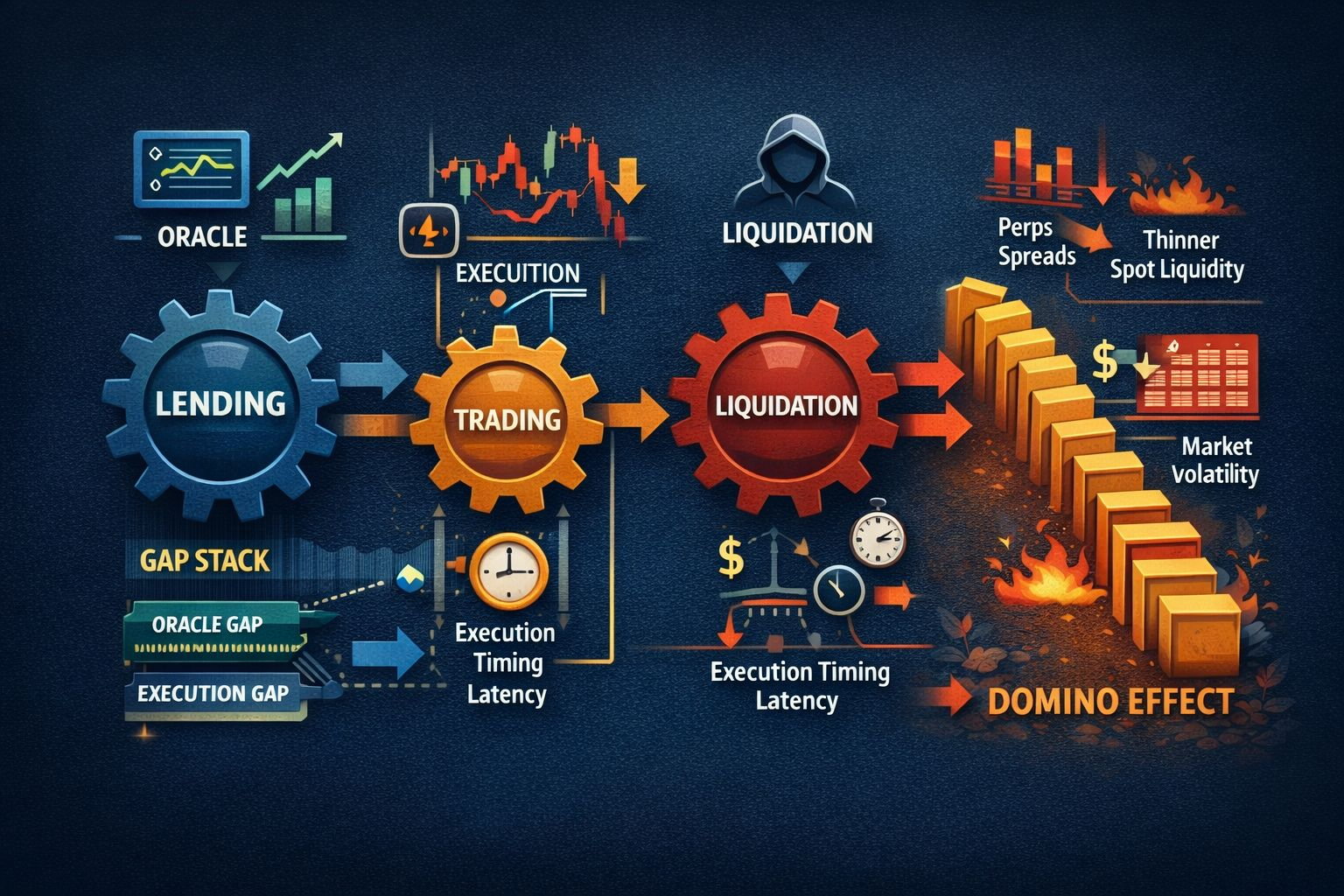
This is the one people feel only after they get hit once
Perps spreads widen
Spot liquidity thins
Collateral values drop
Liquidations spike
Forced selling increases volatility
Volatility makes liquidators demand higher incentives
And the whole system starts feeding itself
You think you are managing one position
But you are inside a network reaction
Why Fogo belongs in this conversation
Fogo is positioned as a trading first chain with very low latency and fast confirmations
In a lending plus trading world speed is not just about user experience
Speed can shrink some of the windows that create solvency risk
Faster settlement can reduce the time between a price move and a liquidation completing
That matters when markets move violently
But I want to be blunt
Speed helps
Speed alone does not guarantee safety
Safety depends on the rules built on top
Risk checks collateral factors caps oracle handling liquidation incentives circuit breakers
A fast chain can give builders better physics
Builders still have to write better rules
Three organic examples what I did what I learned
Example one the one click leverage illusion
I used a product that built the whole position in one clean flow
It felt addictive because it removed friction
Then I asked myself three questions
If the market wicks eight to ten percent what is the unwind path
Are there circuit breakers or does the strategy keep looping into stress
Who enforces borrow caps and exposure caps
That is when I learned
A smart interface is not the same thing as a smart risk model
Example two sessions make things smooth but permissions are a risk surface
I tested session style flows where everything feels gasless and frictionless
It feels like a web2 login experience
Then my security brain woke up
If permissions are too wide a small bug or edge case can create unintended exposure
So my personal rule became simple
Keep sessions short
Keep permissions narrow
Revoke when done
Example three health factor is not a liar it is often late
Health factor is not always wrong
It can be late in fast markets
I watched a health factor stay green while my execution prices got worse
That taught me a clean lesson
Health factor is a dashboard light
It is not the road itself
What safe composability actually means
If you combine lending and trading you need more than integration
You need seatbelts at every boundary
Seatbelt one risk checks at every boundary
Before borrowing
Before trading
After trading
Before looping again
Seatbelt two dynamic guardrails
Static parameters look fine in calm markets
They fail in stress
Good systems adapt to volatility liquidity depth and oracle behavior
Seatbelt three caps and circuit breakers
Max borrow per asset
Max leverage per account
Limits for correlated collateral
Limits on how fast exposure can grow in a short window
Slow mode or pause logic for extreme conditions
These are boring features
They are also what prevents death spirals
If I used lending plus trading composability on Fogo today what I would do
I would start small and scale only after observing real stress behavior
I would avoid using thin liquidity assets as collateral for leverage loops
I would treat health factor as an indicator not a guarantee
I would understand the oracle model and liquidation design before trusting it
I would use sessions only with tight scope and short duration
Because the lesson I learned the hard way is simple
In DeFi everything is possible
Not everything is safe
Closing
I still like composability
I just do not treat it like a shortcut anymore
I treat it like a seatbelt system
Fogo style trading first infrastructure can shrink timing gaps
But true safety comes from how lending and trading are stitched together with rules
One click is nice
One click with rules is survival
