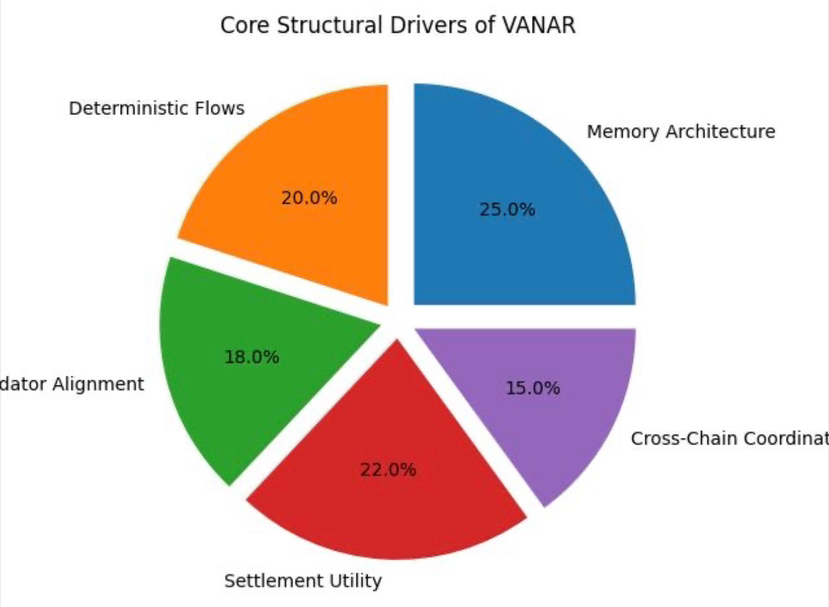
There are projects that win attention. And then there are projects that quietly build structure.
@Vanarchain sits in the second category.
A lot of chains compete on surface metrics. Speed. TPS. Fees. Incentives. They try to win the narrative cycle. But structure is different. Structure is about how a network behaves when hype fades, when usage grows, and when complexity increases.
VANAR’s advantage isn’t about being louder. It’s about being layered correctly.
Most ecosystems treat scalability, usability, and developer tooling as separate conversations. VANAR treats them as one integrated system. That matters more than it sounds.
Because in real adoption, nothing happens in isolation.
When a developer builds, they don’t just need fast execution. They need predictable costs, stable infrastructure, shared standards, and cross-application compatibility. When users interact, they don’t care about consensus mechanics. They care about responsiveness, clarity, and reliability. When capital flows in, it doesn’t evaluate slogans. It evaluates resilience.
VANAR’s structure is increasingly aligned around these realities.
First, execution is not the bottleneck. The chain is optimized for consumer-grade interaction. That means lower friction at the interface layer and stronger reliability at the base layer. When performance feels smooth, users stay longer. And when users stay longer, network effects begin to form.
Second, VANAR leans into memory and continuity.
This is where many chains fall short. They process transactions but don’t preserve context. VANAR is positioning itself around persistent participation where agents, applications, and users operate on shared history rather than isolated actions. That creates compounding behavior.
Compounding is structural.
If builders operate on the same substrate consistently, references align. Liquidity pools deepen instead of fragmenting. Integrations don’t have to be reinvented repeatedly. Identity, reputation, and coordination become easier.
Over time, that cohesion becomes an advantage that is hard to replicate.
Another overlooked factor is design maturity.
Instead of trying to compete on every vertical at once, VANAR appears focused on coherence. A network that tries to optimize everything simultaneously often ends up fragmented. VANAR’s approach feels more deliberate. It builds components that reinforce each other rather than compete internally.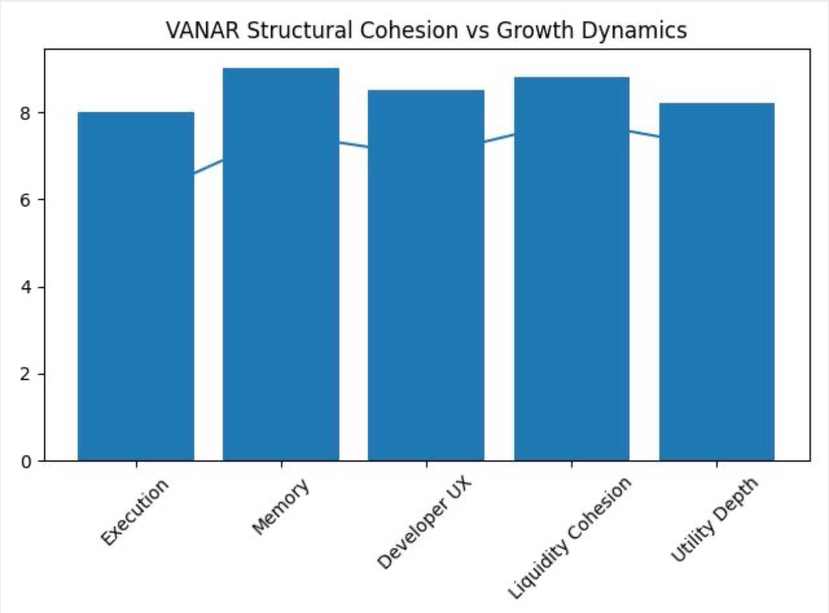
That includes how value flows.
Utility-driven ecosystems survive cycles better than speculation-driven ones. When tokens reflect usage, participation becomes more organic. Builders care about long-term alignment. Users care about stability. Capital feels safer because it can trace activity to real engagement rather than pure emissions.
Structural advantage is also about behavior patterns.
If early adopters interact in ways that encourage reuse — staking that integrates into DeFi, applications that share standards, governance that rewards contribution — those patterns tend to persist. Behavior formed early often defines culture.
And culture defines durability.
VANAR is still early. That’s important. Structural advantage is not something you declare. It’s something that becomes visible over time through consistency. But early signals matter.
Right now, the signals suggest a network building with integration in mind rather than fragmentation. With continuity in mind rather than bursts of activity. With usability in mind rather than technical exhibition.
Markets reward velocity in the short term.
Infrastructure rewards cohesion in the long term.
If VANAR continues to align execution, memory, developer experience, and capital efficiency into one connected loop, its advantage won’t be about outperforming on a chart.
It will be about becoming difficult to displace.
And in blockchain, durability is the ultimate edge.