
When I first came across Fogo I did not approach it like a trending topic. I search for how systems behave beneath their marketing language because infrastructure only proves itself through function. In my personal experience analyzing blockchain design I have learned that performance claims often sound impressive until real usage arrives. So I checked the architecture first rather than the announcements.
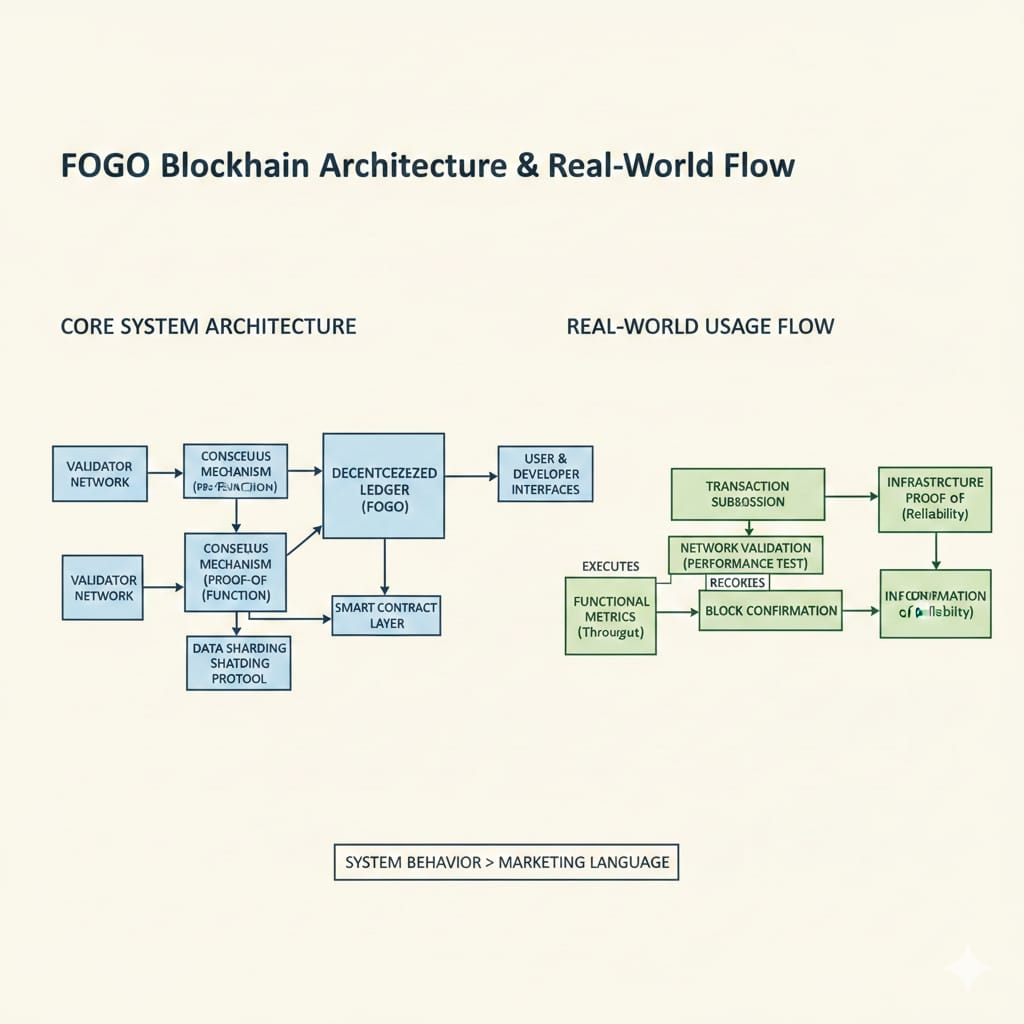
Fogo is a high performance Layer 1 that utilizes the Solana Virtual Machine. That detail matters because it defines how execution is handled. Instead of processing transactions one by one the system allows independent actions to run in parallel. This is not just a technical upgrade. It is a structural decision that assumes activity will be continuous and overlapping. Real economies do not operate sequentially. They operate simultaneously. Fogo is designed with that assumption from the beginning.
As I continued researching I say to this approach that it reflects a shift from theoretical throughput to sustained throughput. Many networks can demonstrate high capacity under controlled conditions. The challenge is maintaining that behavior when demand becomes unpredictable. They are coordinating execution so workloads that do not conflict can move together. That reduces artificial bottlenecks which often appear in systems that rely too heavily on serialized processing.
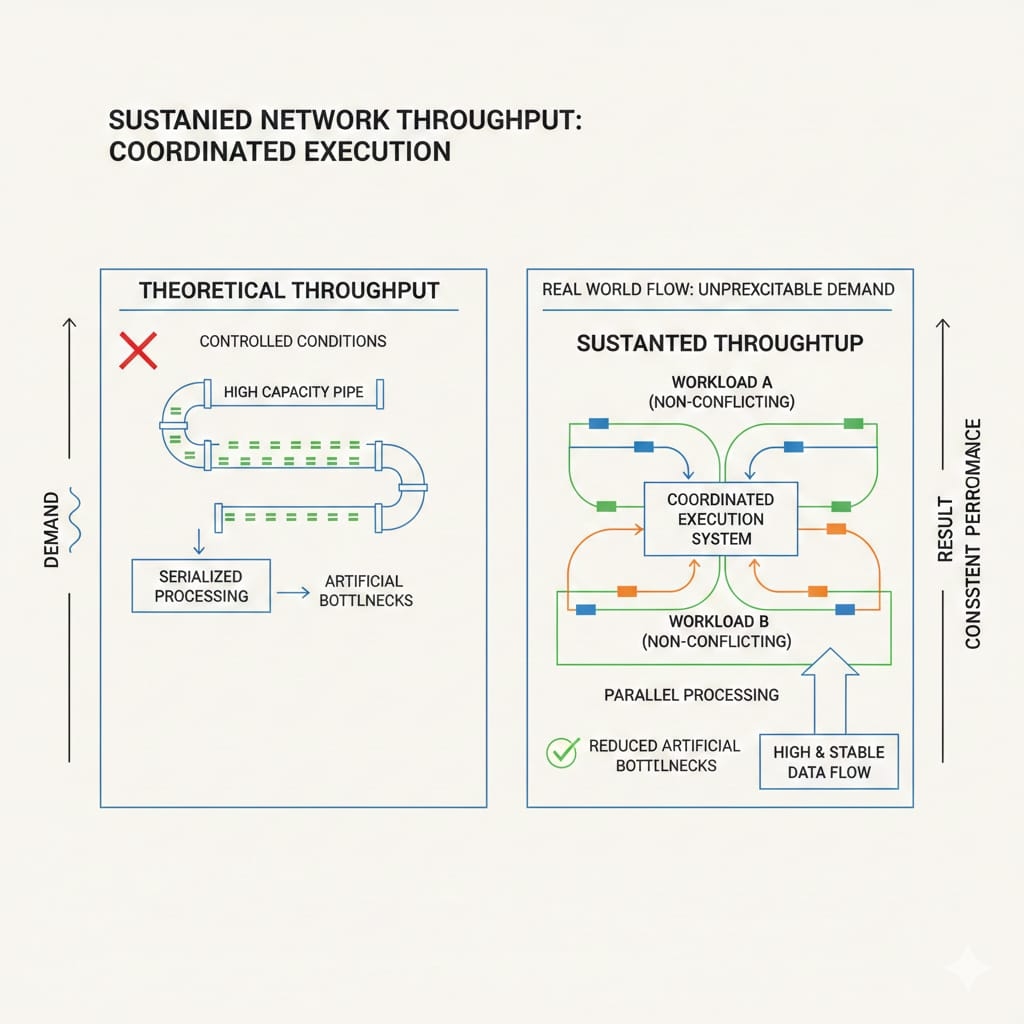
We can understand the significance of this by looking at how developers build applications. When infrastructure behaves inconsistently developers compensate with extra logic redundancy and cost management strategies. When infrastructure behaves predictably they simplify design and focus on functionality. We are seeing across multiple ecosystems that reliability reduces friction more effectively than raw speed increases capability.
From my personal experience evaluating infrastructure maturity I checked for indicators beyond transaction counts or market sentiment. I focused on whether the architecture supports stable validator operation consistent execution timing and scalable resource distribution. These are measurable characteristics that determine whether a network can support long term workloads rather than short term spikes.
They are not reinventing computation. They are refining how it is scheduled and validated. That distinction reduces complexity which historically has been one of the primary causes of instability in new blockchain environments. If execution remains deterministic under scale it becomes easier for participants to coordinate which strengthens network resilience over time.
There are still risks that must be acknowledged. High performance systems require careful balance between optimization and decentralization. Hardware accessibility validator diversity and ecosystem participation will determine whether scaling remains inclusive. Understanding these factors early allows evaluation based on sustainability instead of narrative momentum.
Looking ahead we should not measure Fogo by whether it becomes the fastest chain in isolated benchmarks. We should measure whether it maintains operational consistency as usage expands. Infrastructure success is observable through reduced variance in performance predictable confirmation behavior and continued developer deployment across cycles.
My expert takeaway is simple and grounded in observable patterns rather than hype. Networks that achieve lasting adoption tend to prioritize execution stability developer confidence and repeatable performance metrics over headline throughput. If Fogo can demonstrate these qualities consistently over time then its value will emerge from measurable utility not speculation.