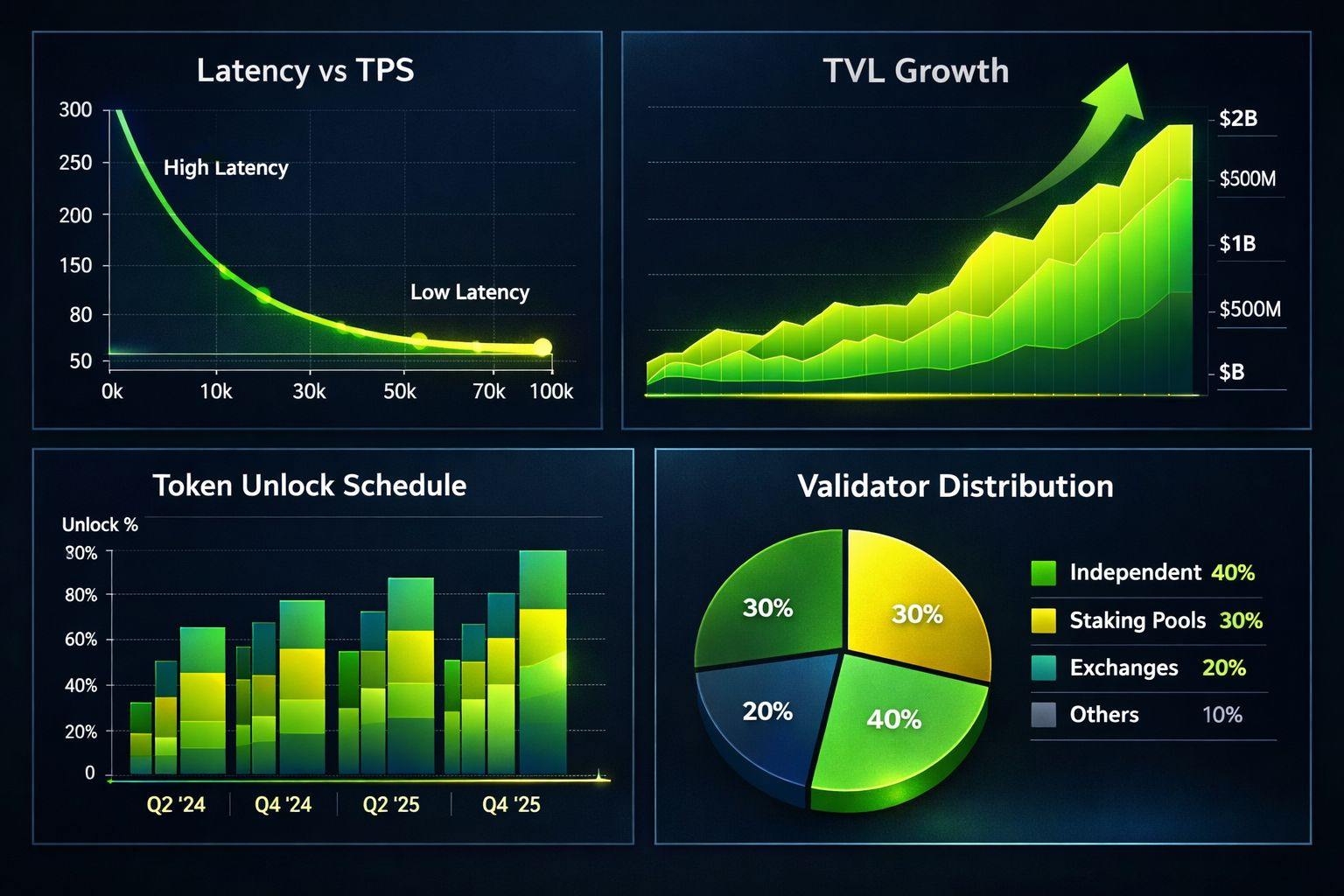
Let’s be real. Crypto has been obsessed with speed for years. Every cycle, someone shows up claiming they’ve built the “fastest chain ever.” I’ve seen this before. You probably have too. But here’s the thing speed actually matters now in a way it didn’t a few years ago.
Back in Bitcoin’s early days, nobody cared about transactions per second. Bitcoin wasn’t trying to be fast. It was trying to survive. Ten-minute blocks, limited space, ultra-conservative design. It worked. Period.
Then Ethereum showed up and said, “What if we program money?” That changed everything. DeFi exploded. NFTs took over timelines. DAOs popped up everywhere. But Ethereum wasn’t built for that kind of traffic. Fees went crazy. Networks clogged. Normal users got priced out. You’d try to make a simple swap and it would cost more than dinner. That’s not sustainable.
So the industry split into two camps.
One side said, fine, let’s scale Ethereum with rollups. Keep Layer 1 secure and slow, push activity to Layer 2. Arbitrum. Optimism. That whole direction.
The other side said, no, we should just build faster base layers. Rethink execution from the ground up. That’s where Solana came in. And now Fogo sits in that lineage.
Fogo is a high-performance Layer 1 that uses the Solana Virtual Machine, the SVM. That’s not a small detail. It’s the core of the whole thesis.
If you don’t understand the SVM, you won’t understand why Fogo even exists.
Ethereum’s EVM processes transactions mostly one by one. Sequential. That’s just how it works. The SVM does something different. It lets transactions run in parallel as long as they don’t touch the same state. Basically, if two users are doing unrelated things, the system handles them at the same time instead of waiting in line.
That sounds simple. It’s not.
Parallel execution is hard to build and even harder to maintain under stress. But when it works, throughput jumps dramatically. Solana has processed billions of transactions. Not theory. Reality. During heavy NFT mints and meme coin chaos, it kept pushing insane volumes. Yes, it had outages. People don’t forget that. But the architecture itself proved something important: you can scale Layer 1 performance if you design for it from day one.
So when Fogo builds on the SVM, it’s not reinventing the wheel. It’s starting from a system that already pushed real-world limits. Developers who understand Solana’s model don’t have to relearn everything from scratch. That lowers friction. And friction kills ecosystems faster than bad code.
But here’s where people get lazy. They hear “high-performance” and immediately think that solves everything.
It doesn’t.
Speed alone won’t build an ecosystem. I don’t care how many TPS charts you post.
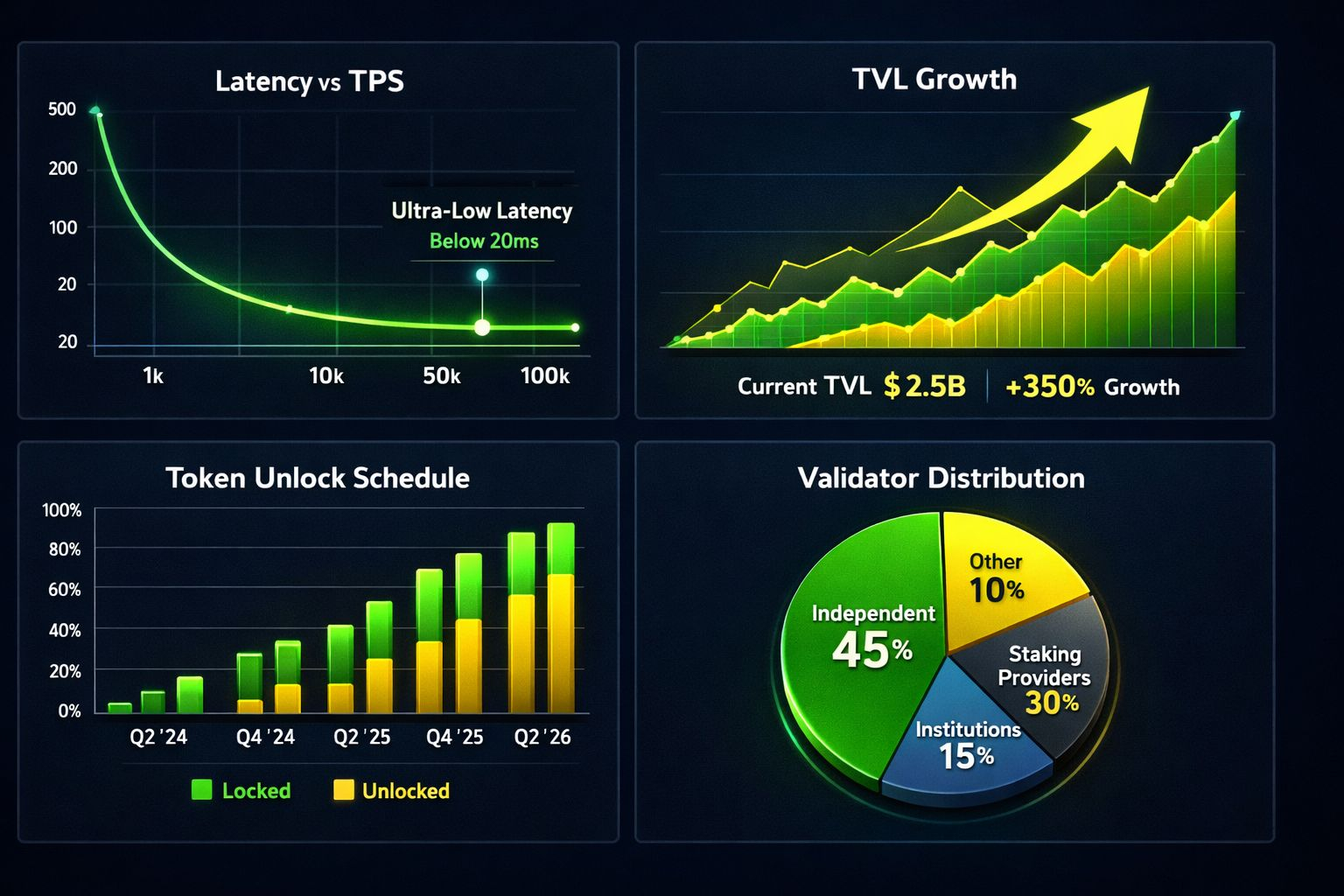
High performance in blockchain isn’t just about raw throughput. It’s about latency. It’s about finality. It’s about how the network behaves when everyone shows up at once. It’s about what happens at 3 a.m. when something weird hits mempools. Can the chain handle it? Or does it freeze?
We’ve seen both scenarios play out across different chains. Stability under pressure matters more than headline numbers.
And then there’s the uncomfortable conversation. Hardware.
High-throughput systems often demand serious machines to validate efficiently. That’s the tradeoff nobody likes to talk about. If validator requirements climb too high, fewer people can participate. Fewer participants means more centralization risk. That’s not theoretical. That’s basic economics.
If Fogo pushes performance further, it needs to balance that carefully. You can’t market decentralization and quietly build a data-center-only club. The community will notice.
Still, I get why teams pursue this path. Some applications genuinely need speed. On-chain order books. Real-time trading. Gaming environments with constant state updates. Prediction markets reacting to live events. Try running those on a slow, expensive chain. It’s a headache.
Rollups help, sure. But they introduce bridges, sequencers, extra trust assumptions. Some developers don’t want that complexity. They want a base layer that just works fast.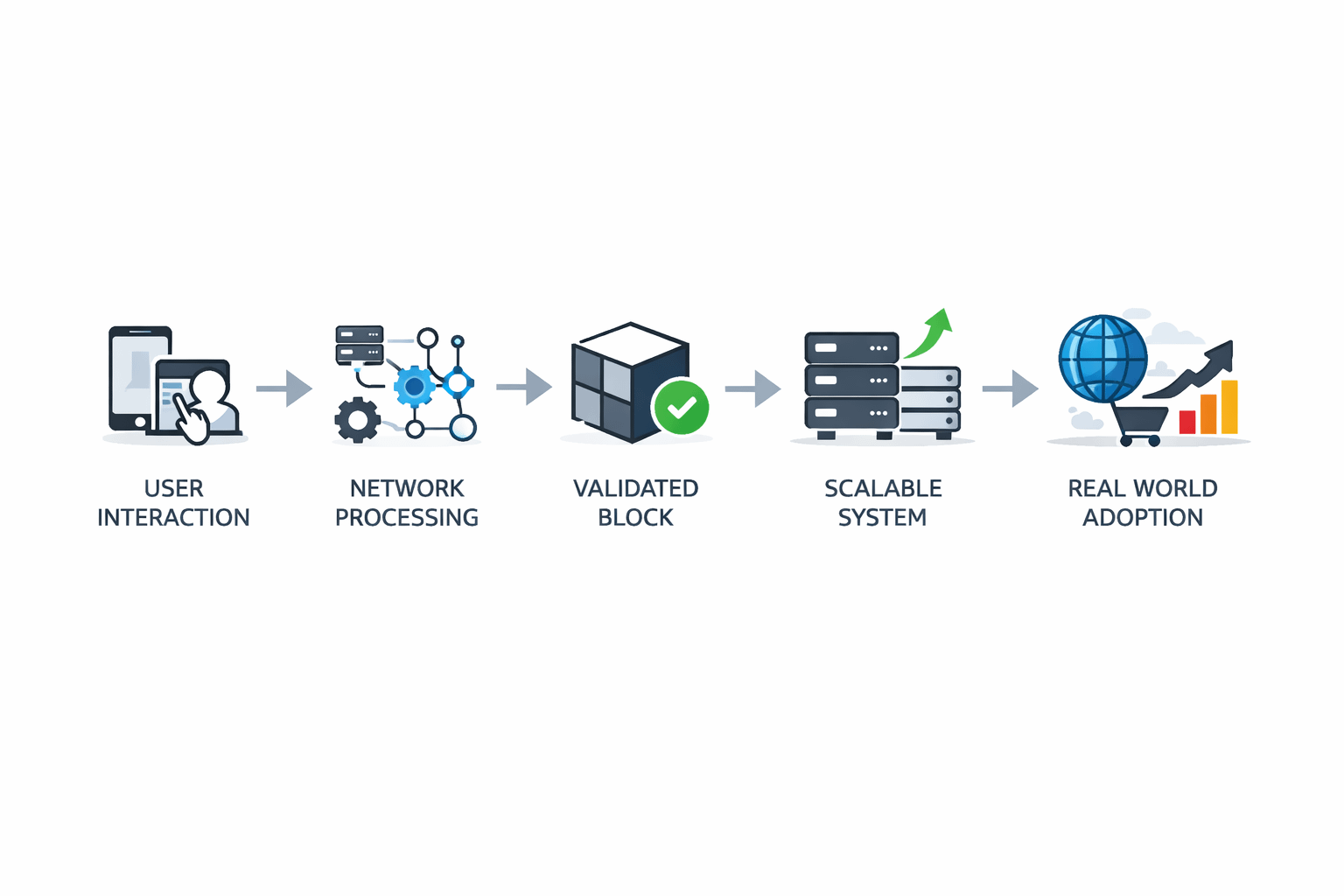
That’s the appeal.
And let’s talk about network effects for a second. Because this is where most Layer 1 dreams die.
Developers follow users. Users follow liquidity. Liquidity follows incentives. It’s a loop. Breaking into that loop is brutal. You can have the cleanest codebase in the world and still struggle if nobody shows up.
So the real question isn’t “Is Fogo fast?” It’s “Why would people move?”
Compatibility with the Solana Virtual Machine helps. It lowers switching costs. But it’s not magic. Teams still need a reason to deploy. Traders need a reason to bridge funds. Communities need a reason to care.
And then there’s token economics. This part always gets glossed over in performance discussions.
Many high-speed chains boast ultra-low fees. Great for users. But how do validators get paid long term? If inflation drops and fees stay tiny, who secures the network? Security budgets matter. People don’t talk about this enough.
A sustainable Layer 1 aligns performance with incentives. If the economic model doesn’t make sense, the tech won’t save it.
Now, I also think the “only one chain will survive” narrative is nonsense. We don’t live in a single-provider world. Finance doesn’t run on one exchange. Cloud computing doesn’t rely on one company. Blockchains won’t collapse into a monopoly either.
Bitcoin will likely keep its conservative role as digital collateral. Ethereum will keep pushing modular settlement and rollups. High-performance Layer 1s will compete for real-time applications. That’s a more realistic future.
The market today feels different than 2021. Institutions are stepping in through regulated vehicles. Venture capital isn’t spraying checks at every whitepaper anymore. People ask harder questions. They look at uptime data. Validator distribution. Governance models.
Good. The space needed that maturity.
For Fogo to matter long term, it needs to prove consistency. Not just benchmarks. Not just launch hype. Real uptime. Real usage. Real stress tests. Over years, not months.
I think performance-optimized chains will continue gaining relevance. Users won’t tolerate ten-minute waits or unpredictable fee spikes forever. As decentralized apps get more sophisticated, expectations rise. People want Web2 smoothness with Web3 guarantees. That’s the goal, even if we’re not there yet.
But competition is fierce. Ethereum rollups keep improving. Alternative execution models keep emerging. Interoperability keeps getting better. The chain that wins won’t just be the fastest. It’ll be the one that combines speed, reliability, decentralization, and sane economics.
That’s hard. Really hard.
Fogo’s bet is clear. Base-layer performance still matters. Parallel execution is a real advantage. Building on the Solana Virtual Machine gives it a head start instead of starting from zero.
Whether that bet pays off depends on execution. Not marketing. Not Twitter threads. Execution.
If Fogo can stay fast without breaking. If it can scale without quietly centralizing. If it can design token incentives that make sense beyond speculation. Then it has a shot.
If not, it’ll join the long list of ambitious Layer 1s that taught us lessons the hard way.
And honestly, that’s crypto. Bold experiments. Brutal competition. The strongest architectures survive.
The rest become case studies.