
Vanar Chain is built around a human truth that most technical pitches ignore. A lot of people do not fear new technology. They fear the feeling of loss of control. There is a small silent gap after you press confirm where your chest stays tight. I’m talking about that gap. Vanar frames itself as a next generation Layer One that is designed for global adoption and mainstream use cases instead of only crypto native habits. The project ties its identity to consumer worlds like gaming entertainment and brand experiences because those worlds expose weak infrastructure fast. If the experience is slow or confusing people leave. They do not argue. They vanish.
Vanar also presents itself as EVM compatible and built on the same foundation that many developers already know. This choice is less about ideology and more about speed of building. When a team can reuse familiar tools they ship faster and they make fewer mistakes. That matters because real adoption is not a single launch. It is thousands of small launches that keep working. The Vanar whitepaper describes the intention to be fully compatible with Ethereum tooling and it leans on the Geth implementation as a base for its execution layer. That is the kind of decision that tries to reduce friction rather than reinvent everything.
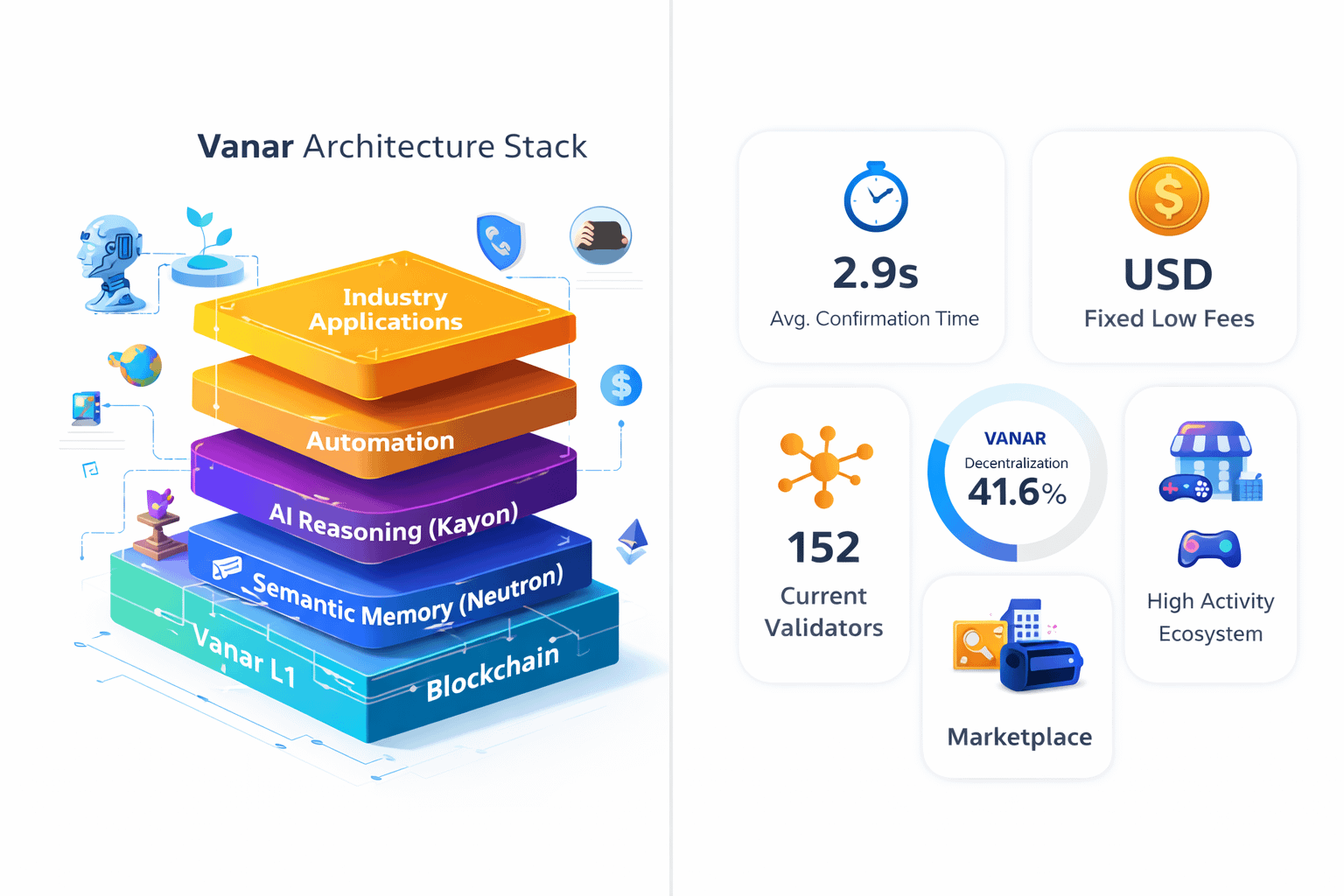
Under the surface Vanar describes a hybrid consensus approach. It is primarily Proof of Authority and it is governed by Proof of Reputation. The official documentation states that the Vanar Foundation initially runs validator nodes and then onboards external validators through a reputation based process. This tells you what Vanar is optimizing for early. It is optimizing for stability and predictable operation. A consumer network can survive slower decentralization in the beginning only if it is honest about the plan and actually moves toward broader participation over time. They’re betting that trust grows when the chain works every day and the validator set can expand in a controlled way.
The VANRY token sits at the center of the network economy. It is presented as the token used to power the network and pay for activity. The Vanar whitepaper describes a maximum supply capped at 2.4 billion tokens and it explains that additional issuance beyond the initial genesis supply is generated through block rewards. Supply structure matters because incentives shape validator behavior and long term security. A chain can feel fast today and still fail later if rewards do not sustain honest participation. Vanar wants predictability here too. The whitepaper frames issuance as predefined and transparent so people can reason about the path instead of guessing.
Us
A big part of Vanar’s story is that it is not only a chain. It is presented as a full stack that tries to make onchain systems capable of handling real information not only token transfers. The Vanar site describes an intelligent Layer One stack designed for PayFi and tokenized real world assets with components that include the base chain plus Kayon and Neutron. This is the part where Vanar tries to step into the next era of software. We’re seeing AI systems move from chat to action. Action needs memory and verification and accountability. Vanar positions its stack as a way to store data in a structured and verifiable form and then let AI logic query and apply rules.
Neutron is the most distinctive element of this narrative because it changes what it means to store data. Vanar describes Neutron as a compression and restructuring layer that turns raw files into programmable Seeds and keeps them verifiable. The Neutron documentation adds that each Seed is enriched with AI embeddings so it becomes context aware and searchable by meaning including time file type and even visual similarity. This is not a small claim. It is basically a promise that data can become usable onchain in a way that supports semantic search and agent workflows. If it works at scale It becomes a bridge between real world documents and smart contract logic without forcing everything through fragile offchain pipelines.
Kayon is positioned as an onchain reasoning and logic layer. The framing is that Kayon can query and validate information and apply compliance logic in real time for intelligent applications. This is a direction that fits a world where more transactions are not initiated by humans. They are initiated by software agents that need rules. It is easy to say AI native. It is harder to make it auditable. Vanar keeps using the language of verifiable data and compliance aware logic because the real future customers are not only traders. They are institutions and platforms that need evidence and traceability when automation moves value.
The project also connects itself to consumer facing products and ecosystems. Virtua is repeatedly associated with this world and it positions itself as a metaverse and collectibles platform with brand and entertainment roots. The strategic point is simple. Infrastructure without products often becomes an empty highway. Vanar is trying to anchor usage through experiences where people show up for fun and stay because ownership feels seamless. When digital ownership becomes invisible and natural that is when mainstream adoption starts to look real.
To understand Vanar deeply you have to look past price and into behavior. The most honest metric is user confirmation experience under load. If short block times and stable performance hold during busy periods then users feel calm and developers can design real time experiences without fear. Another insight metric is fee predictability in practice. Vanar highlights low cost use and the broader project messaging focuses on reducing infrastructure friction. The question is whether costs remain understandable across different demand environments. The third metric is validator set evolution. With a Proof of Authority start the network must show a credible path toward wider validator participation and clear reputation based onboarding. The fourth metric is product gravity. You want to see sustained activity that is not driven only by announcements. You want to see repeated use that looks boring and consistent. Boring is a compliment in infrastructure.
Now for the risks because deep trust requires honesty. The first risk is centralization perception and reality. Proof of Authority is stable but it concentrates responsibility. If validator onboarding remains limited or unclear then the network can be seen as controlled infrastructure rather than a widely governed system. The second risk is complexity risk. A multi component stack with semantic data and AI logic can become hard to secure and hard to ship. If shipping slows the market will not wait. The third risk is adoption risk. Gaming and metaverse narratives can surge and then cool. A chain tied to consumer entertainment must prove retention through cycles. The fourth risk is data trust risk. Semantic compression and embeddings create powerful search and reasoning capabilities but they also raise questions about correctness and provenance. The value of verifiable Seeds depends on clear methods and strong guarantees about what is stored and how it can be validated.
Vanar’s pressure handling story is built around practicality. EVM compatibility lowers developer switching costs and reduces tooling risk. A structured architecture around a base chain and focused layers tries to separate responsibilities so the system can evolve without breaking everything. The documentation also emphasizes a consensus approach that starts stable and then opens as reputation and governance mature. That is a path that can work when it is paired with transparency and measurable decentralization progress. The best defense against doubt is not marketing. It is visible evolution in validators in uptime in developer activity and in real product retention.
The far future vision is where the emotional trigger becomes strongest. Imagine an internet where value moves as easily as messages and where ownership feels like a normal part of apps. Imagine that AI agents can read a document understand it and act within clear rules while leaving a verifiable trail of what they used and why they decided. We’re seeing the early shape of that world in the push toward agent memory and semantic search and compliance aware automation. Vanar is trying to place itself directly under that wave with Neutron and Kayon as core building blocks. The dream is not that users become crypto experts. The dream is that users never have to think about it at all.
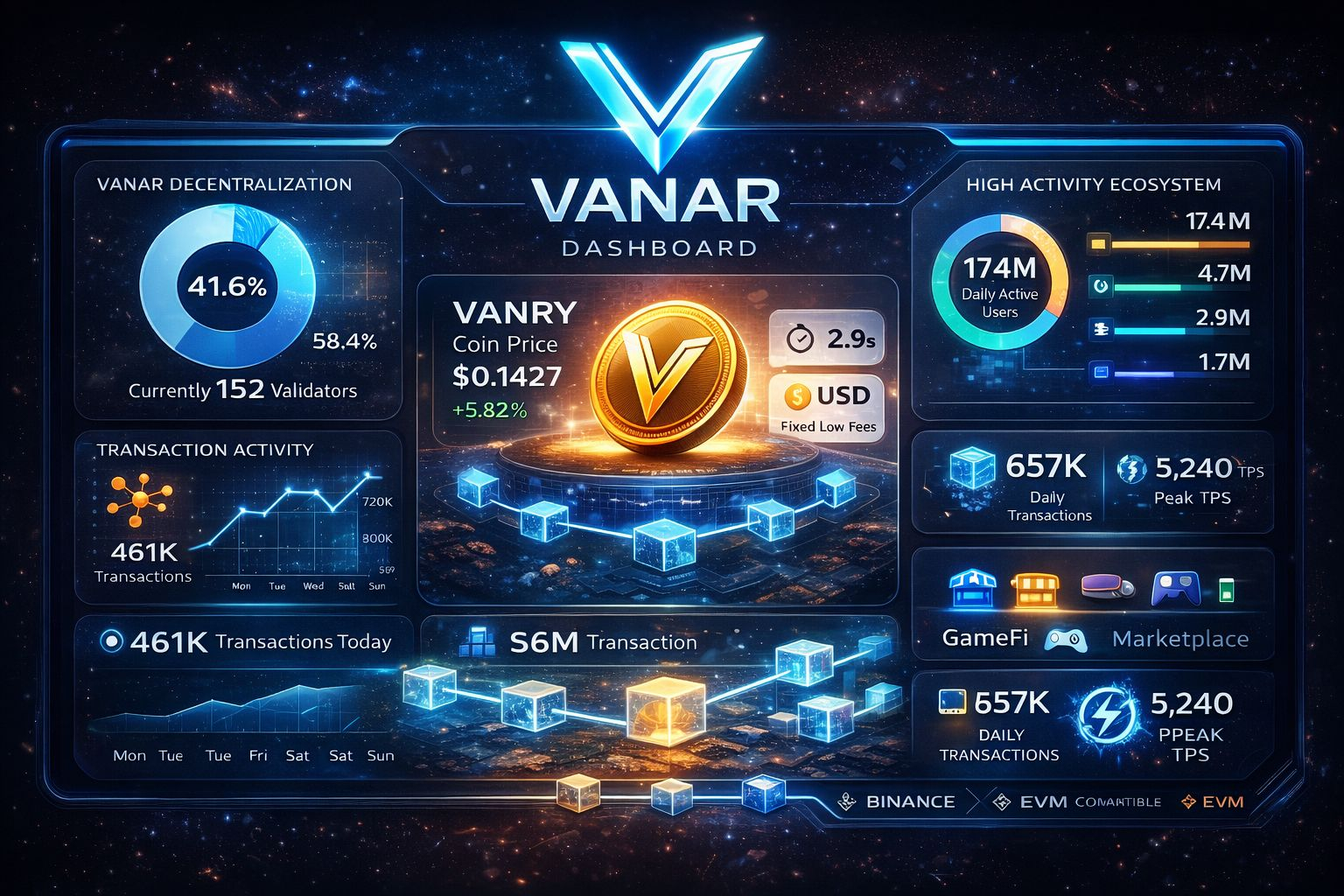
If Vanar succeeds it will not be because it shouted the loudest. It will be because it protected the user in that quiet moment after confirm. That is the moment where trust is either built or broken. I’m looking at Vanar as an attempt to turn blockchain from a stressful interface into a dependable foundation for consumer experiences and automated intelligence. They’re aiming for a world where builders move faster users feel safer and real world data becomes useful without losing verification. If it keeps shipping and if decentralization progresses in a way people can measure then It becomes the kind of infrastructure that disappears into daily life. That is the real victory. Not attention. Not hype. Calm.
#Vanar #vanar @Vanarchain $VANRY
