


When I first looked at Vanar I was honestly tired of the same story we hear in crypto. Another chain. Another promise. Another mix of AI and blockchain in one headline. It felt like worn out blockchain ideas mixed with smart AI marketing. But in 2026 the direction looks different. This is not just hype. It is about connecting real product usage with ongoing economic demand. That is a big shift.
Vanar Chain is no longer positioning itself as just a fast chain or a gaming focused network. The bigger idea now is to build AI directly into the core of the blockchain. Not as an extra feature. Not as a side tool. But as part of the foundation. The stack combines AI reasoning semantic memory and logic inside one on chain environment. That means intelligence is not sitting outside the chain. It lives inside it.
In past years many projects added AI like a marketing layer on top of normal infrastructure. Vanar is trying to avoid that. The goal is to make AI a native part of how the chain works. And the important part is this is not just a demo. The focus now is on practical tools that people need to use regularly. Because a blockchain cannot survive on innovation alone. It needs daily activity that creates economic demand.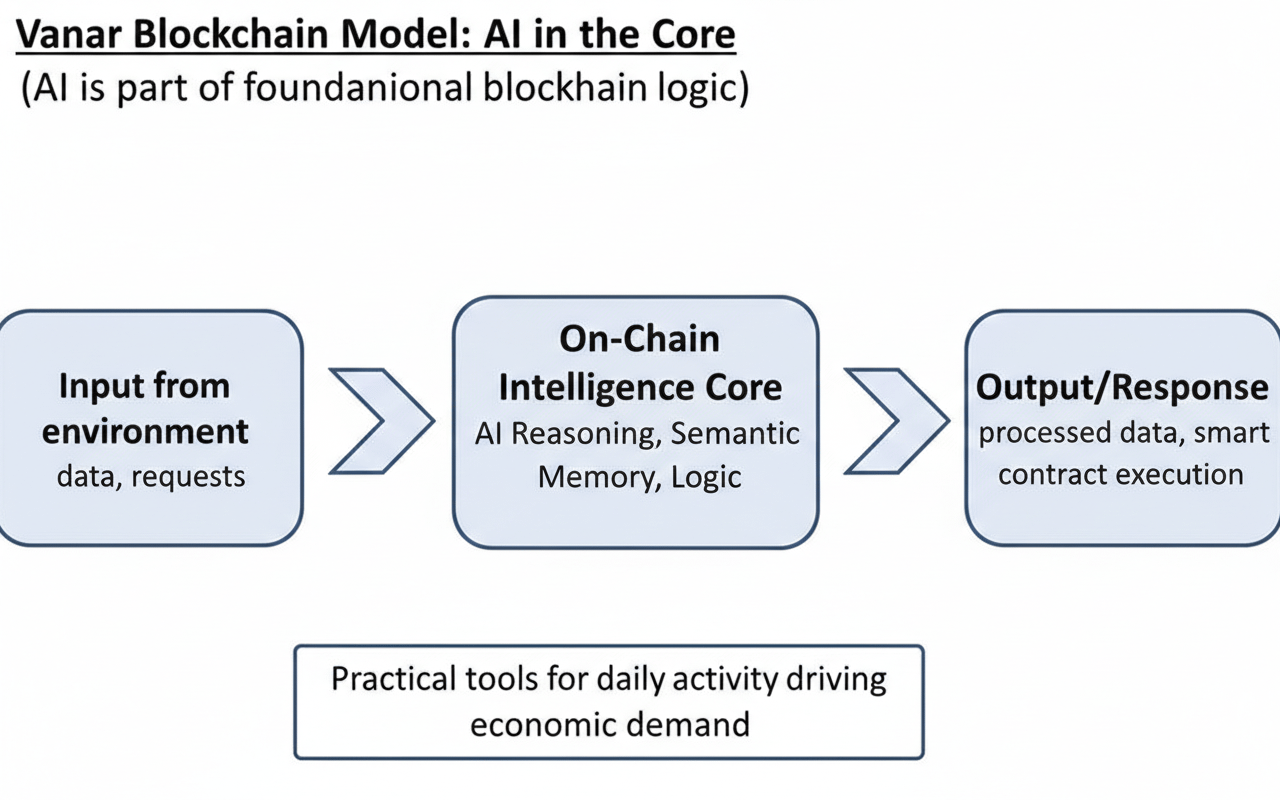
One of the biggest changes I see is how intelligence is being monetized. Tools like Neutron and Kayon are not just free experiments. They offer semantic data storage reasoning and natural language queries. But access is moving toward subscription or usage based models. That means if developers or businesses want deeper AI features they need to pay in tokens.
VANRY is being positioned as the payment layer for this access. This is important. Instead of hoping people buy the token because of speculation the ecosystem is trying to create demand through real usage. If you want advanced AI services you need the token. That feels closer to how software companies charge for APIs or cloud services. It is not just a gas fee model. It is more like a software economy running on chain.
When token demand is tied to paid AI tools it creates a healthier cycle. You are not asking the market to believe in future potential only. You are asking users to pay for what they actually use. That kind of loop is stronger than pure narrative driven trading.
There are also new products on the roadmap like Axon and Flows. Details are still limited but their positioning next to the AI stack shows they are meant to push automation further. Axon looks like an orchestration layer. Something that can connect decentralized data reasoning outputs and automated actions across apps. If that works it could allow smart contracts and intelligent agents to interact without human steps in between.
Flows seems to focus on turning high level logic into programmable tasks. That means workflows on chain could feel more natural not just simple transfers. Vanar is not just adding AI features. It is trying to automate parts of the Web3 system itself.
Now let us be real about the market side. Even with technical progress the token has faced ups and downs. Utility and price do not always move together. Many strong projects struggle because demand does not appear automatically. This gap between technology and token value shows that usefulness alone is not enough. Adoption needs to be visible and consistent.
Vanar seems aware of this. That is why the move from free tools to paid AI services matters so much. If these services do not gain users token demand may stay weak in the short term. But if developers and companies rely on them regularly the economic model becomes stronger.
When we compare Vanar to other AI blockchain projects the difference becomes clearer. Bittensor focuses on decentralized machine learning markets. Fetch.ai builds around autonomous agents and coordination tools. Vanar is positioning itself as the base infrastructure where AI logic memory and workflows live natively. It feels less like a marketplace and more like an operating system for intelligent decentralized apps.
This base layer approach can support many use cases. Smart payments automated governance compliance tools gaming and more. Infrastructure usually creates broader demand than niche applications if it works.
Another important area is user experience. Crypto still feels complicated for normal people. Long wallet addresses manual keys confusing onboarding. Vanar is integrating human readable naming systems and exploring biometric based sybil resistance. The idea is to make interaction easier and safer. If users can move through the system without facing old crypto pain points adoption becomes more realistic.
Mainstream growth does not happen overnight. It comes step by step. Stable infrastructure. Developer wins. Economic loops. Better user experience. Less friction. Vanar is building along these lines even if it is not loud about it.
I have watched NFTs explode and cool down. I have seen DeFi waves rise and fall. Most of those cycles lacked a sustainable economic loop. What makes this direction interesting is the attempt to connect AI capability with recurring paid access through the token. It is not flashy. But it feels grounded.
If Vanar can truly drive continuous demand for its AI tools because people and businesses need them then it becomes more than another chain with an AI label. It becomes infrastructure for decentralized intelligence.
There are three things I am watching closely. First are users actually paying tokens for AI services on a recurring basis. Second how Axon and Flows roll out and whether they expand the ecosystem or just add complexity. Third whether user experience becomes genuinely smoother than traditional crypto systems.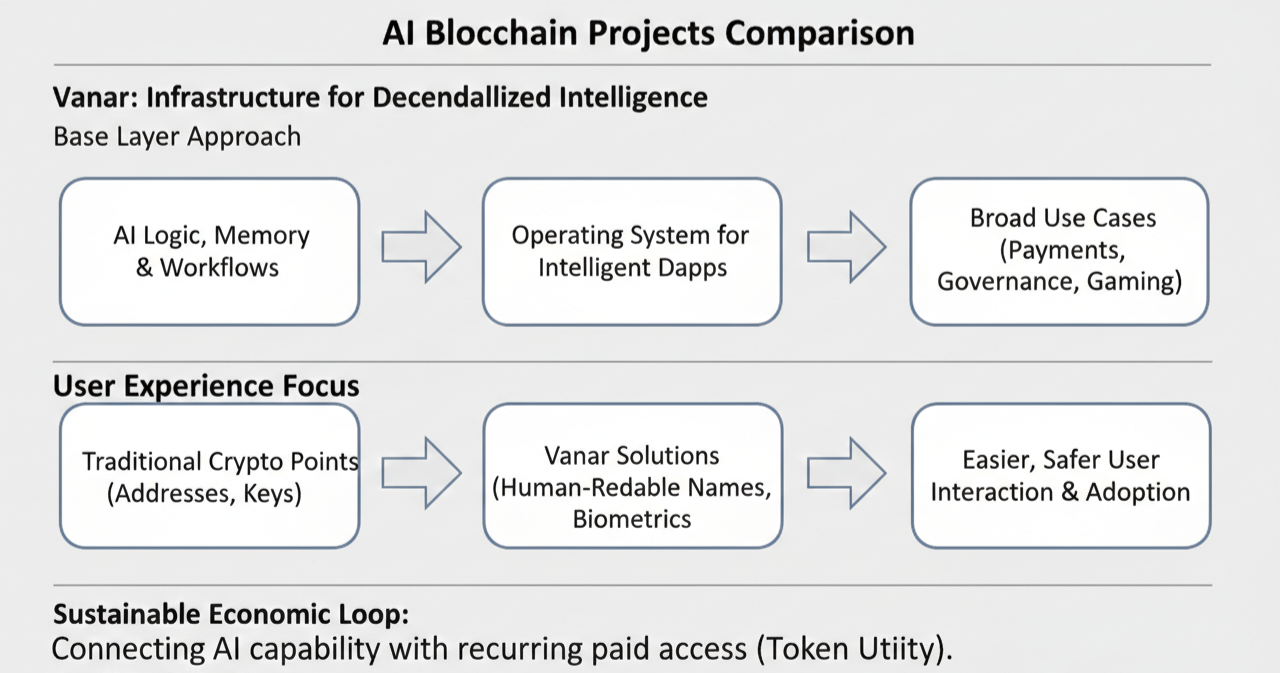
Vanar is not chasing the highest TPS race. It is building a new stack that blends AI into the core of the chain and ties token value to product usage. This is an attempt to create a real economic cycle not just speculation.
Execution will decide everything. But the shift toward utility driven token demand is one of the more serious and mature moves happening in Web3 right now. If it works Vanar will not just be another story in the AI narrative. It will be a working intelligence layer that people actually use and pay for.