
Digital identity is still fragmented across apps, chains, and platforms.
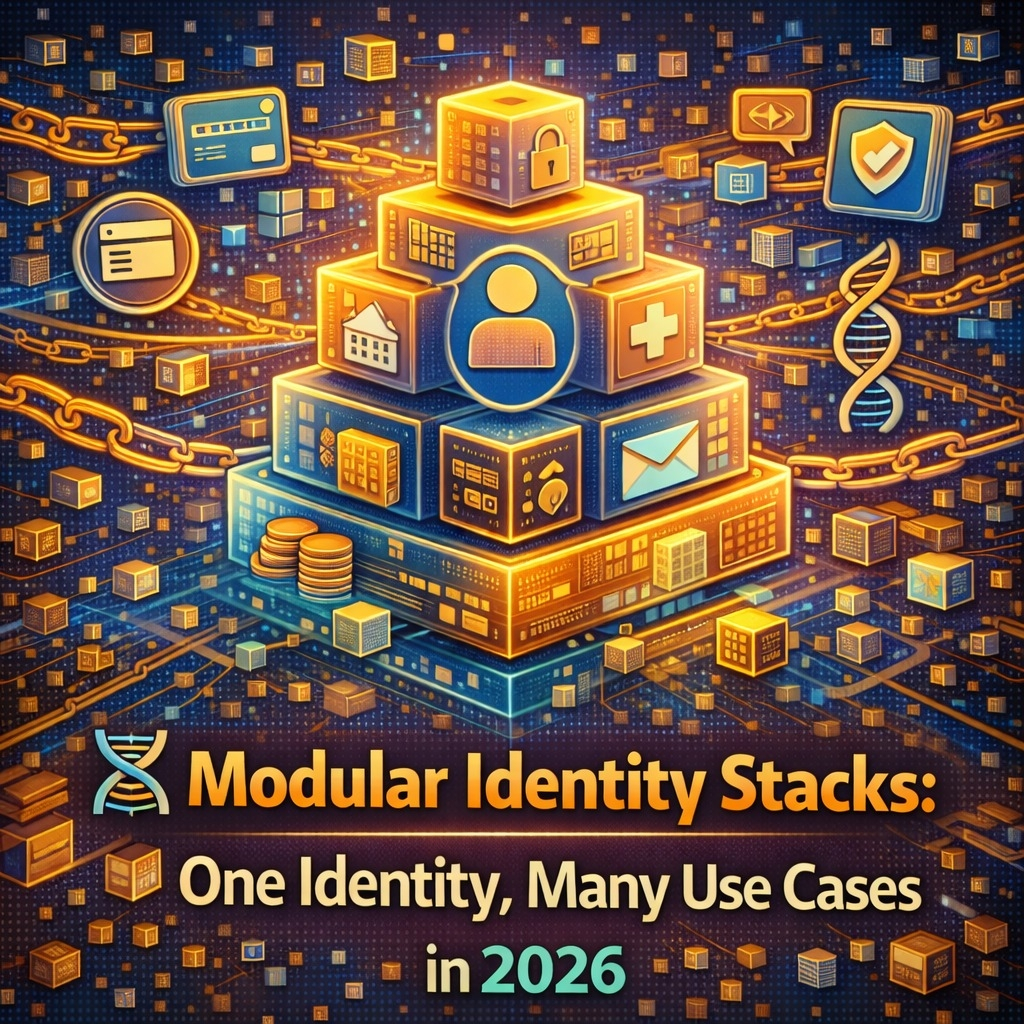
In 2026, Modular Identity Stacks are emerging as a key Web3 trend — allowing users to assemble identity like building blocks, depending on where and how it’s needed.
This is identity becoming flexible, not fixed.
⚙️ What Are Modular Identity Stacks?
A modular identity stack separates identity into independent components.
Instead of one all-exposing profile, users can selectively use:
• proof of age or location for compliance,
• reputation scores for DeFi or DAOs,
• credentials for work, education, or access,
• anonymity layers for privacy-first interactions.
Each module can be verified independently without revealing everything else.
🚀 Why It’s Trending in 2026
• Privacy-first regulation is tightening globally.
• DeFi, gaming, and DAOs all need different identity signals.
• Zero-knowledge proofs make selective disclosure practical.
• Users want control, not permanent data trails.
Identity is shifting from monolithic to composable.
💡 Final Takeaway
Modular Identity Stacks are redefining how trust works online.
In 2026, users won’t carry one oversized digital identity everywhere — they’ll present only what’s needed, when it’s needed, keeping privacy intact while remaining fully verifiable on-chain.
#CryptoTrends2026 #Web3Identity #ModularBlockchain #PrivacyTech #BlockchainInnovation #BinanceSquare #Write2Earn