
QB-CURE Wallet adds biometric authentication to wallet recovery, so a stolen seed phrase alone can never drain your funds. And it runs on a blockchain built to survive quantum computing.
Houston, TX - Picture this. You open your crypto wallet one morning and the balance reads zero. Every token. Every coin. Gone. You didn't click a bad link. You didn't share your password with anyone. But somewhere, somehow, someone got hold of your recovery phrase. Maybe it was a phishing email you don't even remember. Maybe a compromised cloud backup. Maybe someone found that piece of paper in your desk drawer.
It doesn't matter how they got it. What matters is that 24 words was all they needed.
No two-factor authentication. No fraud alert. No customer support line that can freeze the account and reverse the transfer. In crypto, once your recovery phrase is exposed, your assets move in seconds and they don't come back.
This isn't a rare edge case. Billions of dollars in cryptocurrency have been stolen this way. Phishing rings operate entire businesses around recovery phrase theft. And the industry's best advice for the past ten years has been: "Store your seed phrase somewhere safe."
That's not security. That's wishful thinking.
Ameritec IPS, a Houston-based cybersecurity company, thinks the problem isn't careless users. It's a broken model. And the company just launched a product designed to fix it.
What QB-CURE Wallet Actually Does Differently
The fix is surprisingly simple to explain.
Every crypto wallet on the market today treats the recovery phrase as the single master key. Get the phrase, get the wallet. QB-CURE Wallet breaks that pattern by adding a second requirement that can't be stolen, copied, or phished: your face.
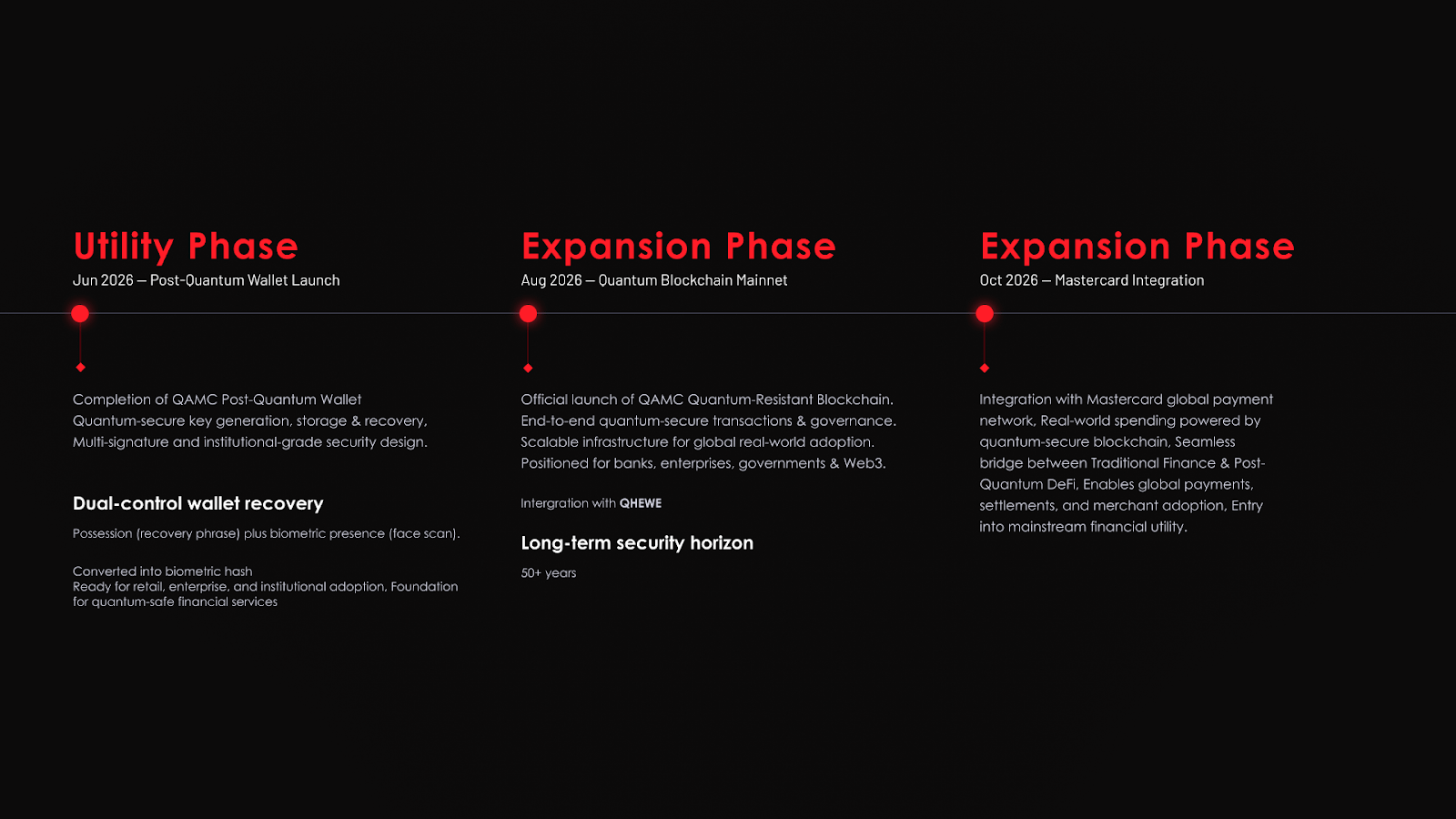
Ameritec IPS calls it Identity-Bound Recovery Security. To restore access to a QB-CURE wallet, you need two things working in tandem. First, the verified recovery phrase. Second, encrypted facial biometric authentication. Both. Not one. Both.
Here's what that changes in the real world. A hacker runs a phishing operation and collects thousands of recovery phrases. With any other wallet, that's thousands of accounts drained by morning. With QB-CURE, those phrases are dead weight. Every single one of them is useless without the matching biometric verification. The attacker would need to physically clone each victim's face through an encrypted authentication system to access a single wallet.
The single point of failure that has haunted crypto for over a decade just became a dead end.
The security stack under the hood goes further. QB-CURE runs on post-quantum encryption, meaning its cryptographic protections are built to hold up even against future quantum computers. It includes quantum-safe private key storage, AI-powered intrusion monitoring that watches for suspicious behavior in real time, anti-phishing safeguards, and secure identity-linked asset restoration. This isn't just a wallet with a face scan tacked on. It's a different security architecture entirely.
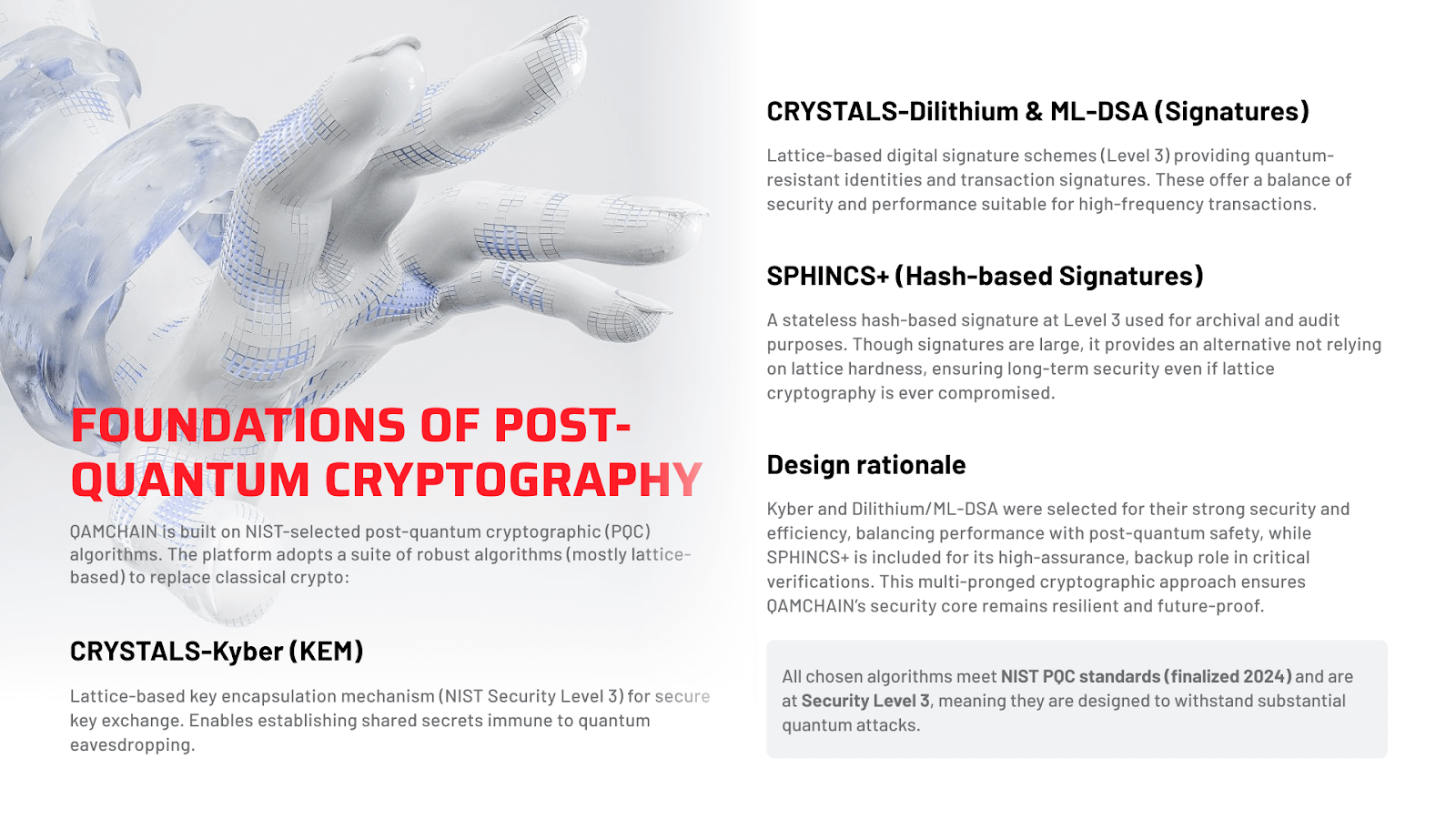
But the wallet is only half the story.
The Chain Underneath It
A wallet is only as strong as the blockchain it sits on. Ameritec IPS knows this, which is why QB-CURE isn't launching on an existing network. It's launching on QAmChain, the company's new post-quantum cryptographic blockchain.
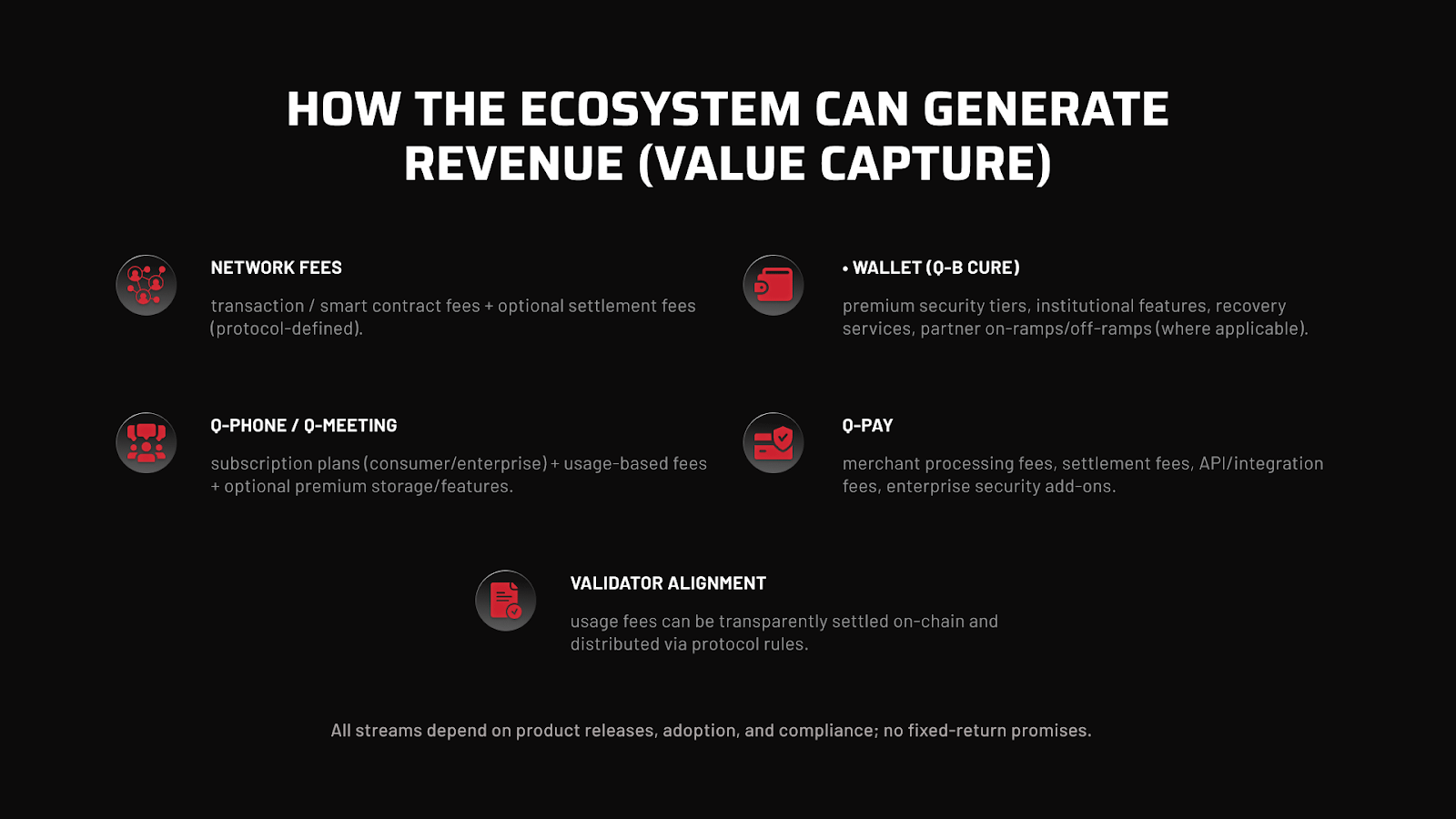
QAmChain isn't built from scratch in the traditional sense. It's an evolution of Ameritec IPS's existing AmChain network, rebuilt with quantum-resistant algorithms embedded at every layer. Transaction validation. Consensus architecture. Validator nodes. Key management. All of it designed to withstand the kind of computational attacks that quantum machines will eventually make possible.
The company put it this way: "Rather than applying post-quantum patches to legacy systems, Ameritec IPS has engineered QAmChain from the ground up, securing every architectural layer against future quantum threats."
Existing ecosystem assets are making the jump too. HEWE becomes Q-HEWE. AMC becomes Q-AMC. Current holders get a migration path that preserves everything they own while upgrading the security standard underneath it. The new chain supports DeFi, digital payments, smart contracts, and enterprise-level deployment.
Why This Matters If You Hold Crypto
If you've been in crypto for any length of time, you've probably felt it. That low-grade anxiety every time you hear about another phishing attack. That moment of paranoia when you wonder if your backup is actually safe. That uncomfortable truth that your entire financial position in digital assets depends on nobody ever finding a specific combination of words.
Ameritec IPS is making a bet that the next generation of crypto users won't accept that tradeoff. They'll want wallets that don't collapse the moment a recovery phrase leaks. They'll want infrastructure that accounts for threats that haven't fully arrived yet. And they'll expect the security model to protect them, instead of asking them to protect it.
The rollout is happening in phases. Validator node programs, developer integrations, enterprise security partnerships, and institutional blockchain deployment are all planned. More details on how to participate are expected in the coming weeks.
For now, the message is straightforward. The era of treating a piece of paper as your last line of defense in crypto may be ending. And Ameritec IPS just fired the first shot.
About Ameritec IPS
Ameritec IPS is a U.S.-based technology and cybersecurity company focused on blockchain infrastructure, AI-driven security systems, and post-quantum cryptographic innovation. The company builds digital security solutions designed to protect the future of finance, digital identity, and decentralized technology. For more information, visit https://hewe.io/.