


Never has the competition over the blockchain race been tougher. The darlings of the next-generation Layer 1 story, conceived out of the tumult of failed Diems project Meta, and wielding the Move programming language, have been Aptos and Sui, with hundreds of millions in venture capital support all in hand. However, 2026 has come as an unexpected entrants with a new SVM-basedLayer 1: Fogo a trading-focused Layer 1 that has gone live in January 2026 and has already begun to curve the performance curve in directions that no one ever expected.
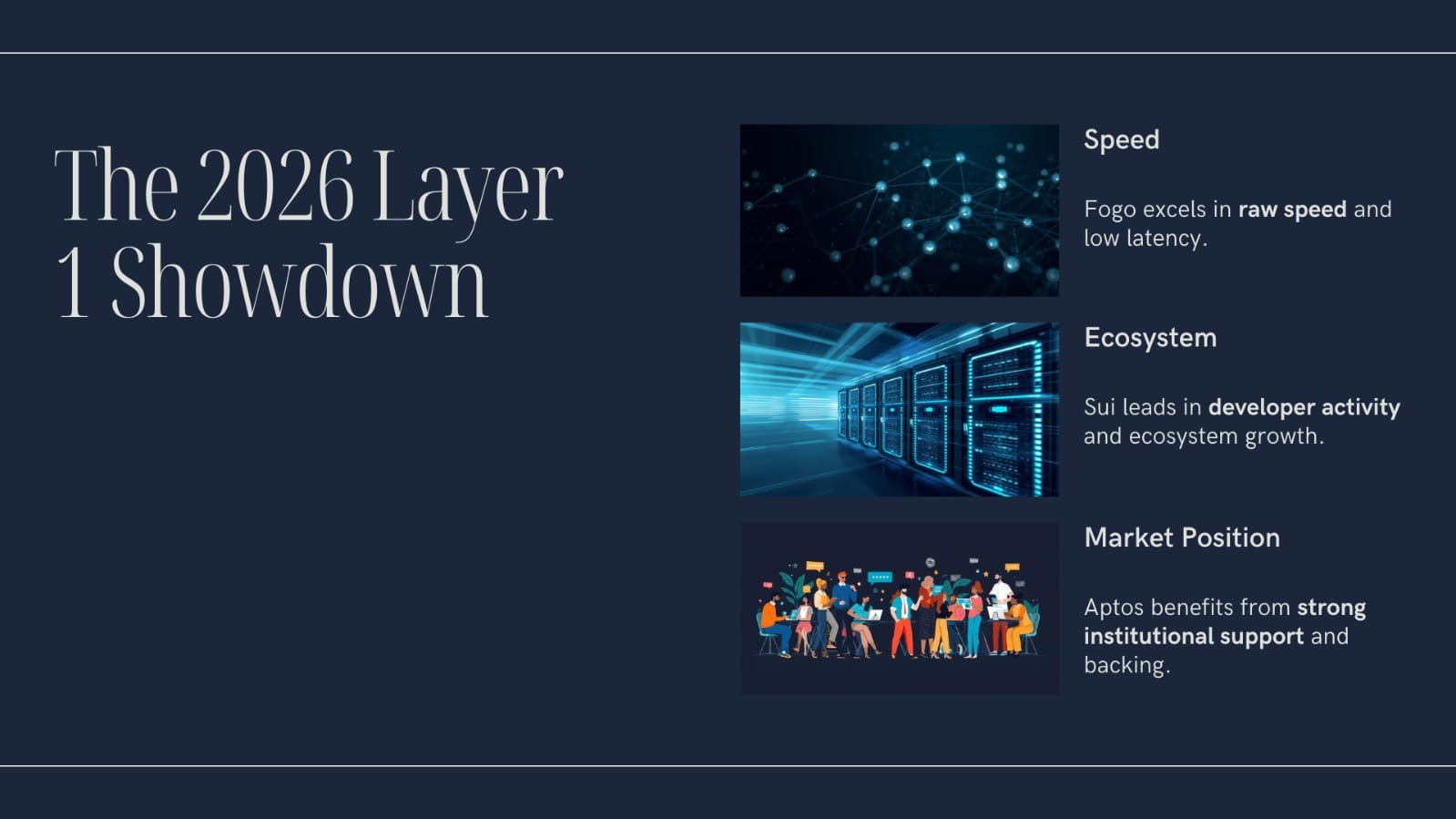
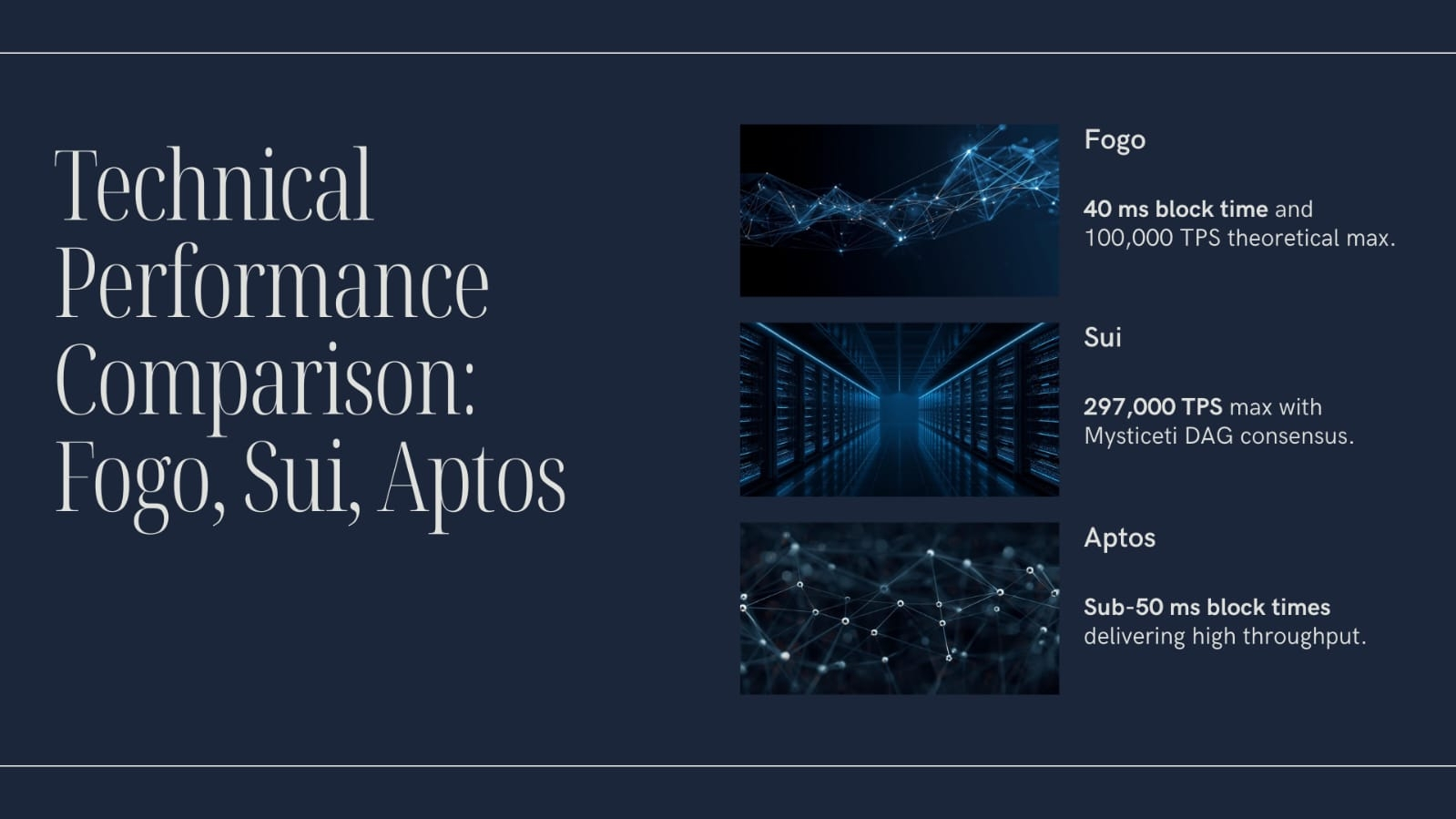
Fogo is not a project typical of blockchains. Constructed by former Wall Street executives, such as a Citadel Securities researcher, Douglas Colkitt, the construction of the project was purpose-built to ensure that on-chain trading was as fast and fair as a centralized exchange. Operating the Solana Virtual Machine (SVM) on a barebones Firedancer client, Fogo has an average block time per 40 milliseconds, finality is 1.3 seconds, and the theoretical scale of more than 100,000 transactions per second. It has amenities of a Binance token sale and a top place on the Chainspect performance leaderboard in its testnet phase, and is supported by 7 million dollars.
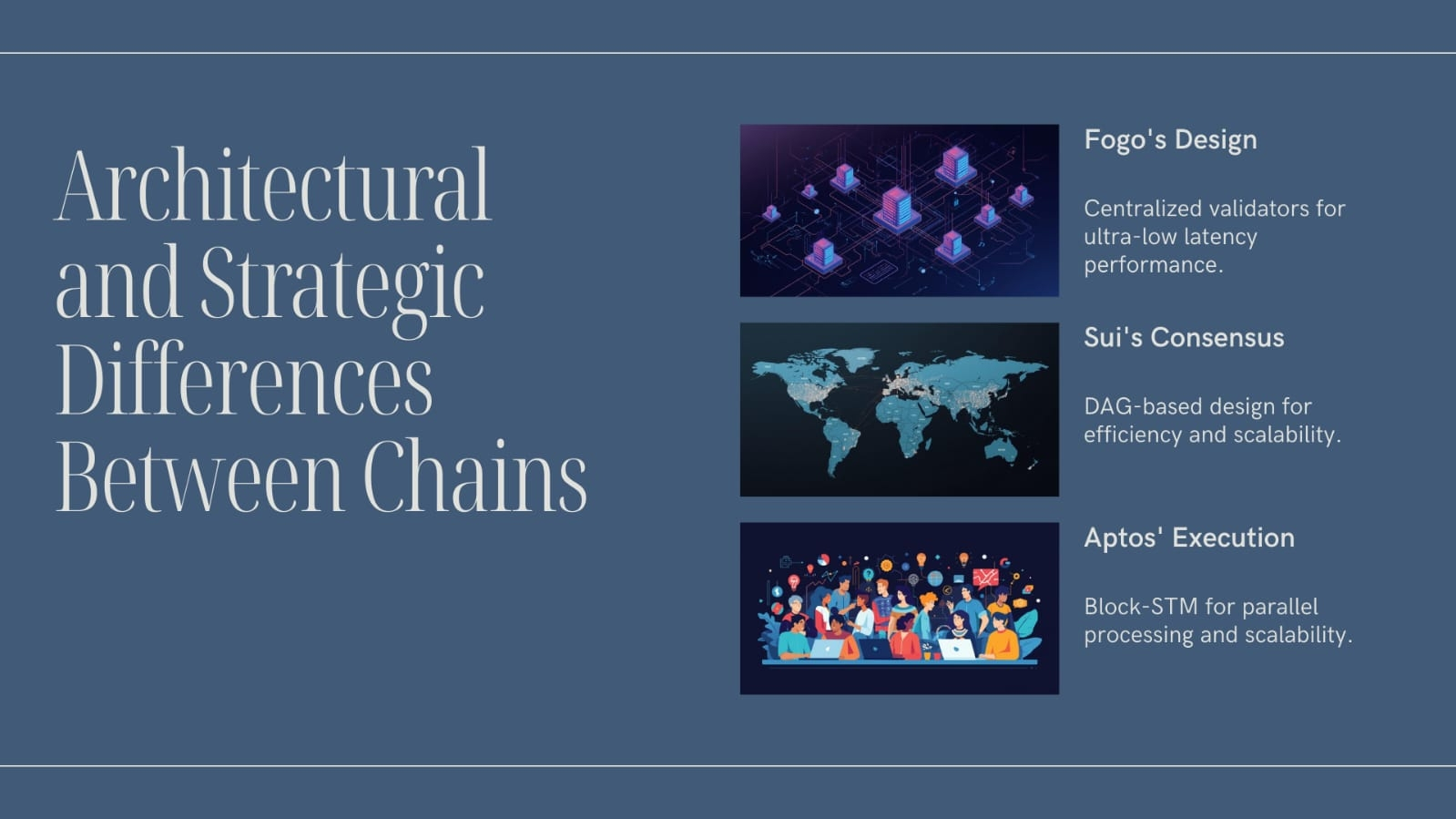
Sui was formed out of Mysten Labs, the company of former Meta engineers. It implements a data model based on custom objects and a consensus protocol, called Mysticeti, based on a DAG that does not rely on consensus when performing simple transactions. The outcome is smouldering throughput under perfect circumstances - theoretical maxes of 297,000 TPS. By early 2026, Sui will have about 7.5 billion in market cap, be the largest in DeFi by TVL, number of developers, and volume in its DEXs and has developed one of the most active ecosystems in the crypto industry.

Aptos pursued the more systematic way. It was also started by former engineers at Meta but retained the old model of accounts on Ethereum/Solana but introduced Block-STM - a software transactional memory engine that allows optimistic parallel execution. In December 2025, Aptos recorded sub-50 millisecond block times on mainnet and maintained a throughput of over 22,000 TPS. BlackRock put in place on the chain tokenized assets of $500 million. By the end of the year, its stablecoin market cap was up to 1.8 billion. But APT the token? It reached its lowest point of $1.14 earlier in 2026 as a reminder of the sad reality that brilliant technology does not necessarily equate to company success.
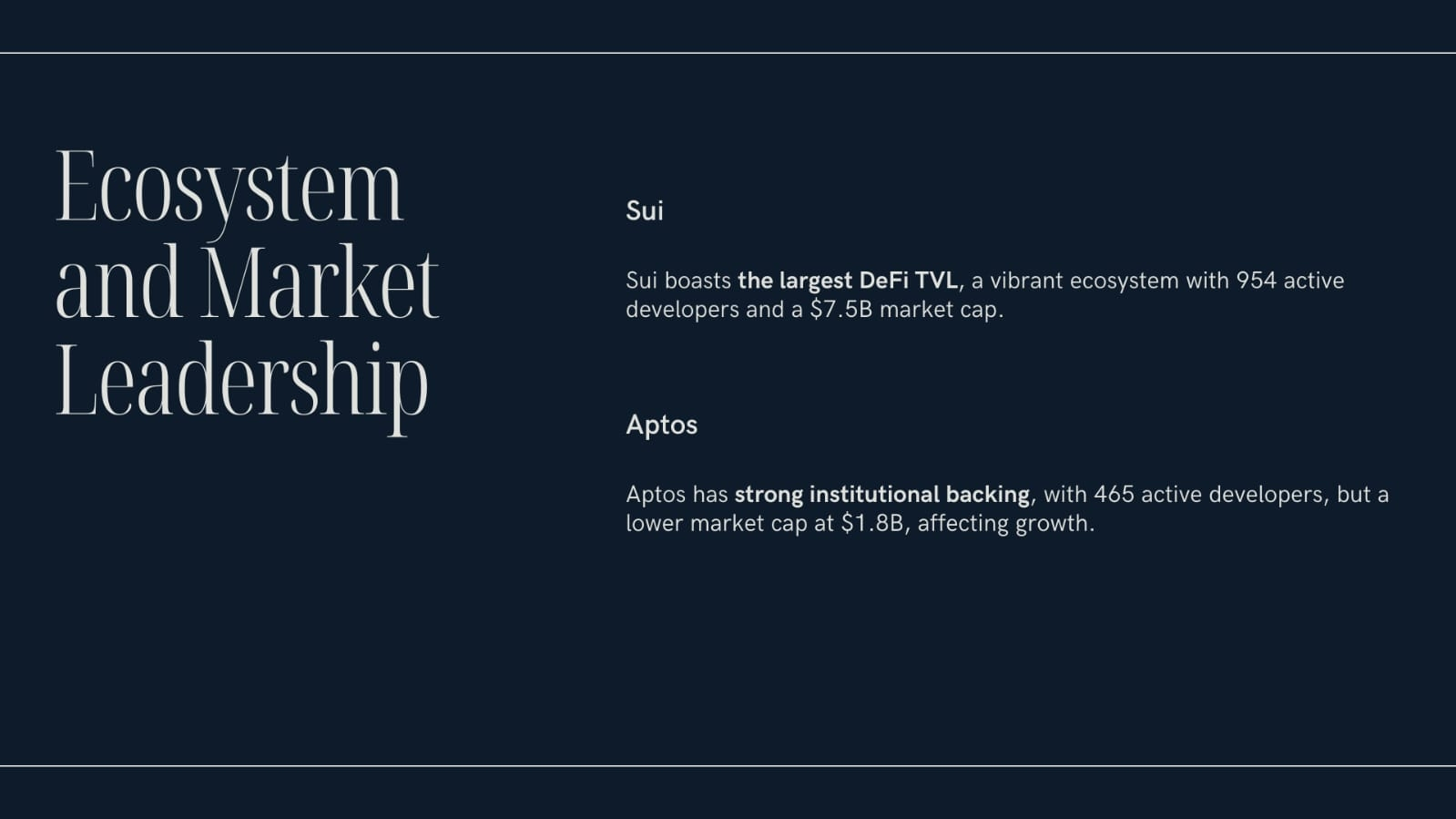
Fogo takes the category of raw speed on paper and by quite a significant margin. Fogo has got low latency apps covered with 40ms block times and fees that are virtually free. The key caveat? The mainnet was released by Fogo in January 2026 and only contains a few validators and approximations of 10 live dApps. Sui and Aptos have years of mainnet experience to fight with.
The architecture of Fogo, including high-performance data centers with co-located validators, a pure Firedancer client, zone-based consensus was directly inspired by the high-frequency trading infrastructure. It is fast because it embraces centralization (geographically) in the early stages, but has prospects of increasing the validator set as time progresses. This is intentional, rather than a neglect. Instead, Sui and Aptos have thousands of validators worldwide and have demonstrated their ability to be able to withstand real economic pressure.
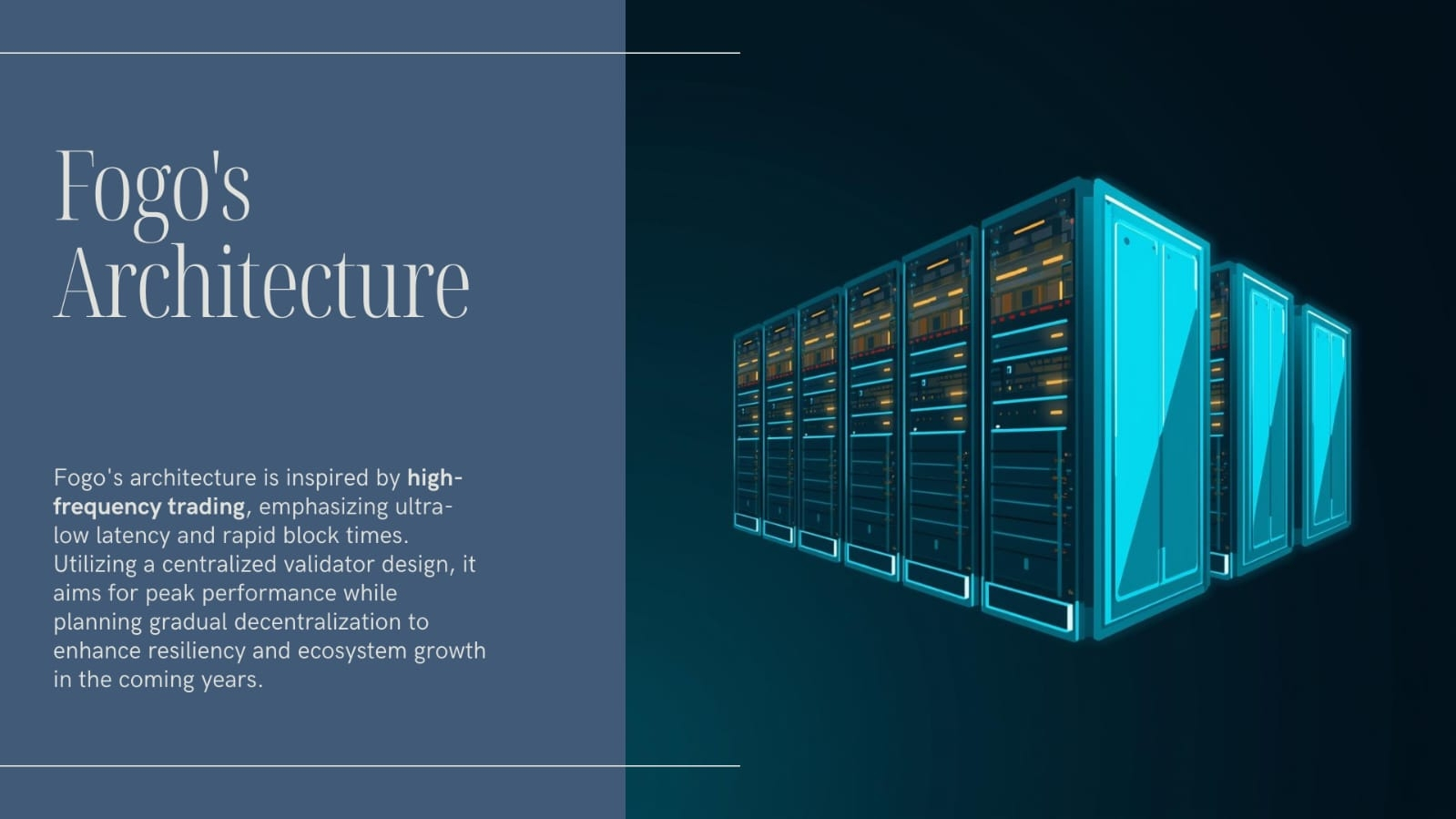
Sui now has 954 monthly active developers to Aptos of 465. That developer lead is converting into actual ecosystem action: Sui TVL is approximately two times larger than Aptos, its DEX volume is 3.5x greater during the last year and it is experiencing steady expansion in gaming, DeFi and NFT. The S2 program by the Sui Foundation is converting the chain into a full stack developer platform including integrated tools, documentation, and easy onboarding.
Fogo? On the first day, it introduced an approximate number of 10 dApps: the Valiant DEX, the Moonit launchpad, Brasa liquid staking and 2 lending protocols in Pyron and Fogolend. The number of its developers is insignificant at the moment of about 104 developers and 6 repositories. It is early, gritty and laser-targeted on traders. Fogo is not there yet yet builders who require a rich and composable ecosystem with thousands of protocols.
Fogo is without qualification designed to be used as a trader. No gas fees, 40ms blocks, fairness with regard to executions, MEV reduction by Dual Flow Batch Auction mechanics - all the features of its design scream high-frequency DeFi. It is the on chain version of a Bloomberg terminal. Fogo is the most rational infrastructure option in the market at the moment should your application deal with perpetual futures, real-time auctions, order book trading, or any other workflow in which milliseconds count. The DeFi ecosystem moves towards maturity rapidly, and institutional actors require a decentralized system to perform at the exchange level. This demand saw Fogo being constructed in response to it.
Sui has created one of the most diversified cryptoecosystems. It is highly suitable in terms of NFTs, gaming, and consumer use, especially due to its object-focused model, where assets are exchanged regularly. Its Deepbook native order book and on-chain applications such as Bluefin make it competitive in trading as well, but the trading engine of the latter still operates on private servers, also indicative of the fact that even Sui would not use it to solve the problem of trading at the exchange speed. The release of suiUSDe and USDi as Sui-native dollar assets in February 2026 indicates that the chain is aggressively entering the institutional DeFi market.
Aptos is the company chain. Combining the safety assurances of Move, the formal verifiability of its tooling, and institutional-grade collaborations, it is the best fit to provide an underlying to tokenized real-world assets, institutional-grade protocols, and regulated financial infrastructure. Its TPS of 22 000+ is not a theoretical maximum throughput rather the floor as it has been realized on a live mainnet with actual economic activity. This consistency is of greater value to a pension fund than the raw heights of Fogo.
Fogo has the largest risk and the largest upside. It is a new primary chain that is loosely decentralized (7 validators, Nakamoto coefficient of 3), is a small but quickly expanding ecosystem, and has community-oriented tokenomics at an early stage. The team is brilliant, the technology is factual and the testnet results hold it on the top of all key performance indices. But fast on a leaderboard has been applied to many projects that have become unknown. The following 12 months will establish whether Fogo will be able to turn speed into the sticky liquidity and actual trading volume.
