

Last Saturday I watched a small experiment fail. A friend of mine — someone who builds iOS apps for a living — decided to try a blockchain game. She was curious and technically fluent, the exact type of person you would expect to move through onboarding without stress. Within four minutes she had written down a seed phrase, approved a gas fee, confirmed a bridge transaction, switched networks, connected a second wallet, and approved a token swap. She didn’t complain or get angry. She simply closed the tab and opened Steam. That moment stayed with me, because if a developer won’t tolerate that friction, why do we assume everyone else will?
Somewhere along the way, GameFi convinced itself that players care about infrastructure. We talk about “true ownership” like it’s enough to justify inconvenience, as if normal people will gladly manage private keys and monitor gas fees in exchange for decentralization. They won’t. Not because they can’t understand it, but because they don’t want to think about it. When someone launches a game, they want to play, not manage wallets or check networks. The second the experience feels like paperwork instead of entertainment, they’re gone.
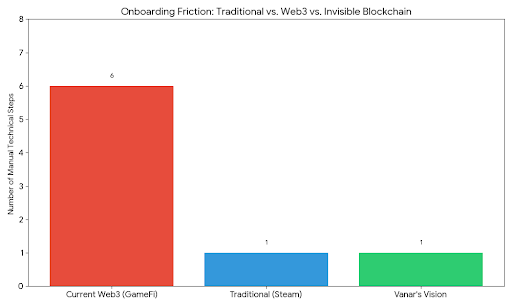
That’s why I started paying attention to what VanarChain is trying to do. Their focus isn’t louder marketing or shinier tokenomics. It’s something quieter and much harder: making the blockchain invisible. Not just hidden behind better design, but truly out of sight. Ownership should happen automatically. Transactions should complete without constant popups. Assets should exist without the user ever being forced to think about how they’re stored. The blockchain should feel like plumbing in a house — essential, but never the center of attention.
Most Web3 games treat on-chain activity like a badge of honor, proudly recording every action to a public ledger. But logging everything isn’t innovation if it damages the experience. Vanar’s philosophy feels different: build something people actually enjoy using, and let the infrastructure support it quietly in the background. Instead of chasing crypto-native users, they’re working with traditional brands that already have large audiences. The idea is simple — let the brand manage the relationship with the user while Vanar manages the ownership layer behind the scenes. Users don’t need to convert to crypto; they just use the product.
There is, of course, a real risk. Announcing partnerships is not the same as generating activity. Logos on a website don’t equal transactions on a network. If those integrations don’t turn into consistent user traffic, the vision remains an idea rather than a movement. Infrastructure only matters if it’s actually used.
The bigger question isn’t whether Vanar is perfect today. It’s whether the next wave of adoption will come from teaching people about gas fees or from building systems so seamless they never notice the blockchain at all. Every time someone closes a dApp and returns to a traditional platform, the answer becomes clearer. The next billion users won’t download a wallet just to participate. They’ll open apps that simply work, unaware that a blockchain is running quietly underneath. Whoever builds that invisible layer — and successfully brings it into real consumer products — will define the future of digital ownership.
