
I remember when the idea of blockchain still felt like a promise waiting to unfold. People spoke about freedom ownership and a new digital economy where anyone could build without asking permission. Over time that early excitement turned into something heavier. Networks multiplied yet clarity did not always follow. Developers moved from one ecosystem to another chasing performance while users tried to understand which platforms would still exist in a few years. The space kept moving yet stability often felt distant. In that emotional landscape Fogo begins to feel less like another project and more like a response to a shared question. What would it look like if infrastructure felt dependable instead of experimental.
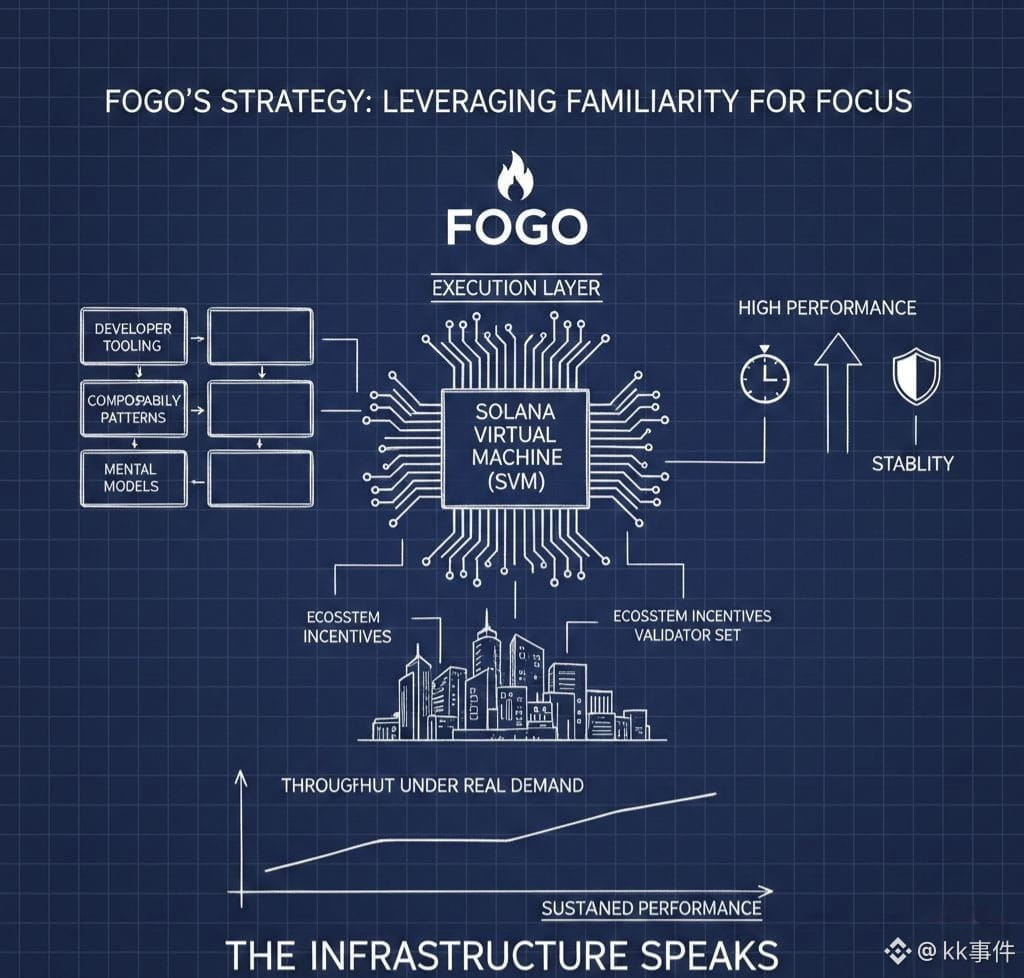
Fogo enters the scene as a high performance Layer one network built around the Solana Virtual Machine. That technical description sounds simple but the deeper meaning sits in the choice itself. Instead of designing a completely new execution model Fogo builds on something already proven to handle large scale throughput and parallel execution. This signals a philosophy that progress does not always come from reinvention. Sometimes progress comes from strengthening what already works and making it easier for people to carry forward their knowledge. Developers often choose environments where they feel confident rather than environments that look impressive on paper. Fogo seems to understand that trust grows when tools feel familiar and predictable.
Under the surface the network is built around the idea that transactions should not always wait in a single line. Many blockchains process activity step by step which protects order but restricts growth. The Solana Virtual Machine allows independent transactions to run at the same time when they do not conflict. This parallel execution changes how applications behave. Instead of fighting congestion developers can design systems that expand naturally as demand grows. Users experience faster confirmation and smoother interaction. These small differences shape perception over time. A network that responds instantly begins to feel reliable. Reliability slowly turns into loyalty and loyalty is what ultimately sustains ecosystems.
Fogo also introduces a reward structure designed to draw early participation. A large allocation of tokens encourages users validators and developers to explore the system. Incentives alone never guarantee long term adoption but they can create the initial spark that brings people together. What matters is what happens after that spark. If participants discover that the infrastructure truly supports their work they remain long after rewards shrink. This is where deeper metrics start to matter more than surface numbers. Instead of focusing only on transaction counts the real signal becomes developer retention real application usage and the diversity of services emerging from the ecosystem. When independent tools appear without direct funding it means the network has moved from novelty to necessity.
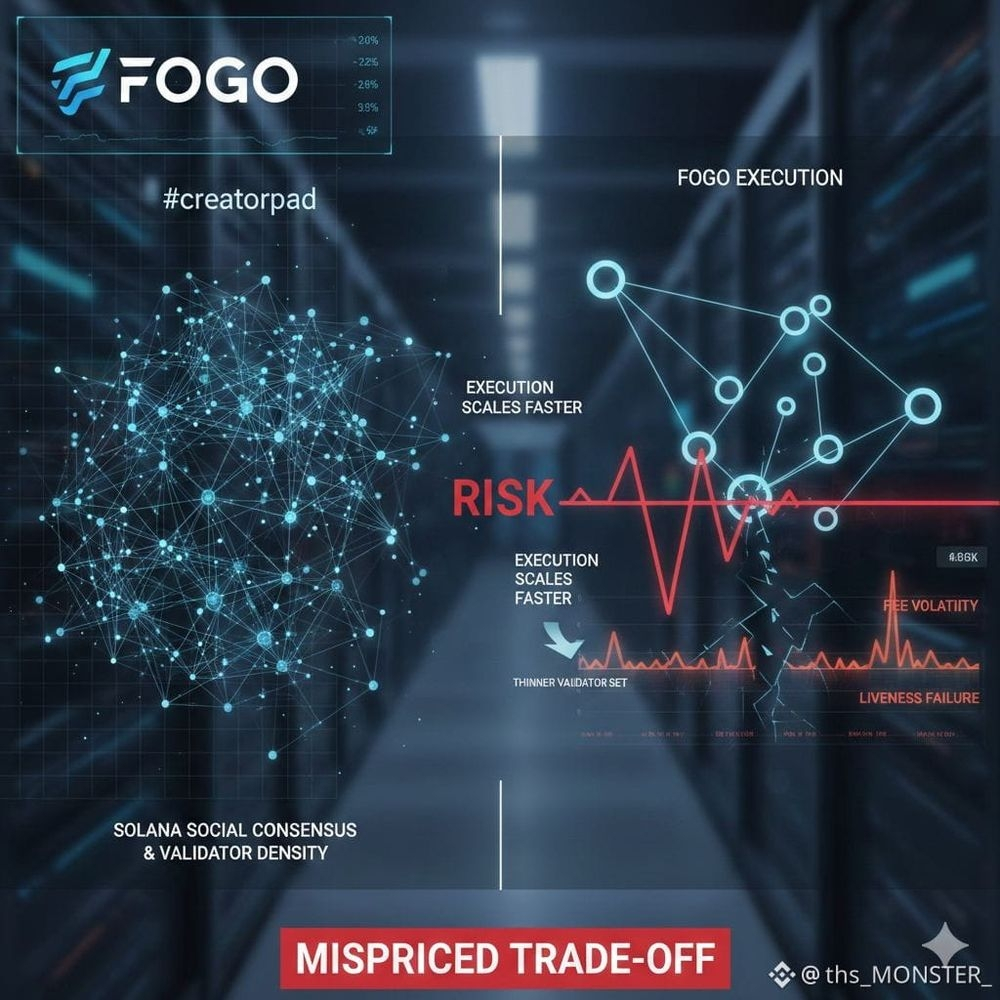
The decision to build on a high performance execution environment carries both promise and risk. Advanced systems often demand stronger hardware and more coordination among validators. This can improve efficiency yet it can also raise barriers to entry. If participation narrows too much decentralization may weaken over time. Fogo must balance speed with openness to ensure that the network remains accessible. The challenge is not purely technical. It is philosophical. A system built for scale must also remain welcoming or it risks becoming efficient but isolated.
User behavior adds another layer of uncertainty. People rarely adopt new infrastructure purely for its technical strengths. They follow liquidity familiarity and community momentum. Even the strongest architecture can struggle if it fails to capture sustained attention. Incentives create movement but usefulness creates permanence. For Fogo the long road depends on whether applications built on the network solve meaningful problems. Payments digital identity decentralized finance and creator economies all represent potential use cases. Each successful application strengthens the narrative that the chain exists for real needs rather than speculative interest.
Regulation continues to shape the environment as blockchain systems move closer to mainstream finance and digital governance. Any network that hopes to endure must navigate this reality carefully. Compliance expectations may grow. Reporting requirements may evolve. The ability to adapt without losing core decentralization principles becomes essential. Fogo stands at the intersection of innovation and accountability where technical design alone cannot determine success. Social acceptance legal clarity and institutional confidence will influence whether the ecosystem flourishes.
Competition in the Layer one landscape remains intense. New chains and scaling solutions appear constantly each promising efficiency and developer friendliness. Many projects launch with strong momentum only to fade when attention shifts elsewhere. What separates lasting infrastructure from temporary hype is the ability to evolve. Fogo must continue refining its tools documentation and governance so that growth feels organic rather than forced. Networks that endure are not always the fastest at launch but they are often the most adaptable over time.
Despite these uncertainties there is something emotionally compelling about the vision behind Fogo. It reflects a broader transition happening across the blockchain world. Early years were filled with experimentation and bold claims. The current phase feels more grounded. Builders are asking not only what technology can do but also what systems people can rely on every day. Fogo seems positioned within this shift toward sustainability. It represents the belief that infrastructure should quietly support creativity rather than constantly chase attention.
If the network matures as intended its long term value will not be measured only in throughput or token price. It will be measured in how naturally it integrates into the lives of developers and users. When builders choose a platform because it feels dependable rather than trendy it signals maturity. When communities grow around tools that solve real problems it signals permanence. When applications continue running smoothly during market downturns it signals resilience. These qualities form the foundation of systems that last beyond cycles of hype.
The story of Fogo ultimately speaks to a deeper human desire. People want to build on ground that feels solid. They want tools that support their ambitions rather than complicate them. They want technology that fades into the background while enabling meaningful work in the foreground. Fogo aims to become that kind of foundation. Whether it succeeds will depend not only on architecture but on patience community and the willingness to evolve with changing conditions.
As I reflect on the journey the project represents I find myself thinking less about performance metrics and more about endurance. The digital world is full of brilliant ideas that flash brightly and disappear. What truly shapes the future are the systems that continue working quietly year after year. If Fogo manages to become one of those systems it will not only prove its technical design. It will prove that steady belief still matters in a space often driven by short term excitement.
In the end the real fire within Fogo may not be its speed or rewards. It may be the persistence behind the vision. Building infrastructure that people trust requires more than innovation. It requires resilience honesty and a long horizon. If the team and community keep moving with that mindset they are not simply launching another blockchain. They are contributing to the slow patient construction of a digital foundation that could support countless ideas in the years ahead. And that kind of work the kind that grows through belief and consistency is what turns a project into something lasting.