
Recently discussed emails connected to the Jeffrey Epstein investigation brought unexpected attention to an unusual subject — toxic plants. Among them were so-called “trumpet plants,” species known to contain scopolamine, a powerful psychoactive compound sometimes nicknamed “Devil’s Breath” or “Zombie Breath.”
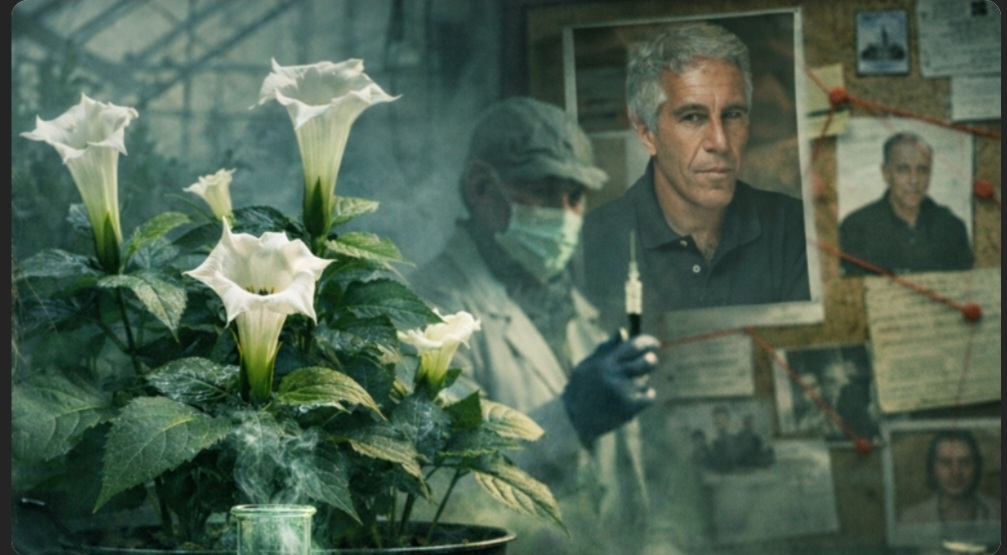 According to the correspondence, Epstein appeared aware of the plant’s properties and even referenced cultivating such plants in a nursery. In one forwarded message, the substance was described as a drug capable of making people highly suggestible and impairing independent decision-making. While scopolamine has legitimate medical uses in controlled doses (for motion sickness and anesthesia support), misuse can cause memory loss, confusion, hallucinations, and severe disorientation
What Is Scopolamine?
Scopolamine occurs naturally in plants such as Brugmansia (Borrachero tree) and related species like Datura. These plants contain toxic alkaloids — including atropine and scopolamine — that affect the nervous system.
Possible effects of exposure include:
Memory impairment
Loss of awareness or confusion
Hallucinations
Dilated pupils and increased heart rate
Temporary inability to make decisions
Because of these effects, the substance has long attracted both medical researchers and criminal investigations.
The Cultural Paradox: Sacred Yet Dangerous
The discussion becomes more complex when cultural context is considered.
In Hindu tradition, the Datura plant is sacred and offered to Lord Shiva, symbolizing the transformation of poison into protection — a reference to mythology where Shiva consumes deadly cosmic poison to save the universe. During festivals such as Maha Shivratri, the plant represents devotion and spiritual surrender.
Yet biologically, the same plant is highly toxic..
Why the Topic Matters
The Epstein-related emails do not change the known science of these plants, but they highlight how botany, pharmacology, and human behavior can intersect in disturbing ways. A plant revered in ritual can also possess compounds dangerous when misused.
The story ultimately serves as a reminder:
nature itself is neutral — its meaning depends on human intent.
Sacred in temples. Studied in medicine. Dangerous in the wrong hands.