
Fogo uses colocation infrastructure rather than geographically distributed validator nodes. Light takes over 130ms to circle the Earth at the equator. Real-world network routes add further delays, which compound when consensus requires multiple rounds of communication. Globally distributed networks must adopt conservative block times to accommodate these delays.
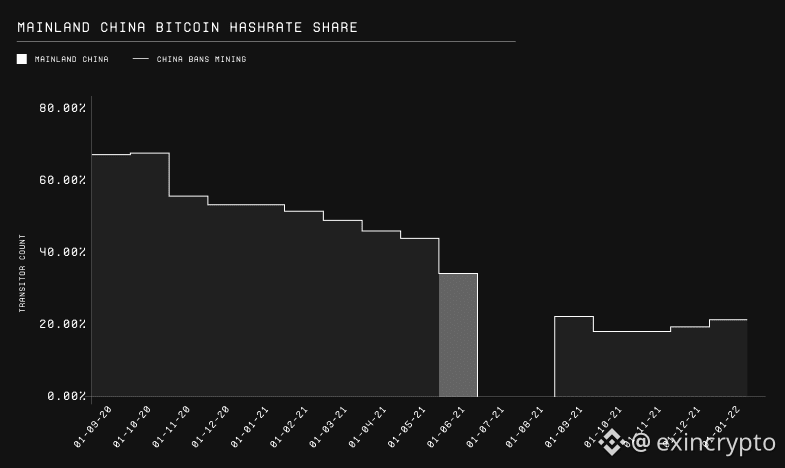
Geographic distribution protects against government censorship and regional infrastructure failures. A 2021 crackdown on Bitcoin mining in China demonstrated this risk, with hash rate migrating to other jurisdictions. On Ethereum, approximately 60% of nodes are located in the United States according to Etherscan. If validator distribution mirrors node distribution, a nationwide ban could take more than a third of Ethereum's stake offline, preventing the network from finalising blocks.
Solana's geographic distribution by stake amount shows 68% concentrated in Europe. Despite being designed for high throughput, Solana's 400ms block times still exceed what centralised exchanges achieve. Price discovery remains on platforms like Binance, with CEX-DEX arbitrageurs bridging the gap.
Hyperliquid demonstrates convergence toward colocation at the limits of performance. Validators can operate from anywhere, but those outside the Tokyo region struggle to keep up due to speed of light constraints, leading to missed voting rounds and lower performance-based rewards. The network has reduced orderbook block times to 150-200ms.
Fogo trades geographic distribution for lower latency, targeting institutional traders rather than consumer applications. The network implements multi-local consensus where validators coordinate physical locations across epochs while maintaining distinct cryptographic identities for different zones. A zone is ideally a single data centre where latency approaches hardware limits, though zones can expand to larger regions.