
Trading Strategies: A Smart Approach to the Markets
Trading is not gambling — it is a disciplined process of analyzing the market and making calculated decisions. A strong trading strategy helps traders reduce risk, control emotions, and increase the probability of consistent returns.
One of the most widely used approaches is technical analysis, where traders study price charts, patterns, and indicators to predict future movements. By identifying trends, support and resistance levels, and momentum signals, traders can make more informed entry and exit decisions.
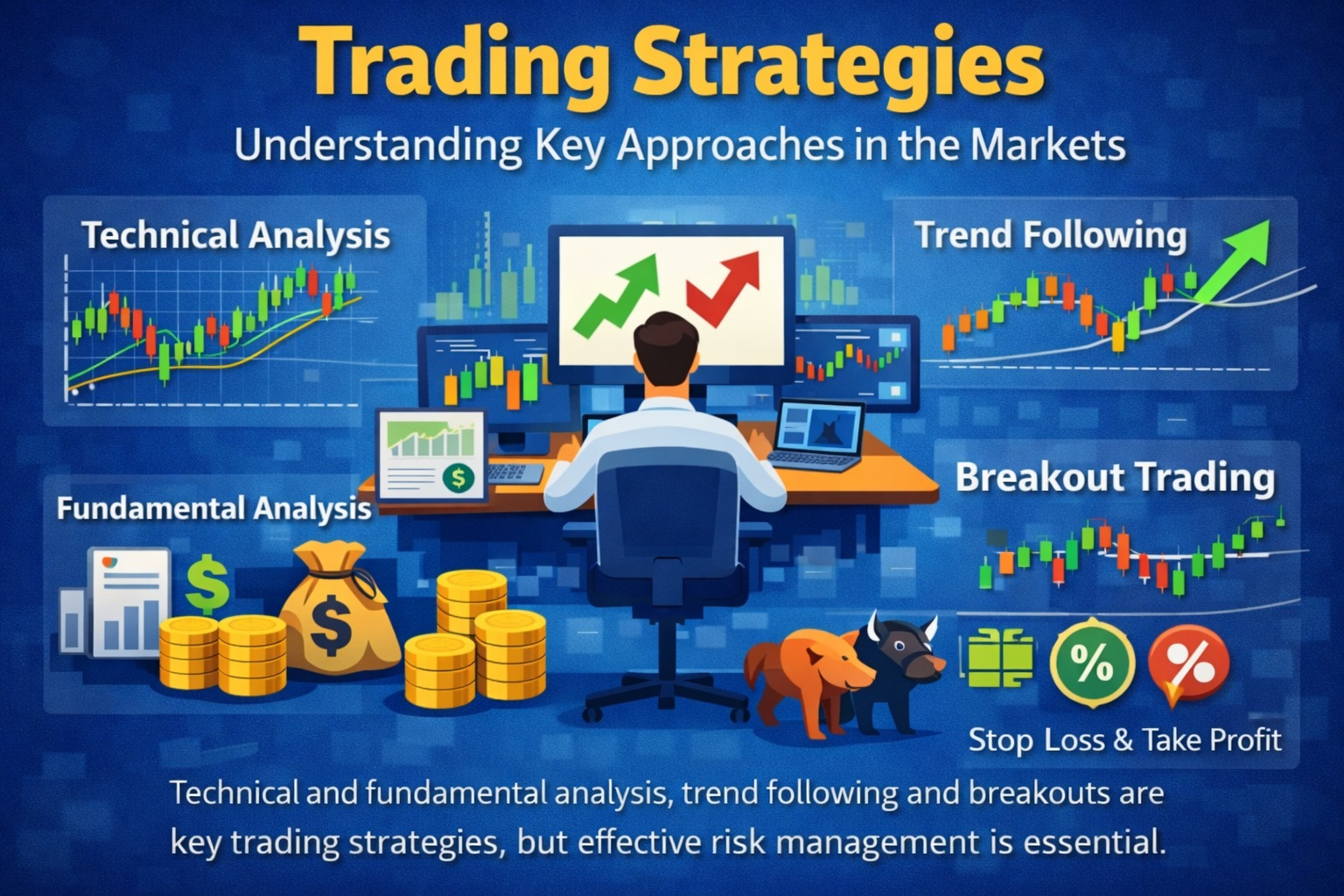
Another important method is fundamental analysis, which focuses on the real value of an asset. This includes analyzing economic data, company performance, market news, and global events that influence prices. While technical analysis is often used for short-term trading, fundamental analysis is commonly applied for long-term positions.
Popular strategies include trend following, where traders move in the direction of the market trend, and breakout trading, which involves entering trades when price moves beyond key levels. However, even the best strategy fails without proper risk management. Setting stop-loss orders, defining profit targets, and managing position size are essential for long-term success.
In conclusion, successful trading is built on knowledge, discipline, and strategy — not emotions. A well-planned approach combined with strong risk control is the true foundation of professional trading.