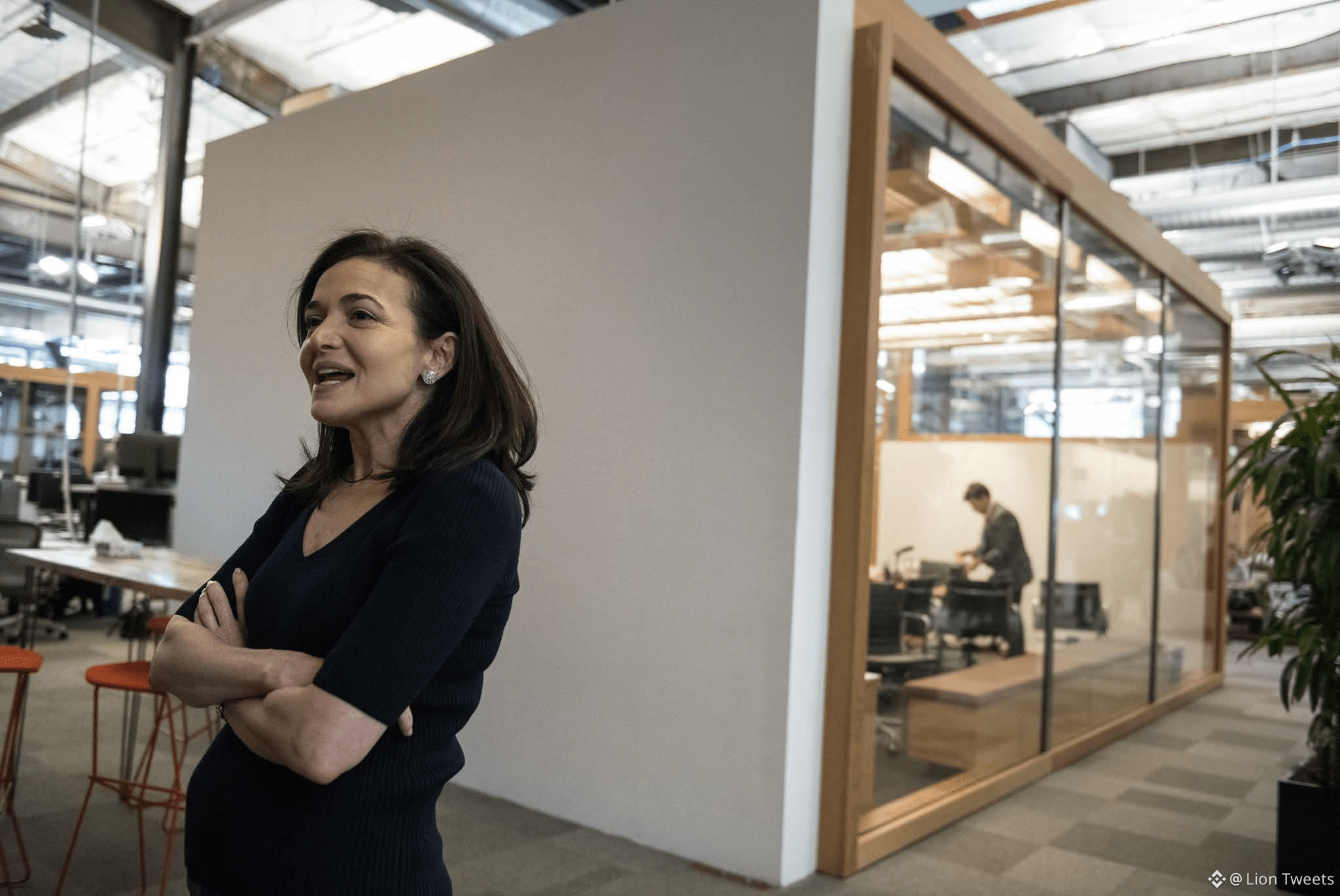
Mark Zuckerberg was 23 and clueless about money. She was 38 and about to make him one of the richest humans alive.
Everyone told her she was insane to leave.
Sheryl Sandberg was 38 years old. A Vice President at Google. One of the most powerful women in Silicon Valley.
And she was about to throw it all away for a company that had no idea how to make money.
"Stay at Google. You're set for life."
"Facebook is a college website. It will never last."
"Why take the risk? You've already made it."
She didn't listen.
In December 2007, Sandberg met a 23-year-old kid named Mark Zuckerberg at a Christmas party.
He had a website with millions of users. But the company was bleeding cash. No clear business model. No path to profit. Just a cool product and a prayer.
They talked for an hour by the door.
Then they kept meeting. Dinner after dinner at her home. Over 100 hours of conversations in six weeks.
Zuckerberg needed someone to help him figure out how to turn his social network into a real business. Someone who knew how to make money.
Sandberg had spent six years at Google building their advertising business. She helped create AdWords and AdSense. The products that turned Google into a money-printing machine.
But Google wouldn't give her the role she wanted. She asked to become COO. They said no. Too many cooks in the kitchen already.
So in March 2008, she made a decision that stunned everyone.
She quit Google. Joined a company with $272 million in revenue and $56 million in losses.
Here's what Sandberg understood that everyone else missed.
Facebook wasn't a college website.
It was the largest collection of personal data ever assembled. And that data could be turned into the most powerful advertising platform in history.
Before Sandberg showed up, Facebook was "primarily interested in building a really cool site." Profits, they assumed, would follow.
They assumed wrong.
Sandberg got to work. She walked up to hundreds of employees. Introduced herself. Listened. Learned the business.
Then she built an advertising machine.
Within two years, Facebook became profitable.
By 2010, one-third of all internet display advertising appeared on Facebook. Revenue hit $2 billion.
By 2012, the company went public. Sandberg became the first woman on Facebook's board of directors. She became a billionaire.
But she wasn't done.
By 2021, the company she joined for $272 million in revenue? It generated $118 billion. That's over 43,000% growth.
She did this while raising two kids. Writing a bestselling book called Lean In. Becoming one of the most influential voices for women in business.
Then tragedy hit.
On May 1, 2015, her husband Dave Goldberg collapsed on a treadmill at a resort in Mexico. Cardiac arrhythmia. He was 48 years old.
Sandberg found him. His face was already turning blue.
At the hospital, they asked if she wanted to say goodbye. She held him. She didn't want to let go. Her friend had to physically pull her away.
Weeks later, Sandberg was planning a father-child event. But there was no father.
She broke down crying. "But I want Dave."
Her friend put his arm around her and said something that changed everything.
"Option A is not available. So let's just kick the shit out of Option B."
Sandberg could have disappeared. Could have stepped away from everything. Could have let grief swallow her whole.
Instead, she wrote another book. Option B. About resilience. About facing adversity. About finding joy even when life destroys your plans.
She returned to work. Raised her kids. Kept building.
Because that's what she learned early on.
When people tell you to play it safe, sometimes the safest thing is the biggest risk.
When life takes away your first choice, you still have choices.
When everyone says your best days are behind you, you get to decide if that's true.
Sandberg didn't just survive Google thinking she was crazy for leaving.
She didn't just survive building a $118 billion business from a money-losing social network.
She survived losing the love of her life. And kept going.
What "safe" path are you clinging to because everyone says it's the smart move?
What tragedy are you treating like the end of your story?
What Option B are you refusing to kick the shit out of?
Sheryl Sandberg left a guaranteed thing for an uncertain thing. Built one of the biggest businesses in history. Lost her husband. Rebuilt her life.
Not because she was special.
Because she understood something most people don't.
You don't win by avoiding risk.
You don't win by staying comfortable.
You win by making moves that scare you.
And when life takes away Option A?
You find Option B. And you make it work.
Think Big