


One of the biggest problems in Crypto is still the same old Scalability.
To put it most simply, will the system work if we suddenly have millions of users instead of thousands? Will the pipelines act differently when faced with 100x, even 1000x demand? Will the fees work the same way?
Because, by nature, most things dont work the same if they nned to serve 100 people as when they need to serve 100k people; This is only ilustration, a simplified view of the problem of scalability, which is very, very real.
Scaling fails at the moment demand explodes.
Not during low activity.
Not during demos.
But when the network is pushed to its limits.
That’s when design decisions matter most.
As activity rises, block space becomes scarce.
Fees increase. Execution becomes unpredictable.
Users end up paying more for the same action.
Most rollups still push execution pressure back into shared data layers.
When traffic spikes, costs spike with it.
Users don’t care about architecture debates.
They care about one thing:
Why does the same transaction suddenly cost more?
Plasma handles this differently.
By separating execution from data constraints, Plasma keeps transaction behavior stable even under heavy network demand.
Builders can plan around predictable conditions.
Users know what they will pay before clicking send.
Predictability builds trust.
Fee Volatility vs Network Load
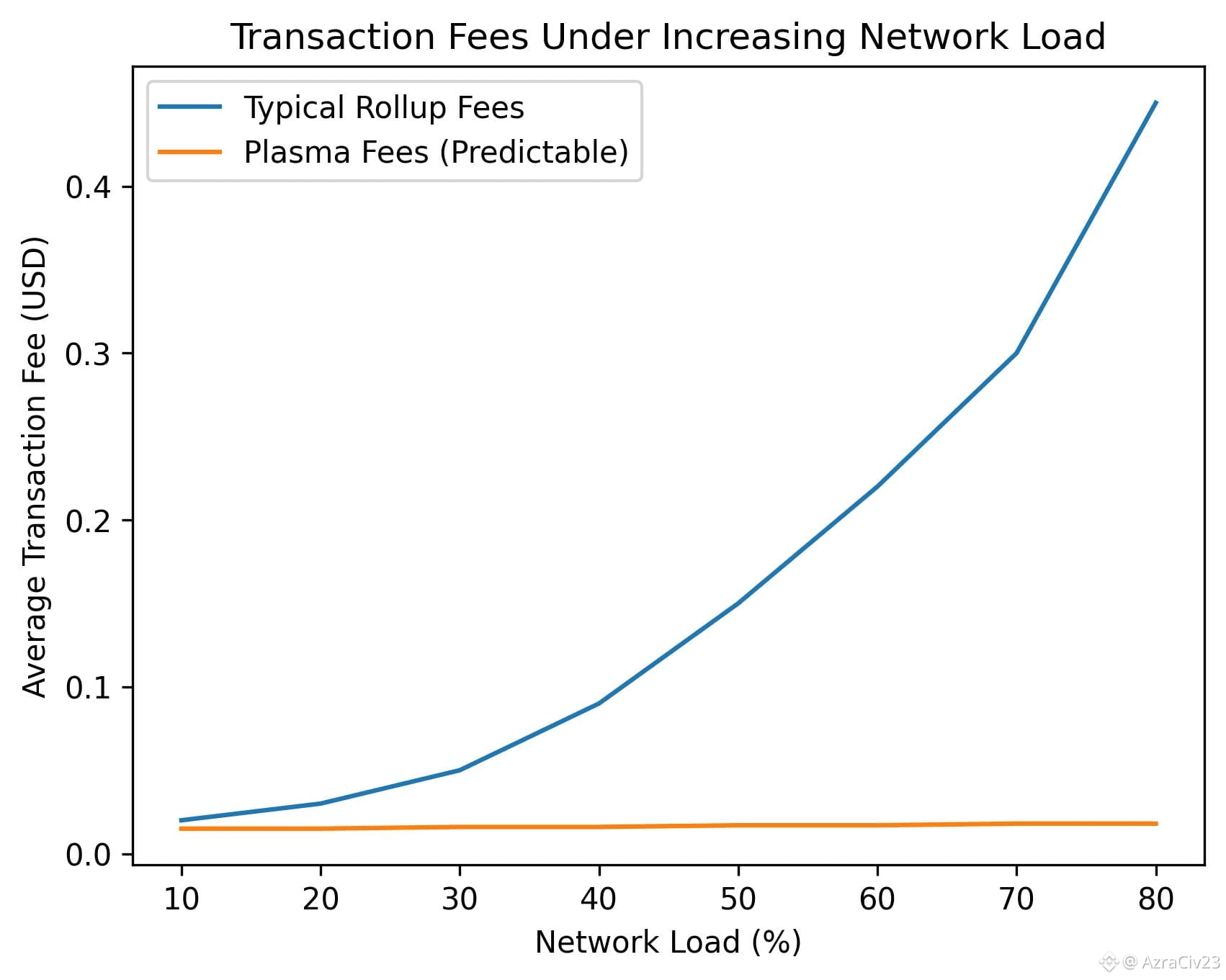
How fees spike on typical rollups during congestion vs Plasma’s predictable behavior.
PLASMA EXECUTION COST COMPARISON
Simplest way to say this is :
Who Pays the fees?
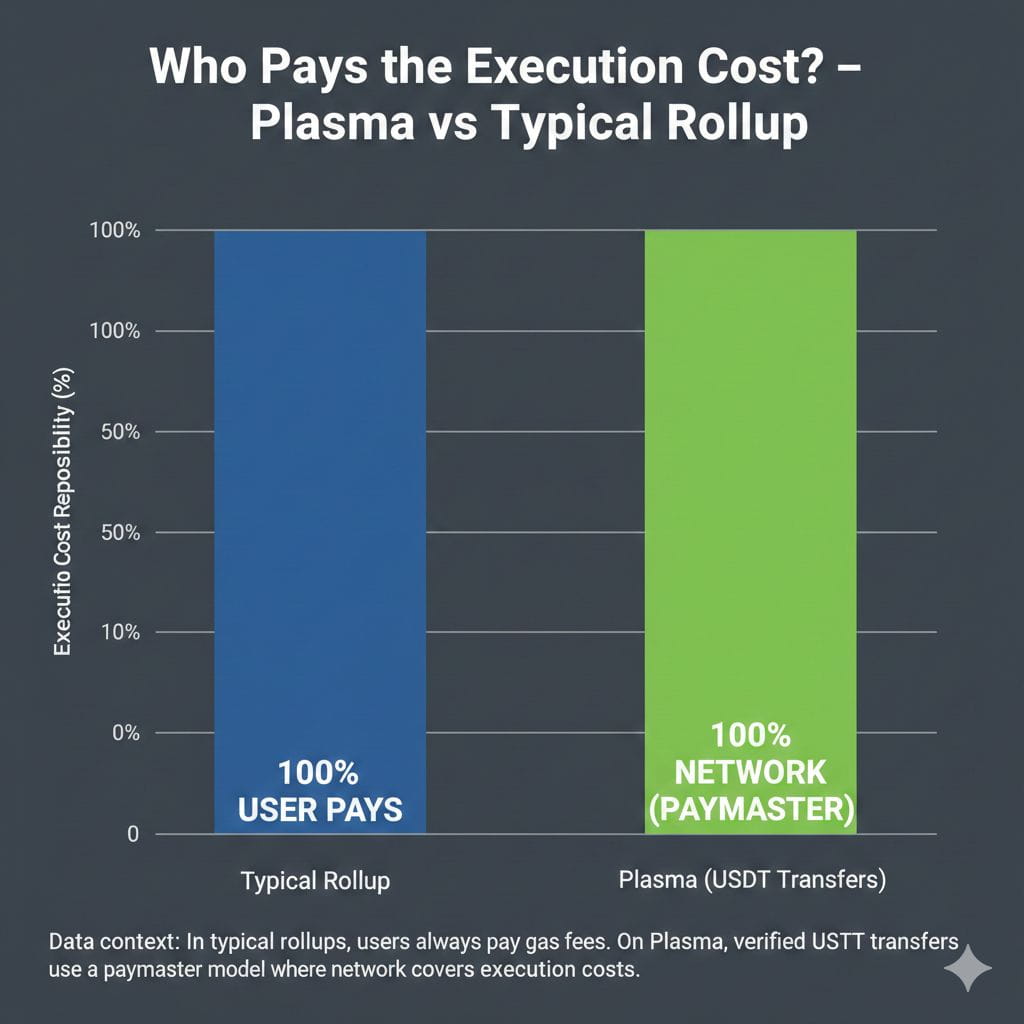
Execution Cost Responsibility (Paymaster)
Typical Rollup:
[██████████] User pays 100%
[ ] Network pays 0%
Plasma (USDT transfers):
[ ] User pays 0%
[██████████] Network pays 100% (Paymaster)
✅ Rollups: users always cover gas → fees spike under congestion
✅ Plasma: verified USDT transfers use a paymaster → predictable or zero fees
This isn’t about maximum throughput numbers.
Scaling is about remaining usable when demand is at its highest.
It’s about systems that absorb pressure internally instead of passing it to users.
Congestion Impact on User Experience
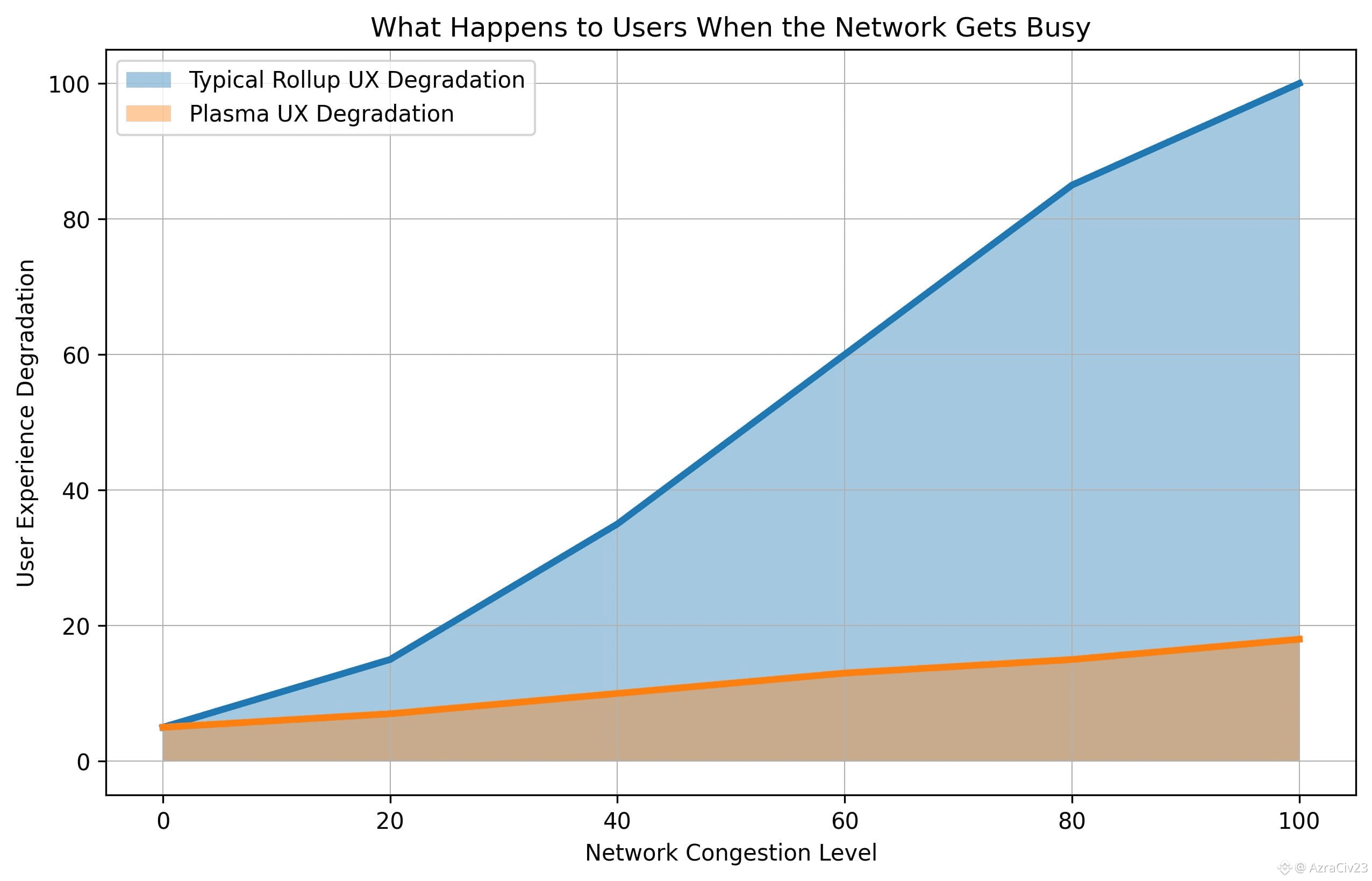
Shows how user experience degrades quickly on normal rollups but stays stable on Plasma during peak network congestion.
Plasma isn’t competing for raw speed.
It’s built to stay reliable when conditions are most extreme.