

I wasn’t planning to write about it at first. It was just another name I came across while reading documents and following discussions. But the more time I spent with it, the more it stayed in my head. In my experience, that usually means something deeper is going on. Projects built purely on hype tend to fade quickly once the noise dies down. Projects built on structure tend to reveal themselves slowly.
That was my experience while researching the WAL token and its role inside the Walrus ecosystem.
What became clear early on is that WAL isn’t designed to exist for speculation alone. Its purpose feels intentional. In decentralized infrastructure, technology only survives if the economics make sense. You can build something elegant from a technical perspective, but without a strong economic engine, it eventually collapses. WAL feels like it was designed with that reality front and center.
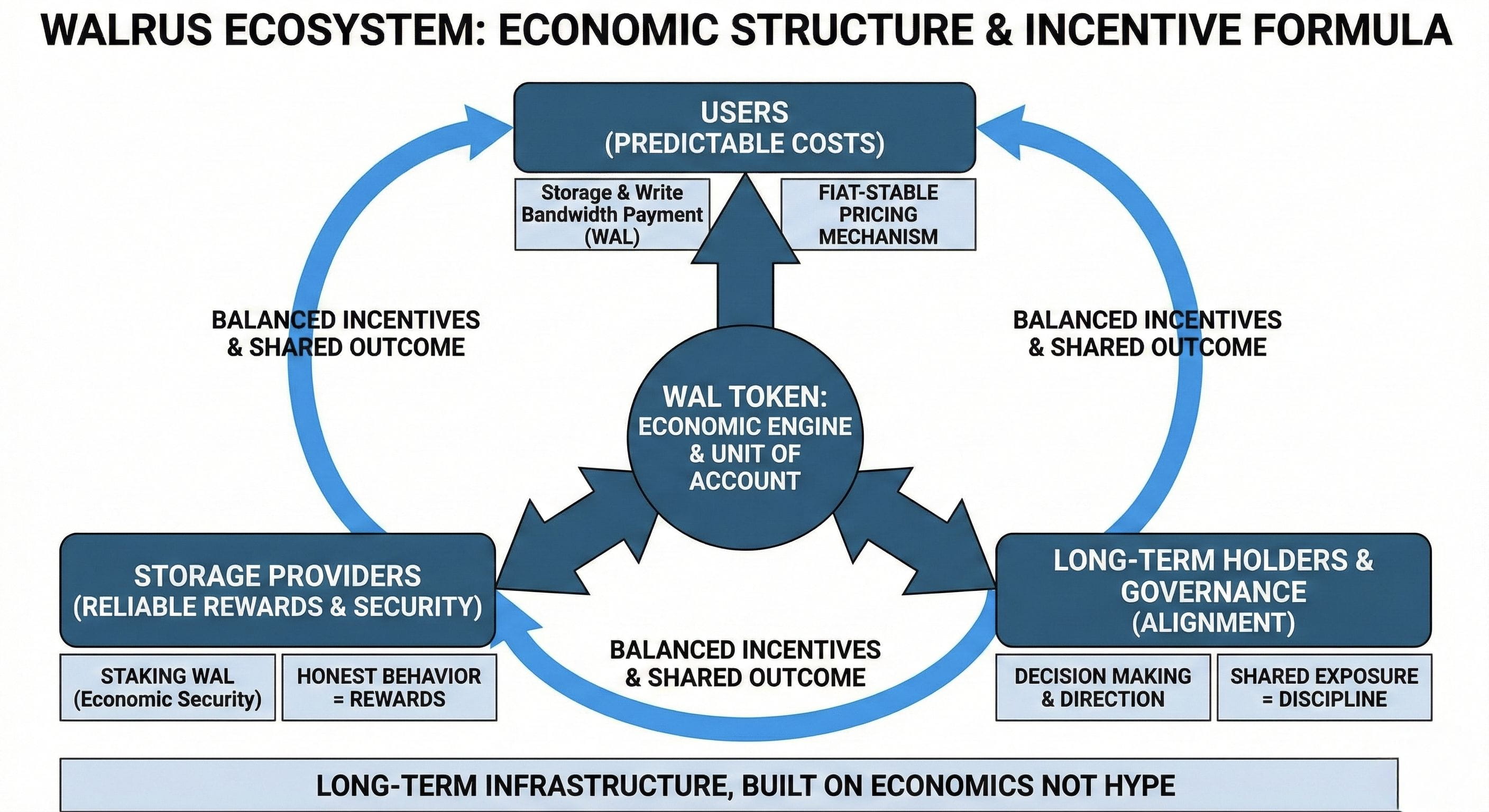
As I understand it, WAL functions as the unit of account, the security layer, and the coordination mechanism for the entire network. That clarity matters. Too many tokens try to be everything at once and end up serving no role particularly well. Here, the responsibilities are well defined, but also interconnected. Value moves through WAL. Trust is enforced through WAL. Decisions about the future are shaped by WAL holders.
What I found interesting is how the system balances incentives between very different participants. Users want predictable costs. Storage providers want fair and reliable rewards. Long-term holders want sustainability. Instead of separating these interests, the design ties them together. Everyone is exposed to the same underlying outcomes. In my view, that shared exposure creates discipline. No group benefits if the system breaks.
From a usage perspective, WAL is how storage and write bandwidth are paid for. This is where many crypto projects struggle, because volatility turns real usage into a gamble. Enterprises and serious users can’t plan infrastructure if costs swing wildly based on token price movements. What Walrus does instead is aim for stability in fiat terms, even though payments are made in WAL.
In simple terms, the protocol adjusts how much WAL is required depending on its market price. If the token appreciates, fewer tokens are needed for the same service. If it declines, more are required. The goal isn’t perfect stability. It’s predictability. For anyone actually building on top of the network, predictability matters far more than short-term price action.
This is an important distinction. When pricing becomes predictable, storage stops feeling like speculation and starts feeling like infrastructure. In my experience, adoption accelerates when systems become boring in the best possible way. Reliable. Understandable. Easy to plan around. This mechanism quietly removes one of the biggest barriers that keeps serious users away from crypto-based services.
Security is the next layer where WAL plays a critical role. Tokens aren’t just spent, they’re committed. Storage providers are required to stake WAL, which ties rewards directly to honest behavior. This isn’t based on trust or reputation. It’s based on economics. If a node wants to earn, it must also risk something meaningful.
From what I’ve read, this creates a clear incentive structure. Honest participation is rewarded consistently, while dishonest behavior carries real consequences. In my knowledge, systems that enforce accountability through economics tend to scale better because they don’t rely on assumptions about goodwill.
Governance completes the picture. WAL holders aren’t passive observers. They influence how the system evolves, from parameters to incentives to long-term direction. What stood out to me is that governance here doesn’t feel like a popularity contest. It’s rooted in alignment. Those who care about the long-term value of the network have a direct incentive to think beyond short-term gains.
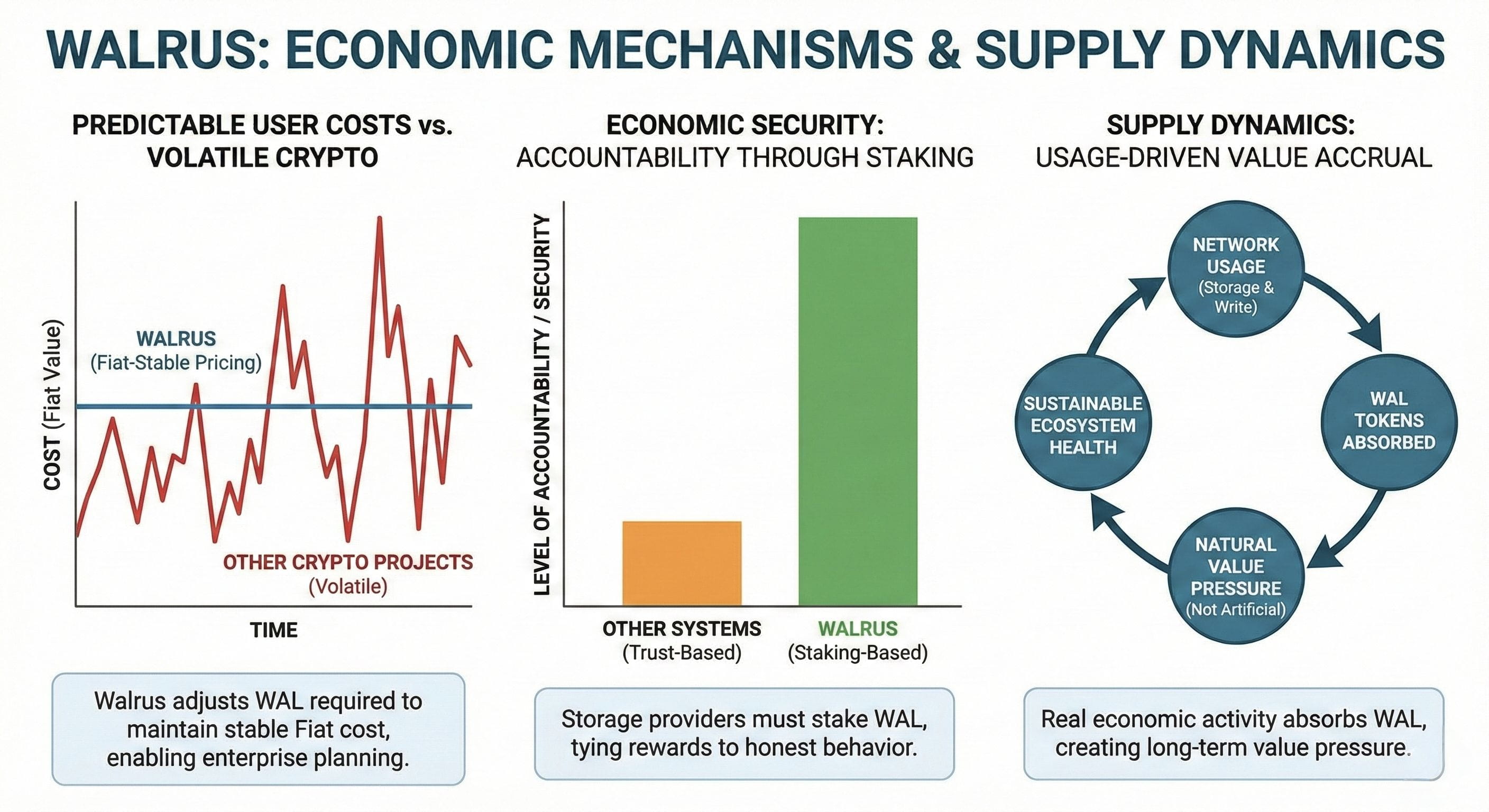
There’s also a subtle but important point about supply dynamics. WAL isn’t designed to inflate endlessly without purpose. As the network is used, tokens are absorbed through real economic activity. Over time, that creates a natural pressure toward value accrual driven by usage rather than artificial mechanisms. It’s quiet, but it’s real.
When I step back and look at everything together, WAL feels less like a marketing token and more like economic infrastructure. It connects users who want predictable costs, operators who want sustainable rewards, and holders who care about long-term health. None of these groups can succeed in isolation, and the design ensures they move together.
That’s why this project stayed in my mind. It doesn’t try to impress at first glance. It doesn’t shout. It focuses on balance, structure, and incentives. And in my experience, the systems that last are usually the ones that don’t demand attention. They just keep working.
