
The screen looked fine.
Too fine.
Every validator dashboard showed the same state. Same throughput. Same confirmations. No variance worth mentioning. When systems agree this cleanly, people stop questioning the agreement itself.
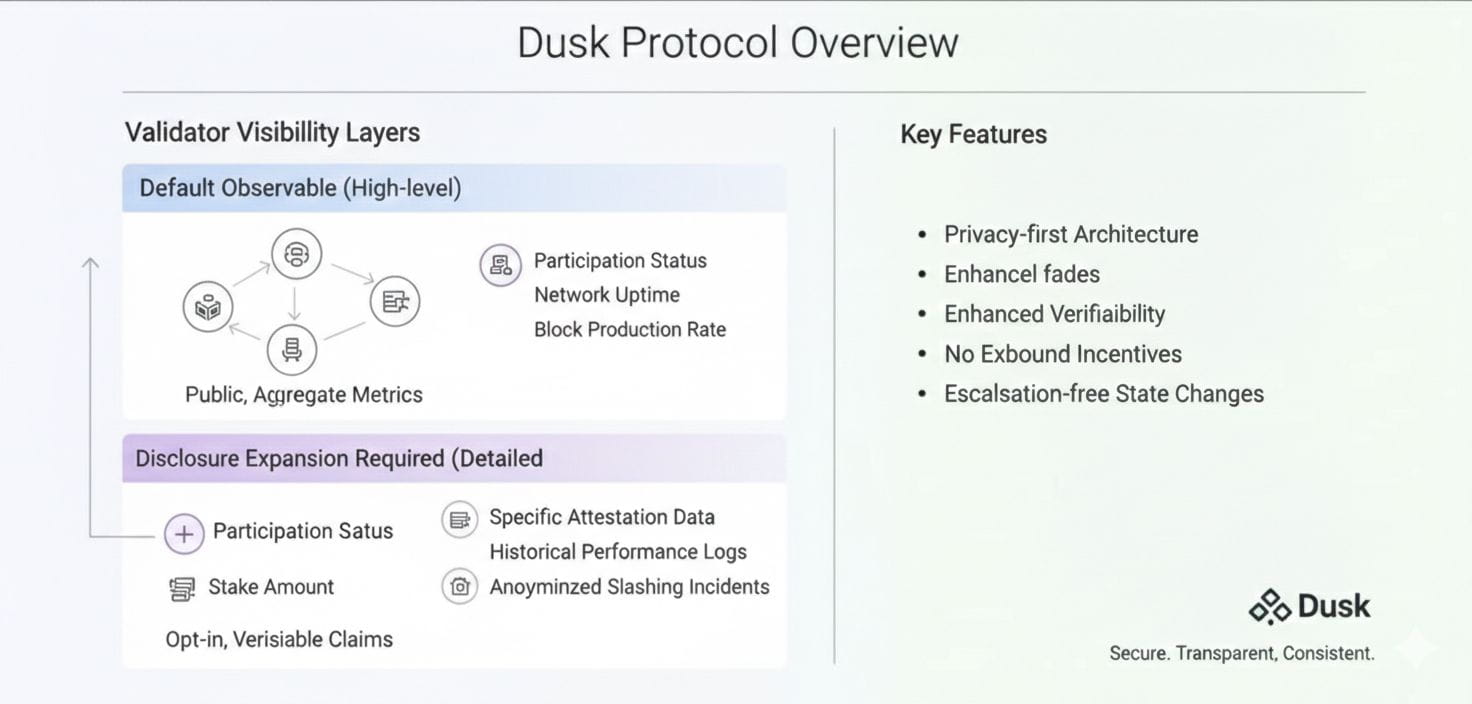
On Dusk, confidentiality narrows what operators are allowed to observe. Not maliciously. Correctly. Over time, that permitted slice becomes the only reality anyone reacts to.
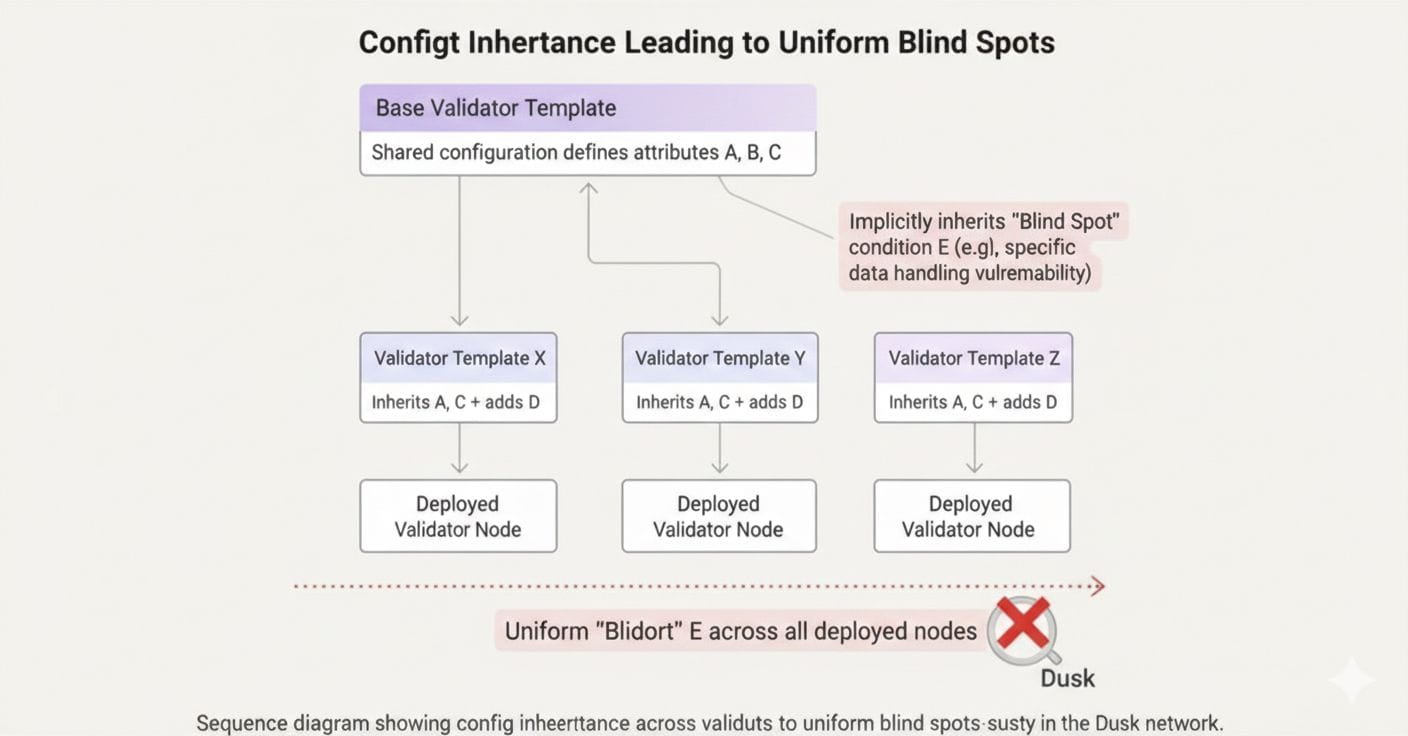
A configuration flag rotated during a routine update. It was documented. It was inherited. It propagated cleanly. Finality never wobbled.
No one did anything wrong.
The problem was not failure.
The problem was sameness.
When everyone sees the same limited surface, disagreement disappears. On transparent systems, dissent leaks naturally. On Dusk, dissent must be intentionally requested. That request widens disclosure scope. Someone has to own that decision.
Nobody asked. There was nothing visible to argue with.
Later, an ops reviewer noticed something unsettling. Logs aligned too perfectly. Independent teams produced identical interpretations. That is usually when experience kicks in. Not because something broke, but because nothing disagreed.
The fix was procedural. A second scoped view added. A checklist expanded. No incident report. Just a quiet acknowledgement that confidentiality changes how professionalism behaves.
This is the real operational cost Dusk introduces. Not downtime. Not risk events. But the need to actively manufacture second opinions when accidental ones are no longer possible.
That is not a flaw.
It is a responsibility most teams are not used to carrying.