
I have been in this space long enough to know that not every important project announces itself loudly. Some of them just keep building, improving quietly, and waiting for the rest of the world to catch up. Dusk is one of those projects. And lately, I find myself coming back to it more often, not because of hype or sudden excitement, but because when I look at what is actually live today, it feels like the groundwork has reached a level that deserves serious attention.
Dusk has always lived slightly outside the main crypto spotlight. While other chains fought over speed claims or meme attention, Dusk chose a much harder lane. It decided to focus on privacy that works within real world rules, not outside of them. That decision shaped everything that followed, from the pace of development to the kind of users and builders it attracts. For a long time, that made Dusk feel slow to people who were chasing fast narratives. Now, that same approach is starting to look intentional.
I remember when privacy chains were mostly about hiding everything. That worked for a while, but it also created obvious limitations. Completely opaque systems are hard to integrate into regulated environments. Financial institutions, enterprises, and even governments cannot operate in a black box. Dusk recognized that early and made a choice to focus on selective privacy. Not everything hidden, not everything exposed, but privacy where it is needed and verification where it is required.
That balance is extremely difficult to get right.
What stands out to me now is how much the infrastructure has matured. The network itself feels more stable than it ever has. Transactions behave consistently. Block production feels smooth. Finality is predictable. These are not features people tweet about, but they are the foundation of trust. Without this kind of reliability, no serious system will ever run on a blockchain, no matter how advanced the technology sounds.
One of the most important recent developments is how privacy is now deeply integrated into the protocol rather than treated as an add on. Zero knowledge technology on Dusk has evolved to support more complex verification while keeping sensitive data protected. This allows applications to prove things without revealing underlying information. And the key part here is usability. Privacy that is too heavy or too complex never gets adopted. Dusk has been refining this balance so developers can actually build with it.
This has major implications for real world use cases. Financial instruments, digital identity, compliance reporting, and data sensitive applications all require confidentiality. At the same time, they require auditability and trust. Dusk is building an environment where both can exist at the same time. That alone puts it in a very small category of blockchains.
Another area where I see meaningful progress is asset issuance. Dusk is increasingly positioned as a platform for compliant digital assets. Not just simple tokens, but structured financial instruments with built in rules. Rules around who can hold an asset, who can transfer it, under what conditions, and what disclosures are required. These rules are enforced at the protocol level, not through external agreements.
This is important because it removes ambiguity. When rules are built into the asset itself, compliance becomes automatic rather than manual. That is exactly the kind of infrastructure traditional finance needs if it is ever going to move on chain in a serious way.
Smart contracts on Dusk have also grown more capable. They are designed to support confidential logic while still allowing developers to build real applications. This is not easy to achieve. Most smart contract platforms force developers to choose between transparency and privacy. Dusk is working to offer both, and recent updates show steady progress in that direction.
From a builder perspective, the environment feels much more approachable than it used to. Tooling has improved significantly. Documentation is clearer. Development workflows feel more predictable. It no longer feels like you need to be a cryptography specialist just to get started. That matters because adoption depends on how easy it is for people to build, not just how advanced the technology is.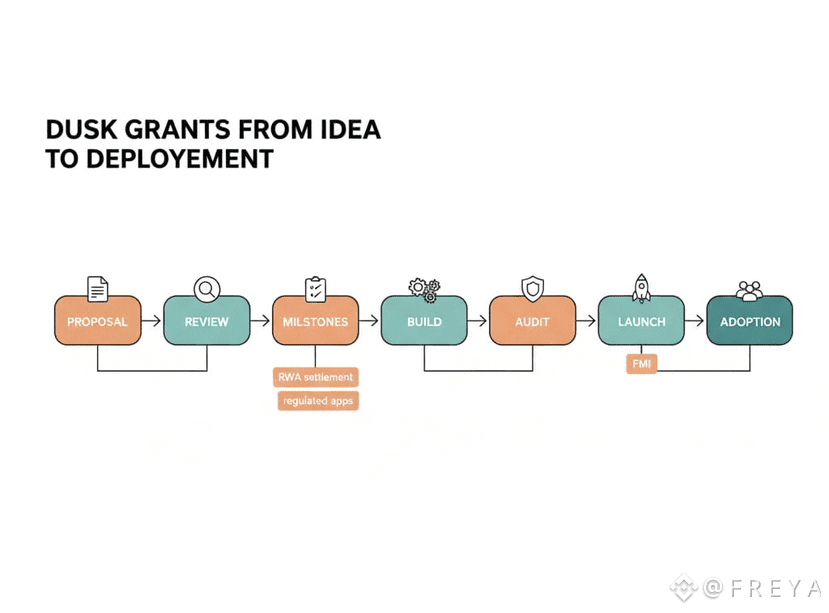
The DUSK token plays a clear operational role in the ecosystem. It is used for staking, securing the network, paying execution costs, and participating in governance. As more applications use the network, the token becomes more integrated into everyday activity. I like this because it ties the token directly to usage rather than speculation alone.
Staking has also matured. Validators are incentivized to behave reliably over long periods rather than chasing short term rewards. This encourages participants to think like infrastructure operators rather than traders. Over time, this creates a healthier and more resilient network.
Governance within the Dusk ecosystem feels more grounded now. Discussions around upgrades and direction are more thoughtful. Decisions feel less reactive. This usually happens when a project moves out of its experimental phase and into a phase where stability matters more than speed.
User experience has improved quietly. Wallet interactions are smoother. Transactions give clearer feedback. The network behaves in a predictable way. These details might not excite people, but they are critical for trust. Users may not understand zero knowledge proofs, but they immediately notice when something feels reliable or unreliable.
Interoperability is another area where Dusk has been making sensible progress. The project is not trying to isolate itself. It is being designed to interact with other networks and systems while preserving privacy guarantees. This matters because real world systems are interconnected. No blockchain operates in a vacuum.
What really makes Dusk feel relevant right now is how well it aligns with broader trends outside of crypto. Privacy regulations are increasing globally. Data protection requirements are becoming stricter. Institutions are under pressure to modernize infrastructure without exposing sensitive information. When I look at these trends, Dusk feels like it is building for the world that is coming, not the one that already passed.
There has been a noticeable increase in experimentation on the network. Developers testing applications. Infrastructure services being built. Systems being refined. This kind of activity usually happens quietly before broader adoption. It is not flashy, but it is meaningful.
Communication from the project has also become more focused on delivery. Updates emphasize what has been implemented rather than what might happen someday. Challenges are acknowledged. Progress is explained. That kind of transparency builds trust over time, especially among people who have seen too many projects overpromise.
Dusk is not a project that moves fast just to appear active. It moves carefully because the environments it targets demand caution. Financial systems, regulated markets, and sensitive data do not forgive mistakes. The fact that Dusk respects that reality is a strength, even if it costs attention in the short term.
Looking ahead, the direction feels consistent. Continued refinement of privacy technology. Expansion of compliant asset infrastructure. Improved performance and usability. Deeper integration with real world systems. None of this requires a change in vision. It is a continuation of what Dusk has been building toward all along.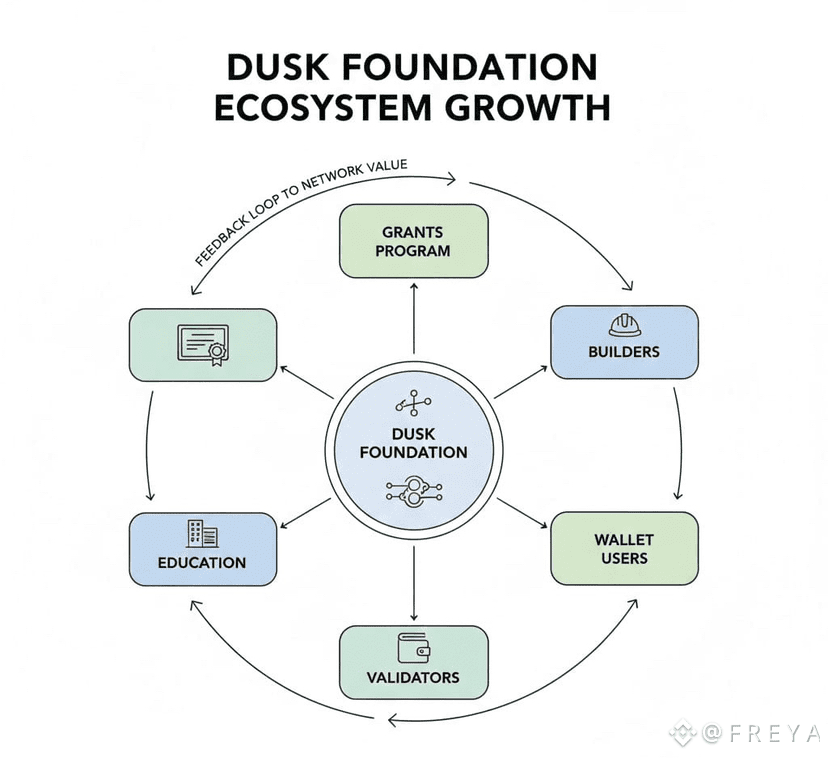
The value of the DUSK token grows alongside this utility. As more value flows through the network, as more applications rely on its infrastructure, the token becomes more relevant. This is not about quick price movements. It is about steady integration into systems that actually matter.
For me, this is why Dusk feels different now. Not because it suddenly changed, but because the environment around it has caught up. The need for privacy with compliance is clearer. The infrastructure is more mature. The use cases are more tangible.
I am not saying this is without risk. Nothing in this space is. But I am saying that Dusk feels like it is operating with intention and discipline. And in a market full of noise, that combination stands out.
This is not the kind of project that explodes overnight. It is the kind that slowly embeds itself into serious systems and becomes difficult to replace. Those projects rarely get the loudest attention, but they tend to last.
That is why I am paying attention to Dusk right now. Not because of hype, but because it feels like the foundations have finally reached a point where real adoption becomes possible.