

Most blockchains are built like general purpose machines, trying to be everything at once and hoping developers will figure out the rest. Plasma takes a different path. It starts with a simple observation that many traders and users already feel but rarely articulate. Stablecoins are the real engine of on chain activity, yet they still live on infrastructure that was never designed specifically for them. Plasma exists because that mismatch keeps showing up in real market behavior.
If you look at today’s on chain volumes, the majority of economic activity is not driven by speculative tokens. It is driven by stablecoins being moved between exchanges, protocols, market makers, payroll systems, and cross border transfers. Traders use them as base pairs. Funds use them as settlement layers. Businesses use them as cash equivalents. Despite that, most blockchains still treat stablecoins as just another smart contract. Plasma flips that logic and asks what happens if the chain itself is designed around stable value movement first.
That design choice matters more than it sounds. Stablecoin users care about different things than NFT traders or gaming communities. They care about predictability, uptime, fees that do not spike during volatility, and rules that do not change suddenly. Plasma is not trying to win every category. It is trying to be extremely good at one. That focus is what separates it from the one size fits all approach that dominates crypto infrastructure.
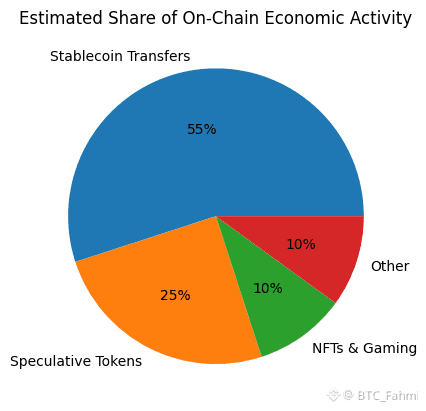
A practical way to understand this is to think about how traders actually behave during high stress moments. When markets move fast, people do not rush to mint collectibles or deploy complex contracts. They rush to park value, rotate exposure, and manage risk. That almost always means moving stablecoins. On a congested general purpose chain, those moments are exactly when fees spike and confirmation times become uncertain. Plasma is built around the assumption that these moments are not edge cases. They are the core use case.
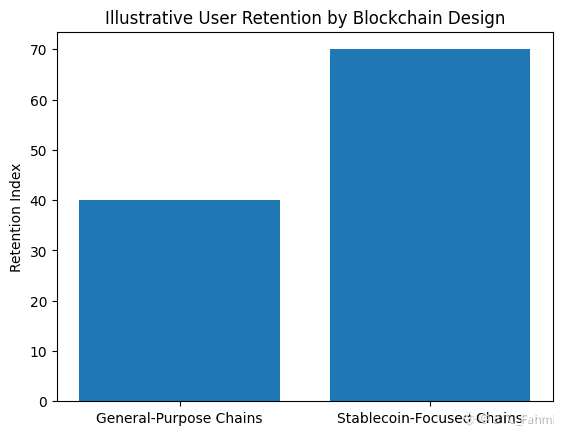
The technical choices behind Plasma are better understood after that behavioral reality is clear. Instead of optimizing for maximum flexibility, the network prioritizes stablecoin settlement, compliance friendly primitives, and throughput patterns that match financial flows rather than social activity. This does not mean Plasma is anti innovation. It means innovation is constrained by the requirements of financial reliability. That constraint is intentional.
There is also a regulatory dimension that traders and investors cannot ignore anymore. Stablecoins sit directly in the line of sight of regulators across multiple jurisdictions. Chains that host them at scale need to be designed with that reality in mind. Plasma positions itself as infrastructure that institutions can actually reason about, not just experiment with. For long term capital, that distinction often matters more than short term yield.
The retention problem is where this focus becomes especially relevant. Many blockchains attract users during hype cycles but struggle to keep them once incentives fade. Users arrive for rewards, leave when fees rise or narratives shift, and move on to the next chain. Stablecoin users behave differently. Once a system proves reliable for payments, settlement, or treasury management, people tend to stay. Retention is driven by trust and habit rather than excitement. Plasma is clearly aiming at that dynamic rather than chasing short lived attention.
A real world example makes this clearer. Consider a small trading firm that moves funds between centralized exchanges and decentralized venues multiple times a day. What they need is not the latest feature set. They need transfers that settle quickly, cost the same at noon as they do during a market spike, and do not introduce surprise risk. If Plasma can deliver that consistently, the firm has little reason to leave. That is retention rooted in utility, not incentives.
From an investor perspective, this is both less flashy and more durable. A chain focused on stablecoins is unlikely to dominate headlines. It is more likely to quietly accumulate usage as infrastructure. That makes it harder to value emotionally but easier to understand fundamentally. The question is not whether Plasma can support every possible application. The question is whether stable value movement continues to grow as a share of on chain activity. All current data suggests it does.
Plasma is not a bet on maximalism. It is a bet on specialization. In a market that often confuses breadth with strength, that is a contrarian stance. It also aligns closely with how mature financial systems evolve, where specialized rails handle specific functions and reliability matters more than novelty.
For traders, Plasma is worth watching as a signal. If liquidity and volume begin to cluster around chains that optimize for stablecoins, it says something important about where real usage is heading. For investors, it offers exposure to infrastructure that aims to be boring in the best possible way.
The call to action is simple. Do not evaluate Plasma by the standards you use for general purpose blockchains. Evaluate it by asking whether stablecoins are becoming more central to crypto markets and whether specialized infrastructure tends to win in mature systems. If the answer to both is yes then Plasma is not trying to be everything. It is trying to be essential.