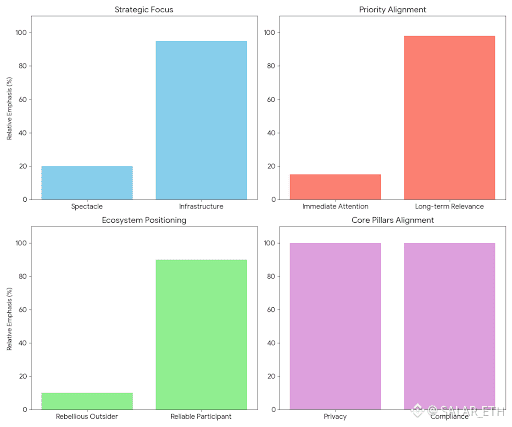
In an era where most blockchains compete to be louder faster and more spectacular than the last Dusk feels like a deliberate pause a thoughtful breath taken in a room crowded with noise. Founded in 2018 Dusk did not emerge as a reactionary experiment or a speculative frenzy it arrived with a philosophy. That philosophy is simple yet radical finance can be private without being opaque regulated without being suffocating and decentralized without being reckless. This idea quietly ambitious sits at the heart of what Dusk represents and it is why its story feels less like a startup pitch and more like a long form conversation about trust dignity and the future of money.
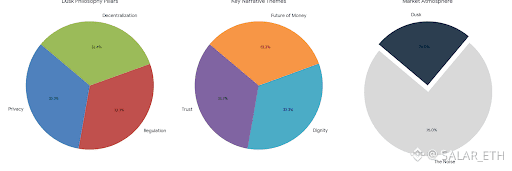
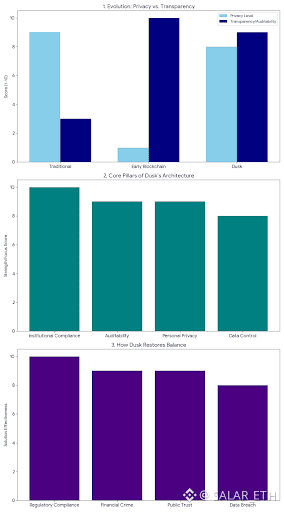
Modern finance has always lived with a contradiction. On one hand it demands transparency auditability and oversight. On the other it is deeply personal bound to identities livelihoods and sensitive decisions that were never meant for public display. Traditional systems attempted to solve this through closed databases and trusted intermediaries while early blockchains swung the pendulum to radical transparency exposing every movement of value to anyone willing to look. Dusk exists in the space between these extremes not as a compromise but as a refinement. It suggests that selective disclosure is not a weakness of the system but its greatest strength.
The emotional gravity of Dusk’s vision lies in its respect for reality. Institutions do not operate in a vacuum and neither do people. Laws exist regulators exist and financial accountability is not optional. Rather than treating regulation as an obstacle to be bypassed Dusk weaves it into the very fabric of its architecture. Its modular design reflects a deep understanding of how financial systems evolve piece by piece requirement by requirement. This approach allows institutions to build compliant decentralized applications without surrendering privacy or security creating an environment where innovation feels grounded instead of fragile.
There is something quietly powerful about designing a blockchain with auditability as a feature rather than an afterthought. On Dusk privacy does not mean invisibility it means control. Transactions can remain confidential while still being verifiable by authorized parties. This distinction is crucial especially in a world where financial crime data breaches and regulatory failures have eroded public trust. By enabling proof without exposure Dusk restores a sense of balance allowing systems to be inspected without turning individuals into open books.
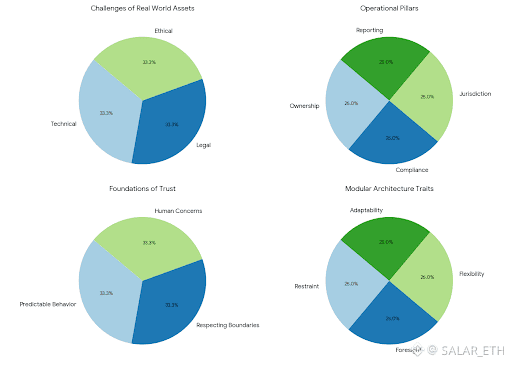
Tokenized real world assets are often discussed with grand enthusiasm but rarely with sufficient honesty. Turning physical or legally bound assets into digital representations is not just a technical challenge it is a legal and ethical one. Ownership compliance jurisdiction and reporting all matter. Dusk approaches this complexity with humility. Its infrastructure is designed to support assets that carry real obligations real oversight and real consequences. This is where its regulated focus shines brightest. It is not interested in hypothetical markets alone but in financial instruments that can survive contact with courts regulators and institutional balance sheets.
What makes Dusk particularly compelling is its emotional intelligence as a technology. It recognizes that trust is not built through slogans or speed alone. Trust emerges when systems behave predictably respect boundaries and acknowledge human concerns. Privacy in this context becomes an expression of respect rather than secrecy. Auditability becomes reassurance rather than surveillance. This duality speaks to a mature understanding of how financial relationships actually function in the real world.
The modular nature of Dusk’s architecture also tells a story of restraint and foresight. Instead of forcing every participant into a single rigid framework it allows components to be assembled according to specific needs. Institutions can integrate compliance mechanisms without sacrificing decentralization and developers can create applications that align with regulatory realities instead of fighting them. This flexibility is not about fragmentation it is about adaptability. It acknowledges that financial systems must evolve alongside laws markets and societal expectations.
There is an understated courage in building something meant to last rather than something meant to trend. Dusk does not chase spectacle. It invests in infrastructure correctness and long term relevance. This choice may not always generate immediate attention but it generates something far more valuable credibility. Over time credibility becomes the currency that institutions regulators and serious builders trust with real value.
As decentralized finance matures the conversation is shifting. The question is no longer whether blockchain can disrupt finance but whether it can responsibly support it. Dusk answers this question not with promises but with design. It shows that privacy and compliance are not opposing forces but complementary principles when approached with care. It suggests a future where decentralized systems are not rebellious outsiders but reliable participants in the global financial ecosystem.
In the end Dusk feels less like a technological product and more like a philosophy embodied in code. It is a reminder that progress does not always announce itself loudly. Sometimes it arrives quietly reshaping foundations instead of headlines. By focusing on regulated privacy first financial infrastructure Dusk is not trying to redefine finance overnight. It is patiently teaching finance how to whisper securely lawfully and with respect for the people it serves.