

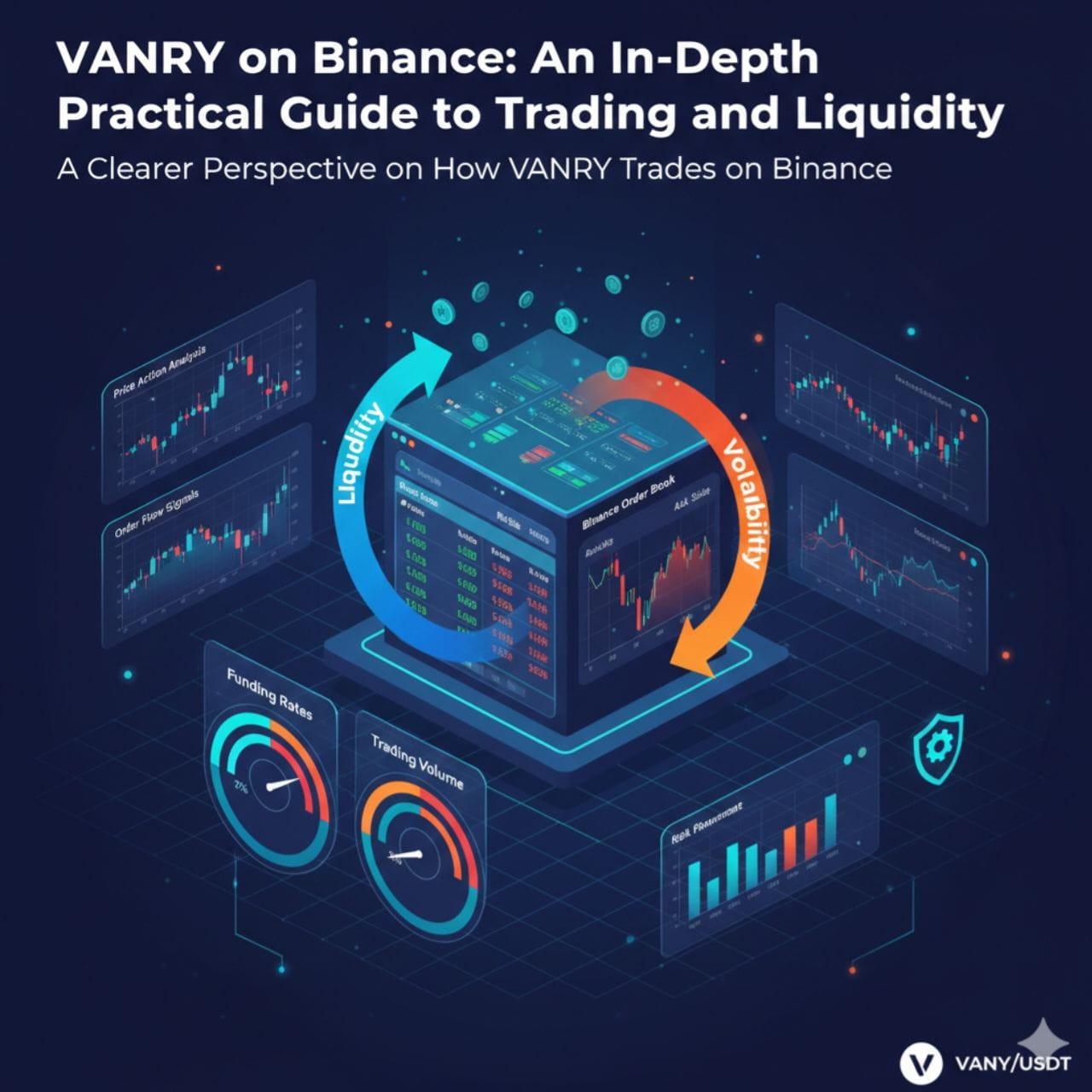
A Clearer Perspective on How VANRY Trades on Binance
When a new token like VANRY arrives on Binance, it naturally sparks a lot of attention—especially around sudden price jumps and dips. However, if you want to trade with a cool head and focus on lasting results, it’s important to look deeper than just the latest chart spikes. The real questions you should be asking are: How smoothly can you buy or sell VANRY? What is the underlying trading structure? Which signals actually matter for your risk and return, rather than just feeding the noise?
VANRY’s listing on Binance is a prime opportunity to walk through these questions with real-world context. Instead of speculating on where the price might go next, let’s explore how trading VANRY actually works, what liquidity really means, and how to navigate the market with confidence. This guide is straightforward, practical, and designed for traders who want substance over hype.
1. What Trading VANRY on Binance Really Means
Trading VANRY on Binance works through a traditional order book system, not an automated market maker or a protocol-driven DEX. Every transaction is the result of a buyer and a seller agreeing on a price. This process is transparent and driven by real demand and supply, not just rumors or market manipulation.
Unlike some decentralized exchanges where smart contracts set prices, on Binance, the visible order book is the heart of the market. Traders submit buy and sell orders at chosen prices, and trades only happen when these match. This means prices reflect actual trading interest. It’s a market that rewards paying attention—if you ignore the mechanics, you risk missing key signals about market strength or weakness.
2. Liquidity Demystified—Why It’s More Than Just a Buzzword
Liquidity is often mentioned in passing, but in trading, it’s absolutely fundamental. Liquidity answers the question: Can you execute a trade for VANRY quickly and at the expected price, or will your order move the market?
High liquidity means you’ll see a tight spread between buy (bid) and sell (ask) prices. Large trades can be placed without causing sharp price changes, and there’s minimal slippage—so you get prices close to what you expect. When liquidity is high, you can move in and out of positions with confidence, which is essential for both day traders and longer-term investors.
Low liquidity is the opposite. Not only do spreads widen, but even small trades can cause significant price swings. This increases your risk, especially if you need to exit a position in a hurry. You may see wild short-term volatility, and the costs of trading—hidden in slippage—can quickly add up.
On Binance, you can see real-time liquidity in the order book and daily trading volume. Don’t be distracted by project announcements or social media buzz; focus on the numbers in front of you.
3. Order Book Analysis—Finding the Real Signals
The order book is a goldmine of information that many traders overlook. It shows all pending buy and sell orders at different price levels, creating a live snapshot of market sentiment.
Depth is crucial: Deep order books with lots of buy and sell orders at many price points signal strong market participation and stability. If the order book looks thin—with few orders on either side—any decent-sized trade can shift the price sharply, making the market riskier.
Balance matters, too. If there is a much larger wall of buy orders or sell orders, it can hint at imminent price moves or big players taking positions. But also watch for stability: Are orders being placed and left there, or do they disappear as soon as the price nears them? Rapidly vanishing orders can mean bots or traders are trying to mislead the market.
Think of the order book like a traffic report: consistent, steady movement is safer and more predictable than chaotic surges.
4. Volume vs. Volatility—Why the Difference Matters
Many traders equate high trading volume with opportunity, but this can be a mistake. High volume is only valuable if it comes with stable spreads and sustained trading at similar prices. That’s a sign of healthy, ongoing participation, not just fleeting interest.
Watch for repeated trades at consistent prices throughout the day, not just a single surge. Sudden spikes in volume often mean a big player or group is testing liquidity, not necessarily that there’s genuine market demand. Misreading these signals can lead to buying into false moves or selling during temporary dips.
Remember, real demand shows up as sustained, even activity—not just big numbers in short bursts.
5. Liquidity and Your Risk—A Direct Connection
Liquidity isn’t just a technical term—it directly impacts your trading risk. In liquid markets, your stop-losses are more likely to execute at planned prices, and you can enter or exit positions without fighting the market. This lowers your exposure to surprise losses.
In illiquid conditions, you may face slippage—your order fills at a worse price than expected—and even well-placed stop-losses can trigger at unexpected levels due to sudden price jumps. This risk is magnified during periods of market stress or when trading less popular pairs or during off-peak hours.
For VANRY on Binance, smart traders watch liquidity first and adjust their position sizes to match. If depth is thin, trade smaller and use more conservative stops. It’s often wiser to focus on liquidity than to obsess over catching the absolute bottom or top of a move.
6. Common Pitfalls—What Many Traders Overlook
Many traders get caught up watching the price alone. But price is just the final outcome of a complex dance between orders, liquidity, and sentiment. Common mistakes include ignoring the depth of the order book, trading during times of low activity (such as late-night hours or weekends), and mistaking a sudden volume spike for a genuine trend.
Also, don’t assume that a Binance listing by itself means the token is stable or mature. The tools are there to analyze the market, but interpreting them correctly is your responsibility.
7. Practical Habits for Trading VANRY on Binance
To trade VANRY effectively, focus on habits that manage risk and keep you grounded:
Monitor if the 24-hour volume remains steady, not just occasionally peaking.
Keep an eye on how the bid-ask spread changes before you place an order. Wider spreads mean more risk.
Use limit orders, especially when order book depth is thin—this lets you control your entry and exit prices.
Scale back your trade size if there’s not much liquidity; don’t force large trades into shallow markets.
If you notice sudden, sharp jumps in volatility, pause and reassess. Rash decisions in volatile markets often lead to mistakes.
These habits won’t guarantee profits, but they’ll help you avoid unnecessary losses and frustration.
FAQs
Q: Does higher liquidity guarantee price growth?
A: No. High liquidity simply means it’s easier to trade without large price swings. It doesn’t mean the price is destined to rise—price growth depends on real demand, not just liquidity.
Q: Is VANRY suitable for short-term trading?
A: VANRY can attract short-term traders, but your success will depend on liquidity, trading volume, and your ability to read the market structure. If liquidity is strong and the order book is deep, it’s easier to execute short-term trades efficiently. However, during periods of low activity, trading can become riskier, with higher slippage and unpredictable price moves. As with any token, adapt your strategy to the current market conditions rather than assuming past activity will continue.
In summary, trading VANRY on Binance is about understanding the subtle interplay between liquidity, order book dynamics, and market behavior—not just chasing headlines or the latest price action. By focusing on these core ideas, you can trade more effectively and reduce your exposure to avoidable risks.

Disclaimer:Not Financial Advice