

I’ve spent a long time working around digital systems—long enough that appearance stopped impressing me. What began to matter instead was durability. As I tried to understand how these systems function beneath their interfaces, one theme kept repeating itself: they look sturdy from the outside, but internally they’re surprisingly brittle.
Most modern platforms bind data tightly to applications, companies, and brand identities. Everything feels stable as long as the app works, the company survives, and the site stays online. But when one of those pieces disappears, anxiety spreads almost instantly. People suddenly realize their data was never truly theirs—it was dependent. I ended up going much deeper into this than I expected. The more I examined it, the more obvious it became that most systems are designed as consumer products first, and as long-term foundations only as an afterthought.
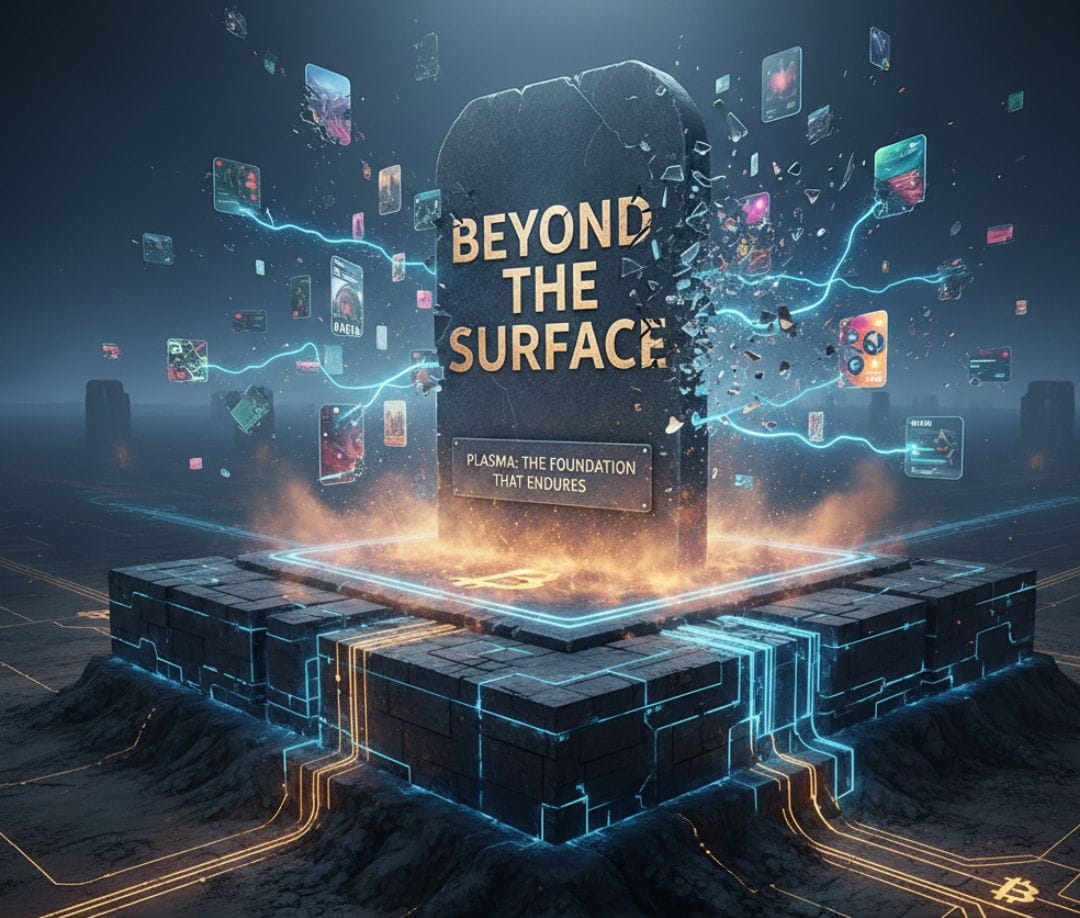
During this research, I encountered Plasma. What drew me in wasn’t marketing or grand claims. It was something subtler. The system was built to exist independently of any interface—before one appears and after one disappears. Plasma is often described as a Layer 1 blockchain for stablecoin settlement, but that label barely captures its core philosophy. At its heart is an idea that’s increasingly rare online: data should stand on its own. It shouldn’t rely on the success of an app. It shouldn’t be leased. It should last.
I’ve watched too many platforms where balances, transaction logs, and records live entirely inside corporate systems. People trust them because they seem dependable—until they’re suddenly not there anymore. When that happens, panic sets in. Social media fills with speculation. Support channels overflow. No one knows what’s real. Plasma approaches this differently. Its priority is infrastructure, not presentation. Interfaces are simply entry points. If one disappears, the structure behind it remains untouched.
At one point, while I was paying close attention, a widely used interface connected to Plasma shut down. There was no hack. No scandal. Just a business that couldn’t continue. In most ecosystems, that would have caused immediate chaos. People would assume their funds were inaccessible or lost. I watched carefully, because moments like that reveal what a system is truly made of. What stood out was the absence of panic. The data was still there. Balances hadn’t changed. Transaction histories were intact. Other ways to access the system worked as usual. It felt like an accidental stress test—and Plasma passed by simply continuing to function.
That experience clarified the difference between products and infrastructure. Products are experiments. They fail often, and that’s expected. Infrastructure shouldn’t collapse when they do. It should persist quietly. Plasma did exactly that. There were no emergency fixes, no frantic updates, no dramatic statements. The system behaved as if nothing essential had occurred—because it hadn’t. The interface was never in control of the data to begin with.
As I kept exploring, it became clear why this design aligns so well with stablecoins. Stablecoins aren’t novelties. People rely on them in everyday life, especially in regions where adoption is high. Institutions use them for payments and settlement. These users need reliability, not clever abstractions. Plasma’s plans—like gasless USDT transfers and stablecoin-focused gas mechanics—reflect how money is actually used. The goal is to remove friction, not pile on complexity.
What impressed me further was Plasma’s decision to anchor its security to Bitcoin. That choice isn’t about performance metrics. It’s about neutrality, longevity, and resistance to control. By grounding itself in something designed to endure, Plasma reduces reliance on any single organization or interest group. It becomes more difficult to suppress, capture, or dismantle. This isn’t marketing—it’s a survival mindset.
That interface shutdown reshaped how decentralization felt to people. It stopped being an abstract term and became something tangible. Users experienced firsthand that even when a visible layer failed, the underlying system kept operating. Fear didn’t spiral. Communication stayed clear. Alternative access methods emerged naturally. There was no sense of emergency because the foundation never shifted.
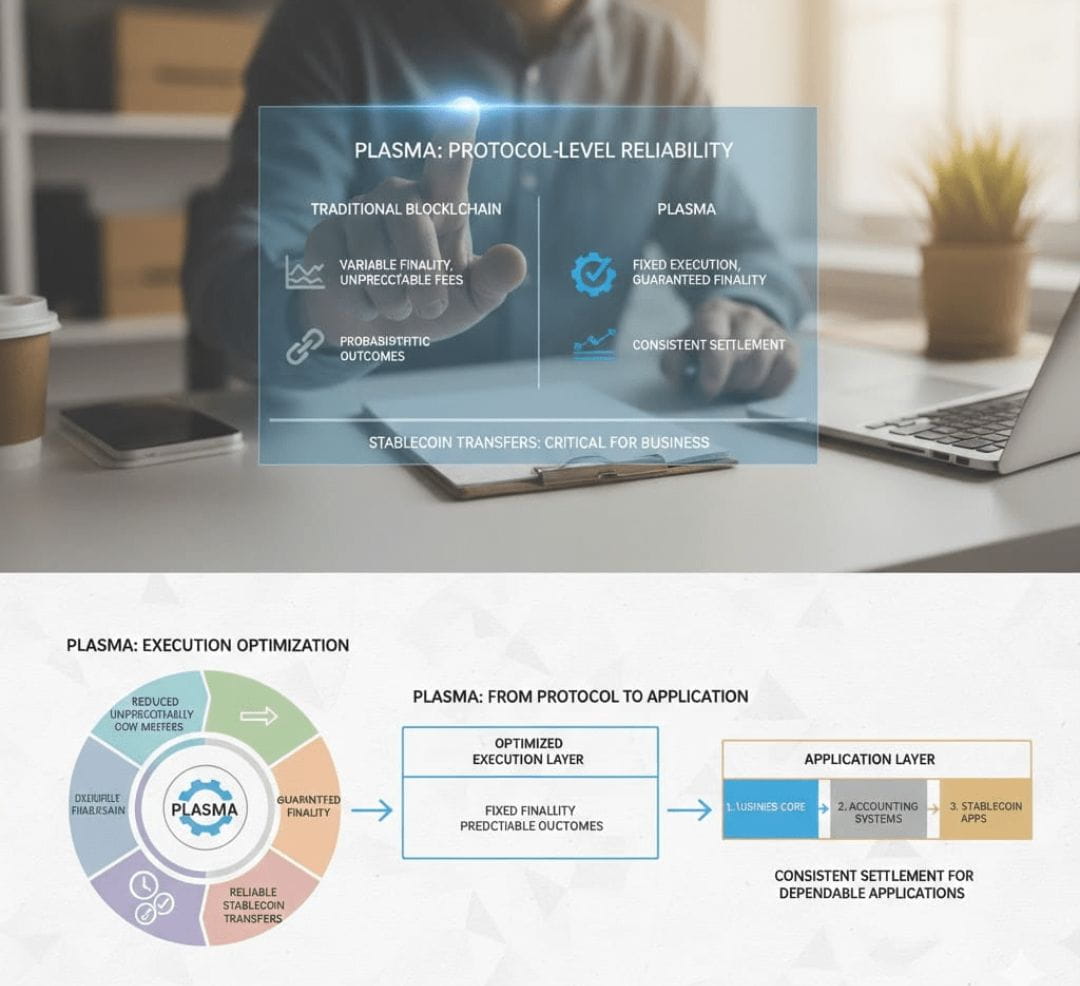
I’ve come to believe that truly strong systems don’t need constant reassurance. They demonstrate their value when no one is trying to demonstrate anything at all. Plasma showed that kind of quiet strength. It highlighted that long-term infrastructure isn’t about flawlessness—it’s about resilience. Sometimes that means being uneventful, even boring, when things go wrong.
What stays with me is straightforward. Making promises is easy. Holding up under pressure is rare. Plasma isn’t trying to be loud or flashy. It’s trying to still be here tomorrow, next year, and long after most products disappear. After seeing so many systems fail, I know this matters more than anything else. Real value lives in foundations that remain standing even as everything built on top of them changes—or vanishes entirely.
