

Dusk didn’t begin with excitement or noise. It began with an uneasy feeling that something essential was missing from blockchain. In 2018, while many projects were racing toward openness without limits, the people behind Dusk were thinking about what happens when real money, real companies, and real lives try to move on chain. Finance isn’t abstract. It carries responsibility. It holds pensions, salaries, and long-built trust. Ignoring rules might look rebellious, but it breaks the bridge between blockchain and the real world. Dusk was born from the belief that this bridge mattered.
From the start, they weren’t trying to impress traders or chase short-term attention. They were trying to build something institutions wouldn’t fear and users wouldn’t feel exposed using. That meant facing a difficult truth. Privacy and regulation had been treated as opposites in crypto, but in real life they exist together. Businesses need confidentiality. Regulators need oversight. People need dignity. Dusk chose not to sacrifice one for the other.
Privacy on Dusk isn’t about hiding. It’s about control. It allows sensitive information to stay private while still proving that rules are being followed. This is done through cryptography that lets actions be verified without revealing their details. A transaction can prove it complied without exposing amounts, identities, or strategies. If it becomes necessary, authorized parties can audit. Until then, privacy remains intact. This approach feels deeply human because it mirrors how trust works in the real world. You don’t expose everything to prove you’re honest. You demonstrate it when asked.
The foundation of the network reflects this same mindset. Dusk is designed to feel stable, not exciting. When transactions settle, they settle fully. There’s no waiting to feel safe. No uncertainty about reversals. This kind of finality matters when legal obligations are involved. Validators secure the network through a proof of stake system that favors reliability over randomness. Small groups take turns confirming blocks, and once consensus is reached, it’s final. The system behaves less like an experiment and more like infrastructure.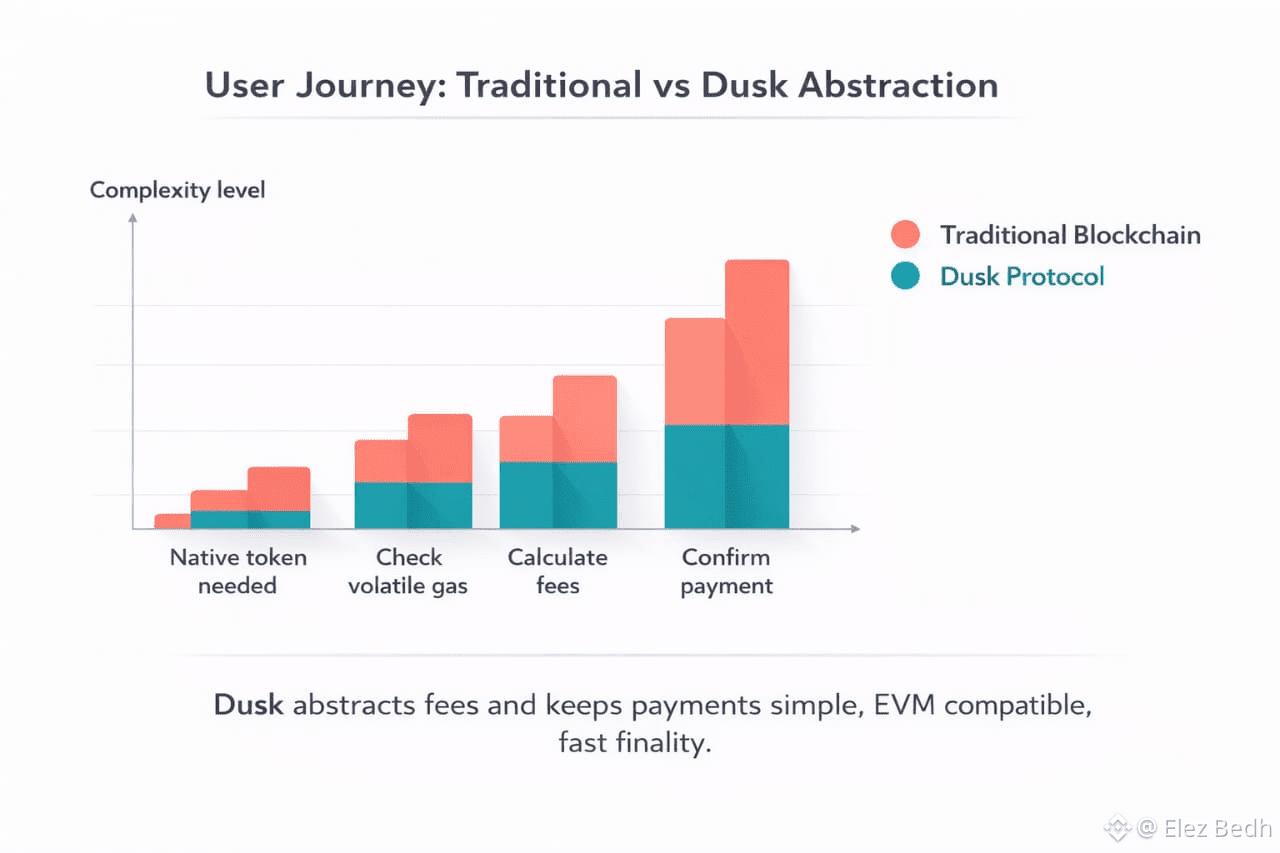
Even the way nodes communicate is deliberate. Information moves efficiently, not loudly. The network avoids unnecessary noise. This makes it easier to run, easier to scale, and easier for institutions to integrate without fear of instability. Everything about the design suggests patience and responsibility rather than spectacle.
What truly sets Dusk apart is how it handles privacy in daily use. Not every transaction needs to be visible, and not every transaction needs to be hidden. Dusk supports both. Some transfers are transparent and account based. Others are fully private and encrypted. Both exist on the same chain and follow the same settlement rules. This flexibility reflects real life. Not every financial action belongs on a public stage, but every action should be accountable.
Smart contracts on Dusk are built with this reality in mind. Developers can use familiar tools while gaining access to confidential execution. Contracts can operate on encrypted values, enforce compliance rules, and still behave predictably. This allows regulated assets like shares or funds to exist on chain without breaking the laws that govern them. The system doesn’t ask developers or institutions to abandon what they know. It meets them where they are and offers something better.
Using Dusk feels familiar on the surface. Wallets hold assets. Validators stake tokens. Applications run as expected. But beneath that surface is a system designed to carry real value without leaking trust. Ownership updates instantly. Settlement happens on chain. Compliance is enforced automatically. What once took days and multiple intermediaries can happen in moments, without exposing sensitive data along the way.
Progress on Dusk doesn’t always show up as noise. It shows up in quieter signals. More validators choosing to secure the network. More developers building without fear of legal fragility. More infrastructure becoming production ready. Institutions move slowly for a reason. They test. They observe. They act when systems feel safe. That slow confidence is one of the strongest signs of real adoption.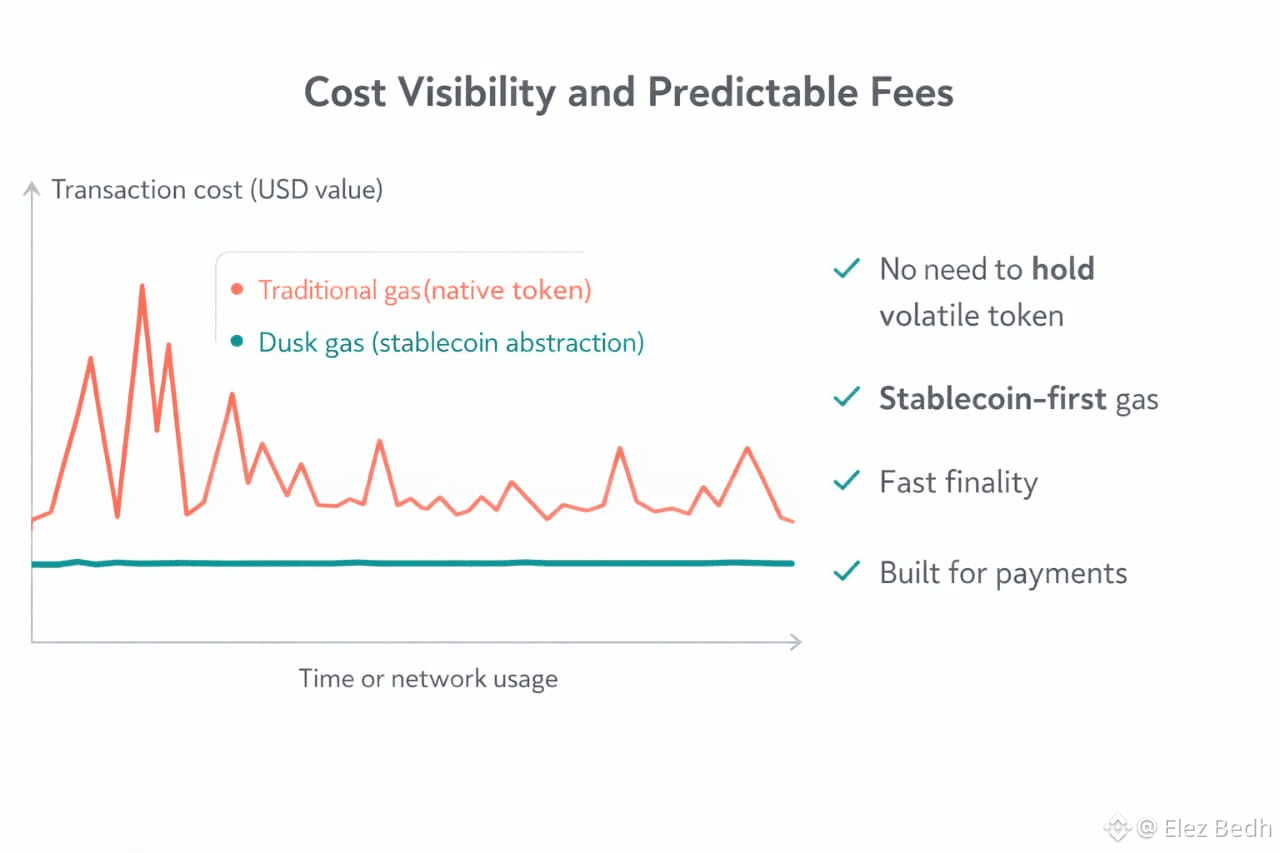
Of course, the path isn’t without risk. Regulation continues to evolve. Cryptography demands perfection. Adoption takes time. Markets are unpredictable. Dusk operates where mistakes carry real consequences. These risks aren’t ignored. They’re acknowledged and built around. The project grows carefully because financial infrastructure cannot afford shortcuts.
Looking forward, the direction feels intentional. The focus is on expanding execution environments, improving tools, and bringing real assets on chain at meaningful scale. Payment systems aligned with law, not fighting it. Asset lifecycle tools that support issuance, transfer, and compliance from start to finish. The goal isn’t to dominate headlines. It’s to become quietly essential.
There’s something reassuring about Dusk’s story. It doesn’t promise to disrupt everything overnight. It suggests that blockchain can grow up. That privacy doesn’t have to disappear for accountability to exist. That regulation doesn’t have to kill innovation. We’re seeing a shift across the space from ideology to infrastructure, and Dusk sits firmly in that transition.
In the end, Dusk feels less like a rebellion and more like a reconciliation. A reminder that technology becomes powerful when it respects reality instead of running from it. It shows that freedom and responsibility were never meant to be enemies, and that building systems for the real world requires patience, humility, and care.
