
There are some projects that begin with a technical breakthrough, and others that begin with a feeling. Vanar belongs to the second group. Before there was a network, before there was a token, there was a growing sense that digital experiences were becoming richer while the infrastructure beneath them remained rigid. Games, virtual spaces, interactive media, and emerging digital worlds were evolving faster than the systems meant to support ownership, persistence, and scale. I’m seeing that Vanar was born from this imbalance, not from a desire to create another blockchain, but from the need to support a new kind of digital life.
The earliest idea behind Vanar Network did not focus on finance at all. It focused on experience. Developers working in gaming and immersive environments were facing the same obstacles repeatedly. Blockchains were either too slow, too expensive, or too inflexible. Assets could exist on-chain, but interactions felt disconnected from real-time worlds. Ownership was possible, but using that ownership inside complex environments was difficult. Vanar began as a question rather than a solution. What would infrastructure look like if it were designed around worlds instead of transactions?
That question shaped the project from its first conceptual stage. Instead of starting with a base chain and adding features later, Vanar approached design from the top down. They looked at how users behave inside games and virtual spaces. They examined how creators build narratives, economies, and social systems. Only then did they work backward to define what the underlying technology needed to provide. This inversion of the usual process is subtle, but it explains much of what makes Vanar different.
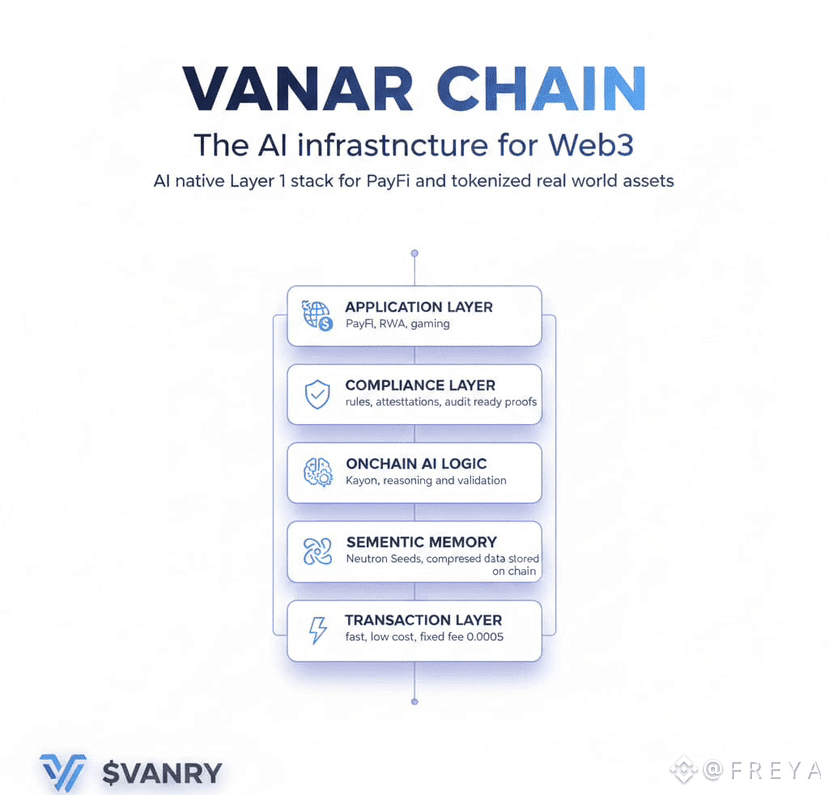
In the early research phase, the team identified a core tension. Immersive environments demand speed and responsiveness, but decentralization demands consensus and security. Traditional blockchains favor certainty over immediacy. Games and virtual worlds favor immediacy over certainty. Vanar’s mission became finding a balance that did not force developers to choose one over the other. They’re not trying to turn blockchains into game engines. They’re trying to make blockchains disappear into the background of interactive systems.
As the project moved from idea to architecture, scalability became the first major challenge. High-frequency interactions, such as in-game actions or dynamic asset changes, cannot rely on congested networks with unpredictable fees. Vanar’s solution was to design a system optimized for throughput and consistency. The goal was not to chase theoretical maximums, but to provide reliable performance under real-world conditions. This reliability is essential for creators who need to plan economies and experiences months or years in advance.
The technical design also reflected an understanding that immersive assets are not static. In games and virtual worlds, assets evolve. Characters level up. Items change states. Environments respond to user actions. Vanar’s infrastructure was built to support this dynamism. Rather than treating assets as simple tokens, the network accommodates complex data structures that can represent evolving digital objects. This capability may seem abstract, but it is foundational for persistent worlds.
During this stage, Vanar’s identity began to take shape. It was not positioning itself as a general-purpose blockchain competing with everything else. It was positioning itself as specialized infrastructure for interactive digital ecosystems. This focus allowed deeper optimization and clearer messaging to developers. We’re seeing how specialization can be a strength rather than a limitation in an increasingly crowded blockchain landscape.
The introduction of the VANRY token marked a transition from internal development to ecosystem formation. The token was designed to serve functional roles within the network, including transaction processing, network security, and incentive alignment. Importantly, it was framed as part of a larger system rather than the system itself. Vanar’s narrative consistently placed applications and experiences at the center, with the token supporting those layers rather than overshadowing them.
As external developers began exploring the network, feedback loops formed. Game studios and interactive platforms brought real requirements that influenced ongoing development. They’re not theoretical users. They have deadlines, budgets, and player expectations. This interaction grounded Vanar’s roadmap in practical needs. Features were refined not because they sounded impressive, but because they solved concrete problems faced by builders.
One of the defining aspects of Vanar’s growth was its attention to onboarding. Many Web3 platforms assume a level of blockchain familiarity that traditional developers do not have. Vanar invested in tools, documentation, and compatibility layers that reduce friction. The aim was to allow creators to integrate decentralized ownership and economies without rewriting their entire stack. This pragmatic approach reflects a broader belief that adoption happens when technology adapts to creators, not the other way around.
As the ecosystem expanded, Vanar began supporting a diverse range of applications. These included games, virtual social spaces, digital marketplaces, and hybrid experiences that blur the line between entertainment and commerce. Each use case stressed the network in different ways, providing valuable data about performance and scalability. We’re seeing here an iterative evolution driven by usage rather than speculation.
Economic design became increasingly important as more value flowed through the system. Vanar’s tokenomics were structured to encourage long-term participation. Validators are incentivized to maintain network health. Developers benefit from sustainable fee models. Users are not punished by unpredictable costs. This balance is difficult to achieve, but it is essential for environments meant to persist over time. Short-term extraction undermines long-term worlds.
Governance also entered the picture as the network matured. Decisions about upgrades, parameters, and ecosystem support required coordination among stakeholders. Vanar approached governance cautiously, recognizing that premature decentralization can be as damaging as excessive centralization. The governance model evolved gradually, allowing the community to grow into its role. If governance feels rushed, it fractures. If it is delayed indefinitely, trust erodes. Vanar’s path sits between these extremes.
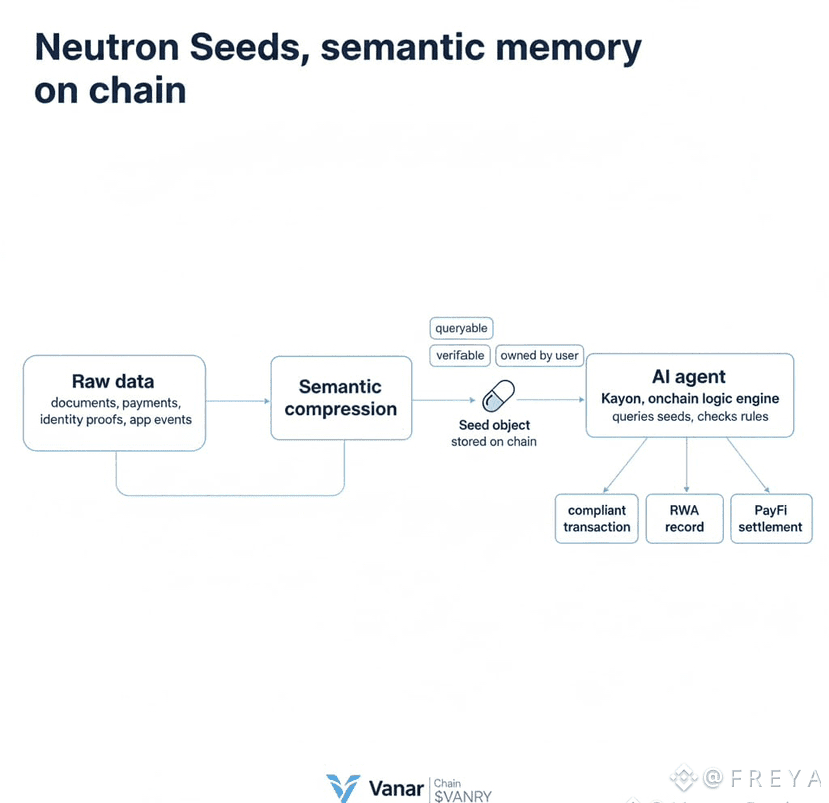
Another layer of Vanar’s development involved interoperability. Immersive worlds do not exist in isolation. Assets, identities, and communities increasingly move across platforms. Vanar’s architecture considers how digital objects can retain meaning and value beyond a single application. This interoperability mindset positions the network as part of a broader digital fabric rather than a closed ecosystem.
As market narratives shifted over time, Vanar remained relatively consistent in its messaging. It did not rebrand itself with every trend. Instead, it continued refining its role as infrastructure for digital experiences. This consistency helped attract partners aligned with long-term goals rather than short-term cycles. They’re building for creators who think in years, not weeks.
The cultural dimension of Vanar is also worth noting. Games and virtual worlds are not just technical systems. They are social spaces. They shape how people interact, express identity, and form communities. Vanar’s focus on ownership within these spaces reflects an understanding that digital identity is becoming increasingly important. When users truly own parts of their digital lives, their relationship with platforms changes.
As the network gained traction, challenges naturally emerged. Scaling infrastructure is complex. Supporting diverse applications requires constant adaptation. Balancing decentralization with usability is an ongoing process. Vanar’s response to these challenges has been measured rather than reactive. Updates are framed as improvements rather than reinventions. This steadiness contributes to trust among developers and partners.
Looking ahead, the potential directions for Vanar are closely tied to the evolution of immersive technology itself. As virtual reality, augmented reality, and mixed reality mature, the demand for persistent, interoperable digital assets will increase. Vanar’s infrastructure is designed to support this shift without requiring fundamental redesign. Its emphasis on performance and flexibility makes it well suited for environments that are still emerging.
There is also a broader economic implication. Digital worlds are becoming places where real value is created and exchanged. Creative labor, social capital, and virtual goods are converging into new forms of economy. Vanar provides the rails for these economies, allowing value to move fluidly while remaining anchored in ownership and trust. We’re seeing the early outlines of systems that could rival traditional digital marketplaces in scale and significance.
At the same time, Vanar’s future will depend on its ability to remain invisible. The best infrastructure is rarely noticed. If users are thinking about blockchains while playing a game or exploring a virtual space, something has gone wrong. Vanar’s success will be measured by how seamlessly it integrates into experiences, allowing creators and users to focus on interaction rather than mechanics.
Regulatory considerations may also shape Vanar’s path. As digital assets gain recognition, frameworks will emerge that influence how ownership and economies are structured. Vanar’s flexible design allows it to adapt to these changes without losing its core identity. This adaptability may prove crucial as digital worlds intersect more directly with real-world systems.
When reflecting on Vanar’s journey so far, it becomes clear that this is not a project chasing visibility. It is building quietly, aligning technology with a vision of digital spaces that feel alive, persistent, and meaningful. They’re not promising to replace existing systems overnight. They’re laying groundwork for worlds that may take years to fully emerge.
In the end, Vanar invites a different way of thinking about blockchain. Instead of asking what transactions it can process, it asks what experiences it can support. Instead of focusing on speed for its own sake, it focuses on continuity and immersion. As digital life continues to expand beyond screens into shared spaces, infrastructure like Vanar may become essential without ever becoming obvious.
The future Vanar is building toward is one where digital worlds are not temporary products but enduring places. Places where creativity, ownership, and community intersect naturally. If that future arrives, it will not announce itself with noise. It will simply feel normal. And when that happens, the quiet systems that made it possible will have done their job, leaving us to reflect on how much of the digital world depends on foundations we rarely see, but always rely on.