
Plasma did not start as a brand, a token, or even a clear product. It started as discomfort. A persistent feeling shared by developers and researchers who believed in blockchain but could not ignore its growing contradictions. As usage increased, networks slowed. As decentralization expanded, user experience deteriorated. I’m seeing that Plasma was born in this uncomfortable space, where belief in the future of decentralized systems collided with the reality of their limitations.
To understand Plasma, it helps to step away from the idea of a blockchain as a single object. Plasma was never meant to be one chain competing with others. It was conceived as a way of thinking about blockchains as systems that could grow organically, like branches extending from a trunk. The earliest thinking behind Plasma focused on one fundamental question: what happens when a decentralized network actually succeeds and millions of people try to use it at the same time?
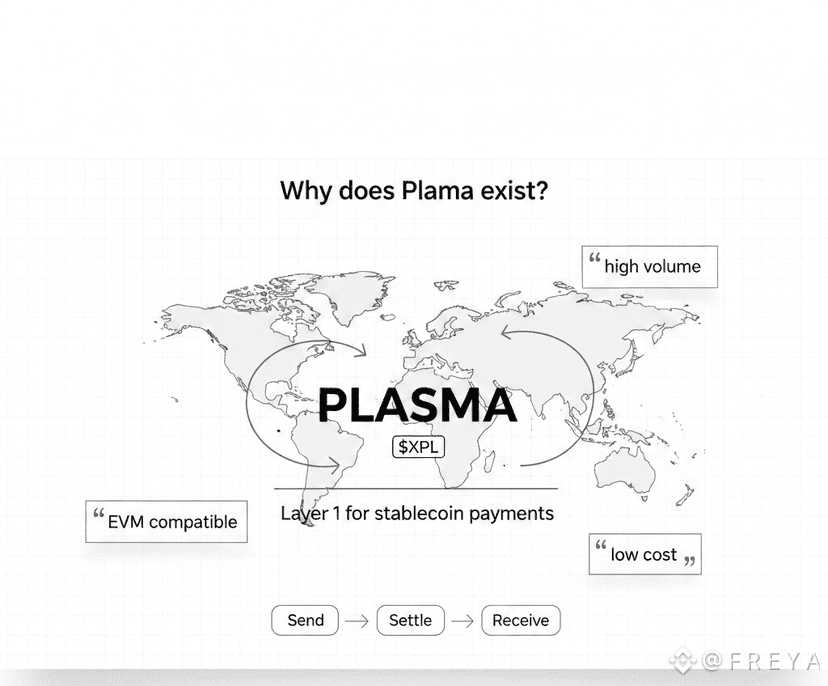
At the time Plasma was first imagined, this question did not have a satisfying answer. Blockchains processed transactions sequentially. Every action competed for limited space. This worked when usage was small, but it broke down under scale. Fees rose, confirmations slowed, and users were forced to wait or pay more. Plasma emerged not as a reactionary fix, but as a structural rethink. Instead of pushing harder on a single layer, Plasma proposed distributing activity across many layers while preserving a shared source of truth.
The conceptual leap behind Plasma was subtle but powerful. Rather than asking how to make a blockchain faster, Plasma asked how to make blockchains plural. The idea was that a main chain could act as a secure anchor, while secondary chains handled the bulk of activity. These secondary environments could process transactions quickly and cheaply, then periodically report back to the root layer. Security flowed downward from the main chain, while scalability flowed upward from the child chains.
This approach reframed the scalability problem entirely. Instead of forcing every participant to verify every transaction, Plasma allowed verification to be localized. Users interacting within a specific environment only needed to track what mattered to them. At the same time, cryptographic guarantees ensured that if something went wrong, assets could always be recovered through the main chain. They’re not removing trust. They’re redistributing responsibility.
In its earliest theoretical phase, Plasma faced skepticism. The idea of moving transactions off-chain raised concerns about security, data availability, and user safety. Plasma addressed these concerns by designing exit mechanisms that allow users to withdraw funds back to the root chain if a child chain behaves incorrectly. This safety valve was central to the model. It ensured that users were never locked into a system they could not escape. Trust was optional, not enforced.
Turning this theory into a working system required careful engineering. Plasma was not a single implementation but a framework for building scalable execution environments. Different versions explored different trade-offs, from simplicity to expressiveness. Throughout this experimentation, one principle remained constant. The root chain must remain minimal, secure, and conservative, while experimentation happens at the edges. This separation of concerns allowed innovation without risking systemic collapse.
As the Plasma concept matured, it began to influence broader conversations about blockchain scalability. While not every implementation succeeded, the underlying ideas shaped how developers thought about layer separation. Plasma was less about delivering a finished product and more about opening a design space. We’re seeing here how foundational ideas can matter even when their initial forms evolve or adapt.
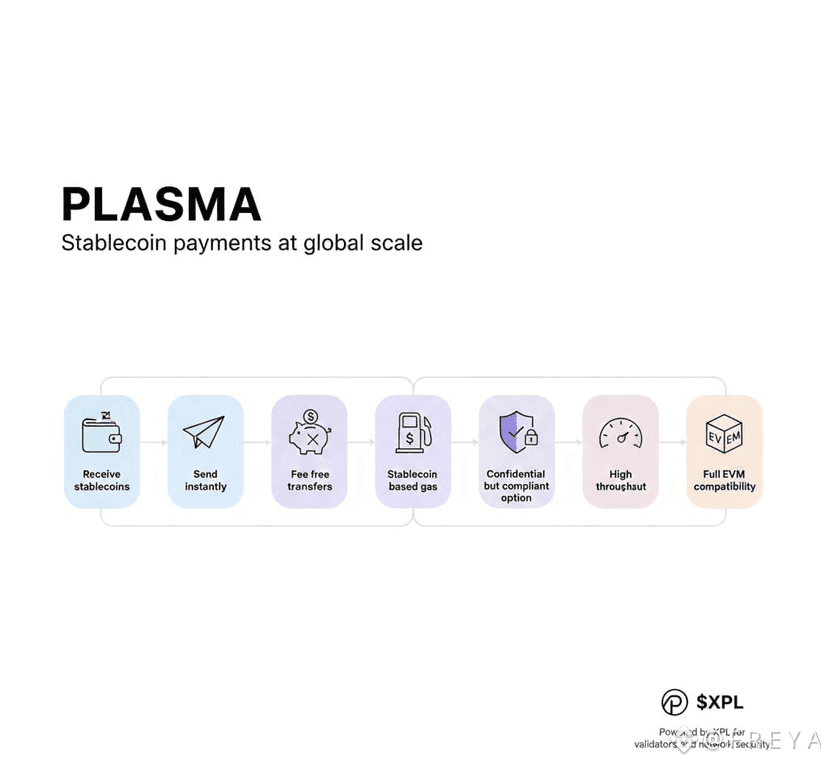
The introduction of the XPL token marked a shift from abstract framework to living ecosystem. The token provided a way to coordinate incentives across participants, rewarding those who contributed to network security and operation. XPL was not positioned as a speculative centerpiece, but as a functional component that aligned behavior. Its role was to support the network’s operation rather than dominate its narrative.
As development continued, Plasma began to attract builders who valued control and customization. Child chains could be tailored to specific applications, from payments to gaming to decentralized marketplaces. Each environment could define its own rules while inheriting security from the root layer. This flexibility allowed developers to experiment without fragmenting trust. We’re seeing how modularity became one of Plasma’s defining strengths.
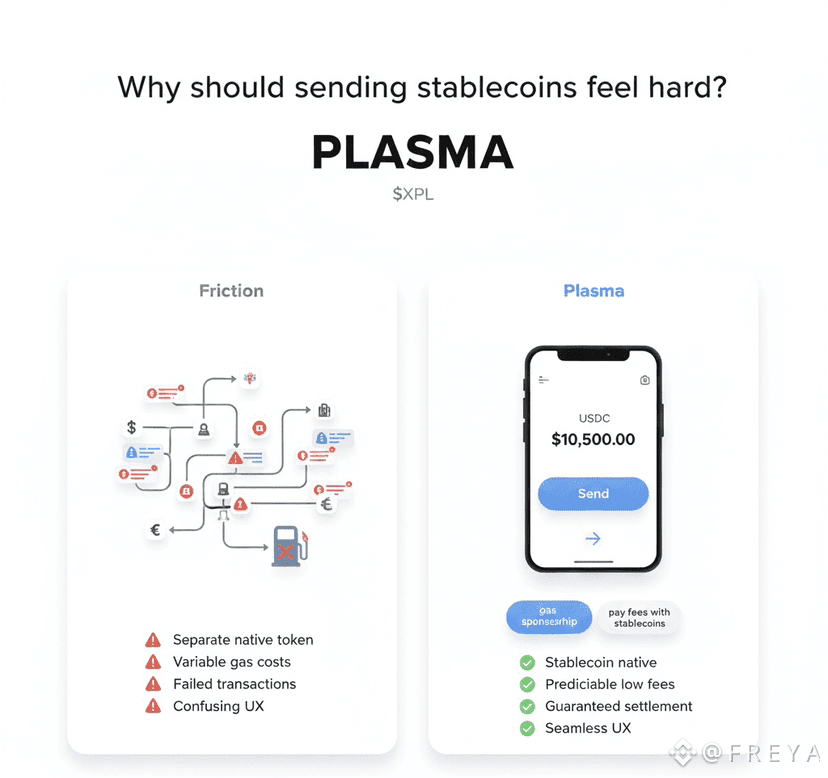
User experience was another area where Plasma’s philosophy stood out. Traditional blockchains often expose users to complexity, requiring them to understand fees, confirmations, and network states. Plasma aimed to abstract much of this complexity away. In an ideal Plasma-powered system, users interact with applications that feel responsive and immediate, while the underlying infrastructure quietly ensures correctness. This invisibility was not accidental. It was a design goal.
Over time, Plasma’s development highlighted important lessons about decentralization. Total decentralization at every layer is not always practical. Plasma embraced a more nuanced view, where decentralization is applied where it matters most. The root chain remains highly decentralized and secure. Child chains may accept more coordination in exchange for performance. This layered approach reflects how real-world systems balance efficiency and oversight.
Governance became increasingly relevant as the ecosystem grew. Decisions about protocol upgrades, security parameters, and economic incentives required structured processes. Plasma explored governance models that allowed stakeholders to participate without overwhelming the system. The goal was not perfect democracy, but functional alignment. If governance becomes dysfunctional, scalability loses its meaning. Plasma’s approach emphasized gradual evolution rather than abrupt change.
Security continued to be a central concern. Plasma’s exit mechanisms were designed to protect users even in worst-case scenarios, but they required careful monitoring and education. Users needed to understand their rights and responsibilities within the system. Plasma invested in tooling and documentation to make these processes clearer. They’re acknowledging that technology alone cannot guarantee safety. Awareness matters.
As the broader blockchain ecosystem evolved, new scaling solutions emerged. Rollups, sidechains, and alternative layer-one networks offered different approaches to the same problem. Plasma did not disappear in this landscape. Instead, it became part of a larger conversation. Many newer systems incorporated ideas pioneered by Plasma, sometimes without using the name. This diffusion of influence is a sign of conceptual success, even if branding fades.
Economically, Plasma’s architecture opened interesting possibilities. Because child chains can define their own fee structures, economic models can be tuned to specific use cases. High-frequency applications can minimize costs. Value-heavy applications can prioritize security. This flexibility allows ecosystems to grow organically rather than being constrained by one-size-fits-all economics.
Looking forward, Plasma’s relevance may increase as blockchain usage becomes more diverse. Not every application needs the same guarantees. Some need speed. Some need privacy. Some need strong settlement assurances. Plasma’s layered vision supports this diversity. It allows specialization without fragmentation, creating a shared foundation for varied experiences.
Regulatory considerations may also shape Plasma’s future. Layered systems can adapt more easily to regulatory requirements by isolating compliance-sensitive logic. This adaptability could become increasingly important as decentralized systems intersect with traditional institutions. Plasma’s architecture does not force uniformity. It allows compliance and innovation to coexist.
There is also a philosophical dimension to Plasma’s story. It challenges the assumption that bigger blocks or faster consensus alone can solve scalability. Instead, it suggests that scale emerges from structure. By allowing systems to branch, specialize, and reconnect, Plasma mirrors natural growth patterns. This perspective moves blockchain design closer to systems thinking than mechanical optimization.
As years pass, Plasma may not be remembered as a single network or product. It may be remembered as a turning point in how developers think about scale. Its ideas continue to echo in modern architectures, shaping how new systems are built. We’re seeing how influence can persist even as implementations change.
In reflecting on Plasma’s lifecycle, one theme stands out. It is a project defined by restraint. Instead of chasing immediate adoption, it focused on solving a hard problem properly. Instead of centralizing for convenience, it distributed responsibility thoughtfully. This restraint may not generate excitement in the short term, but it builds credibility over time.
The future Plasma points toward is not one dominated by a single chain or protocol. It is a future of interconnected environments, each optimized for its purpose, all anchored by shared security. In such a world, scalability is not a race. It is an ecosystem property.
As blockchain technology continues to mature, the questions Plasma asked remain relevant. How do we grow without breaking trust? How do we support millions without forcing uniformity? How do we build systems that can evolve without collapsing under their own weight? Plasma does not claim to have final answers, but it offers a framework for thinking differently.
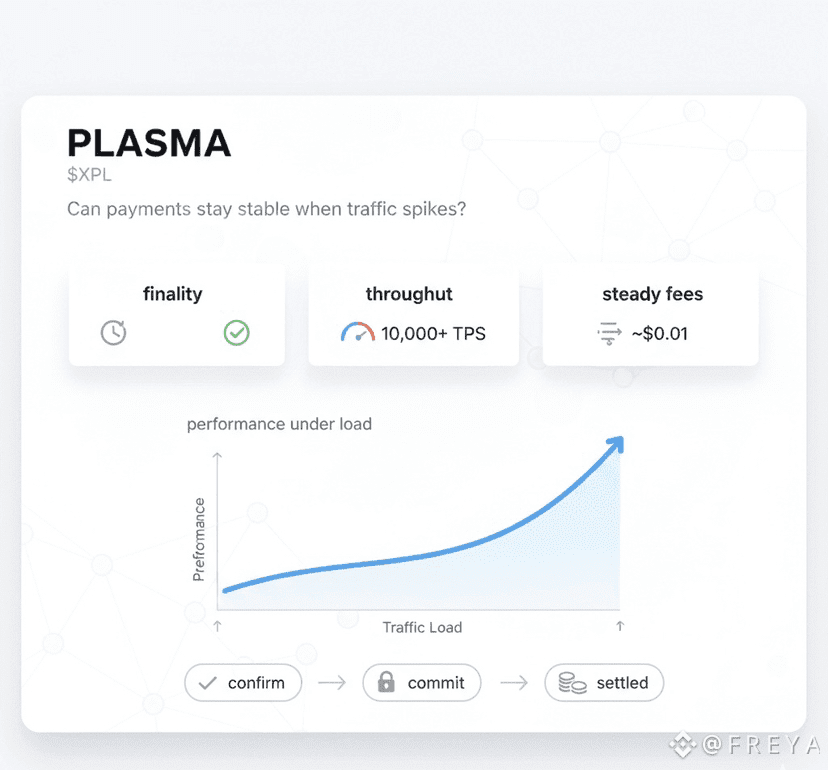
In the end, Plasma’s significance lies less in what it built and more in how it reframed the problem. It reminds us that scalability is not just about speed or volume. It is about architecture, incentives, and humility. As decentralized systems move from experimentation to infrastructure, these lessons may prove more valuable than any single technical breakthrough. And in that sense, Plasma’s quiet influence may shape the future long after its name fades from the spotlight.