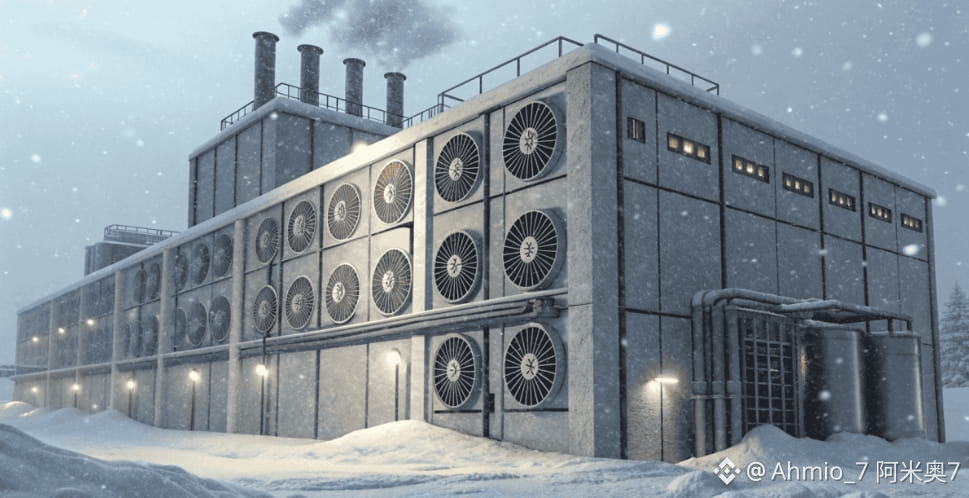
A strong winter storm hit large parts of the United States in January 2026. The storm known as Winter Storm Fern brought freezing temperatures and heavy pressure on power systems. During this time several major Bitcoin mining companies reduced their mining activity.
The main reason was electricity demand. Cold weather increased heating use across homes hospitals and essential services. Power grid operators had to make sure basic needs were met first. As a result energy heavy industries were asked to lower usage.
Bitcoin miners are among the largest flexible power users. Many of them take part in grid support programs. These programs allow miners to reduce power use during stress events in return for lower costs or future benefits. When the storm peaked miners followed these agreements and cut output.
Data from on chain tracking shows a clear drop in daily Bitcoin production. Several well known mining firms saw output fall sharply over a short period. These drops happened almost at the same time which points to planned curtailment rather than technical failure.
Mining sites in regions with flexible power markets often pause operations during extreme weather. This helps stabilize the grid and protects households and emergency services. Once conditions improve miners usually return to full activity.
Network level data shows the same pattern. The total Bitcoin hashrate dropped during the storm window. Hashrate measures how much computing power secures the network. During the storm it fell from recent highs to a lower level before starting to recover.
This kind of movement is not unusual. Bitcoin has seen similar hashrate dips during heat waves floods and cold snaps in the past. What matters is how the system responds after the event.
Bitcoin is built to handle these situations. The network adjusts mining difficulty over time. If hashrate falls blocks may take slightly longer at first. Later the difficulty adjusts and block timing returns to normal. This design keeps the system stable even when mining power changes.
In this case the storm related drop was short lived. There was no sign of lasting damage to the network. Transactions continued to process and security remained intact.
The event also shows how Bitcoin mining has become part of the broader energy system. Miners no longer operate in isolation. They interact with grids and respond to real world conditions. This flexibility is often overlooked but it plays an important role during emergencies.
After the storm passed miners began restoring operations. Hashrate started moving back toward prior levels. Production data also showed recovery. This confirms that the cuts were temporary and tied directly to weather conditions.
For Bitcoin users the impact was minimal. There was no major disruption and no long term effect on the protocol. The system worked as intended.
In simple terms the storm caused miners to pause not fail. The network adapted and moved on.
This episode highlights two things. First Bitcoin mining in the United States is closely linked to energy markets. Second the Bitcoin network is resilient by design. Short term external shocks do not break it.
Winter Storm Fern tested the system under stress. The response showed that both miners and the protocol handled it smoothly.
#bitcoin #CryptoNewss #cryptooinsigts #Binance