

Most technology stacks build upward from transaction settlement—a foundation of throughput, then layers of applications atop that base. Vanar inverted this hierarchy. By positioning memory as the foundational layer, it recognizes that genuine intelligence requires durability first. Without reliable, persistent memory, intelligence is merely reactive. With it, systems can learn, adapt, and make decisions grounded in accumulated truth.
The memory-first architecture determines everything upstream. Query protocols are designed around efficient recall rather than optimized for isolated transactions. State management prioritizes durability and auditability over speed. Incentive structures reward validators who maintain complete, uncorrupted historical records. This isn't a compromise—it's a recognition that memory itself is the critical infrastructure upon which everything else depends.
What emerges from this foundation is genuinely different. Agents operating on Vanar's stack maintain verifiable history of observations and decisions. Smart contracts can reason about state not just in the present moment but across time, understanding causality and consequence. Applications build knowledge rather than merely processing transactions. The entire stack becomes capable of genuine intelligence because every layer trusts the memory layer beneath it.
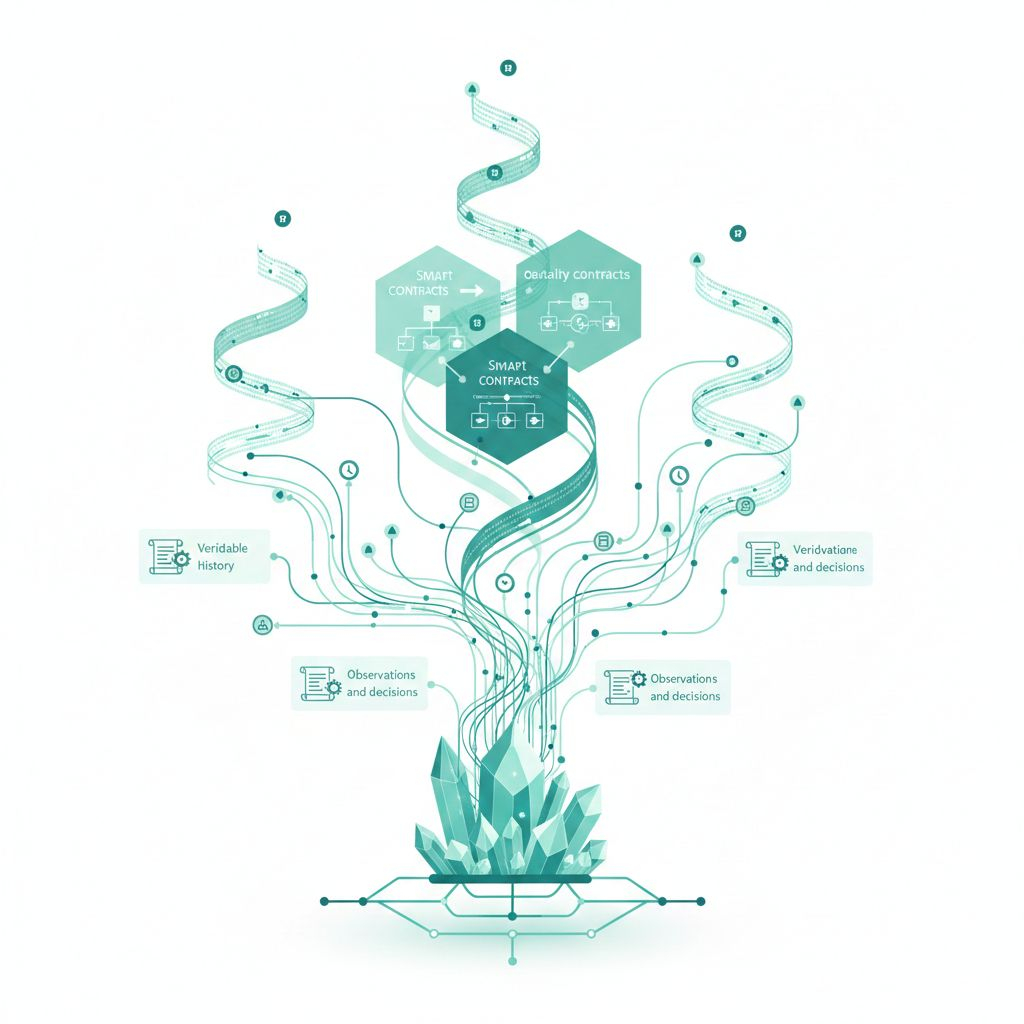
The implications extend beyond technical elegance. By making memory foundational, Vanar creates an environment where long-term thinking aligns with incentive structures. Validators are rewarded for maintaining history. Developers build applications that improve through accumulated data. Users benefit from systems that remember and learn.
This alignment—where durability becomes economically rewarded rather than externalized as cost—changes what becomes possible to build. Vanar's intelligence stack isn't faster or cheaper than alternatives; it's fundamentally capable of enabling systems that grow smarter through time