

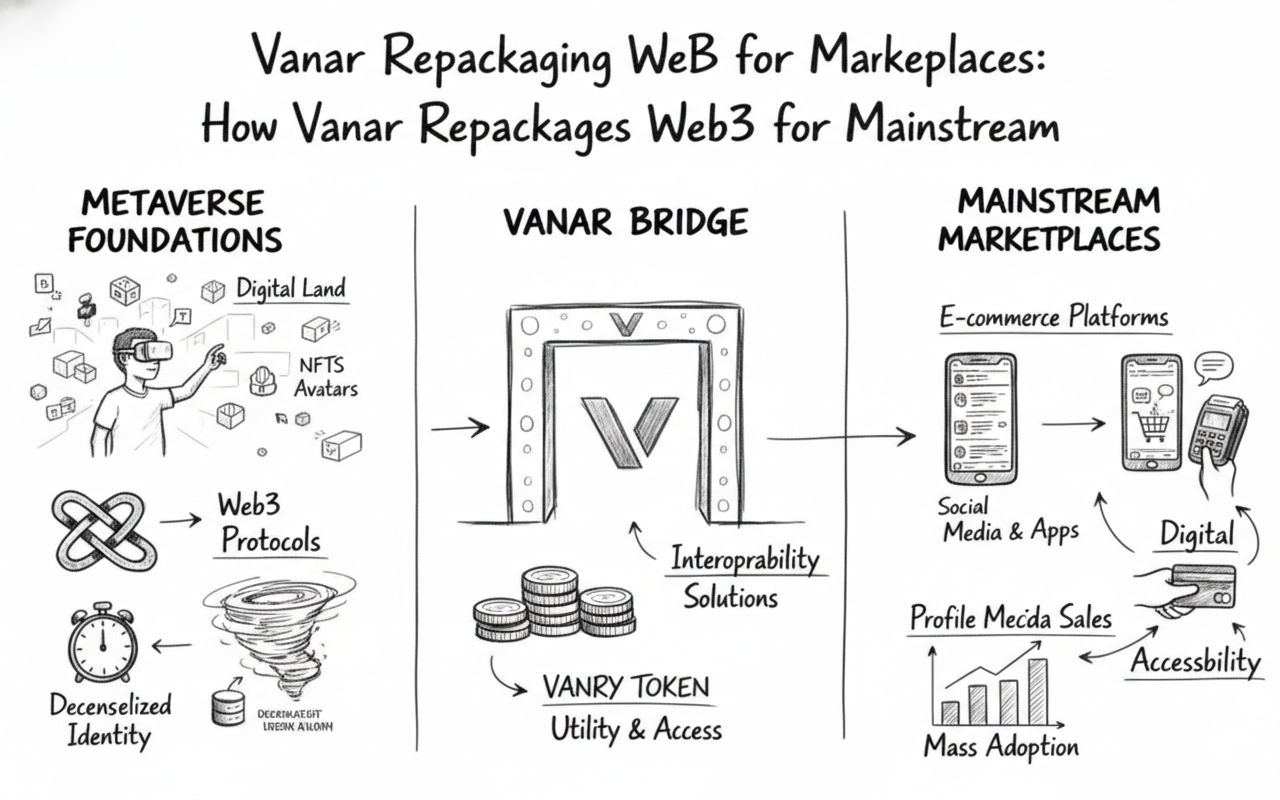
 Web3 entered culture through the metaverse because it could not enter through the marketplace. The early wave of crypto-native digital goods needed narrative insulation a fantasy layer where new behaviors made sense even if the economics didn’t. But the metaverse narrative hit a ceiling: it asked mainstream users to leave reality before participating in value. Vanar flips that sequence. Instead of asking users to enter a metaverse, it brings Web3 into the marketplaces, brands, entertainment and cultural surfaces they already inhabit.
This is the first major repackage of Web3 that doesn’t require escapism. It requires integration.
Why Web3 Started With Metaverse Instead of Markets
The metaverse narrative originally solved a problem Web3 had in 2020–2022:
Crypto needed a domain where:
digital goods were natural,
ownership was intuitive,
scarcity made sense,
identity mattered,
and immersion could justify price.
Games and virtual worlds already had these primitives, so NFTs fit there before fitting anywhere else. But that model had an economic flaw: value had nowhere to settle outside the bubble. Assets had lore but lacked distribution. Ownership had status but lacked purpose. Users could buy but could not participate in culture beyond speculation.
The metaverse became the museum, not the marketplace.
The Mainstream Doesn’t Need More Worlds It Needs More Value in the Worlds It Already Lives In
The next 3 billion users are not looking for new worlds; they’re trying to upgrade their existing ones. They already interact with:
brands,
IP,
fandom,
virtual goods,
loyalty programs,
retail ecosystems,
digital identity.
The missing upgrade is not a new location it’s a new economic primitive:
Programmable ownership that doesn’t require financial literacy.
Vanar’s strategy acknowledges something the crypto space repeatedly ignored:
Mainstream adoption scales when you enter cultural and commercial contexts where users already are not when you ask them to migrate.
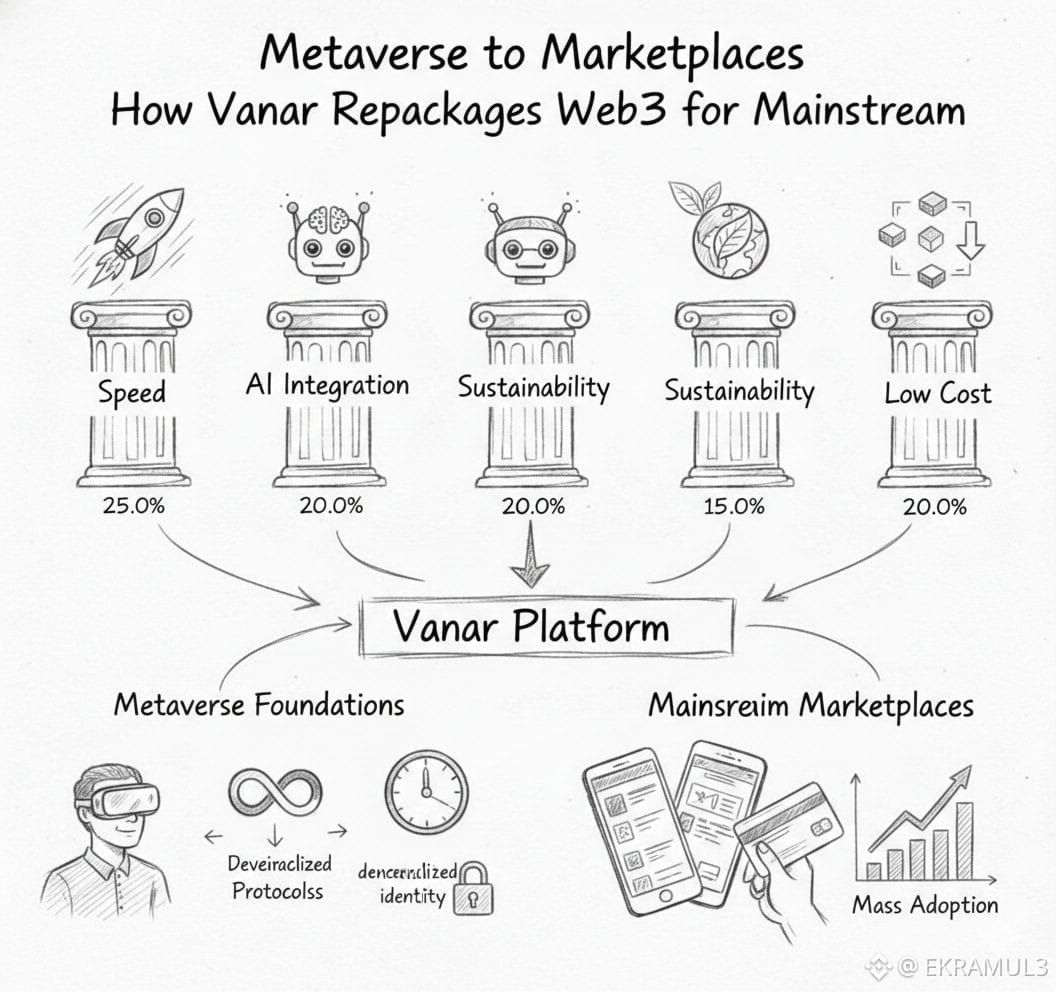 Vanar Repackages Web3 Through Three Translations
Vanar’s playbook is not metaverse-first; it is market-first. And it does this by reframing Web3 through three strategic translations:
1. From Immersive Worlds → Entertainment IP & Characters
Metaverse assets were avatars and items in imaginary worlds. Vanar focuses on IP that already has:
lore,
characters,
fanbases,
merchandising rights,
and cross-platform potential.
IP is the scalable unit of culture; metaverses were experimental containers. By moving from world-building to IP-export, Vanar bridges Web3 into entertainment supply chains that already function.
2. From Digital Ownership → Brand Loyalty & Consumer Perks
Early NFTs sold ownership as a standalone value. Mainstream markets treat ownership as a means to unlock perks, not an end state. Vanar maps Web3 assets to:
membership tiers,
rewards,
event access,
exclusive drops,
unlockable experiences,
gamified loyalty.
This makes ownership utilitarian instead of conceptual.
3. From Asset Speculation → Marketplace Participation
The metaverse model assumed:
“buy an asset and hope it appreciates.”
The marketplace model assumes:
“use, redeem, trade, and collaborate with value.”
This shift enables:
fluid demand,
repeat usage,
brand participation,
cross-IP commerce,
and cultural liquidity.
Speculation isn’t removed it becomes a secondary effect rather than the onboarding mechanism.
Why Marketplaces Are the Real Endgame
Marketplaces have three attributes metaverses lacked:
a) Distribution — Brands bring audiences in the millions.
b) Retail Logic — Users already expect digital goods to transact.
c) Commerce Motive — Users don’t need ideology to buy things.
The metaverse was a belief system.
Marketplaces are a business system.
Belief systems scale slowly. Business systems scale when incentives align.
The Infrastructure Behind the Repackage
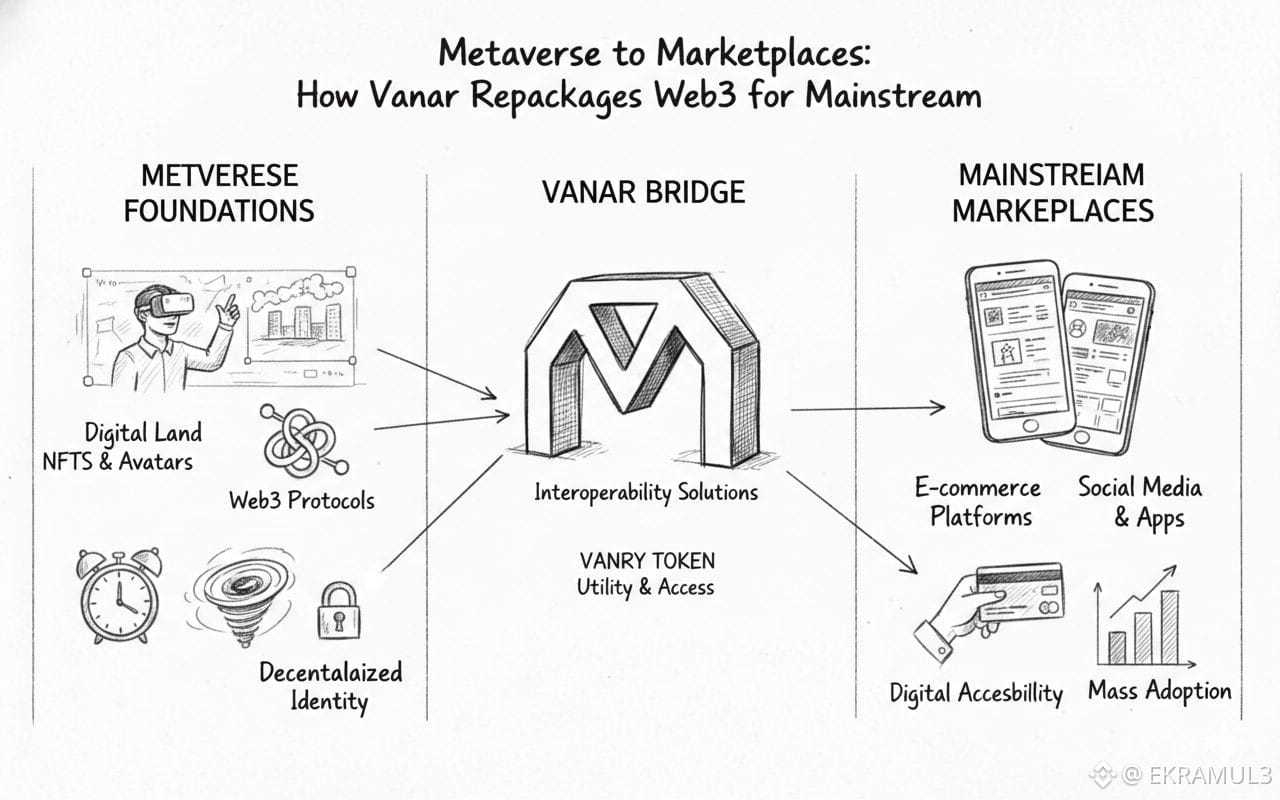 For Vanar to replace metaverse-first adoption with marketplace-first adoption, the underlying chain must handle:
✔ low-friction UX
✔ composable digital goods
✔ interoperable IP
✔ loyalty & rewards rails
✔ brand campaign tooling
✔ multi-format content
✔ non-speculative adjacent value
This is a completely different requirement set than DeFi, L1 speculation, or PFP NFT markets.
Web3 infra was optimized for financial artifacts. Vanar optimizes for cultural artifacts.
Why This Matters at Ecosystem Scale
The transition from metaverse → marketplace signals something deeper:
Web3 is finally moving from escapist value to exported value.
Escapist value lives in worlds you must enter.
Exported value lives in worlds you already occupy.
Metaverse = build a new world
Marketplace = upgrade the existing one
The first worked for early adopters.
The second works for mainstream consumers.
This is the real unlock for brands, IP studios, game publishers, loyalty operators, and entertainment companies. It gives them a route to monetize digital culture without asking users to learn new paradigms.
The Summary in One Line
Vanar repackages Web3 by shifting it from fantasy worlds to commercial rails turning culture into an economic export instead of an economic experiment.
That’s how you move from metaverse hype to mass-market adoption.