
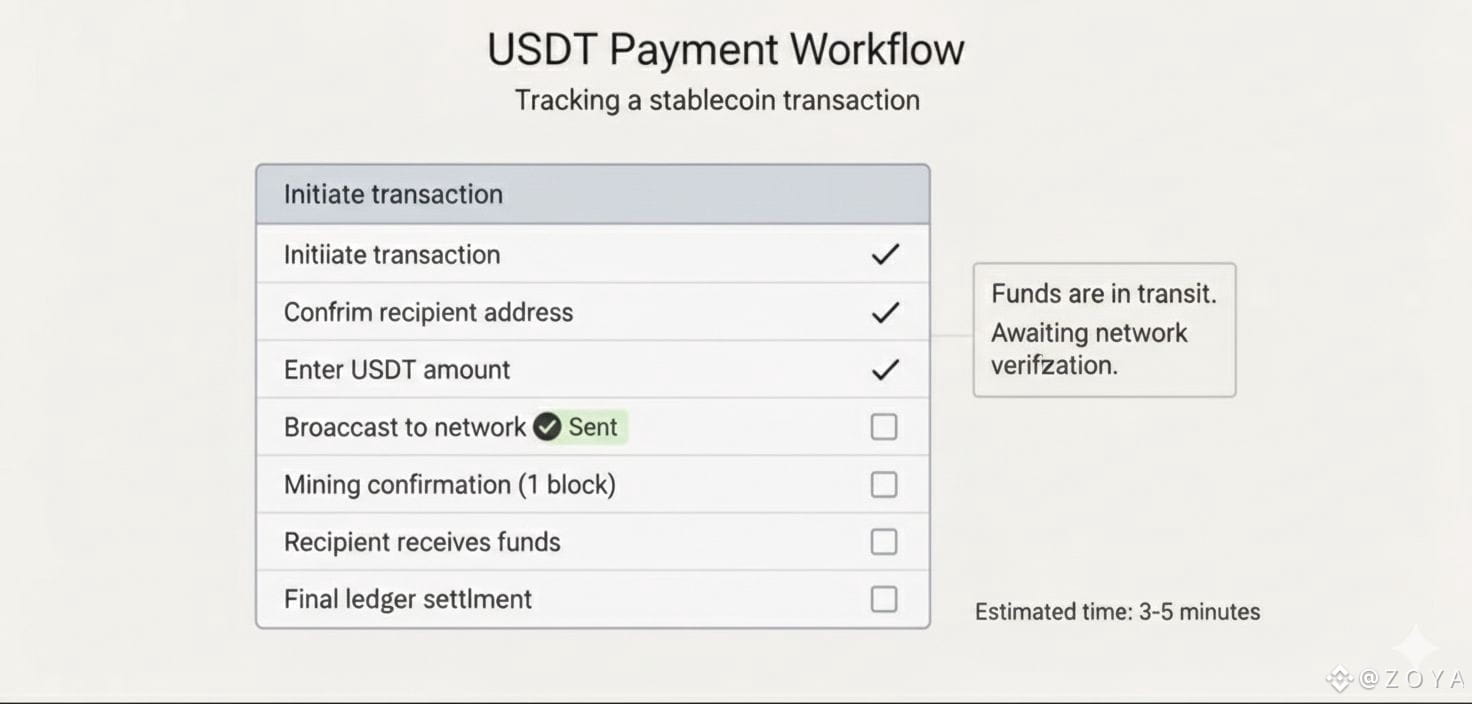
The fastest way to break a payment workflow isn’t delay.
It’s premature confidence.
A USDT transfer goes out. The UI updates. The sender closes the task. Somewhere else, the receiver is still waiting for a state they can rely on. Nobody panics. Nobody escalates. The system hasn’t failed loudly enough to stop the process, but it hasn’t finished cleanly enough to let it end.
So someone closes early.
And someone else opens risk.
This is where stablecoin settlement becomes asymmetric. One side disengages while the other still bears uncertainty. The chain may already be converging, but the human workflow has split into two timelines.
PlasmaBFT can finalize blocks sub-second. That part is not fragile. What’s fragile is the moment between “I’m done” and “we’re done.” That gap is where reconciliation errors are born.
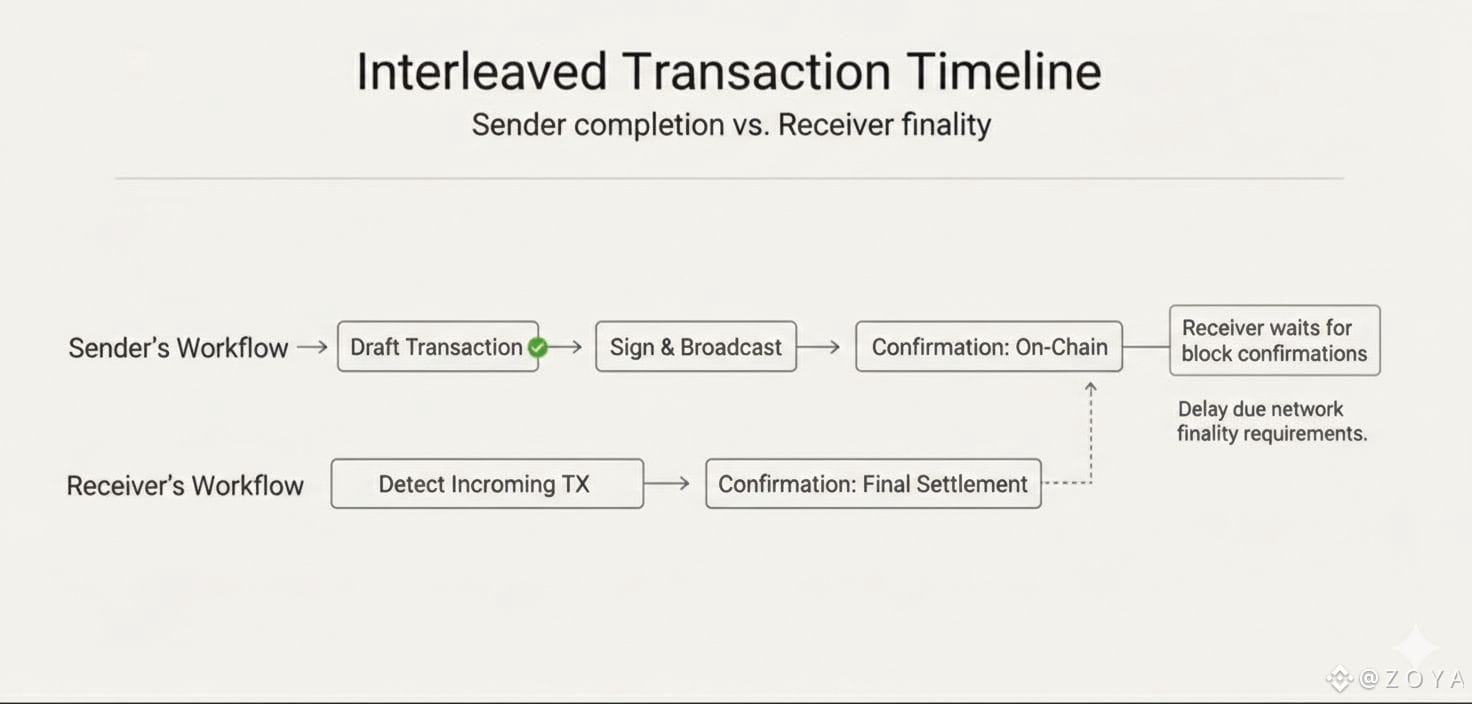
Gasless USDT transfers sharpen this edge. When users don’t feel the mechanics of gas, they also don’t feel the cost of closing too soon. The interface trains them to believe the action is complete at click-time. Everything after that feels like background noise.
But accounting doesn’t run on feelings.
A merchant doesn’t book based on optimism. A treasury doesn’t reconcile on UI states. They wait for something boring, unambiguous, and defensible. When that signal lags behind the user’s sense of completion, the system creates silent exposure.
No money is lost.
But guarantees get fuzzy.
That fuzziness changes behavior. Ops adds buffers. Finance delays close. Teams start saying “wait a bit” even when they shouldn’t have to. Over time, the network gets a reputation for being technically fine but operationally cautious.
Nothing breaks.
Velocity just drops.
Plasma’s design appears to be shaped around that friction. Finality isn’t framed as a brag. It’s framed as a compression tool. The faster a trusted state arrives, the fewer people act ahead of it. The fewer people act early, the cleaner the downstream ledger stays.
Bitcoin anchoring sits behind all of this, doing long-horizon work. It doesn’t prevent early closure mistakes. It prevents long-term trust erosion. Plasma doesn’t confuse the two.
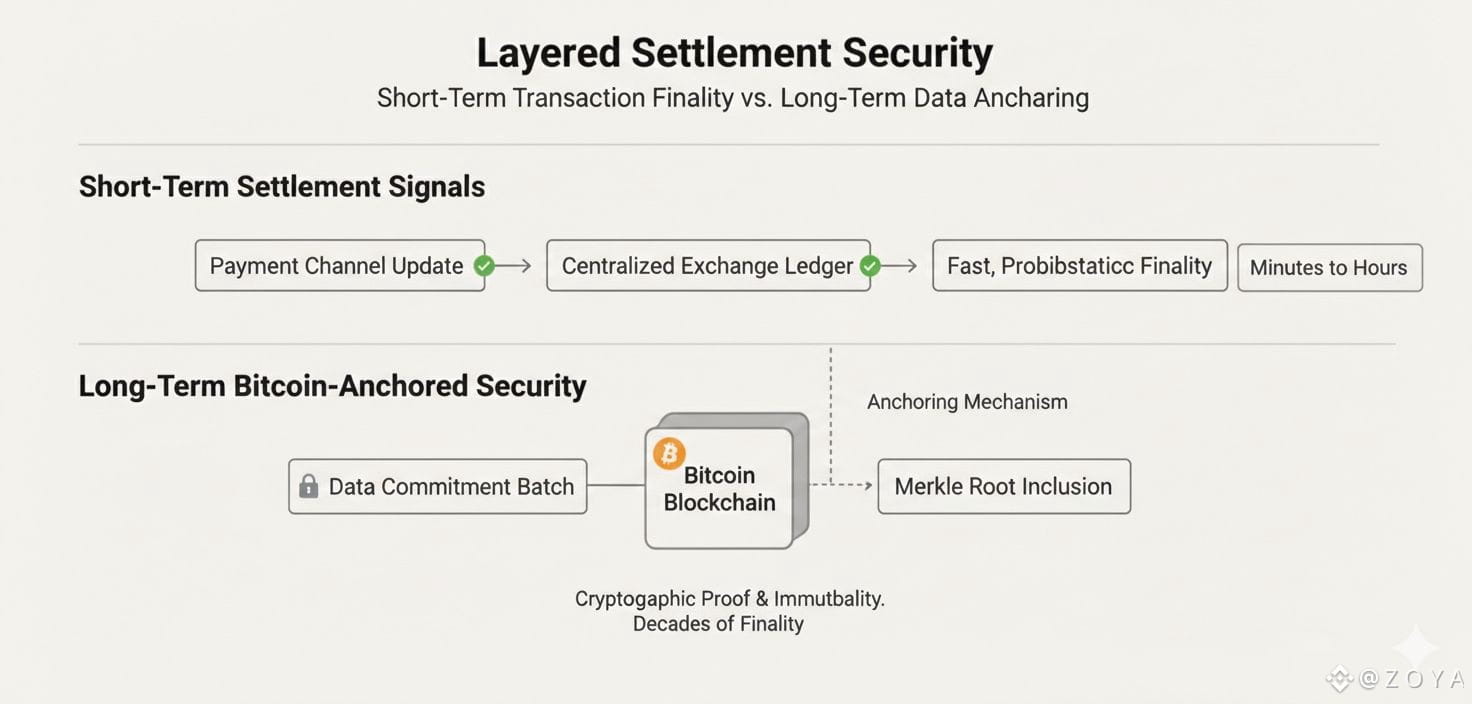
What actually completes a stablecoin payment isn’t the block.
It’s alignment.
Alignment between sender confidence, receiver certainty, and system authority. When those line up, workflows close naturally. When they don’t, people invent their own stopping points.
The first time someone closes a payment “because it looked done,” Plasma hasn’t failed. But it has revealed the cost of being almost clear.
And in settlement, almost clear is where risk quietly accumulates.
