

(My take on why decentralized data actually matters these days)
Why Data Even Matters in This Messy Digital World
Look, we're all hooked on these giant tech companies' servers that run our apps, games, AI models — everything. Super convenient, yeah, but it's risky as hell: one bad decision and your stuff gets censored, servers go down, or you have no clue who's really controlling your files. When I first got into Web3 and AI, it hit me hard — blockchains are great for tiny transactions, but they choke on big "blob" files like videos or datasets. Storing that on-chain would force every validator to copy the whole thing a ton of times, which is insanely expensive. Even decentralized options like IPFS rely on full replication, making retrieval slow and basically no room for programmability. So I started wondering: could we actually build something decentralized, secure, cheap, and actually programmable for storage?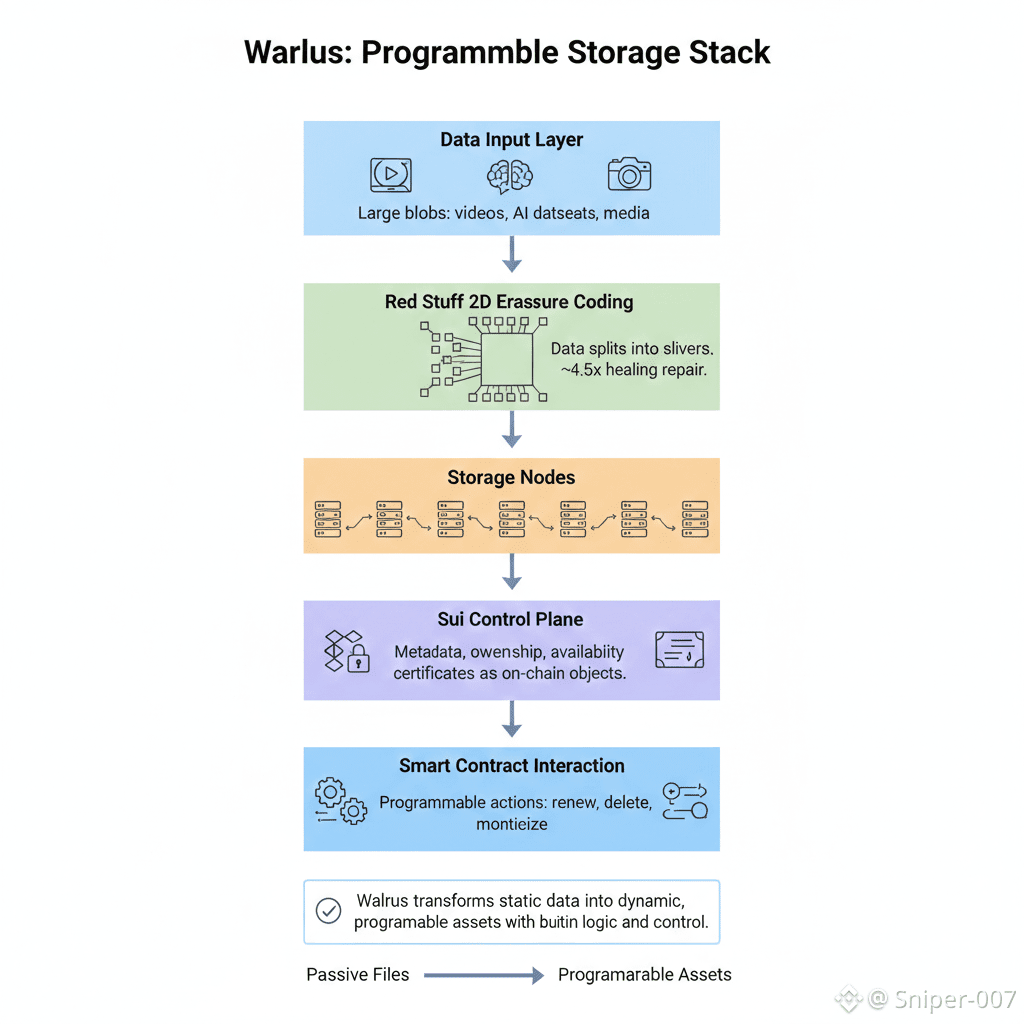
The Old Ways Suck, Here's Why
No point sugarcoating the trade-offs. Blockchains thrive on consensus for small state changes, but big files? They get replicated across tons of nodes (like 100x or more overhead). Centralized clouds like Amazon S3 handle blobs fine but come with high costs, single points of failure, and easy censorship. Other decentralized networks like Filecoin or Arweave go with full replication or basic erasure coding — either way, you pay a fortune in overhead or wait forever for recovery. And most treat data like it's dead: upload once, read later, no real way to program around it. That static vibe doesn't cut it for Web3 or AI, where you need to verify, monetize, or even delete files sometimes. The dream setup would slash replication costs, keep data alive even if nodes flake, let devs automate management, and give owners real control.
What Walrus Actually Is
Walrus is this decentralized storage and data-availability protocol built on Sui by Mysten Labs. It lets apps publish, read, and straight-up program big binary blobs using Move smart contracts — turning storage into something interactive and alive. It's chain-agnostic too: you can plug it into Solana, Ethereum, whatever, via SDKs and tools that talk to apps through Sui. The Walrus Foundation runs it, raised $140 million back in March 2025 from folks like Standard Crypto, Electric Capital, Franklin Templeton Digital Assets, and more. That cash went to scaling, and mainnet dropped March 27, 2025.
To me, Walrus feels like the data backbone for the AI age. It turns passive files into trustworthy, useful, programmable assets. While others just let you upload/download, Walrus makes data ownable, transferable, interactive via smart contracts. Opens doors to wild stuff: data marketplaces, AI agent backends, on-chain sites, rich-media NFTs.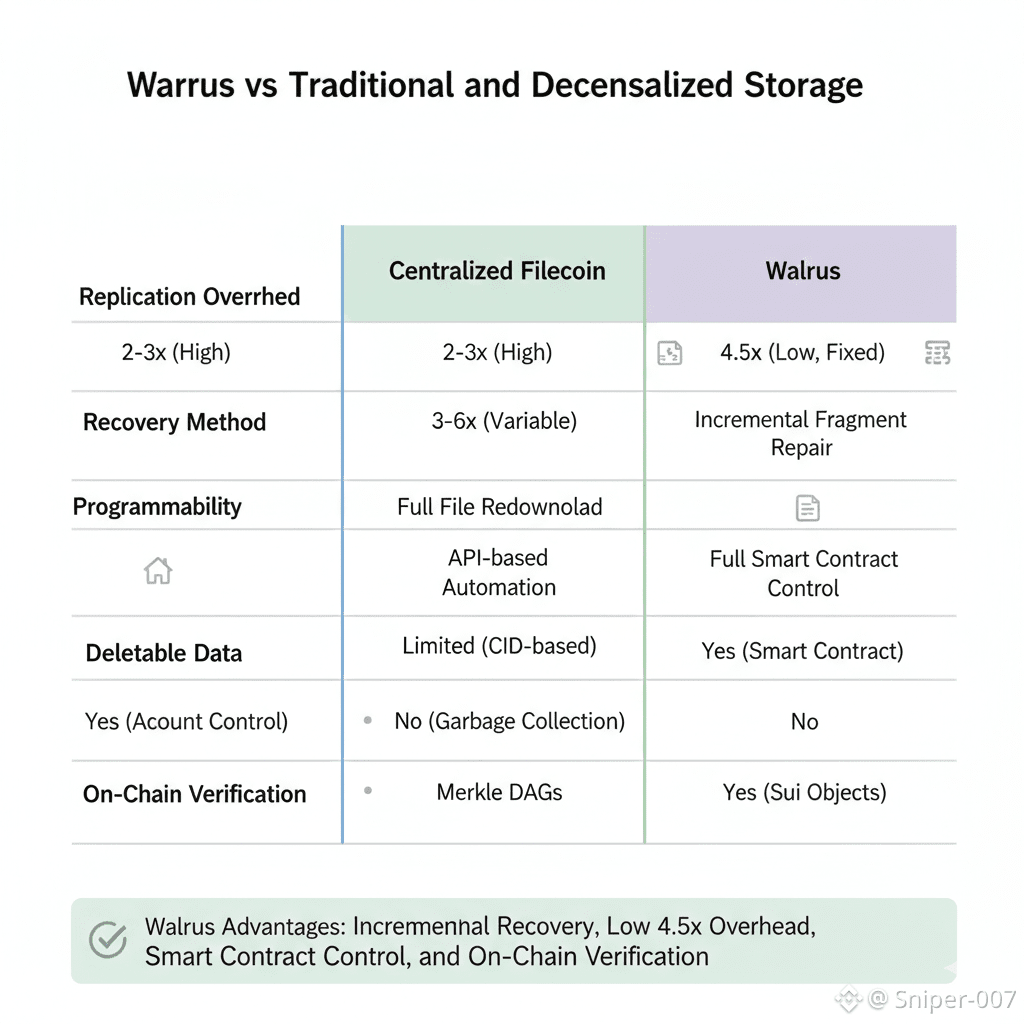
How It Works (Simple Version, No BS)
Red Stuff & Erasure Coding
The magic sauce is Red Stuff — their custom 2D erasure-coding scheme. Old-school Reed-Solomon splits files into pieces where any subset rebuilds the original, but it hates node churn and recovery gets pricey. Red Stuff does it two-dimensionally with only about 4.5x replication (way better than full copies). It enables "self-healing": fix lost bits using just the bandwidth of what's missing, not the whole file. Plus it fights off attackers trying to game delays. Bottom line: Walrus can recover even if up to two-thirds of nodes go bad or turn evil.
Delegated Proof-of-Stake & Epochs
Walrus runs delegated PoS (DPoS). Storage nodes compete for stake from token holders; higher delegated stake gets you in the committee for an epoch to store/serve data. End of epoch, rewards go to nodes and stakers. You don't need to run a node — just delegate WAL to trusted operators and earn. Slashing hits bad or lazy nodes by taking some stake. It's flexible economically and keeps things secure; quick stake flips get penalized to stop short-term attacks and reward long-haulers.
Sui Integration & Real Hard-Disk Storage
Walrus uses Sui as the control plane — metadata lives on-chain as Sui objects. Blobs get turned into ownable, splittable, combinable, transferable objects. Client uploads data, splits into slivers distributed to nodes, then a proof-of-availability cert hits Sui confirming it's stored and reachable. Since it's on-chain, Move contracts can check availability, renew, or delete blobs when they're done. That's huge — unlike Arweave's "permanent" no-delete model, Walrus lets you nuke stuff. Programmability bridges data to DeFi: auto-renew with payments, pay-per-view, tokenize rights.
The WAL Token: Utility, Supply, Economics
WAL is the native token, capped at 5 billion total, 1.25 billion initial. Right now ~1.57 billion circulating, price around $0.12, market cap ~$190 million. It does three main jobs:
1. Payments — You pay in WAL to store. Costs get streamed to nodes/stakers over time, so storage stays predictable even if token price swings. Early subsidies (10% of supply earmarked) keep costs low during bootstrap.
2. Security — Stake WAL to delegate to nodes. Rewards based on performance; slashing punishes bad actors. Spreads stake wide for decentralization.
3. Governance — Holders vote on params like slashing rates. Nodes (weighted by stake) decide fees too.
Distribution
Super community-focused: over 60% of WAL goes to community via airdrops, subsidies, reserves.
It's deflationary too — short-term stake shifts burn some fees, plus slashing penalties partially burn. Long-term supply shrinks, balancing incentives.
Keeping It Decentralized
Big networks usually centralize stake in whales. Walrus fights that: delegators pick independent nodes, rewards go by uptime/reliability not size, slashing hits centralizers, quick stake moves get punished. Governance spreads decisions to holders. As more users/data join, it stays decentralized by design.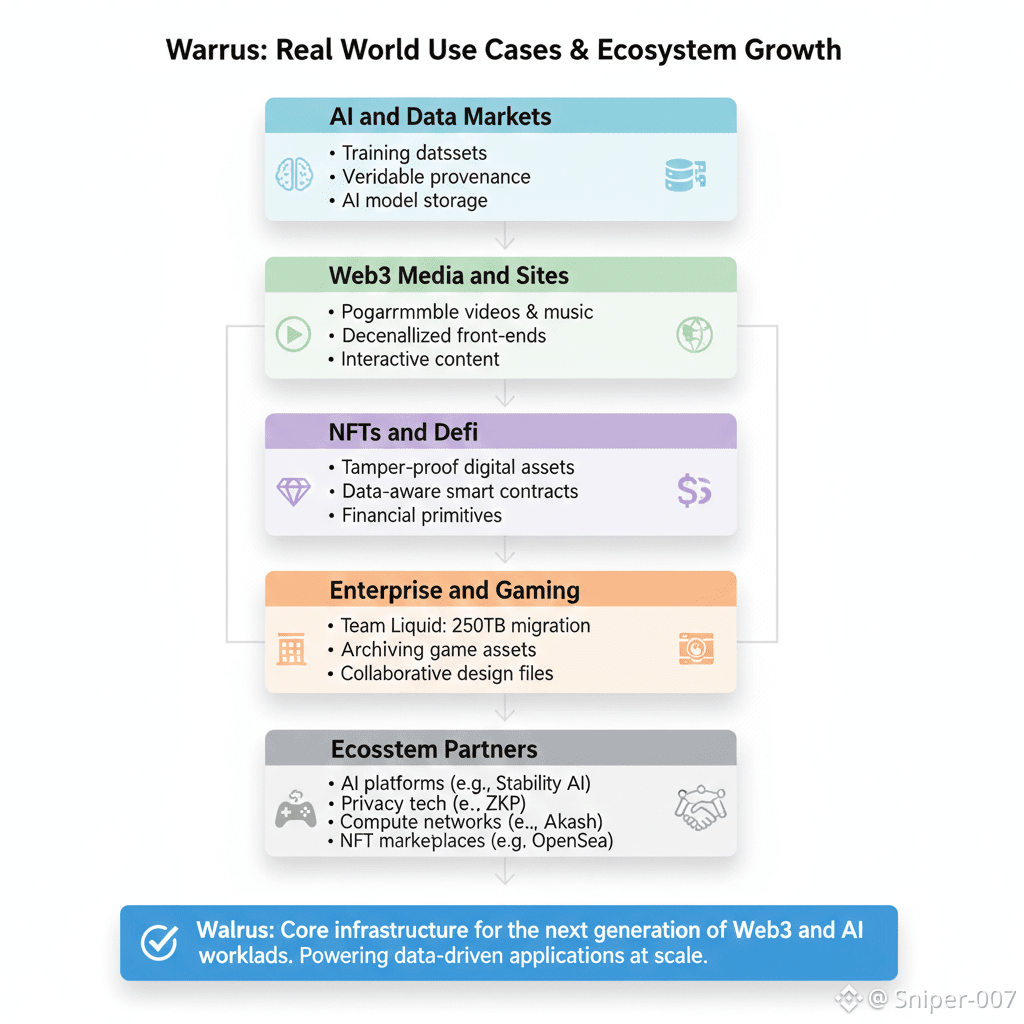
Real-World Use (Not Just Talk)
Walrus is live and kicking in tons of spots:
1. AI & Data Markets — Stores huge datasets for training with verifiable provenance via Sui certs. Encryption like Seal adds privacy/control.
2. Web3 Media — Walrus Sites for decentralized websites; videos/music as programmable objects creators monetize.
3. NFTs & DeFi — On-chain real data for tamper-proof NFTs; contracts verify before trades. Helps rollups with big state.
4. Enterprise & Gaming — Backups with geo-redundancy. In January 2026, esports giant Team Liquid moved 250TB of match footage and brand stuff to Walrus — kills single failures, easy global access, future-proofs archives. Programmable side lets them build fan experiences; partners like Zarklab add AI meta-tagging for better search.
Partnerships & Ecosystem
Solid backers: Standard Crypto, a16z crypto, Electric Capital, Franklin Templeton. Collabs with io.net (AI GPUs), Seal (privacy), Tusky (compute), Unchained (front-ends), Pudgy Penguins (NFTs), and more. Spans AI infra, NFTs, gaming, enterprise.
Walrus vs Others
Compared to Filecoin/Arweave:
- Replication ~4.5x vs Filecoin's full (way higher) — cheaper, still fault-tolerant.
- Incremental recovery: rebuild only missing parts, fast even with 2/3 loss.
- Deletable/editable via contracts (Arweave can't delete).
- Programmable on Sui objects — automate, monetize, DeFi integrate. Others are mostly dumb file stores.
Walrus complements them: high-performance dynamic layer next to their archival/immutable stuff.
Risks & My Two Cents
Nothing's perfect. WAL's volatile — ATH $0.8742 March 27 2025, dipped to $0.07815 October 2025, now ~$0.12 in Jan 2026. Burns/staking help deflation, but market swings happen. Execution risks: slashing rollout, cross-chain, more decentralization could delay adoption.
Still, I think data economy is the next decade's big thing — AI, metaverse, on-chain games, decentralized social all need scalable big-file storage. Walrus nails it with Red Stuff tech, programmable design, community economics. Real users like AI devs and Team Liquid prove it's beyond hype. I'm excited to watch (and use) it grow — governance, personal projects, the works. (Not investment advice, obviously.)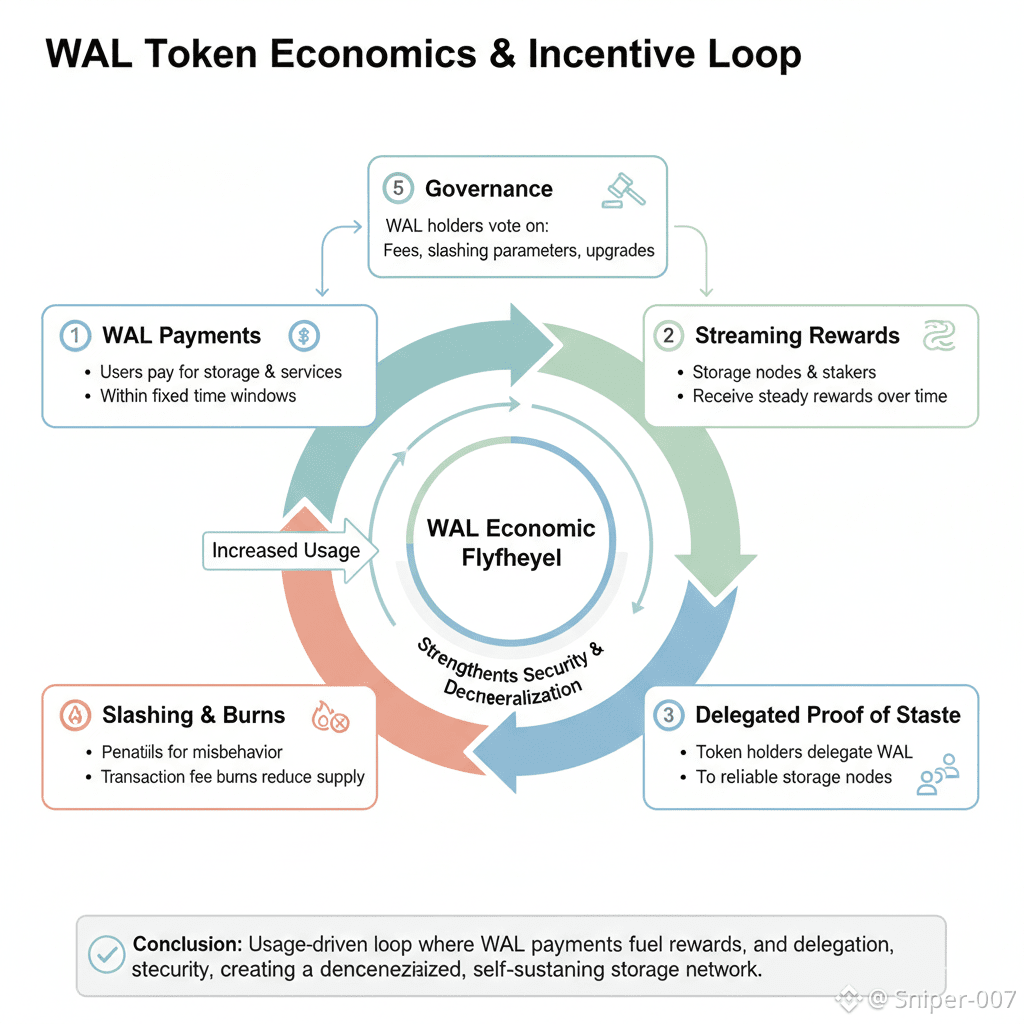
Wrapping It Up
Walrus flips storage on its head: treats it as programmable, interactive resource instead of dumb files. Advanced 2D erasure coding cuts replication costs, delegated PoS secures it, Sui smart contracts enable automation/deletion, community tokenomics decentralize power. With strong partnerships, real adoption, and solid backing, it's becoming core Web3/AI infra. As someone obsessed with decentralized data, I see Walrus sparking the next wave of apps, not just another token play.