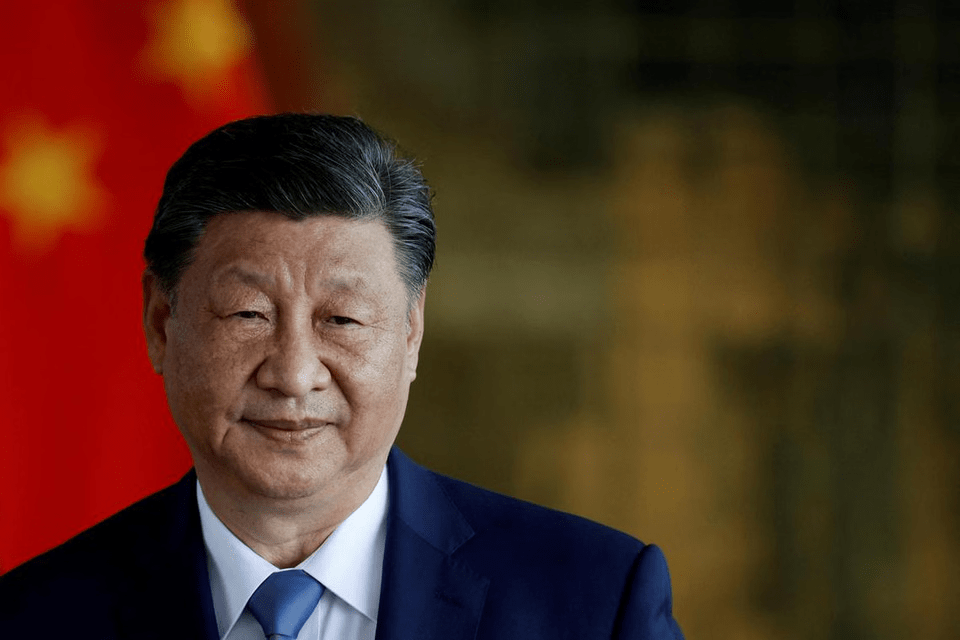
On April 14, Chinese President Xi Jinping called for strengthening trade and supply chain relations with Vietnam in the face of disruptions caused by U.S. tariffs, as he attended the signing ceremony for dozens of cooperation agreements between the two communist countries in Hanoi.
The visit has been planned for weeks, occurring against the backdrop of Beijing facing a 145% tariff from the U.S., while Vietnam is negotiating to reduce a looming 46% tariff threat from the U.S., which would come into effect in July after a global tariff suspension expires.
"Both sides should strengthen cooperation in the production and supply chain," Xi said in an article in the People's Daily, the newspaper of the Communist Party of Vietnam, published before his arrival on April 14.
He also encourages more trade and closer relations with Hanoi regarding artificial intelligence and the green economy.
Xi added that "No side wins in trade wars and tariff wars" without specifically mentioning the United States.
After meeting with senior Vietnamese leader To Lam, the two countries signed dozens of cooperation agreements, footage of the documents reviewed by Reuters showed, including agreements to enhance supply chains and railway cooperation.
The contents of the agreements have not been disclosed, and it is unclear whether they involve any financial commitments or obligations.
On April 12, Vietnamese Deputy Prime Minister Bui Thanh Son stated that about 40 agreements would be signed. A separate aviation business agreement was signed on April 13.
Under pressure from Washington, Vietnam is tightening controls on some trade activities with China to ensure that goods exported to the U.S. labeled "Made in Vietnam" have sufficient value added in the country to justify that.
A memorandum of understanding was signed on April 14 to promote cooperation between the China Council for the Promotion of International Trade and the Vietnam Chamber of Commerce and Industry, the body that issues certificates of origin for goods.
Vietnam is a major industrial and assembly hub in Southeast Asia.
Most of the country's imports come from China while the United States is the main export market. The country is an important supplier of electronics, footwear, and clothing to the United States.
Vietnam's customs data shows that in the first three months of 2025, Hanoi imported goods worth about 30 billion USD (40 billion Singapore dollars) from Beijing while exports to Washington reached 31.4 billion USD, confirming a long-term trend where imports from China nearly match the value and volatility of exports to Washington.
Railways, aircraft
After two days in Hanoi, Xi will continue his Southeast Asia trip on April 15 with visits to Malaysia and Cambodia from April 15 to April 18. The last time he visited Cambodia and Malaysia was nine and twelve years ago.
His trip to Hanoi—the second in less than 18 months—aims to strengthen ties with the strategically neighboring nation that has received billions of dollars in investment from China in recent years as manufacturers based in China have shifted southward to avoid tariffs imposed by the Trump administration.
Mr. Lam, in an article published in state media on April 14, stated that Hanoi wants to enhance cooperation on defense, security, and infrastructure, particularly regarding the railway.
Vietnam has agreed to use Chinese loans to build a new railway between the two countries, in an important step to build trust, boost trade, and enhance bilateral connectivity.
However, no loan agreements have been announced yet.
After prolonged pressure, Beijing has obtained Vietnam's approval for the aircraft certified by the Chinese aviation authority, paving the way for the use of Chinese-made Comac passenger aircraft in this Southeast Asian country.
Hanoi has recognized the regulatory authority of China on par with the United States and the European Union, according to a decree approved by the government one day before Xi's arrival, and revealed on the government portal on April 14.
Comac aircraft operated by several Chinese companies are still struggling to find foreign buyers or gain approval abroad.
According to an invitation to the event obtained by Reuters, on April 13, Vietnam's low-cost airline Vietjet and Comac signed a memorandum of understanding in Hanoi.
A regional Comac C909 aircraft bearing the Vietjet logo and the logo of China's Chengdu Airlines was parked at Hanoi International Airport on April 14.
The contents of the agreement have not yet been disclosed, but Reuters reported in recent weeks that under the draft agreement, Vietjet will lease two Comac C909 aircraft, operated by Chengdu Airlines crew, on two domestic routes.
Despite close economic ties, tensions often arise between the countries over territorial disputes in the South China Sea.
Vietnam's concessions to the United States to avoid tariffs could also irritate Beijing, as they include the deployment of Elon Musk's Starlink satellite communications service in this Southeast Asian country, alongside cracking down on some trade activities with China due to potential origin fraud.
In recent months, Vietnam has imposed anti-dumping duties on some Chinese steel products and ended the tax exemption policy for low-value shipments, in a move that government officials describe as aimed at reducing the flow of cheap Chinese goods.
The other two countries in Xi's Southeast Asia trip—Cambodia and Malaysia—are facing U.S. tariffs of 49% and 24% respectively and have begun contacting the U.S. to seek a postponement.
Binance registration link: https://www.generallink.top/referral/earn-together/refertoearn2000usdc/claim?hl=en&ref=GRO_14352_4ANEH&utm_medium=app_share_link
PLEASE SUPPORT US BY LIKING, SHARING, COMMENTING, FOLLOWING
THANK YOU VERY MUCH!