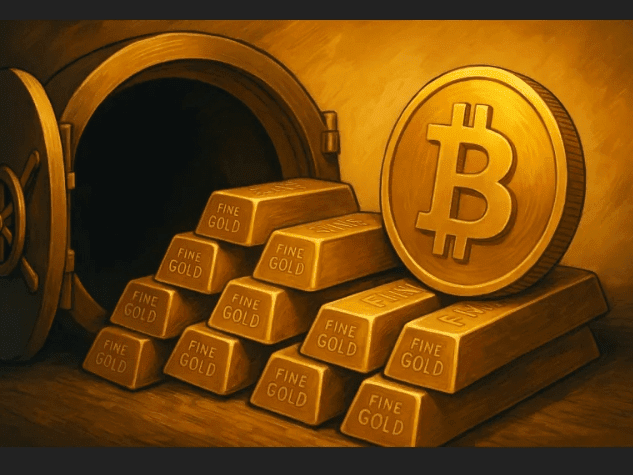
Is Tether building its own gold standard that no one is talking about?
In recent days, Tether has shaken the cryptocurrency market again. Its CTO, Paolo Ardoino, confirmed that the company holds over 80 tons of physical gold stored in a vault in Switzerland, with an estimated value of over $8 billion.
The news has become a headline worldwide
strategic silent accumulation
The technical details of the announcement are already known: the gold is under the direct custody of Tether, and not third parties. The reserves are comparable to those of institutions like UBS Group and solidify the backing of its USDT stablecoin, especially in an environment of high distrust towards the US dollar and sovereign debt.
What is truly revealing, however, is the pattern of accumulation of physical gold by a cryptocurrency company, something unprecedented in modern monetary history. What is the point of buying gold bars and storing them as if it were a central bank?
With the advancement of dedollarization — primarily driven by China, Russia, and BRICS countries — and the growth of global financial fragmentation, gold has regained its importance as a safe haven. By aligning with this trend, Tether seems to be building an alternative to gold-backed cryptocurrency, a kind of digital gold standard, but outside the traditional system.
Could USDT transform into a physically gold-backed currency, similar to currencies before 1971? Or is this change part of a larger strategy to gain legitimacy, traction in emerging markets, or strengthen the DeFi ecosystem?
In addition to the USDT stablecoin, Tether already operates Tether Gold (XAUT), a token backed by physical gold held in Switzerland. This initiative, combined with its investments in Bitcoin mining and renewable energy, reveals a clear strategy: backing its influence with real and scarce assets.
the impact on regulators, central banks, and large investors will be profound