
As a result of another recalculation, the mining difficulty decreased by 11.16% — to 125.86 TH.
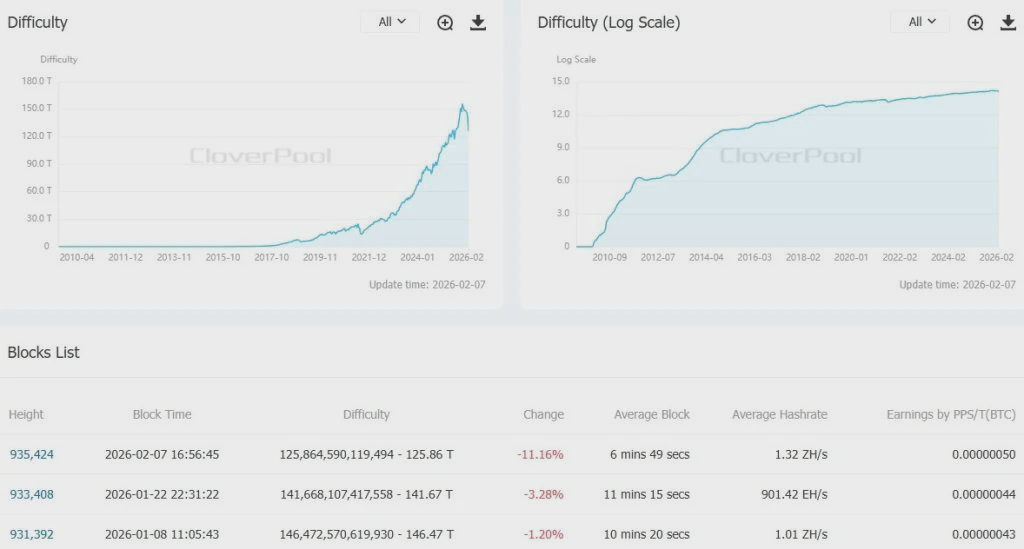
The drop in the indicator was the most significant since the large-scale repression against cryptocurrency miners in China in 2021. At that time, in early July, the parameter collapsed by almost 30%.
After the difficulty adjustment, the Bitcoin hash rate surged to 1.3 EH/s, and the average interval decreased to about seven minutes. This was likely caused by the return of capacities to the network, which were mass disconnected against the backdrop of the worsening mining economy and the consequences of the winter storm in the USA.
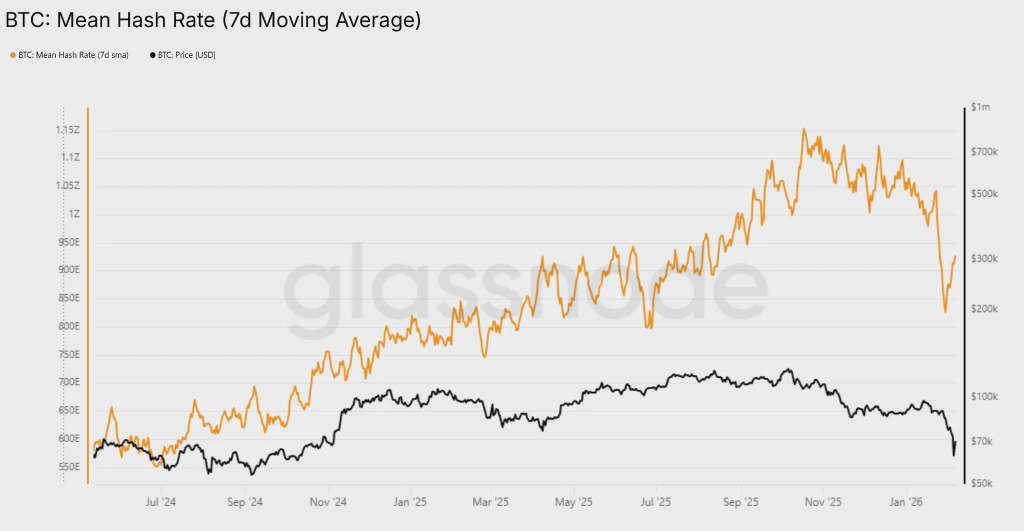
According to Glassnode, on January 30, the smoothed seven-day moving average hash rate reached a local minimum of 826 EH/s. After that, it rose to 927 EH/s.
According to Hashrate Index, over the last 24 hours, the hash price rose from about $31.5 per PH/s per day to $34.8.
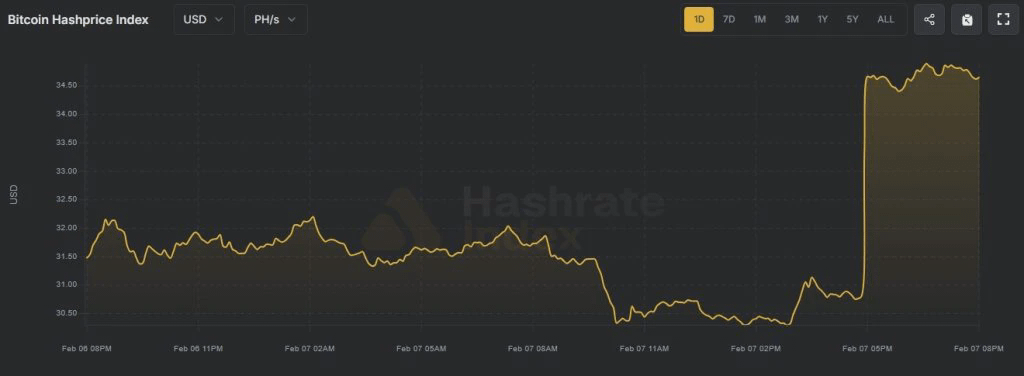
The main metric of mining profitability has risen significantly above the 'hash price' for the most efficient public miners like CleanSpark ($30 per PH/s per day) and IREN ($26). But in general, companies in the sector remain on the brink of break-even operation, noted TheMinerMag.
Let's remind that in 2025, the mining difficulty had already decreased twice — first by 1.2%, and then by another 3.28%.
#MiningBitcoin #Bitcoin #CryptoMarketAnalysis
