

—It's genuinely the engine that keeps everything running, secures the whole thing, and lays the groundwork for what Dusk could grow into long-term.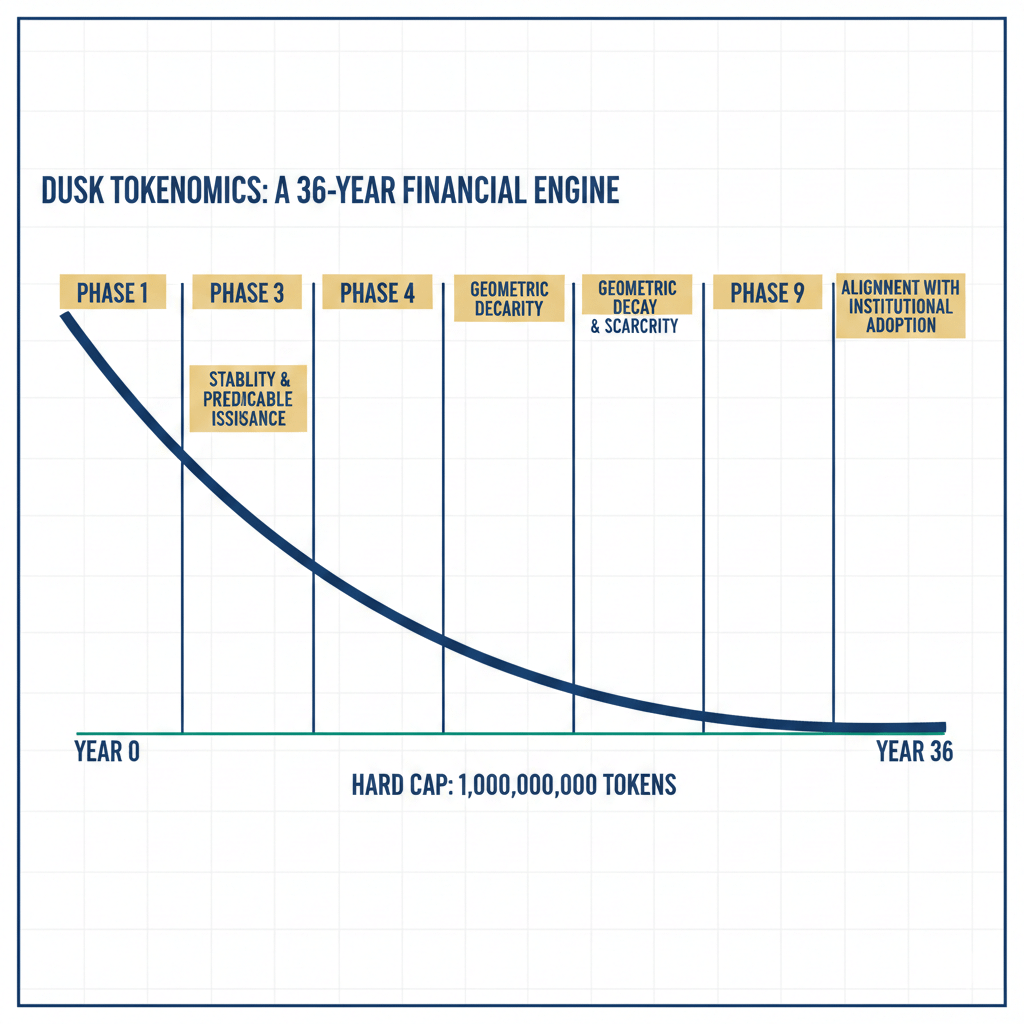
They've set up the token issuance in a really thoughtful way: it's a slow, geometric decay over 36 years (split into nine 4-year periods with halvings), starting from an initial 500 million and emitting another 500 million to reach a hard cap of 1 billion. No wild inflation dumps; instead, it lines up rewards with how institutions actually come on board and scale up. That kind of predictable, long-tail emission gives real stability—exactly what serious financial apps and high-stakes stuff need to trust the network won't go haywire.
Governance is another spot where they nail the tough balance. You want to evolve the protocol and fix things or add features, but when real financial contracts and money are on the line, you can't have chaotic changes. From what they've built, it looks like they use a structured proposal system (like Dusk Improvement Proposals) with longer voting periods for big stuff like upgrades—giving the community (token holders) a say while keeping things deliberate and stable.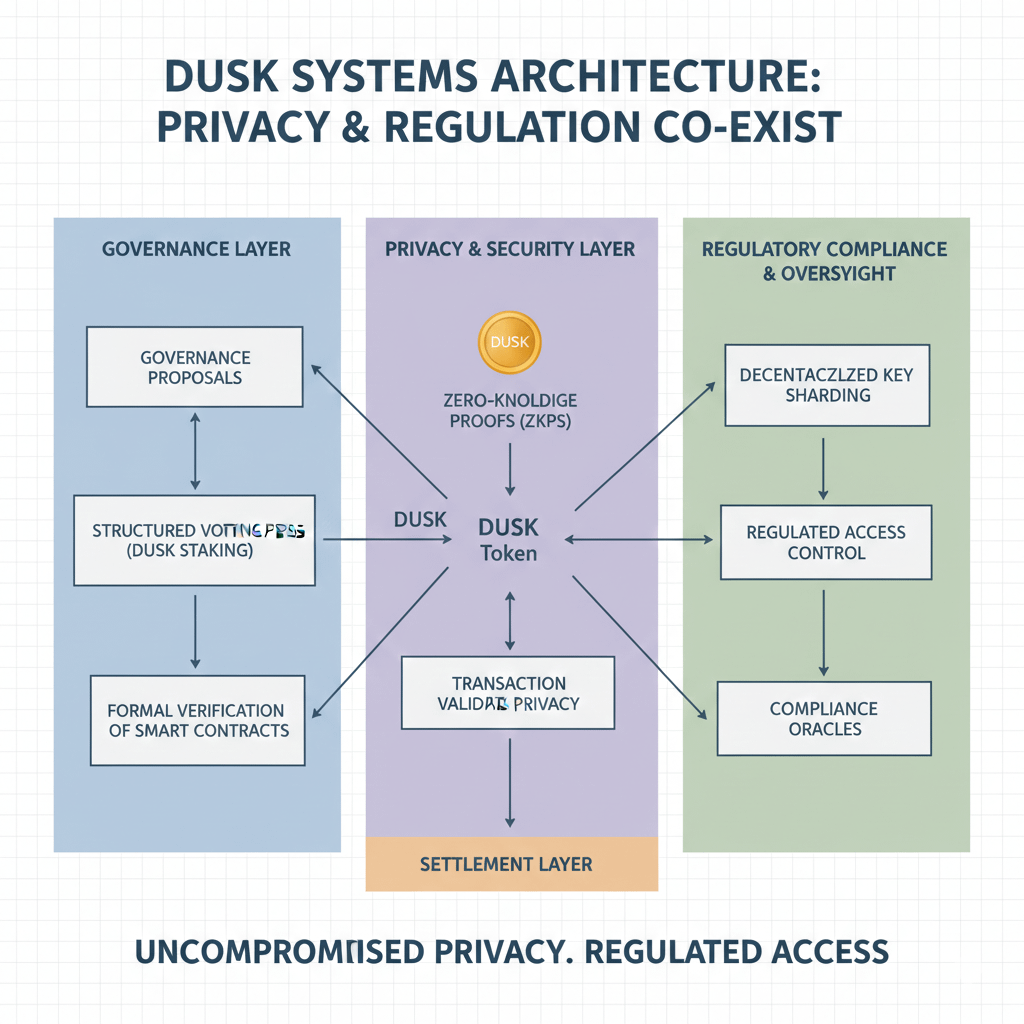
On the security front, Dusk goes deep. Their whole setup leans on zero-knowledge proofs baked right in, so privacy is default for transactions and smart contracts, but they've layered it with multi-defense architecture and formal verification to minimize any crypto flaws. The really clever part is handling regulatory oversight without turning it into a backdoor nightmare. They avoid any single "rogue regulator" holding all the power by sharding keys in a decentralized way, plus logging every warrant-based access in an audit trail. Oversight happens when it legally has to, but it's controlled, transparent, and doesn't compromise the core privacy.
They've also got solid protections against node operators ganging up or acting shady—anti-collusion design in the consensus, plus specific slashing rules that punish bad behavior without accidentally forcing everything to centralize (which would kill the point of a decentralized network).
And the treasury system? It's set up smartly to fund not just core protocol dev, but also the compliance tools, integrations, and ecosystem building that everyone needs for this to actually work in the real regulated world—keeping growth balanced and sustainable.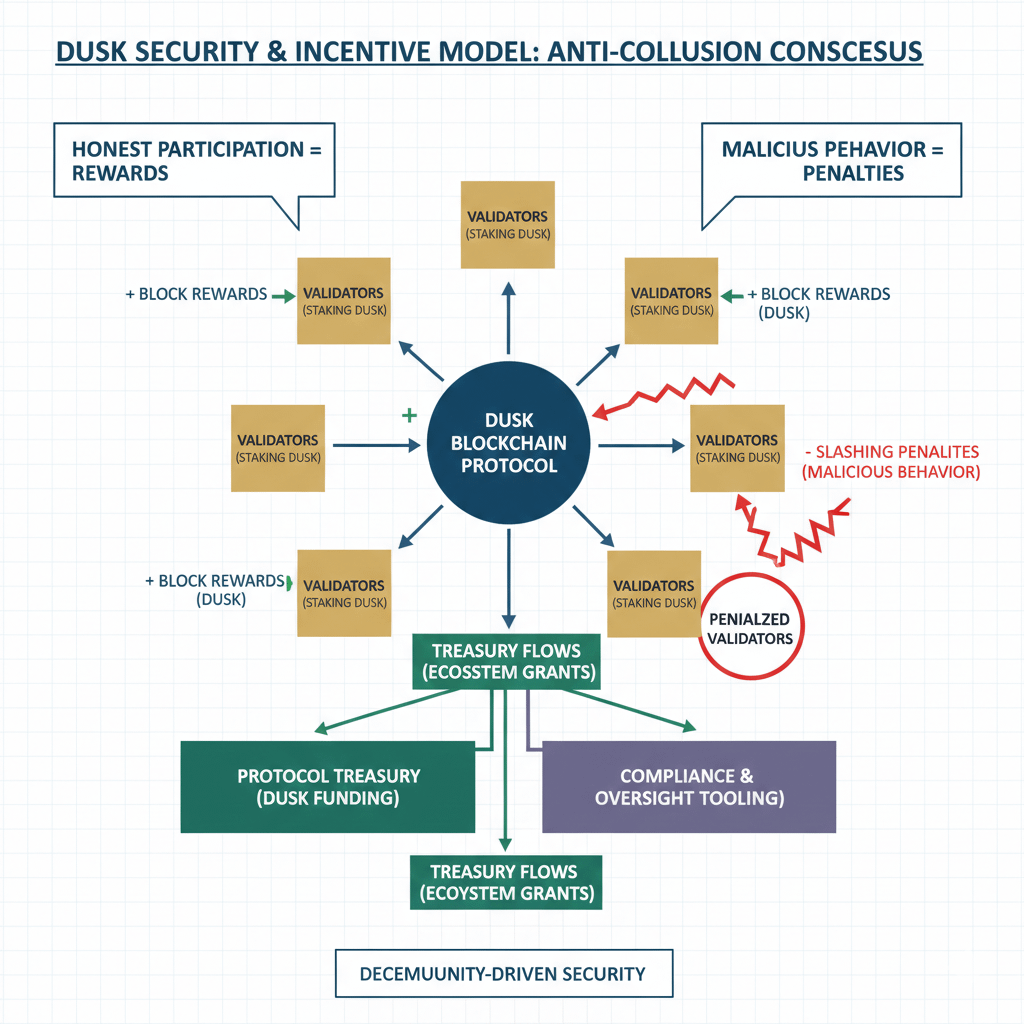
At the end of the day, none of this feels bolted on. Tokenomics, security, governance—they're the actual foundation here. Dusk isn't chasing hype; it's quietly building something solid for compliant, private finance on-chain, where privacy and real-world rules can actually coexist.