

The more I study Dusk, the more it feels like a network built for where blockchain is heading rather than where it has already been. Launched in 2018, the project positions itself as a layer-1 infrastructure designed specifically for regulated and privacy-focused financial activity. That alone separates it from many networks that prioritize open experimentation first and compliance later. Dusk’s direction suggests a different starting point: assume that real adoption will come from institutions, regulated markets, and tokenized real-world assets, then build the architecture around those needs from the beginning.
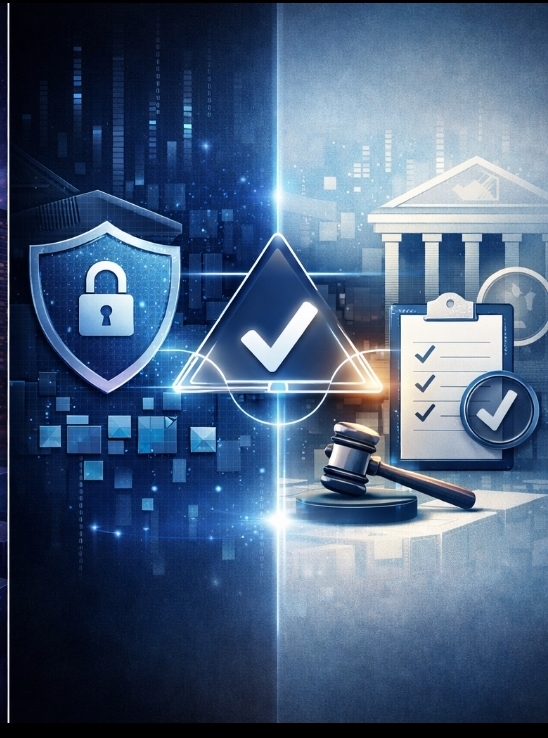
Public blockchains introduced a powerful model of transparency. Anyone can verify transactions, audit balances, and observe activity across the network. While this openness created trustless systems, it also introduced a problem for traditional finance. Financial institutions, asset issuers, and regulated entities cannot expose all transactional data publicly. They need confidentiality for trades, asset ownership, and internal operations, but they also need the ability to demonstrate compliance and provide verifiable records when required. Dusk’s approach attempts to reconcile these two requirements by embedding privacy and auditability into the same system.
The network’s modular design is central to this approach. Rather than building a single rigid structure, Dusk provides a flexible base where different types of financial applications can be developed with specific privacy and compliance settings. This structure allows developers and institutions to create environments where sensitive data can remain confidential while still being provable under regulatory or audit conditions. It’s not about removing transparency entirely. It’s about creating selective transparency, where information can be revealed to authorized parties without exposing everything to the public.
When thinking about the future of tokenized real-world assets, infrastructure like this becomes increasingly relevant. Tokenizing securities, funds, or other regulated instruments requires more than just a blockchain capable of moving tokens. It requires systems that can handle identity requirements, compliance checks, settlement processes, and confidential transactions. Dusk’s architecture appears designed to support that type of activity. By focusing on regulated financial use cases, the network is aiming to become a foundation for applications that operate within existing legal and financial frameworks rather than outside them.
Another important element is how the network balances confidentiality with verifiability. In traditional finance, transactions are not broadcast publicly, but they are still auditable by the appropriate parties. Dusk follows a similar philosophy. Transactions can remain private, yet still produce proofs or records that demonstrate compliance or accuracy when needed. This ability to combine privacy with auditability could be essential for institutions that want to move operations on-chain without exposing proprietary or sensitive information.

The emphasis on institutional-grade applications also shapes how the ecosystem may develop. Instead of focusing purely on retail-driven DeFi experiments, the network seems oriented toward use cases like regulated trading environments, tokenized securities issuance, and structured financial products. These are areas where privacy and compliance are not optional features but fundamental requirements. If the infrastructure works as intended, it could allow developers to build applications that meet regulatory standards while benefiting from blockchain efficiency and programmability.
I find the long-term positioning particularly interesting. Dusk does not appear to be competing primarily on speed narratives or short-term hype cycles. The focus is on creating a reliable base layer that institutions and regulated entities can use. That kind of infrastructure often develops more slowly than consumer-focused platforms, but it can become deeply embedded once adoption begins. If tokenized assets and regulated on-chain finance continue to grow, networks designed for compliance and confidentiality may become critical components of the broader ecosystem.
There is also a wider shift happening across the blockchain industry. Early narratives often framed privacy and regulation as opposing forces. Now, they are increasingly seen as complementary requirements for real-world adoption. Businesses and institutions need confidentiality to operate effectively, but regulators need visibility and assurance that rules are being followed. Dusk sits in that intersection, attempting to create an environment where both needs can be met without sacrificing the benefits of decentralized infrastructure.
Ultimately, the success of a network like Dusk will depend on real usage. Infrastructure only matters if applications and institutions choose to build on top of it. The potential use cases are clear: tokenized financial instruments, compliant DeFi systems, and settlement layers that can operate across regulated environments. If these types of applications begin to appear and scale, the importance of a privacy-aware, compliance-ready base layer becomes much more apparent.
From a broader perspective, Dusk represents a different kind of blockchain narrative. Instead of focusing solely on open experimentation, it focuses on building the foundations for regulated on-chain finance. That path may be slower and less visible in the short term, but it aligns closely with how financial infrastructure typically evolves. If the network continues to develop and attract the right kinds of applications, it could play a meaningful role in shaping how institutions and regulated markets interact with blockchain technology in the years ahead.